Whippet
Summary
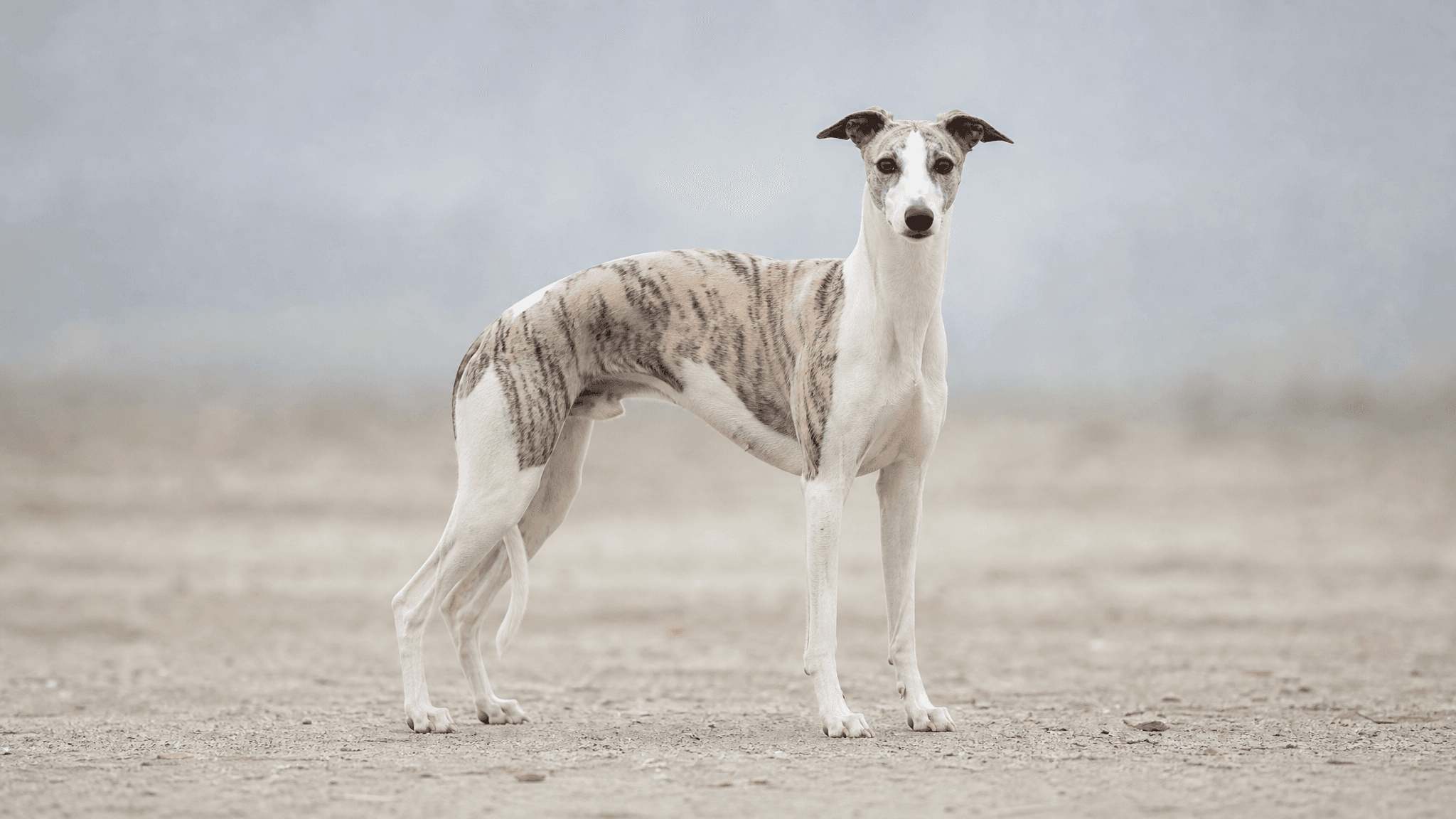
The Whippet emerged in England in the 19th century among workers of the industrial north, who developed this medium-sized sighthound — crossing Greyhounds with terriers — to race on improvised tracks and catch rabbits. Dubbed the "Poor Man's Racehorse," it quickly proved to be not only an extraordinary athlete but also an exemplary domestic companion: affectionate, clean, rarely destructive, and simple to maintain. It is considered one of the breeds with the best overall health among sighthounds.
Physical Characteristics
- Size
- Medium
- Height (male)
- 47–51 cm
- Height (female)
- 44–47 cm
- Weight (male)
- 12.5–18 kg
- Weight (female)
- 10–14 kg
- Life Expectancy
- 12–15 years
- Coat
- Very short, smooth, dense, and firm to the touch; practically no undercoat
- Common Colors
- Any color and pattern — black, white, red, fawn, blue, cream, brindle, and combinations; merle color is not accepted (eliminated from FCI registry since 2019)
Temperament & Personality
The Whippet is a dog of dual nature: a relentless sprinter outdoors and a couch addict at home. It is gentle, affectionate, calm, and forms strong bonds with the family, including children. It is more emotionally sensitive than it appears and does not respond well to punishment-based training. It can develop separation anxiety if not gradually accustomed to solitude. The chase instinct is very strong — it should never be let loose without a secure fence.
Activity & Exercise
- Energy Level
- Moderate to high
- Recommended Daily Exercise
- 45–60 minutes
- Suitable for Apartment
- Yes with exercise
Grooming & Care
- Grooming Needs
- Very low
- Shedding
- Low to moderate
- Bathing Frequency
- Every 4–6 weeks
Health
- Common Health Issues
- Anesthesia and certain medication sensitivity (MDR1)
- Congenital deafness
- Gastric dilatation-volvulus (GDV — less frequent than in larger breeds)
- Hereditary cataracts
- Hypothyroidism
- Idiopathic epilepsy
- Mitral valve disease (MVD — main cardiac cause in senior Whippets)
- Progressive retinal atrophy (PRA)
- Recommended Health Tests
- BAER test (hearing)
- Eye examination
- Periodic cardiac evaluation (echocardiogram)
- Thyroid analysis
Compatibility
- With Children
- Excellent
- With Other Dogs
- Excellent
- With Cats
- Can be difficult
- For First-Time Owners
- Recommended
Is a Whippet right for you?
A Whippet may suit you if:
- You can provide 45-60 minutes of daily exercise, including opportunities for exhilarating sprints and engaging play.
- You enjoy a lifestyle that balances active outdoor adventures with cozy, relaxed indoor companionship.
- You are seeking a gentle, affectionate, and calm companion who thrives on close family bonds.
- You are prepared to use consistent, positive reinforcement training methods with a sensitive and intelligent learner.
- You appreciate a very low-maintenance coat, requiring minimal grooming beyond occasional bathing.
- You are willing to manage a strong natural chase instinct, ensuring safe, secure off-leash environments.
Think twice if:
- You expect unwavering obedience in all situations, especially when presented with a tempting chase.
- You cannot consistently provide companionship or gradually accustom your dog to being alone.
- You have small, fast-moving pets like cats or rabbits that you are unwilling to carefully integrate.
- You are unable to commit to providing their daily requirement of 45-60 minutes of vigorous exercise.
- You lack a securely fenced area or safe space where your Whippet can truly stretch their legs.
- You are prone to using harsh training methods or inconsistent handling with a sensitive companion.
Whippets offer the unique joy of a devoted, calm housemate who transforms into an athletic marvel outdoors. Their gentle nature and low maintenance are a dream, but their sighthound instincts and emotional sensitivity require understanding. Providing secure space for their bursts of speed and consistent, positive guidance ensures a truly harmonious life with this charming breed.
Training a Whippet
Training your Whippet is a truly rewarding experience, as these gentle souls thrive on positive reinforcement and your affection. They are intelligent and sensitive, meaning short, fun, and engaging sessions with plenty of praise and tasty rewards will yield the best results. Avoid any harsh corrections or punishment-based methods, as these will not only be ineffective but can also damage the deep bond you share, making your Whippet anxious or reluctant to learn. Consistency and patience, coupled with a warm, encouraging approach, will help your Whippet blossom into a wonderfully well-behaved companion.
Begin with:
- Attention and name response
- Recall on a long line
- Loose-leash walking
- Leave it and drop it
- Calm greetings
- Settling on a mat
- Cooperative handling
- Waiting at doors
Prey Drive and Recall
Whippets possess a very strong chase instinct, a remnant of their sighthound heritage. This means that an exciting scent or a fleeting movement, like a squirrel or a rabbit, can quickly override all other training. Building a rock-solid recall is paramount for their safety, especially in unfenced areas. Start recall training in a quiet environment and gradually introduce distractions, always using high-value rewards. Practicing with a long line in secure, open spaces allows them to experience freedom safely while you reinforce coming when called. Remember, their instinct is powerful, so always be vigilant.
It's crucial to understand that their prey drive isn't a sign of disobedience, but a deeply ingrained natural behaviour. To manage this, ensure your garden is securely fenced, and when out on walks, consider keeping them on a leash in areas where small animals might be present. For advanced recall training, you might find this guide on teaching recall particularly helpful. With consistent, positive training, you can teach your Whippet to make the right choices, even when their instincts are calling.
Leash Manners
While Whippets are not typically known for brute strength, their moderate to high energy levels and quick bursts of speed can make leash walking a challenge if not addressed early. Their sensitive nature means that harsh leash corrections are detrimental; they can become anxious or develop a negative association with walks. Instead, focus on positive reinforcement from day one. Reward every moment your Whippet walks with a loose leash, using treats and praise.
Invest in a comfortable, well-fitting harness that doesn't restrict their movement or rub their delicate skin. Practice short, frequent loose-leash walking sessions in calm environments before gradually introducing more distractions. If you're struggling with a puppy who pulls, our guide on stopping puppy pulling offers a force-free plan that works wonderfully for sensitive breeds like the Whippet.
Alone Time
Whippets form strong bonds with their families and are known for being 'couch addicts' at home, but this deep attachment can sometimes lead to separation anxiety if they aren't gradually accustomed to being left alone. It's vital to teach your Whippet that alone time can be a positive, calm experience. Start with very short absences and slowly increase the duration, always ensuring they have had their recommended 45-60 minutes of daily exercise and some mental stimulation before you leave.
Create a comfortable, safe den for them, perhaps a crate or a cozy bed in a quiet room, with a long-lasting chew or puzzle toy to keep them occupied. Avoid making departures and arrivals a big fuss. If you notice signs of stress when you leave, such as excessive barking, destructive chewing, or inappropriate urination, our guide on recognising stress signs can help you understand and address the issue proactively.
Whippet — Frequently Asked Questions
Are Whippets good family dogs?
Whippets are excellent family dogs — gentle, affectionate, playful, and deeply loyal to their family. They're calm and clean in the house, sensitive enough to be intuitive companions, and playful enough to enjoy games with children. Their medium size makes them manageable, and their low-maintenance coat is a practical bonus. They tend to bond closely with their household and can be velcro dogs who simply want to be near their people. For families willing to meet their exercise needs, a Whippet is a near-perfect companion dog.
How much exercise does a Whippet need?
Whippets are sight-hounds built for explosive short-distance speed, not endurance — their exercise needs are more moderate than you'd expect. Around 45–60 minutes of daily exercise is sufficient, but they absolutely need the opportunity to run freely in a safely enclosed area to sprint at full speed. Whippets off-leash in open unsecured areas will chase anything that moves and cannot be recalled in time — a securely fenced field or garden is essential. After a good run, they're perfectly happy to curl up on the sofa for hours.
Do Whippets get cold easily?
Whippets feel the cold acutely — their single, very short coat and extremely lean body with almost no subcutaneous fat means they lose heat rapidly. In cold or wet weather, a coat or jumper is not a fashion choice; it's a genuine welfare necessity. Many Whippet owners have an impressive wardrobe of dog coats for different weather conditions. They should not sleep in cold rooms, and walks in bitter weather should be kept comfortable with appropriate outerwear. Their love of burrowing under blankets and sleeping pressed against warm humans is entirely sensible from their perspective.
Are Whippets good apartment dogs?
Whippets are surprisingly well-suited to apartment life — indoors they're calm, clean, quiet, and content to lounge, making them one of the better larger breeds for apartment living. The key condition is that they receive adequate daily outdoor exercise, including opportunities to run freely in a secure area. A Whippet in an apartment who gets daily runs will be perfectly satisfied; one who doesn't will become anxious and restless. Their sensitivity to cold also means they'll appreciate indoor warmth during cold seasons.
What health problems do Whippets have?
Whippets are one of the healthiest pedigree breeds with relatively few breed-specific conditions. Heart problems — particularly mitral valve disease in older dogs — are worth monitoring. Eye conditions including progressive retinal atrophy (PRA) occur in some lines. Their thin skin means wounds and cuts heal slowly and are prone to tearing in rough play or on sharp objects. They're sensitive to anaesthesia due to their low body fat — it's important your vet is aware this is a sight-hound when anaesthetics are needed. Von Willebrand's disease (a clotting disorder) is occasionally seen.
Are Whippets good with cats?
Whippets have a sight-hound prey drive and can instinctively chase cats — particularly cats they don't know. However, many Whippets who are raised with cats from puppyhood live alongside them peacefully and come to regard them as part of the pack. Introductions must be careful, gradual, and always supervised initially. A Whippet that has lived with cats usually respects those cats but may still chase unknown cats outdoors. It's wise to keep the Whippet on-lead around unknown cats and ensure the cat always has an accessible escape route at home.
Are Whippets easy to train?
Whippets are gentle, sensitive dogs who respond well to positive reinforcement training. They're quick learners when motivated correctly, though their sight-hound independence means they can choose to ignore commands when something more interesting captures their attention outdoors. Harsh training methods don't work with Whippets — they shut down emotionally and lose trust. Recall training is the most important skill to develop given their speed and prey drive. Use high-value rewards, train in low-distraction environments first, and build to more challenging settings gradually.
How long do Whippets live?
Whippets are a long-lived, healthy breed, typically reaching 12–15 years. Their relative genetic diversity compared to many pedigree breeds, lean athletic build, and lack of extreme physical features all contribute to their good health. Annual vet check-ups, dental care, weight management, heart monitoring in older dogs, and protecting their thin skin from injury are the main pillars of Whippet health management. Many Whippets remain active, playful, and in good health well into their early teens.
Community
Talk to real Whippet owners
This guide covers the breed on paper. In the app, the Whippet community covers it in real life: photos from other owners, questions answered by people who live with the breed, and a directory of dogs you can browse.
- Photos & pollsSee what Whippet owners are sharing today.
- Questions & answersAsk anything and hear from people who own one.
- Dog directoryBrowse Whippets from around the world.
You join automatically when you add a Whippet to your profile.