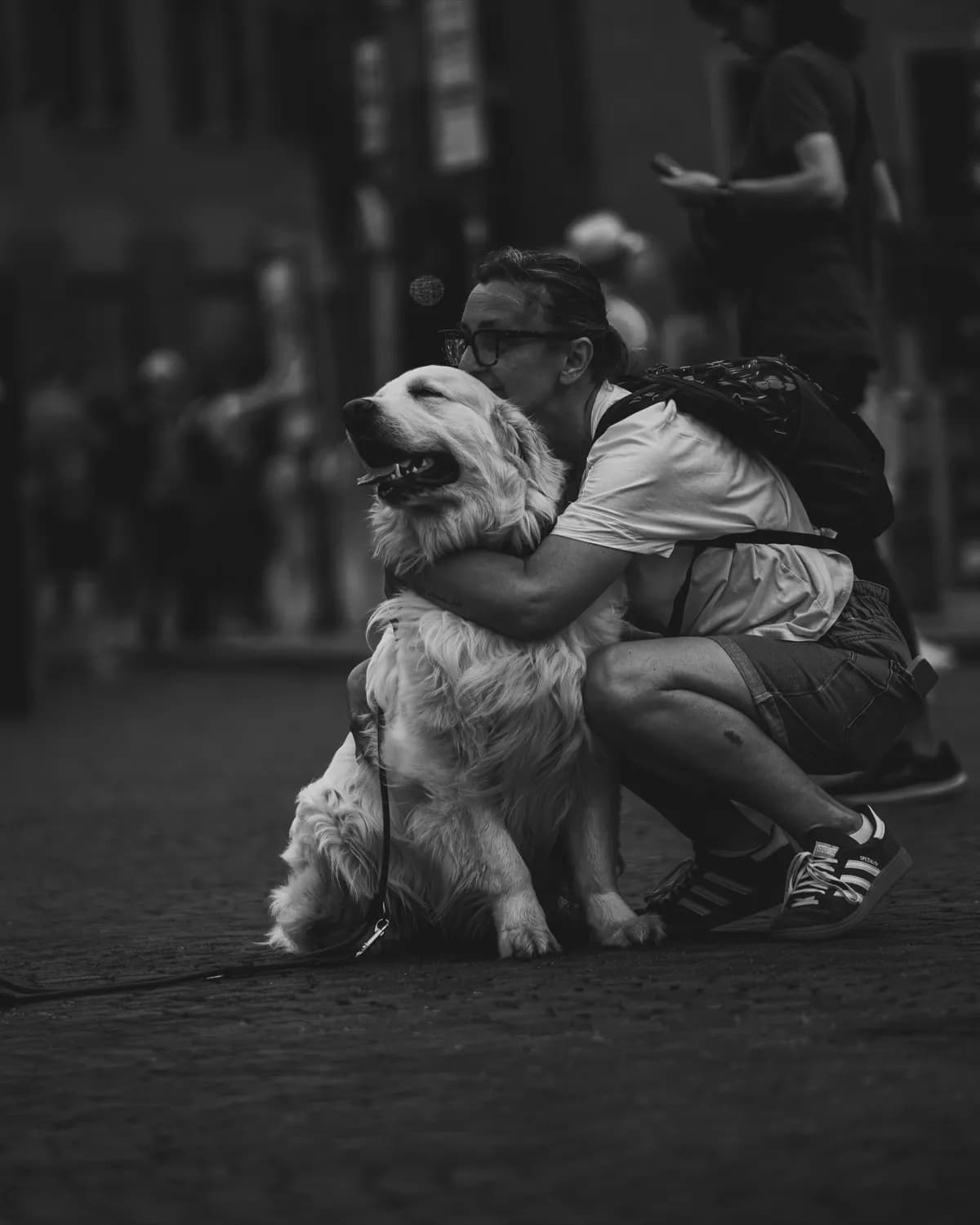
How to Tell If Your Dog Is Stressed When You Leave (Without a Camera)
You pick up your keys. Your dog freezes. Their ears drop, the tail tucks, and they follow you to the door with the kind of quiet intensity that is hard to ignore. You tell yourself they will be fine once you are gone — and most of the time, you are probably right. But here is the uncomfortable statistic: a 2025 study published in the Journal of Veterinary Behavior found that 85.9% of dogs in the US show moderate to severe separation-related issues. Research cited by the RSPCA puts it more simply: 8 out of 10 dogs struggle when left alone — and half of them never show obvious signs. That is the real problem. Most articles list ten symptoms and assume you will notice them. You won't — because by the time the noisy stuff happens, you are not home. The good news is you do not need a camera to figure out if your dog is stressed when you leave. You just need to know when to look, and what to look for. This guide walks you through the three moments that reveal almost everything, how to tell stress apart from simple boredom, and what the latest behaviour science says about why dogs bark, whine, or destroy things when their humans disappear. The 3 Moments That Reveal Everything Forget the idea that separation stress happens only while you are gone. The most diagnostic signals happen around the departure — and you are home for two out of the three. Moment 1: Before You Leave (the 10-20 Minutes Before) Dogs are pattern detectives. They know what shoes, keys, coats, bags, and alarms mean, and most anxious dogs start reacting well before you walk out the door. The ASPCA calls these predeparture cues , and how your dog reacts to them is often more telling than what happens after you leave. Watch for: Shadowing. Your dog follows you from room to room, staying within a metre of you — especially on days you are getting ready to go out. Restlessness. Pacing, sitting, getting up, sitting again. Unable to settle. Displacement behaviours. Yawning out of context, lip licking, scratching themselves when they are not itchy. Refusing food. High-value treats go untouched when the coat comes on. Physical signs. Panting, trembling, dilated pupils, ears pinned back. Blocking. Sitting by the door, trying to prevent you from leaving, or pressing against your legs. A calm dog at this stage does not do most of these things. They may lift their head, note that you are leaving, and go back to whatever they were doing. The difference between "aware" and "stressed" is how long the behaviour lasts and how intense it gets. Moment 2: The Departure Itself This is a 30-second window most owners don't pay attention to, but it carries a lot of information. A relaxed dog may walk with you to the door, take a treat, and settle as you close it. A stressed dog often: Whines or barks as the door closes Scratches or jumps at the door Runs to the nearest window Stops eating the treat you just offered Shows "whale eye" (the whites of the eyes visible at the edge) If you can, step just outside and listen for 30-60 seconds. Most separation-related behaviours peak within the first 10 minutes after departure, according to the research summarised in a 2016 review in the Journal of Veterinary…