Skip to content
Community

Community & Clubs

Share moments, join breed-based clubs, discover local events, and connect with dog owners in your area.

Community

How It Works

Join a vibrant community of dog lovers. Share photos, updates, and milestones on the social feed. Find and join local clubs based on your dog's breed or your interests, and discover dog-friendly events happening near you.

Continue Reading

My Dog Has No Dog Friends — Is That a Problem? (Honestly, Probably Not)

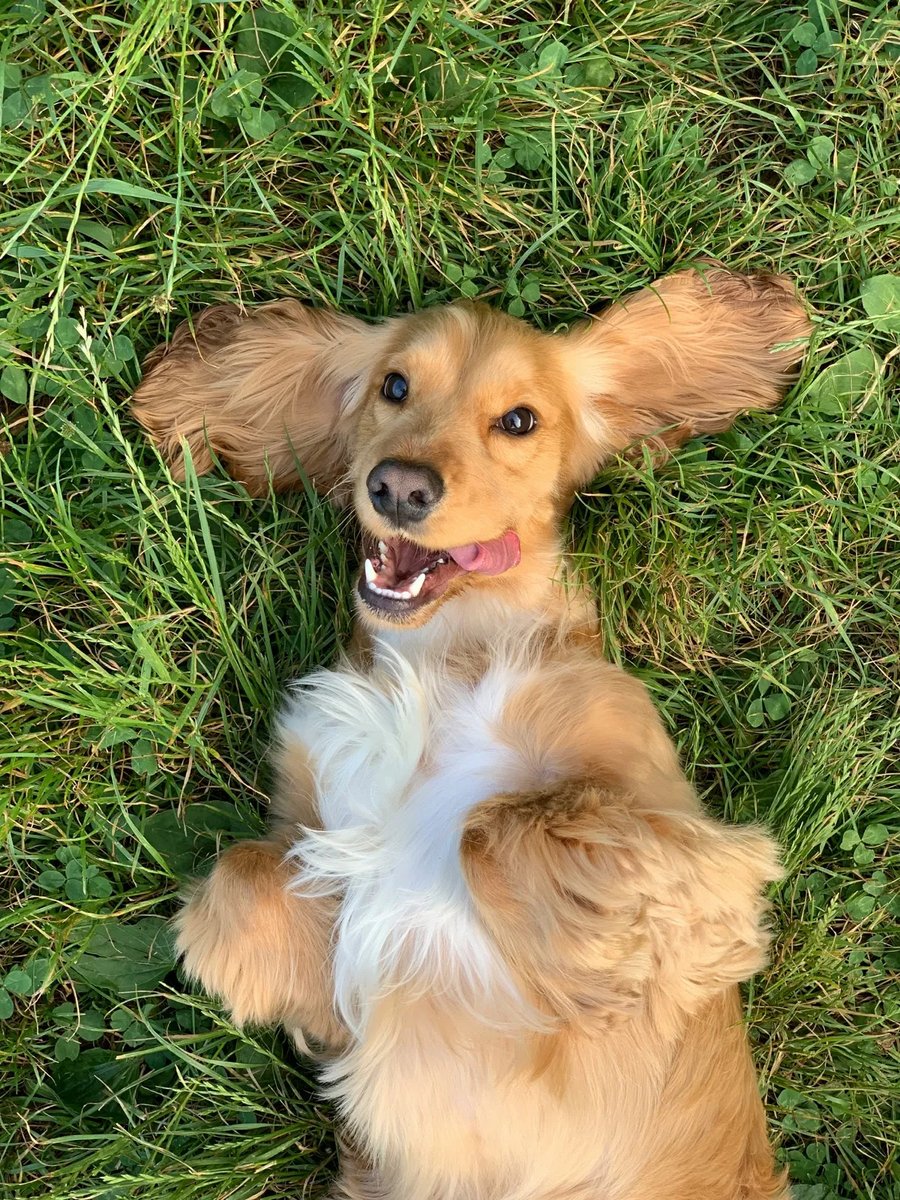
You watch other people at the park. Their dogs sprint into the gate, get instantly absorbed into a wagging, sniffing, bouncing pile of fur, and emerge twenty minutes later with what looks like five new best friends. Then there's your dog. Your dog walks the perimeter. Your dog avoids eye contact. Your dog has a polite but firm opinion that other dogs are a thing that exists — not a thing that needs to be hugged. And so you start to wonder. Is something wrong with my dog? Is he lonely? Did I fail him somewhere? Here's the part nobody tells you at the park: most adult dogs are exactly like yours. The social butterflies you see are not the rule. They're the visible minority. The American Kennel Club's own framework on canine sociability puts most adult dogs in the "tolerant" or "selective" zone — not the "loves every dog" end of the spectrum. And a 2026 review in the journal Animals describes urban pet dogs as living in "socially crowded yet relationally sparse worlds" — they meet many dogs but know almost none ( Bonacci et al., 2026 ). What dogs actually need, the science says, isn't more dogs. It's the right dogs. This article will give you: Why "every dog needs lots of dog friends" is a myth — and where it came from The dog selectivity scale, and why your dog probably belongs in the middle Why your dog changed at 12–18 months (you didn't break anything) The honest line where it actually is a problem A 5-minute self-assessment to know if your dog is genuinely fine What to do instead of forcing friendships Let's take the guilt off the table. The myth: "every dog needs lots of dog friends" The idea that a healthy dog should have a wide, rotating cast of canine pals is surprisingly modern. It traces back to two cultural shifts: the explosion of off-leash dog parks in the 1990s and 2000s, and the rise of the doggy daycare industry. Both rest on a simple commercial premise — dogs need socialisation, daycare and parks provide socialisation, therefore daycare and parks make dogs happy. That logic conflates two completely different things: Puppy socialisation — the developmental process of safe exposure to people, dogs, sounds, surfaces, and environments during the first three to four months of life. This is essential. The American Veterinary Society of Animal Behavior calls it "the standard of care" and warns that incomplete socialisation in this window predicts lifelong fear, anxiety, and aggression problems ( AVSAB Position Statement ). Adult canine friendships — what your two-year-old dog does or doesn't do at the park. This is not the same thing. Adult sociability is shaped by genetics, breed, individual temperament, life experiences, and natural social maturation. Some adult dogs love crowds. Most don't. The worst part of the myth is that it actively harms the dogs caught in the middle of it. Dragging a dog-selective adult into a chaotic dog park "to make friends" doesn't build friendships. It builds stress, then avoidance, then sometimes reactivity. Pushing a quiet introvert into daycare so he "isn't lonely" can produce the exact opposite of the calm, confident dog you wanted. Your goal as an owner isn't to manufacture a wide social circle.…
Hanna Fur

Dog Park Etiquette: 12 Rules Nobody Tells You (and How to Spot a Dangerous Park in 30 Seconds)

In a single year, insurer Nationwide paid out claims for almost 24,000 dogs treated for soft-tissue injuries, with the average head trauma costing owners $591 ( DVM360 ). Most of those injuries didn't happen on dangerous mountain trails. They happened at the local dog park. That stat isn't here to scare you off the park. Dog parks are still one of the best places for a confident, well-socialised dog to burn energy, sniff new things, and read other dogs. But here's the part nobody puts on the welcome sign: a dog park is a self-organising social experiment with no referee, no entrance exam, and no guarantee that the other humans there know what their own dog is doing. This guide is not another "always pick up after your dog" listicle. It's the field manual you wish someone had handed you the first time you stood at the gate, leash in hand, wondering if this was a good idea. You'll get: A 30-second safety scan to run before you even unclip the leash 12 etiquette rules most owners never get told (because they're inconvenient) 7 red flags that mean leave right now, no apology An honest answer to: is the dog park even right for your dog? Let's go. The 30-second safety scan (do this BEFORE you walk in) Stand outside the fence. Don't go in yet. Run this checklist in your head — it takes about half a minute and it will save you a vet bill. Is there a double gate (air lock)? A single gate means the second you open it, every dog inside will rush you and your dog while you're trapped. That's how fights start. How many dogs are inside? Sweet spot is roughly 4 to 8. Above 12 starts to feel like a mosh pit. Three or four loose social groups beats one chaotic mob every time. Are the humans watching, or scrolling? A park full of phone-zombies is a park where the next altercation will go on for 30 seconds before anyone notices. Is one dog being chased by three or more others, with no breaks? That isn't play. That's mobbing. More on this below. Do you see any dog with a high, stiff tail and a forward, frozen body? That's a loaded gun in a furry costume. Is there a separate area for small dogs? If your dog is under 10 kg and there isn't, this might not be your park today. Is the ground clean? Visible poop = nobody's paying attention to the basics, which means nobody's paying attention to the bigger stuff either. Vibe check. Are humans relaxed? Are dogs moving in loose, curving paths and taking breaks to sniff and shake off? Or is it tense and loud? If three or more answers are bad, walk your dog somewhere else. There's no medal for entering a sketchy park. The 12 etiquette rules nobody tells you Some of these are obvious in theory and ignored in practice. A few will be unpopular. All of them are backed either by veterinary consensus, behaviour science, or hard-earned park experience. Before you even leave the house 1. Vaccinated, dewormed, and (ideally) desexed. No exceptions. The American Veterinary Medical Association and the RSPCA both list this as the non-negotiable baseline. Shared water bowls, mouth-on-mouth play, and group sniffing of the same patch of grass make the park an extremely efficient delivery system for kennel cough, parvo, parasites, and…

Hanna Fur

Give Your Dog the Care They Deserve

Join a growing community of dog owners who trust AI to keep their pets healthy, happy, and safe. Download free today.

Free to download. Pro AI Plan available for unlimited features.

Community & Clubs — Smart Dog Care