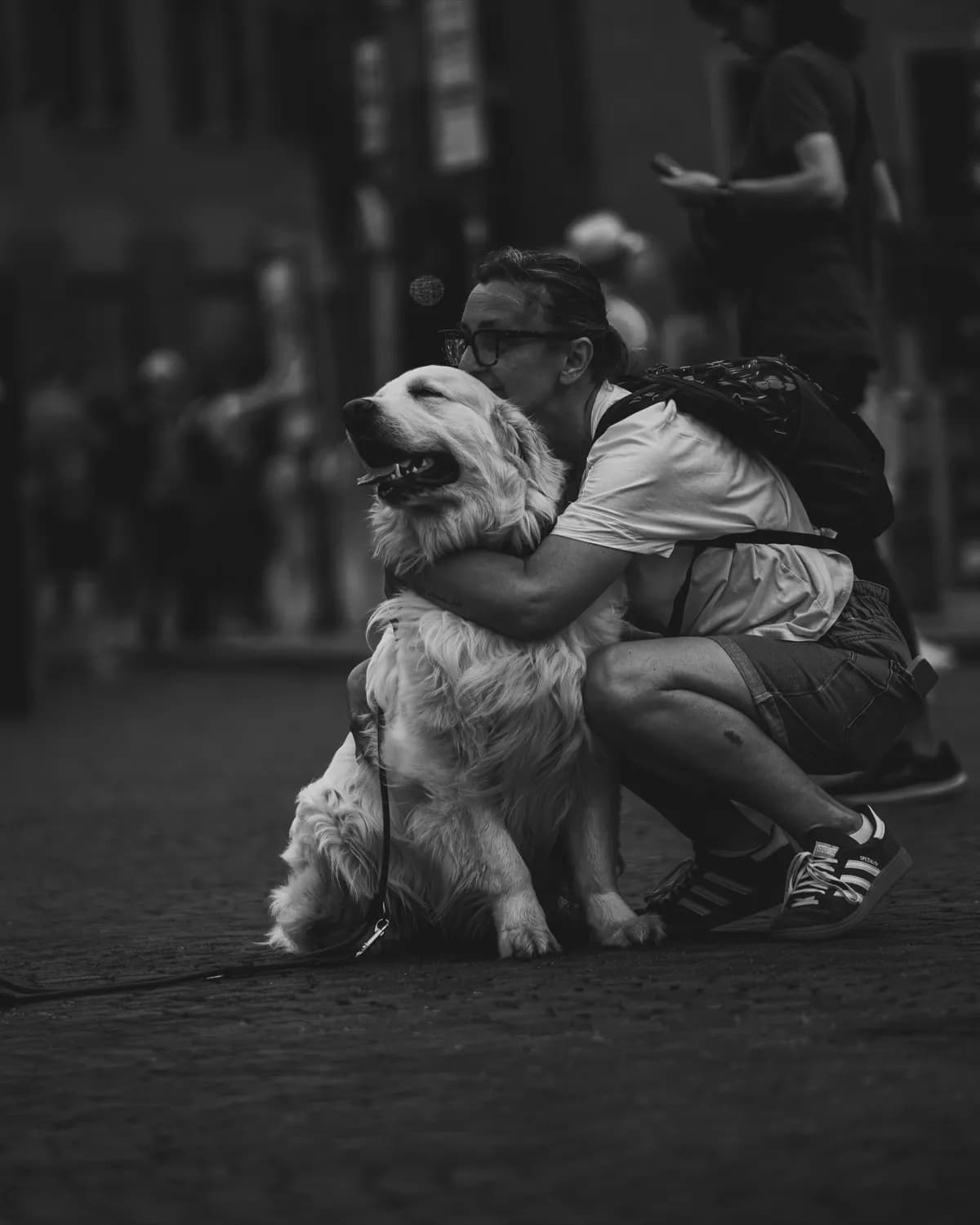
My Dog Has No Dog Friends — Is That a Problem? (Honestly, Probably Not)
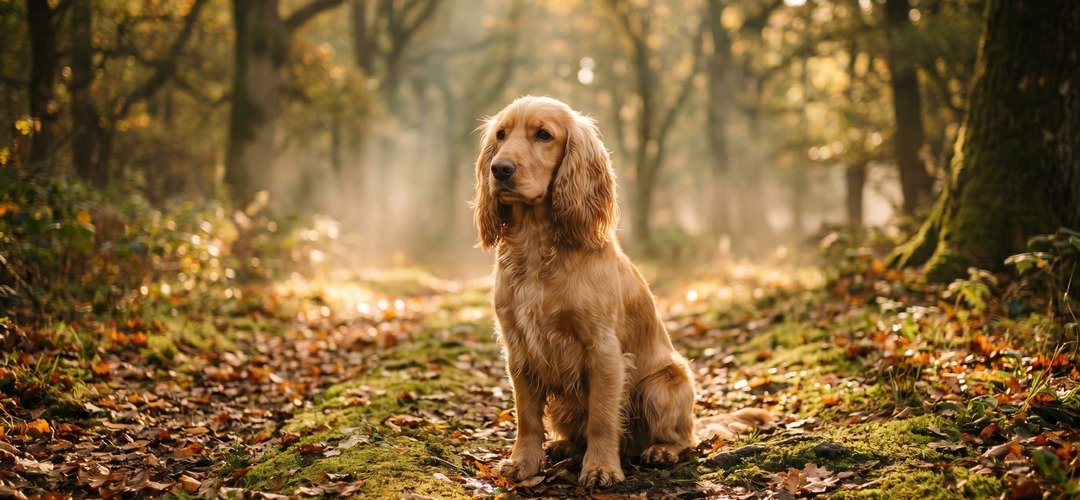
You watch other people at the park. Their dogs sprint into the gate, get instantly absorbed into a wagging, sniffing, bouncing pile of fur, and emerge twenty minutes later with what looks like five new best friends. Then there's your dog. Your dog walks the perimeter. Your dog avoids eye contact. Your dog has a polite but firm opinion that other dogs are a thing that exists — not a thing that needs to be hugged.
And so you start to wonder. Is something wrong with my dog? Is he lonely? Did I fail him somewhere?
Here's the part nobody tells you at the park: most adult dogs are exactly like yours. The social butterflies you see are not the rule. They're the visible minority. The American Kennel Club's own framework on canine sociability puts most adult dogs in the "tolerant" or "selective" zone — not the "loves every dog" end of the spectrum. And a 2026 review in the journal Animals describes urban pet dogs as living in "socially crowded yet relationally sparse worlds" — they meet many dogs but know almost none (Bonacci et al., 2026). What dogs actually need, the science says, isn't more dogs. It's the right dogs.
This article will give you:
- Why "every dog needs lots of dog friends" is a myth — and where it came from
- The dog selectivity scale, and why your dog probably belongs in the middle
- Why your dog changed at 12–18 months (you didn't break anything)
- The honest line where it actually is a problem
- A 5-minute self-assessment to know if your dog is genuinely fine
- What to do instead of forcing friendships
Let's take the guilt off the table.
The myth: "every dog needs lots of dog friends"
The idea that a healthy dog should have a wide, rotating cast of canine pals is surprisingly modern. It traces back to two cultural shifts: the explosion of off-leash dog parks in the 1990s and 2000s, and the rise of the doggy daycare industry. Both rest on a simple commercial premise — dogs need socialisation, daycare and parks provide socialisation, therefore daycare and parks make dogs happy.
That logic conflates two completely different things:
- Puppy socialisation — the developmental process of safe exposure to people, dogs, sounds, surfaces, and environments during the first three to four months of life. This is essential. The American Veterinary Society of Animal Behavior calls it "the standard of care" and warns that incomplete socialisation in this window predicts lifelong fear, anxiety, and aggression problems (AVSAB Position Statement).
- Adult canine friendships — what your two-year-old dog does or doesn't do at the park. This is not the same thing. Adult sociability is shaped by genetics, breed, individual temperament, life experiences, and natural social maturation. Some adult dogs love crowds. Most don't.
The worst part of the myth is that it actively harms the dogs caught in the middle of it. Dragging a dog-selective adult into a chaotic dog park "to make friends" doesn't build friendships. It builds stress, then avoidance, then sometimes reactivity. Pushing a quiet introvert into daycare so he "isn't lonely" can produce the exact opposite of the calm, confident dog you wanted.
Your goal as an owner isn't to manufacture a wide social circle. Your goal is to read the dog you actually have.
The dog selectivity scale (this is most likely you)
The most useful single concept in canine social behaviour is the selectivity scale. It's a fluid spectrum, not fixed boxes — and dogs move along it across their lifetime. Here's how the AKC and most modern behaviourists describe it (AKC, Wiggles and Woofs):
| Level | What it looks like | Is it a problem? |
|---|---|---|
| Dog social | Loves every dog they meet, any age, any breed, any energy level | Common in puppies. Rare in adults. |
| Dog tolerant | Generally fine with most dogs, polite, can read and adjust | Normal and healthy |
| Dog selective | Has specific friends. Picky about energy level, size, or play style. Avoids "rude" dogs. | Normal and the majority of adult dogs |
| Dog aggressive | Genuinely struggles in nearly any canine interaction. Lunges, snaps, fights. | This one needs help |
Read that table again, slowly. The word that matters is "majority." The dogs sprinting around the park making instant friends with everyone are at one end of a long curve. They are not the standard. They are the outliers we happen to see most because they're the only ones who can comfortably be there.
Behaviour trainers have been writing about this for years. As Wiggles and Woofs puts it: "The majority of adult dogs are dog tolerant or dog selective. Since dog selective dogs are not able to hang out in as many public places, we see them less often, and therefore many people do not realise that this sociability level is as common as it actually is."
If your dog is dog tolerant or dog selective, your dog is fine. Your dog is, statistically speaking, typical.
Why your dog changed at 12–18 months (social maturity)
If you're reading this with a slightly older puppy or young adult dog and thinking "but he used to love everyone, what happened?" — congratulations, you have witnessed social maturity in action.
Most puppies start life dog social. Everything is new, everything is exciting, and most pups will bounce up to any other dog with the canine equivalent of "hi I'm five months old can we be best friends?" Then, somewhere between 6 and 18 months, things start shifting. The Canadian behaviour consultancy Sit Pretty describes the change in clean terms:
- Decrease in tolerance — the puppy who used to ignore being jumped on now snaps a clear "buzz off."
- Selective about playmates — your once-everyone-is-my-friend dog now decides he doesn't want to play with every dog at the park anymore.
- Decrease in overall sociability — your dog may want shorter play sessions, prefer to sniff and explore over wrestle, or skip play altogether.
These changes are normal. They're not regression. They're the canine equivalent of going from a kid who has thirty "best friends" in kindergarten to an adult with three close friendships and a strong preference for staying in. You wouldn't say your friend has "stopped being social" because she chose two dinner companions over a packed bar — you'd say she grew up. Same dog, same evolution.
There's a useful analogy here. You don't have fifty close friends. You probably have two or three. You have a slightly larger circle of people you genuinely like, and a much wider ring of acquaintances. Your dog is allowed exactly the same shape of social life.
Can dogs be introverts? (Yes, actually)
There's a quiet but growing recognition in animal behaviour writing that canine personalities are real, individual, and stable. Psychology Today recently profiled the relationship between an introvert owner and her wildly extroverted dog — but the article makes the harder point too: dogs themselves can lean introvert or extrovert. Some thrive on novelty, crowds, and constant social stimulation. Others recharge in quiet, prefer one or two companions, and find too much interaction draining.
Here's the difference between a dog who is introverted and a dog who is fearful — they look superficially similar but they aren't the same thing.
A confident introvert dog:
- Prefers calm settings to crowded ones, but can navigate both
- Recovers from outings by sleeping, not by hiding
- Has one or two preferred dog friends and ignores the rest with mild indifference
- Doesn't avoid out of fear — chooses to rest
- Body is loose. Tail neutral. Mouth soft. Eyes calm.
A fearful or anxious dog:
- Actively avoids — tail tucked, ears back, body low
- Doesn't recover, stays watchful and tense
- Uses many displacement signals: lip-licking, yawning, head turns, scratching
- Tries to leave; hides behind your legs
- Trembles, pants, paces, may bark or lunge to make space
If your dog reads as the first — calmly preferring quiet — you have an introvert. That's not a flaw. It's a temperament.
When it IS a problem (the honest line)
This article isn't here to tell you everything is fine no matter what. There's a real line — and the line isn't whether your dog has lots of friends. It's whether your dog can navigate the world without chronic stress. Here's where it stops being "selective adult dog" and starts being "this is something to work on."
1. Your dog is in panic, not peace.
Trembling, tucked tail, dilated pupils, freezing, repetitive lip-licking, panting, or trying to flee at the mere sight of another dog. That's not introversion. That's fear. Fear is a workable problem with the right help, but it doesn't get better by itself.
2. On-leash reactivity.
Barking, lunging, hackles up, frustration that explodes when another dog appears within fifty metres. This is a specific behaviour pattern that often has nothing to do with how social your dog is off-leash — and it does need a structured plan. We wrote about this in detail in how to train a reactive dog on walks.
3. A recent change in behaviour.
If your dog used to be social and suddenly isn't — within weeks, not months — that's a yellow flag. Pain, illness, hormonal change, or a frightening incident can all flip a dog's social baseline. Vet first, behaviourist second.
4. Zero positive interaction in any context.
Dog selective dogs are picky, but most still have one dog they tolerate or even enjoy — a sibling, a neighbour, a familiar friend. If your dog cannot have a positive interaction with any other dog, anywhere, ever, that's worth investigating.
5. The chronic stress is yours.
This one is for you. If avoiding other dogs has narrowed your walks, made you anxious, or stopped you enjoying your dog, that's a problem that deserves attention — for both of you. A behaviourist isn't only for the dog. They're often for the relationship.
If any of these describe your situation, you're not failing. You're identifying. The next step isn't more dog parks. It's a calm conversation with someone qualified.
What "good enough" canine social life actually looks like
The 2026 review in Animals lands on a phrase that should be on a fridge magnet: continuity, not quantity (Bonacci et al., 2026). Dogs who live with stable social partners — the same friends, the same humans, the same routines — recover faster from stress, show fewer arousal spikes during play, and rely less on watchfulness as a default state. Dogs in "thin" social networks, even if they meet many other dogs, show higher cortisol, more displacement behaviour, and less easy recovery.
In other words: it's not how many dogs your dog meets. It's whether any of them are familiar.
A "good enough" canine social life can look like any of these — none of them require a dog park:
- One or two stable canine friends. A neighbour's dog. A sibling. The same dog at the same playdate every Sunday.
- Pack walks with a known group. Parallel walking with familiar dogs is one of the most natural and least stressful social activities for adult dogs.
- A consistent training class with the same dogs each week. The structure does most of the work.
- A second household dog if the match is right (and only then).
- Long, sniff-rich solo walks. Dogs are also social animals via scent — your dog reading the bulletin board of pee on lampposts is, biologically, social engagement.
Notice what's not on this list: random dog park encounters, daycare with rotating populations, and forced "say hi" greetings on the leash. None of those build continuity. Some actively undermine it.
The 5-minute self-assessment: is your dog actually unhappy?
Before you spiral, run this checklist on your dog. Five questions, honest answers.
- Does my dog sleep well? Calm, settled, returns to sleep easily after disruption.
- Does my dog still play? With you, with toys, with familiar dogs, even briefly.
- Is my dog curious on walks? Sniffs new things, wants to explore, has favourite spots.
- Is my dog's appetite normal?
- Is my dog's body relaxed most of the day? Loose tail, soft face, ears in neutral, no constant scanning.
If you answered yes to 4 or 5: your dog is fine. Whatever you saw at the park earlier is not a welfare crisis. It's just a dog being itself.
If you answered yes to fewer than 3: that's worth flagging. Not necessarily because of the social piece — but because that pattern can point to something else (pain, anxiety, environmental stress). A vet visit and a behaviour consult are sensible next steps.
What to do instead of forcing friendships
If "make my dog more social" was your goal going into this article, here's the upgrade. Replace it with: "build a rich life that suits the dog I have."
1. Curated playdates over open parks.
One compatible dog at a time. Neutral ground. Calm humans. Short sessions. End on a high note. This is what most behaviourists actually recommend over chaotic open parks — and it's how real canine friendships form.
2. Sniff walks instead of social walks.
Decompression walks in nature, where your dog gets to follow their nose, set the pace, and process the world. This is profoundly satisfying for most dogs, and far less arousing than meeting strange dogs on every corner.
3. Training that requires your attention.
A dog working on recall, scent work, or a trick is socially engaged — with you. Recall in particular is a foundation skill that strengthens the human-dog bond and makes the rest of your life together easier (we wrote a recall guide you can use).
4. Reward-based group classes.
Group training in a controlled, force-free environment is one of the few "socialisation" contexts that genuinely benefits dog-selective adults. It's structured, predictable, and the dogs aren't expected to interact directly with each other. The American Veterinary Society of Animal Behavior is firm on this: only reward-based methods, ever (AVSAB).
5. Skip the dog park if it isn't working.
We covered this in dog park etiquette — open parks are not for every dog, and that's okay. Walking past one is not a moral failure.
Quick reference: should you worry?
| Sign | Worry? |
|---|---|
| Doesn't run up to other dogs at the park | No |
| Has 1–2 stable canine friends | No — that's plenty |
| Became more selective at 12–18 months | No — that's social maturity |
| Politely ignores most dogs on walks | No |
| Trembles, hides, shows whale eye near other dogs | Yes — talk to a behaviourist |
| Lunges and barks on leash at other dogs | Yes — start with the reactive dog guide |
| Sudden change in behaviour | Yes — vet first, behaviourist second |
| Sleep, appetite, or play are off | Yes — vet check |
| Strongly prefers your company | No — possibly a happy introvert |
FAQs
My dog used to love every dog and now he doesn't. What changed?
Probably nothing dramatic. Most dogs become more selective between 12 and 18 months as they reach social maturity. If the change happened in days or weeks rather than months, or if it includes other red flags — appetite changes, sleep changes, fear-based behaviour — see your vet first to rule out pain or illness.
Should I get a second dog so my dog has a friend?
Only if the match is right. Adding a second dog because the first one "needs company" without considering whether the two dogs will actually get along often creates a worse problem than the one you were trying to solve. If you go this route, do meet-and-greets, foster-to-adopt where possible, and consult a behaviourist on temperament fit. A bad match is harder to undo than a quiet single-dog household.
Do senior dogs need less canine contact?
Generally yes. Older dogs often become more selective, less tolerant of bouncy puppy energy, and more easily fatigued. Letting them set the pace and choose their company is part of respectful senior care, not neglect.
My dog is dog selective. Should I send him to daycare so he gets socialised?
Almost certainly not. Daycare environments with rotating dog populations are exactly the wrong setting for a dog-selective adult. He won't "get used to it." He'll find it stressful and may regress. Curated playdates with one or two known dogs is far more useful.
How do I tell if my dog is sad or just calm?
Look for engagement with the world, not specifically with other dogs. A calm dog who sniffs walks, plays with toys, eats well, sleeps well, and seeks you out for cuddles is a happy dog. A sad or anxious dog withdraws across the board — appetite, play, curiosity, sleep — not just from canine interactions.
The bottom line
If your dog walks the perimeter while everyone else's dog rolls around in the middle, your dog isn't broken. Your dog is, statistically and biologically, normal. The cultural pressure to manufacture a vast canine social circle isn't backed by science — it's backed by daycare marketing.
What dogs actually need, the research consistently says, is continuity, not quantity. A small circle of stable, familiar companions. Predictable routines. A human who reads them well enough to know the difference between "introvert at peace" and "stressed in silence."
Worried it's loneliness — or just personality?
Smart Dog Care's Behaviour AI reads your dog's body language and stress signals day to day, so you can tell the difference between a calm introvert and a quietly stressed dog. And the Community feed connects you to a small, vetted circle of compatible dogs — quality over quantity, exactly how dogs actually prefer it.
Share this article
Continue Reading
Why Does My Dog Snore? (When It's Normal vs When It's a Problem)
Snoring is the most under-investigated symptom in dog ownership. Owners hear it, smile, post a video, and move on. And most of the time, that's fine — most snoring is harmless. But not all of it. A 2022 survey published in The Veterinary Quarterly found that around 75% of brachycephalic-breed owners believed loud snoring was normal for the breed — when in fact many of those dogs were living with chronic low oxygen levels and a quietly progressive airway disease. If you've already read our piece on why dogs sleep so much , you know that long, fragmented sleep is normal for dogs. Snoring is the next layer — it's what's happening during all those hours of rest, and it's where small changes in the airway show up first. So this article is the honest version. The eight most common causes of dog snoring, ranked from "let your dog sleep" to "call the vet today". A 30-second test you can do tonight to know which one you're looking at. The truth about BOAS and dog sleep apnea. And the small adjustments that often make snoring better. If your dog has snored their entire life and nothing has changed — you'll probably finish this and feel relieved. If something has shifted in the last few months — you'll know what to do next. Either way, you'll never hear that night-time sound the same way again. How dog snoring actually works VCA Animal Hospitals defines it cleanly: snoring is the vibration of soft tissues in the upper airway as air passes during breathing. The structures involved — according to The Animal Medical Center of New York — include the tongue, tonsils, soft palate, larynx, and small pouches near the vocal cords called laryngeal saccules. The principle is simple. Anything that narrows or partially blocks the airway makes those tissues vibrate more, which makes the sound louder. The narrowing can be anatomical (born with it), positional (only when sleeping on the back), inflammatory (allergies, infection, swelling), mechanical (obesity, foreign object, growth), or hormonal (hypothyroidism slowing tissues and adding weight). That's why the change matters more than the snoring itself. A dog who has always snored softly is telling you about their anatomy. A dog who started snoring three months ago — or whose snoring is steadily getting louder — is telling you about something new. The 30-second snore test (do this tonight) Wait until your dog is properly asleep. Then run these seven questions. Yes or no, in your head. Has my dog snored since they were a puppy, with no real change? Yes → probably anatomical, monitor only. No, it started in the last 1–3 months → keep going. Is the snoring getting louder over time? No, it's the same as ever → reassuring. Yes → investigate. Does my dog only snore in one specific position (usually on their back)? Yes → probably positional, low concern. No, in any position → keep going. 🚩 Are there silences where my dog seems to stop breathing for 5–10 seconds, then gasps? Yes → possible sleep apnea, see vet. 🚩 Does my dog wake up suddenly choking, gasping, or making panicked noises? Yes → vet today. 🚩 Are the lips or gums ever bluish or purplish during sleep? Yes → emergency vet now (this is cyanosis). 🚩 Is my dog…
How to Find Safe Walking Routes for My Dog (and the 60-Second Pre-Walk Check Nobody Does)
Most dog owners don't choose walking routes. They inherit them. The block they happen to live on, the park their old neighbour mentioned, the corner store loop they did on day one — and then those routes calcify. Three years later the same dog is still walking the same pavement, past the same construction site, around the same off-leash terrier who lives on the corner. That's a problem, because the route isn't neutral. The route shapes how much your dog walks, how stressed they are when they get home, whether their paws come back intact, and whether you actually enjoy the walk or just survive it. Pavement reaches 125°F (52°C) when the air is only 25°C — hot enough to burn paw pads in 60 seconds, according to Mills Animal Hospital . And research published in the International Journal of Environmental Research and Public Health found that owners in less walkable neighbourhoods walk their dogs 55 minutes less per week on-leash. The route, in other words, decides whether the walk even happens. This article is what nobody taught you about choosing where to walk. Five things, specifically: A 60-second pre-walk check you can do every time before opening the door 12 hazards to scan for, organised by season 7 rules of route design — not "what to avoid", but how to build a route that works How to read a route from your dog's eye-level (the part most people miss) How GPS and hazard alerts turn route choice from guesswork into a system Let's start at the doorstep. The 60-second pre-walk check (do this every time) Before you clip the leash, run this mental checklist. It takes less time than putting on your shoes and prevents 90% of the bad outcomes I see. 1. Test the ground. Place the back of your hand flat on the pavement and count seven seconds. If you can't hold it there, your dog can't walk on it. The Royal Kennel Club made this the official rule for a reason — paw pads are skin, not leather, and burns from hot tarmac are one of the most common summer vet emergencies. 2. Check the weather (all of it). Not just temperature. Humidity above 70% triples heat stress because dogs cool through panting and panting evaporates water. Wind chill in winter changes the felt temperature by 5–10°C. And air quality matters: when wildfire smoke or urban smog spikes AQI above 150, brachycephalic dogs (Pugs, Bulldogs, Frenchies) shouldn't go further than the kerb. 3. Pick the time. In summer, that's early — before 9 a.m. — or late, after 7 p.m. In winter, the warmest hour of the day, usually between 12 and 3 p.m. The middle of the day in July is not a walking time; it's a heatstroke window. 4. Decide the goal. Is this a sniff walk (low pace, dog leads, decompression), an exercise walk (steady pace, cardio), or a training walk (focus, recall, loose-leash work)? The goal changes the route. A sniff walk wants tall grass and slow corners; an exercise walk wants a loop with rhythm; a training walk wants a low-distraction zone. 5. Check the dog. Are they bright-eyed, loose-bodied, food motivated? Or are they hiding under the table, off their breakfast, stiff getting up? A dog that doesn't want to walk is telling you something. Listen to it. 6. Equipment audit. Lead — not…
Dog Park Etiquette: 12 Rules Nobody Tells You (and How to Spot a Dangerous Park in 30 Seconds)
In a single year, insurer Nationwide paid out claims for almost 24,000 dogs treated for soft-tissue injuries, with the average head trauma costing owners $591 ( DVM360 ). Most of those injuries didn't happen on dangerous mountain trails. They happened at the local dog park. That stat isn't here to scare you off the park. Dog parks are still one of the best places for a confident, well-socialised dog to burn energy, sniff new things, and read other dogs. But here's the part nobody puts on the welcome sign: a dog park is a self-organising social experiment with no referee, no entrance exam, and no guarantee that the other humans there know what their own dog is doing. This guide is not another "always pick up after your dog" listicle. It's the field manual you wish someone had handed you the first time you stood at the gate, leash in hand, wondering if this was a good idea. You'll get: A 30-second safety scan to run before you even unclip the leash 12 etiquette rules most owners never get told (because they're inconvenient) 7 red flags that mean leave right now, no apology An honest answer to: is the dog park even right for your dog? Let's go. The 30-second safety scan (do this BEFORE you walk in) Stand outside the fence. Don't go in yet. Run this checklist in your head — it takes about half a minute and it will save you a vet bill. Is there a double gate (air lock)? A single gate means the second you open it, every dog inside will rush you and your dog while you're trapped. That's how fights start. How many dogs are inside? Sweet spot is roughly 4 to 8. Above 12 starts to feel like a mosh pit. Three or four loose social groups beats one chaotic mob every time. Are the humans watching, or scrolling? A park full of phone-zombies is a park where the next altercation will go on for 30 seconds before anyone notices. Is one dog being chased by three or more others, with no breaks? That isn't play. That's mobbing. More on this below. Do you see any dog with a high, stiff tail and a forward, frozen body? That's a loaded gun in a furry costume. Is there a separate area for small dogs? If your dog is under 10 kg and there isn't, this might not be your park today. Is the ground clean? Visible poop = nobody's paying attention to the basics, which means nobody's paying attention to the bigger stuff either. Vibe check. Are humans relaxed? Are dogs moving in loose, curving paths and taking breaks to sniff and shake off? Or is it tense and loud? If three or more answers are bad, walk your dog somewhere else. There's no medal for entering a sketchy park. The 12 etiquette rules nobody tells you Some of these are obvious in theory and ignored in practice. A few will be unpopular. All of them are backed either by veterinary consensus, behaviour science, or hard-earned park experience. Before you even leave the house 1. Vaccinated, dewormed, and (ideally) desexed. No exceptions. The American Veterinary Medical Association and the RSPCA both list this as the non-negotiable baseline. Shared water bowls, mouth-on-mouth play, and group sniffing of the same patch of grass make the park an extremely efficient delivery system for kennel cough, parvo, parasites, and…