Samoyed
Summary
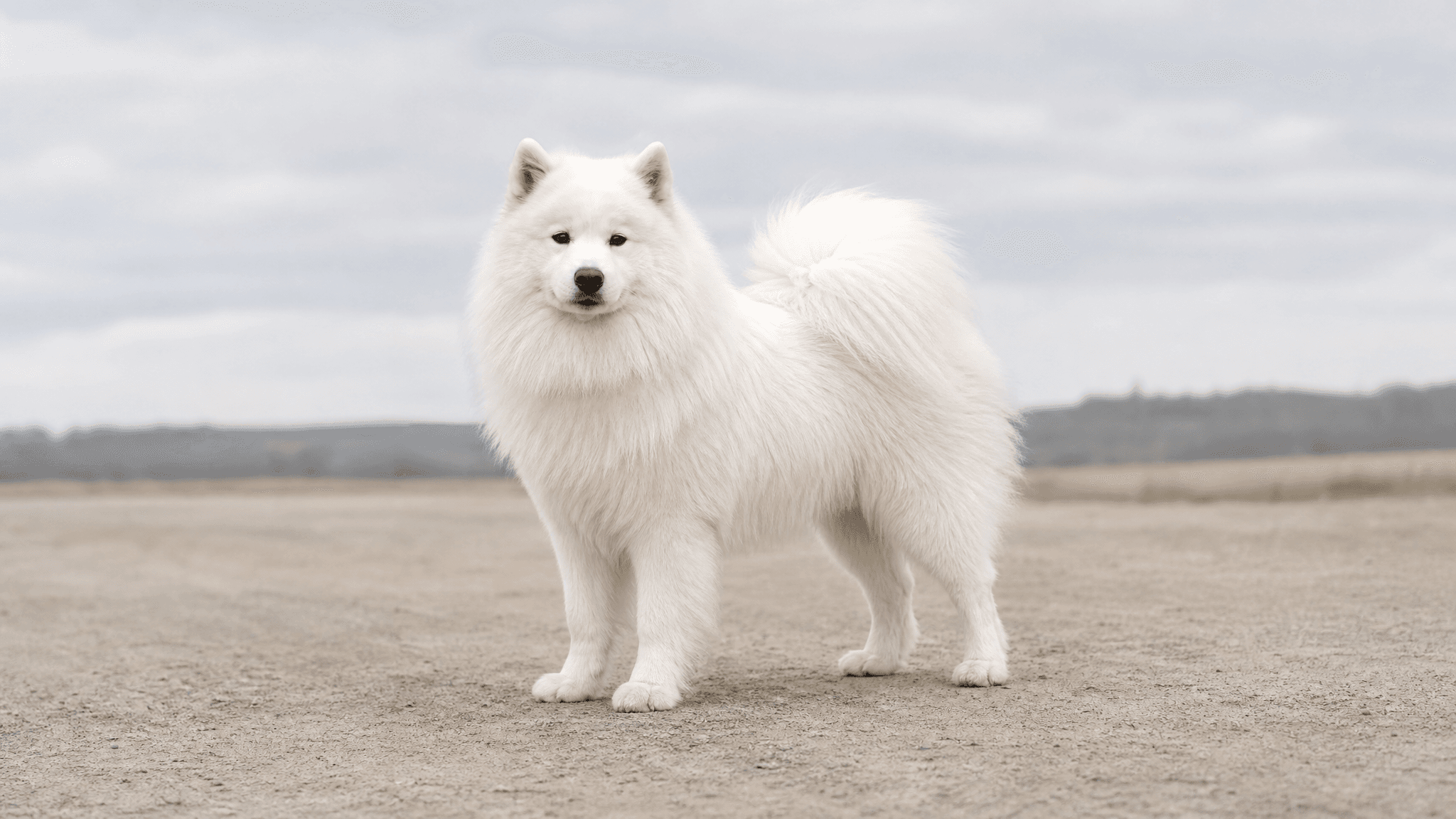
The Samoyed is a stunningly beautiful Arctic dog, bred by the Samoyede people of Siberia to pull sleds, herd reindeer, and hunt. Its white and dense coat protected it from extreme temperatures, and it slept curled up on its owners during cold nights. It is famous for the "Samoyed smile," resulting from the slightly upturned corners of the mouth — an adaptation that prevents ice from forming at the lip commissures.
Physical Characteristics
- Size
- Medium
- Height (male)
- 55–59 cm
- Height (female)
- 51–56 cm
- Weight (male)
- 20–30 kg
- Weight (female)
- 17–25 kg
- Life Expectancy
- 12–14 years
- Coat
- Double and profuse; soft and dense undercoat, long, hard, and straight outer coat, forming a pronounced collar
- Common Colors
- Pure white, white and biscuit, cream, full biscuit
Temperament & Personality
The Samoyed is a gentle, cheerful, and sociable dog, known for its balanced temperament and strong bond with the family. It is playful and loving, but also possesses considerable independence and can be mildly stubborn. It adapts well to families with children and generally gets along well with other animals. It needs constant attention and companionship, as it can develop separation anxiety.
Activity & Exercise
- Energy Level
- High
- Recommended Daily Exercise
- 90–120 minutes
- Suitable for Apartment
- Yes with exercise
Grooming & Care
- Grooming Needs
- High
- Shedding
- Heavy
- Bathing Frequency
- Every 4–6 weeks
Health
- Common Health Issues
- Diabetes mellitus
- Glaucoma
- Hip dysplasia
- Hypothyroidism
- Samoyed syndrome (hereditary nephropathy)
- Recommended Health Tests
- Eye examination
- Hip evaluation
- Kidney screening (genetic test for Samoyed nephropathy)
Compatibility
- With Children
- Excellent
- With Other Dogs
- Excellent
- With Cats
- Good
- For First-Time Owners
- Acceptable
Is a Samoyed right for you?
A Samoyed may suit you if:
- You are prepared to provide 90-120 minutes of daily exercise and engaging mental challenges for a high-energy dog.
- You enjoy an active outdoor lifestyle, including activities like hiking, sledding, or canine sports where your dog can participate.
- You appreciate a gentle, cheerful, and sociable companion who forms a strong, loving bond with your family.
- You are committed to consistent, positive training methods to guide a playful and sometimes independent spirit.
- You are ready for high grooming needs, including regular brushing of a profuse double coat to manage heavy shedding.
- You are willing to manage a dog that thrives on constant attention and companionship, adapting well to family life.
Think twice if:
- You expect unwavering obedience from a dog, as Samoyeds possess considerable independence and can be mildly stubborn.
- You have a routine that requires leaving a dog alone for long periods, as Samoyeds can develop separation anxiety.
- You are not prepared to actively supervise a playful, medium-sized dog around very small children or delicate pets.
- You are unwilling to commit to daily exercise of 90-120 minutes or the extensive grooming a Samoyed's coat demands.
- You lack access to secure, spacious outdoor areas or a large yard, as Samoyeds need room to play and explore safely.
- You are not prepared for managing a strong, medium-sized dog during its energetic adolescent phase, requiring consistent guidance.
Living with a Samoyed is a truly rewarding experience, offering boundless joy and a loyal, loving companion. However, their stunning beauty and cheerful disposition come with significant commitments. They thrive on companionship and activity, requiring dedicated time for exercise, grooming, and training. Embracing their independent spirit and high needs will ensure a happy, well-adjusted Samoyed and a deeply cherished bond for their 12-14 year lifespan.
Training a Samoyed
Your Samoyed is a bright, sociable companion eager to please, but their independent spirit and history as working dogs mean training requires patience and consistency. They thrive on positive reinforcement, praise, and tasty treats, making short, fun, and engaging sessions highly effective. Avoid repetitive drills or harsh corrections, as these can quickly lead to boredom, stubbornness, or a shutdown in your sensitive friend. Building a strong, trusting bond is key; without it, their independent nature can make them less inclined to cooperate, and they may struggle to focus if they feel disconnected or misunderstood.
Begin with:
- Responding to name around distractions
- Reliable recall on a long line
- Loose-leash walking manners
- Leave it and drop it cues
- Calm greetings without jumping
- Settling on a mat or bed
- Cooperative handling for grooming
- Waiting patiently at doors
Recall and prey drive
Samoyeds, with their heritage as hunting and sledding dogs, often possess a strong independent streak and a keen prey drive. This can make recall a significant challenge, especially when there are exciting distractions like squirrels or other moving objects. Start recall training in a quiet environment and gradually introduce distractions, always making coming back to you the most rewarding experience. Use a long line for safety during early outdoor training to prevent them from practicing ignoring you.
Consistency and high-value rewards are crucial. Practice regularly, even when you don't "need" them to come, so it becomes a habit. Remember, a reliable recall is a life-saving skill for your Samoyed, who might otherwise follow their instincts into danger. Our guide on teaching recall can help.
Pulling on the leash
Given their history as sled dogs, Samoyeds are naturally strong and eager to pull, which can make loose-leash walking a real test of patience. Their medium size and strength mean they can easily pull an unprepared owner off balance. Start training early with positive reinforcement, rewarding every step taken on a loose leash. Avoid letting them pull you forward, as this only reinforces the behavior.
Consider using a front-clip harness, which redirects their pulling energy back towards you, making it harder for them to pull effectively. Consistency across all family members is vital, and remember that their high energy level (requiring 90-120 minutes of exercise daily) means they need plenty of opportunities to burn off steam before or after training sessions. This guide can help you stop leash pulling.
Boredom and anxiety
Samoyeds thrive on companionship and mental stimulation; they are known to develop strong bonds with their families and can suffer from separation anxiety if left alone too often or for too long. Their high energy level also means that under-exercised or under-stimulated Samoyeds can become destructive or vocal, finding their own (often undesirable) ways to entertain themselves. Ensure they receive their recommended 90-120 minutes of daily exercise, split into varied activities like walks, playtime, and training sessions.
Provide plenty of interactive toys, puzzle feeders, and regular training to keep their intelligent minds engaged. If your Samoyed shows signs of distress when you leave, such as excessive barking, destructive chewing, or inappropriate urination, it's important to address the underlying anxiety with a consistent routine and gradual desensitization. Recognizing the signs of stress is the first step.
Samoyed — Frequently Asked Questions
Do Samoyeds shed a lot?
Yes — Samoyeds are heavy shedders year-round and shed even more heavily twice a year during seasonal coat blows. Their thick double coat produces large amounts of fluffy white fur, which settles on furniture, clothing, and floors. Daily brushing is essential, and a de-shedding brush during blowouts is a lifesaver. Many owners joke that tumbleweeds of Samoyed fur are simply a permanent home accessory.
Are Samoyeds good family dogs?
Samoyeds are excellent family dogs — they are gentle, affectionate, and famously good with children of all ages. Their playful nature makes them wonderful companions for active kids, and their patience means they rarely snap. They thrive on human company and do not do well when left alone for long stretches. Samoyeds are also sociable with other dogs, making multi-pet households a great fit.
Are Samoyeds difficult to train?
Samoyeds are intelligent but can be stubborn and independent, which makes training a challenge without the right approach. They were bred to make decisions autonomously in the Arctic, so they don't automatically defer to humans. Positive reinforcement works best — they respond poorly to harsh corrections and shut down quickly if pressured. Keep sessions short, fun, and varied. Early socialisation and puppy classes are highly recommended.
Do Samoyeds bark a lot?
Samoyeds are known for being vocal dogs. They bark, howl, and "talk" to communicate — a trait that stems from their working dog heritage, where they alerted sledders to hazards and kept in contact with the pack. While charming to Samoyed lovers, the noise can be an issue in apartments or with sensitive neighbours. Training a quiet command early and ensuring adequate exercise helps manage barking significantly.
How much exercise does a Samoyed need?
Samoyeds need 1–2 hours of exercise daily. They were bred to run hundreds of miles pulling sleds, so they have substantial energy reserves. Long walks, hiking, and off-leash play in a secure area are all excellent options. They excel at dog sports like agility and sledding. Without adequate exercise, they become bored and destructive. Cold weather is no obstacle — they thrive in it — but avoid vigorous exercise in hot, humid conditions.
Are Samoyeds good in warm climates?
Samoyeds can struggle in hot climates. Their thick double coat insulates them extremely well — a blessing in the Arctic, but a challenge when temperatures rise. In warm regions, they need air conditioning, shade, and access to cool water at all times. Exercise should be limited to early morning and evening when it's cooler. Never shave a Samoyed's coat — the double coat actually provides insulation against heat as well as cold. Regular grooming to remove dead undercoat helps airflow.
What health problems do Samoyeds commonly have?
Samoyeds are generally healthy but have breed-specific predispositions. Samoyed Hereditary Glomerulopathy (SHG) is a serious kidney disease that affects males fatally and females more mildly — a DNA test can identify carriers. Hip dysplasia is common, so look for OFA-certified parents. Progressive Retinal Atrophy (PRA) can cause blindness. Samoyeds are also prone to hypothyroidism and diabetes. Choose a responsible breeder who screens for these conditions.
How long do Samoyeds live?
Samoyeds have an average lifespan of 12–14 years, which is relatively long for a medium-to-large breed. Good nutrition, regular exercise, annual vet check-ups, dental care, and avoiding obesity all contribute to a long, healthy life. Genetic screening for hereditary conditions like SHG and PRA in breeding lines has helped improve longevity over generations. Many Samoyeds remain active and playful well into their senior years.
Community
Talk to real Samoyed owners
This guide covers the breed on paper. In the app, the Samoyed community covers it in real life: photos from other owners, questions answered by people who live with the breed, and a directory of dogs you can browse.
- Photos & pollsSee what Samoyed owners are sharing today.
- Questions & answersAsk anything and hear from people who own one.
- Dog directoryBrowse Samoyeds from around the world.
You join automatically when you add a Samoyed to your profile.