Russian Black Terrier
Summary
The Russian Black Terrier is a Soviet creation from the 1940s–1950s, developed at the "Red Star" military kennel on the outskirts of Moscow. The goal was to create the ideal working dog for the Soviet armed forces: large, powerful, intelligent, cold-resistant, and with exceptional guarding instincts. To achieve this, approximately 17 different breeds were crossed, including the Giant Schnauzer, the Airedale Terrier, the Rottweiler, and the Newfoundland.
Physical Characteristics
- Size
- Large
- Height (male)
- 72–76 cm
- Height (female)
- 68–72 cm
- Weight (male)
- 50–60 kg
- Weight (female)
- 45–50 kg
- Life Expectancy
- 10–12 years
- Coat
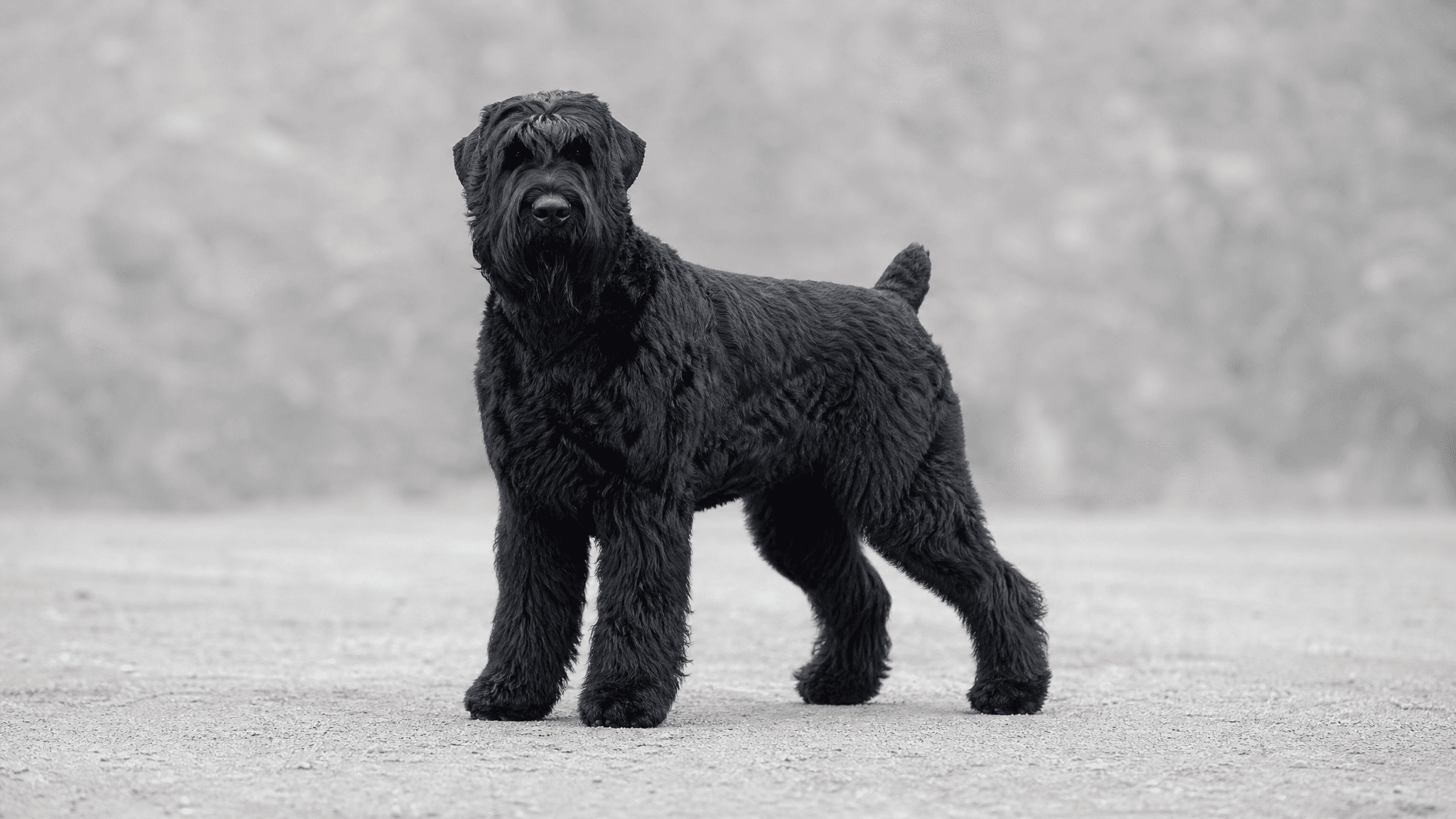
- Rough, dense, slightly wavy, with characteristic eyebrows and whiskers
- Common Colors
- Black (dominant colour; some variations with scattered grey hairs are tolerated)
Temperament & Personality
The Russian Black Terrier is a dog of balanced temperament, confident, and with strong guarding instincts. It is very loyal to its family and calm within the home, but reacts decisively when it perceives a threat. It needs intensive early socialisation to prevent its natural suspicion from becoming excessive. It is intelligent and learns quickly, but its independence requires an experienced and firm owner.
Activity & Exercise
- Energy Level
- High
- Recommended Daily Exercise
- 90–120 minutes
- Suitable for Apartment
- Not recommended
Grooming & Care
- Grooming Needs
- High
- Shedding
- Minimal
- Bathing Frequency
- Every 4–6 weeks
Health
- Common Health Issues
- Ear infections
- Hip and elbow dysplasia
- Progressive retinal atrophy (PRA)
- Recommended Health Tests
- Eye examination
- Hip and elbow X-rays
Compatibility
- With Children
- Good
- With Other Dogs
- Moderate
- With Cats
- Moderate
- For First-Time Owners
- Not recommended
Is a Russian Black Terrier right for you?
A Russian Black Terrier may suit you if:
- You are prepared to provide 90 to 120 minutes of vigorous exercise and engaging mental challenges daily.
- You enjoy an active lifestyle that includes consistent training and purposeful activities to channel their intelligence.
- You appreciate a confident, loyal companion with strong protective instincts who is calm and watchful in their home.
- You are committed to consistent, experienced training and early, intensive socialization to shape their independent nature.
- You are prepared for regular, detailed grooming to maintain their distinctive rough coat, including brushing and occasional professional trims.
- You are ready to manage and guide their natural guarding instincts, ensuring they develop into a well-adjusted protector.
Think twice if:
- You expect a dog that is always eager to please and will unquestioningly follow every command without independent thought.
- You have a routine that frequently leaves a large, high-energy dog alone for extended periods without companionship.
- You are unwilling to commit to extensive early socialization to ensure harmonious interactions with other pets or unfamiliar children.
- You are not prepared for the significant daily commitment required for their extensive exercise and rigorous grooming needs.
- You live in an apartment or do not have a securely fenced, spacious outdoor area for a large, powerful breed.
- You are a first-time dog owner or lack confidence in handling a strong, independent, and potentially stubborn adolescent.
Bringing a Russian Black Terrier into your life is a profound commitment to a loyal, protective companion. While calm and devoted within the home, their strong guarding instincts and independent nature demand consistent, experienced guidance. They offer immense love and security to the right family, but thrive only when their significant needs for exercise, training, and socialization are fully met.
Training a Russian Black Terrier
Training a Russian Black Terrier is a rewarding journey, as these intelligent dogs learn quickly and are deeply loyal to their families. They thrive on positive reinforcement and clear, consistent guidance, responding best to engaging, short training sessions that prevent boredom and keep their keen minds active. Given their independent nature and strong guarding instincts, an experienced and consistent handler is essential. If training lacks structure or consistency, their natural suspicion can become excessive, and their independence may lead to a lack of cooperation, making early socialization and clear boundaries paramount for a well-adjusted companion.
Begin with:
- Attention and response to name around distractions
- Recall on a long line
- Loose-leash walking
- Leave it and drop it
- Calm greetings without jumping
- Settling on a mat or bed
- Cooperative handling for grooming, ears, feet and teeth
- Waiting at doors and gates
Guarding Instincts and Suspicion
Russian Black Terriers possess strong guarding instincts and a natural suspicion of strangers, which, if not managed, can derail training and lead to reactivity. Early and intensive socialization is absolutely crucial for this breed, starting from puppyhood. Introduce your puppy to a wide variety of people, places, sounds, and other well-behaved dogs in a positive and controlled manner.
Focus on teaching your dog appropriate responses to new stimuli, rewarding calm and confident behaviour. Instead of trying to suppress their natural protective nature, channel it by teaching them to alert you without becoming aggressive. If you notice signs of reactivity, our guide on training a reactive dog can offer valuable insights.
Leash Manners and Strength
Given their large size and considerable strength, a Russian Black Terrier who pulls on the leash can quickly become unmanageable. It's vital to establish excellent loose-leash walking habits from a young age. Use a comfortable, well-fitting harness that discourages pulling and practice in low-distraction environments before gradually increasing the challenge.
Consistency is paramount; every walk is a training opportunity. Reward your dog frequently for walking calmly by your side, and immediately stop moving if they start to pull. For detailed guidance on this, check out our article on how to stop a puppy pulling on the leash.
Boredom and Destructive Habits
A Russian Black Terrier with high energy and an intelligent mind requires significant physical and mental stimulation. If they don't receive their recommended 90–120 minutes of daily exercise and engaging activities, they can easily become bored, leading to destructive behaviours like chewing, excessive barking, or digging. Remember, this breed is not recommended for apartment living precisely because of these needs.
Beyond physical walks, incorporate puzzle toys, scent work, and training games to challenge their intellect. Ensure they have appropriate chew toys and a designated safe space. Tracking your walks with our GPS Walks feature can help you ensure your robust companion is getting enough activity.
Russian Black Terrier — Frequently Asked Questions
What is the Russkiy Tchiorny Terrier (Russian Black Terrier)?
The Russkiy Tchiorny Terrier, often called the Russian Black Terrier, is a magnificent and powerful breed originating from Russia. Developed in the Soviet Union during the 1940s–1950s at the "Red Star" military kennel, its purpose was to create the ultimate working dog. They belong to FCI Group 2 (Tchiorny Terrier) and are known for their large size, robust build, and striking black coat. These dogs possess a balanced temperament, exuding confidence and strong guarding instincts, making them truly impressive companions.
What was the Russkiy Tchiorny Terrier (Russian Black Terrier) originally bred for?
The Russian Black Terrier was originally conceived as the ideal working dog for the Soviet armed forces. The ambitious goal was to develop a breed that was large, powerful, highly intelligent, resistant to cold climates, and possessed exceptional guarding instincts. To achieve this formidable combination, approximately 17 different breeds were carefully crossed, including notable ancestors like the Giant Schnauzer, Airedale Terrier, Rottweiler, and Newfoundland. This meticulous breeding program resulted in a dog perfectly suited for demanding military roles and protection duties.
How much exercise does a Russkiy Tchiorny Terrier (Russian Black Terrier) need?
As a large breed with a high energy level, the Russkiy Tchiorny Terrier requires a significant amount of daily exercise to stay happy and healthy. We recommend providing them with 90–120 minutes of physical activity each day. This isn't just about physical exertion; it's also crucial for their mental well-being. Regular walks, playtime in a securely fenced yard, and engaging in dog sports or training activities will help channel their energy positively and prevent boredom, ensuring they remain well-behaved and content companions.
Is the Russkiy Tchiorny Terrier (Russian Black Terrier) a good family dog?
The Russkiy Tchiorny Terrier can be a wonderful family dog, provided they receive intensive early socialization. They are incredibly loyal to their family and typically calm within the home, but their strong guarding instincts mean they react decisively when they perceive a threat. To ensure they are comfortable and safe around children and other pets, it's vital to introduce them gently and supervise all interactions. With proper training and socialization from a young age, their natural suspicion can be managed, allowing them to be protective yet gentle family members.
Is the Russkiy Tchiorny Terrier (Russian Black Terrier) easy to train?
The Russkiy Tchiorny Terrier is an intelligent breed that learns quickly, making them quite capable of mastering commands and tasks. However, their independent nature means they thrive best with an experienced and firm owner who can provide consistent leadership. Early and intensive socialization is absolutely key to shaping their temperament, preventing their natural suspicion from becoming excessive. While they are eager to please their family, their strong will requires a confident and patient approach to training, ensuring they grow into well-adjusted and obedient companions.
What health issues are common in the Russkiy Tchiorny Terrier (Russian Black Terrier)?
Like all breeds, the Russkiy Tchiorny Terrier can be prone to certain health conditions, and being aware of these can help you provide the best care. Documented health concerns for the breed include ear infections, which can often be managed with regular cleaning and veterinary attention. They can also be susceptible to hip and elbow dysplasia, common in many large breeds, and progressive retinal atrophy (PRA), an eye condition. Choosing a reputable breeder who screens their dogs for these issues is a wonderful step towards ensuring a healthy start for your furry friend.
What is the Russkiy Tchiorny Terrier (Russian Black Terrier)'s coat like and how much grooming does it need?
The Russkiy Tchiorny Terrier boasts a dense, coarse, and protective double coat, perfectly suited for colder climates. This impressive coat requires regular and consistent grooming to keep it healthy and free of mats. We recommend daily brushing to remove loose hair and prevent tangles, especially in their longer furnishings. Additionally, professional grooming for trimming or stripping every few months is essential to maintain the coat's condition and the breed's distinctive appearance. Regular grooming sessions are also a great bonding opportunity with your loyal companion!
What is the typical lifespan of a Russkiy Tchiorny Terrier (Russian Black Terrier)?
The typical lifespan for a Russkiy Tchiorny Terrier is generally between 10–12 years. Providing your Black Terrier with a loving home, a high-quality diet, regular veterinary check-ups, and plenty of exercise and mental stimulation will contribute significantly to them living a full and happy life. These wonderful companions thrive on being an integral part of their family, and with devoted care, you can look forward to many joyful years together with your loyal and protective friend.
Community
Talk to real Russian Black Terrier owners
This guide covers the breed on paper. In the app, the Russian Black Terrier community covers it in real life: photos from other owners, questions answered by people who live with the breed, and a directory of dogs you can browse.
- Photos & pollsSee what Russian Black Terrier owners are sharing today.
- Questions & answersAsk anything and hear from people who own one.
- Dog directoryBrowse Russian Black Terriers from around the world.
You join automatically when you add a Russian Black Terrier to your profile.