Miniature Pinscher
Summary
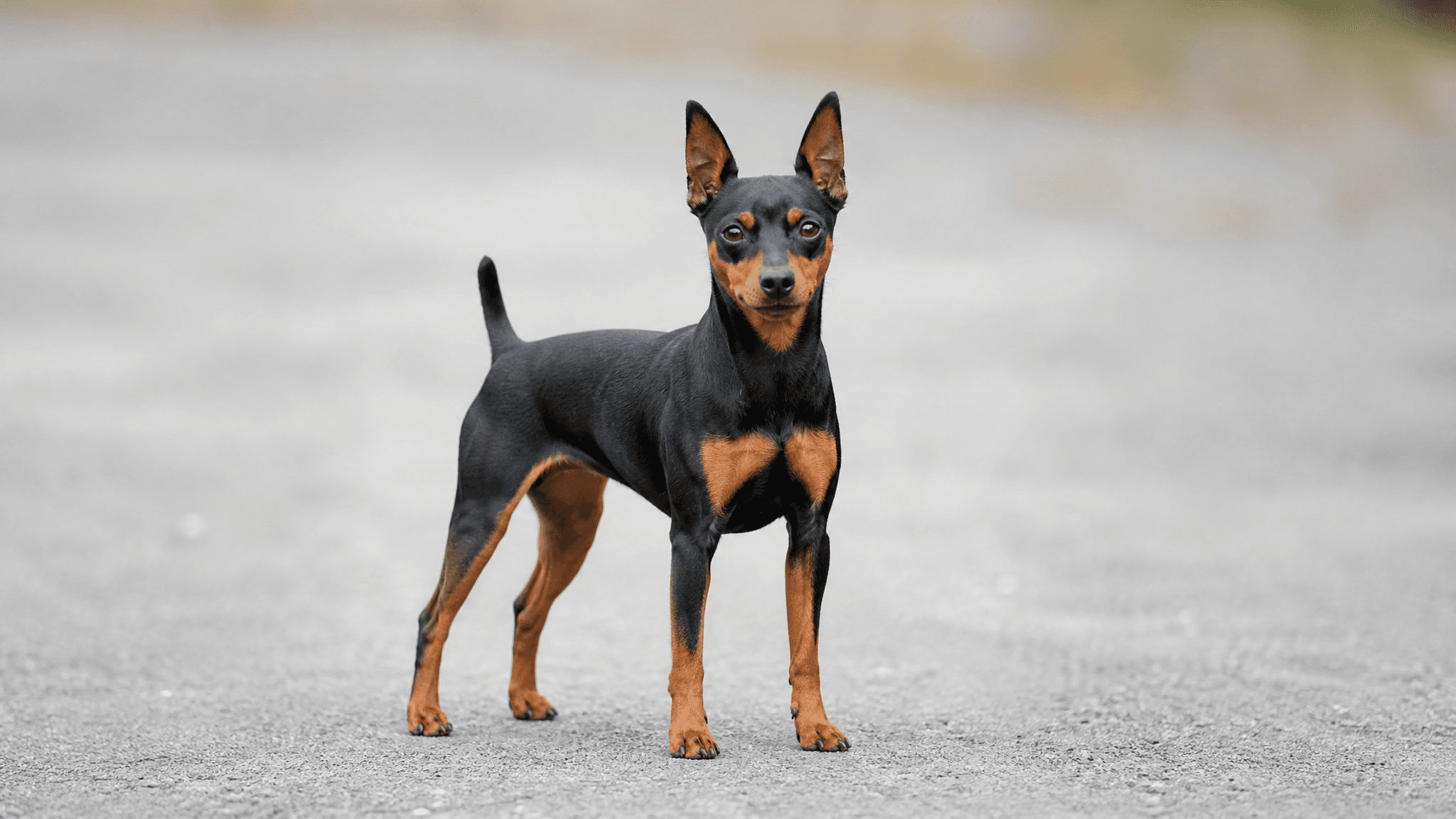
Despite resembling a miniature Dobermann, the Miniature Pinscher is a much older breed with no direct relation to the Dobermann. Bred in Germany at least two centuries ago, it was originally used to hunt rats in stables. Today it is a popular companion worldwide, appreciated for its enormous personality enclosed in a small body.
Physical Characteristics
- Size
- Small
- Height (male)
- 25–30 cm
- Height (female)
- 25–30 cm
- Weight (male)
- 4–6 kg
- Weight (female)
- 4–6 kg
- Life Expectancy
- 12–16 years
- Coat
- Short, dense, smooth, and glossy
- Common Colors
- Black with rust markings, solid reddish-brown, chocolate with markings
Temperament & Personality
The Miniature Pinscher is frequently described as "the King of Toys" — a dog full of confidence, energy, and determination that doesn't seem aware of its small size. It is extremely curious and active, loves exploring and playing, and has a natural tendency to escape through any opening it finds. With its family, it is very affectionate and protective.
Activity & Exercise
- Energy Level
- Very high
- Recommended Daily Exercise
- 45–60 minutes
- Suitable for Apartment
- Yes
Grooming & Care
- Grooming Needs
- Low
- Shedding
- Moderate
- Bathing Frequency
- Every 4–6 weeks
Health
- Common Health Issues
- Dental problems (incomplete dentition in the hairless variety due to genetic linkage)
- Heart problems (murmurs)
- Hypoglycemia
- Legg-Calvé-Perthes disease
- Patellar luxation
- Recommended Health Tests
- Cardiac examination
- Orthopedic screening
- Patella evaluation
Compatibility
- With Children
- Moderate
- With Other Dogs
- Moderate
- With Cats
- Moderate
- For First-Time Owners
- Acceptable
Is a Miniature Pinscher right for you?
A Miniature Pinscher may suit you if:
- You are ready to provide 45-60 minutes of daily exercise and engaging mental challenges for a very high-energy companion.
- You enjoy an active lifestyle, including exploring new places, which this curious and playful breed will adore.
- You appreciate a confident, determined, and affectionate "King of Toys" personality in a small, protective package.
- You are prepared for consistent, positive training to channel this breed's intelligence and strong will effectively.
- You appreciate a low-maintenance grooming routine for their short coat, despite moderate shedding.
- You are prepared to manage a natural tendency to escape by ensuring secure boundaries for your curious explorer.
Think twice if:
- You expect a highly biddable dog that will always prioritize obedience over its own determined will.
- You frequently leave pets alone for long periods, as this active and family-oriented breed needs companionship.
- You have very young children or other small, fragile pets who might not appreciate a confident, energetic "King of Toys."
- You are unwilling to commit to 45-60 minutes of daily vigorous exercise for a dog with very high energy.
- You live in an unsecured environment where a determined explorer could easily find an escape route.
- You are not prepared to provide consistent, firm, yet positive guidance to a dog with a strong personality.
Living with a Miniature Pinscher is a vibrant dance between their small stature and their enormous, confident personality. They are truly the "King of Toys," offering endless affection and entertainment, but they thrive with an owner who appreciates their spirited independence and is ready to consistently guide their curious, energetic nature. This breed demands engagement, rewarding dedicated families with unwavering loyalty and joy for 12-16 years.
Training a Miniature Pinscher
Miniature Pinschers are bright, confident little dogs who thrive on engaging, positive reinforcement training. Their very high energy, intense curiosity, and love for play mean short, fun sessions with high-value treats and toys will yield the best results. They are not dogs to be intimidated; harsh corrections or inconsistent training will quickly lead to a frustrated, stubborn, and potentially evasive learner. Keep it upbeat, fair, and rewarding, and your Min Pin will eagerly participate, showing off their enormous personality.
Begin with:
- attention to name around distractions
- recall on a long line
- loose-leash walking
- leave it and drop it
- calm greetings without jumping
- settling on a mat or bed
- cooperative handling for grooming, ears, feet and teeth
- waiting at doors and gates
Prey drive and recall
The Min Pin's history as a rat hunter, combined with its natural curiosity and determination, gives it a strong prey drive. This means squirrels, birds, and even blowing leaves can be irresistible distractions, making recall a significant challenge. Start recall training in a quiet, enclosed area, making coming back to you the most exciting thing ever with high-value treats and enthusiastic praise.
Gradually introduce distractions, always using a long line in open spaces until their recall is rock-solid. Consistency and making yourself more rewarding than any potential 'prey' are key to overcoming this instinct. For comprehensive guidance, explore our guide on teaching recall.
Leash manners
Despite their small size (4-6 kg), Miniature Pinschers possess immense energy and determination, often leading to enthusiastic leash pulling. They are full of confidence and don't seem to realize they're small! Begin training loose-leash walking early, using positive reinforcement to reward walking calmly by your side. Avoid pulling back or yanking, as this can make them pull harder and become more resistant.
Short, frequent practice sessions in low-distraction environments are best. Focus on rewarding every moment they walk with a loose leash. For more detailed guidance on achieving pleasant walks, check out our guide on stopping leash pulling.
Boredom and escape
A Min Pin's very high energy, intelligent, and curious nature means they require consistent mental and physical stimulation. If under-exercised or left alone for too long, they can become bored, leading to destructive chewing, excessive barking, or even attempts to escape through any opening they find. They have a natural tendency to escape!
Ensure your Min Pin gets their recommended 45-60 minutes of daily exercise, split into engaging activities like vigorous play, walks, and training sessions. Provide puzzle toys and enrichment activities when you can't be actively supervising to keep their clever minds busy. Learning to recognize signs of stress when left alone can also help you adjust their routine.
Miniature Pinscher — Frequently Asked Questions
Is the Miniature Pinscher related to the Dobermann?
Despite their striking visual similarity, the Miniature Pinscher is not a miniature version of the Dobermann. The Min Pin is actually the older breed — it was developed in Germany centuries before the Dobermann was created. The Min Pin is believed to have been bred from the German Pinscher (its close ancestor), Italian Greyhound, and Dachshund. The Dobermann, created in the late 1800s, likely used the German Pinscher in its own creation. So if anything, the relationship is more akin to distant cousins sharing a common ancestor — the Dobermann is not the 'big version' of the Min Pin.
What is the Miniature Pinscher's personality like?
The Miniature Pinscher is self-described by their official standard as the 'King of Toys' — and with good reason. They are fearless, energetic, high-spirited, and extraordinarily self-confident for their size. They have enormous personality packed into a compact frame — alert, curious, always on the move, and with an entertainingly commanding presence. They are loyal to their family but can be reserved with strangers. They tend to be bold and stubborn — they don't know they're small — which makes them both endearing and occasionally exasperating. They thrive on attention and engagement.
Are Miniature Pinschers easy to train?
Miniature Pinschers are intelligent but stubborn and independent. They pick up concepts quickly but then decide whether they want to execute them — a classic Min Pin response. They respond best to positive, food-motivated training in short, engaging sessions. Repetitive drills bore them instantly. Their stubbornness means you need patience and creativity to maintain their interest. Harsh methods cause them to shut down or dig in harder. Housetraining can be a notable challenge — consistency and a dedicated routine are essential. With patient, positive training, Min Pins can achieve solid obedience, but they'll always retain their independent streak.
Are Miniature Pinschers good for apartment living?
Miniature Pinschers are surprisingly well-suited to apartment living given their small size and manageable exercise requirements. Their exercise needs can be largely met with indoor play, daily walks, and interactive games. However, they are alert, vocal dogs that will bark at unfamiliar sounds and people — this requires training management for apartment settings. They are escape artists — Min Pins can squeeze through small gaps, climb surprisingly high, and jump further than you'd expect. A secure environment with careful supervision, especially outdoors, is essential regardless of living situation.
What health issues affect Miniature Pinschers?
Miniature Pinschers are generally hardy, but have some documented concerns. Patellar luxation (slipping kneecap) is common in small breeds — grading by a vet and avoiding high-impact jumping helps reduce risk. Progressive Retinal Atrophy (PRA) can lead to blindness — DNA testing is available. Legg-Calvé-Perthes Disease (degeneration of the femoral head) occurs in some individuals. Hypothyroidism and Mucopolysaccharidosis VI (MPS VI) — a rare metabolic storage disease — have been documented. Regular vet check-ups, dental care (small breeds are prone to dental disease), and weight management are important.
Do Miniature Pinschers get along with children and other pets?
Miniature Pinschers are generally better suited to families with older children. Their small, fragile build makes them vulnerable to accidental injury from rough handling by young children. They also have a snappy temperament and may bite if teased, grabbed, or startled. Older children who understand gentle handling are a much better match. With other pets, Min Pins can be surprisingly dog-social if well-socialised, but their bold, dominant attitude can cause friction with larger dogs. Their prey drive means smaller animals — mice, hamsters, rabbits — are at risk and should be kept separate.
How long do Miniature Pinschers live?
Miniature Pinschers have an excellent average lifespan of 12–16 years, which is typical for a small, robust breed. Key longevity factors include regular exercise (keeping them lean and mentally engaged), maintaining a healthy weight, dental care (critical for small breeds, where periodontal disease significantly impacts health and longevity), regular vet check-ups including patellar assessment and eye testing, protecting them from falls and high-impact injuries given their small frame, and sourcing from responsible breeders who screen for known hereditary conditions.
How much exercise does a Miniature Pinscher need?
Despite their small size, Miniature Pinschers are energetic dogs that need about 45–60 minutes of daily exercise. They love to run, play, and explore — they have a quick, animated movement style and are always on alert. Two moderate walks daily plus indoor play sessions, interactive toys, and training activities keep them satisfied. Their bold, curious nature means off-leash exercise must be in a fully secure area — they will chase anything that moves and are indifferent to traffic. Mental stimulation is equally important; a bored Min Pin will find mischief in surprisingly creative ways.
Community
Talk to real Miniature Pinscher owners
This guide covers the breed on paper. In the app, the Miniature Pinscher community covers it in real life: photos from other owners, questions answered by people who live with the breed, and a directory of dogs you can browse.
- Photos & pollsSee what Miniature Pinscher owners are sharing today.
- Questions & answersAsk anything and hear from people who own one.
- Dog directoryBrowse Miniature Pinschers from around the world.
You join automatically when you add a Miniature Pinscher to your profile.