Affenpinscher
Summary
The Affenpinscher is one of the oldest breeds in Germany, with references dating back to the 17th century. Its name literally means "Monkey Pinscher" in German, a reference to its flat face and peculiar expression that immediately catches the eye. Originally bred to hunt rats in kitchens and stables, it quickly became a highly prized companion among the ladies of the European bourgeoisie.
Physical Characteristics
- Size
- Small
- Height (male)
- 23–30 cm
- Height (female)
- 23–30 cm
- Weight (male)
- 3–6 kg
- Weight (female)
- 3–6 kg
- Life Expectancy
- 12–15 years
- Coat
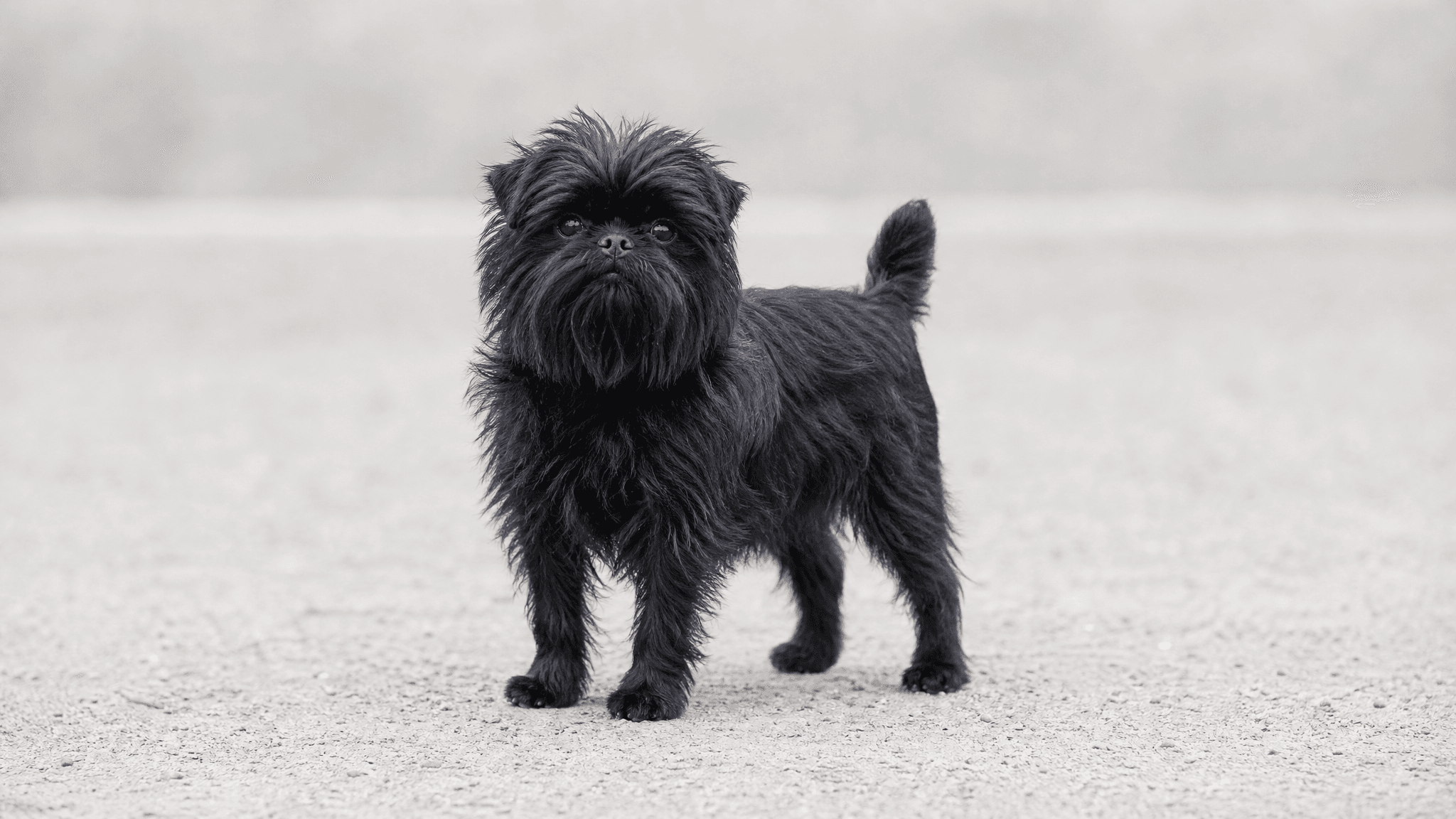
- Rough, hard, and shaggy; forms a sort of mane around the head and shoulders
- Common Colors
- Black (FCI standard); also grey, silver, red, and beige in other organisations
Temperament & Personality
The Affenpinscher has a personality much larger than its body suggests. It is fearless, curious, and full of unintentional humour — its serious expression contrasted with its mischievous behaviour makes anyone laugh. It is very loyal and protective of its family, and can be quite territorial and vocal when it senses something unusual. It learns well, but its stubbornness requires patience.
Activity & Exercise
- Energy Level
- High
- Recommended Daily Exercise
- 30–45 minutes
- Suitable for Apartment
- Yes
Grooming & Care
- Grooming Needs
- Moderate
- Shedding
- Minimal
- Bathing Frequency
- Every 4–6 weeks
Health
- Common Health Issues
- Brachycephalic syndrome (severe respiratory problems)
- Eye anomalies
- Heart problems (murmurs)
- Patellar luxation
- Recommended Health Tests
- Cardiac examination
- Eye examination
- Patella evaluation
Compatibility
- With Children
- Moderate
- With Other Dogs
- Good
- With Cats
- Good
- For First-Time Owners
- Acceptable
Is an Affenpinscher right for you?
An Affenpinscher may suit you if:
- You enjoy engaging with a high-energy companion who thrives on 30-45 minutes of daily activity and mental games.
- You appreciate a charming, compact companion who fits well into apartment living and enjoys being a central part of family life.
- You are drawn to a dog with a big personality, full of fearless curiosity and a mischievous, humorous spirit.
- You are prepared to invest patient and consistent training to guide a smart but occasionally stubborn learner.
- You are willing to perform moderate grooming to maintain their unique rough, shaggy coat and distinctive 'mane'.
- You can manage a loyal and protective companion who may be vocal when alerting you to new sights or sounds.
Think twice if:
- You expect immediate, unwavering obedience from a dog, as their independent spirit requires consistent effort.
- You have a routine that frequently leaves a dog alone for long periods, as they thrive on companionship.
- You are looking for a dog to be a constant, patient playmate for very young children, as they prefer gentle interactions.
- You are unwilling to commit to 30-45 minutes of daily exercise or regular moderate grooming for their shaggy coat.
- You are not prepared to secure your home and yard, as their small size and curious nature require careful containment.
- You are uncomfortable with a spirited, small dog who needs gentle yet firm handling during their curious phases.
An Affenpinscher brings a vibrant, humorous spirit and fierce loyalty into your home for 12-15 years. While their charming antics and protective nature are endearing, their stubborn streak and vocal tendencies require a patient, consistent owner. Embrace their big personality, and you'll gain a devoted, entertaining companion who fills your life with joy and laughter.
Training an Affenpinscher
Affenpinschers are smart and learn well, but their stubborn streak means you need patience and a good sense of humor! They are motivated by positive reinforcement, especially tasty treats and engaging play. Keep training sessions short, fun, and frequent – a few minutes several times a day works best for their curious minds and high energy. If training becomes repetitive or harsh, your Affenpinscher might decide to use their cleverness elsewhere, becoming less cooperative or even vocalizing their displeasure, so keep it light and rewarding!
Begin with:
- Attention and response to name around distractions
- Recall on a long line
- Loose-leash walking
- Leave it and drop it
- Calm greetings without jumping
- Settling on a mat or bed
- Cooperative handling for grooming, ears, feet and teeth
- Waiting at doors and gates
Prey Drive and Focus
Affenpinschers were originally bred to hunt rats, so their prey drive can be quite strong. This means squirrels, birds, or even leaves blowing in the wind can quickly grab their attention, making recall or focus on walks a challenge. To work with this, practice "look at me" exercises in increasingly distracting environments. Start indoors, then move to your garden, and eventually to quiet outdoor spaces. Keep your Affenpinscher on a long line in unfenced areas to ensure their safety while practicing recall. Reward generously when they choose to focus on you over a distraction. For more help, check out how to teach a reliable recall.
Stubbornness on Leash
Despite their small size (3-6 kg), Affenpinschers have a big personality and can be quite stubborn, especially when they decide they want to investigate something on a walk. This can lead to pulling or planting their feet. Focus on positive reinforcement for loose-leash walking from day one. Use a comfortable harness, not just a collar, to prevent strain on their neck. Change direction frequently when they start to pull, making yourself more interesting than the environment. Consistent, short training bursts will yield better results than long, frustrating sessions. You can find more tips in this guide on stopping leash pulling.
Vocal and Destructive Tendencies
Affenpinschers have high energy and are quite vocal, often barking to alert you to anything unusual. If they don't get their recommended 30-45 minutes of daily exercise and mental stimulation, or if left alone for too long without proper preparation, their clever minds can turn to less desirable activities like excessive barking or chewing. Ensure they have a variety of puzzle toys and chew items to keep them engaged. Teach them a "quiet" cue for barking and reward calm behavior. If you're struggling with specific behaviors, our Behaviour AI feature could help in understanding and working on these.
Affenpinscher — Frequently Asked Questions
What is an Affenpinscher?
The Affenpinscher is a small, compact, terrier-like toy dog from Germany with a history dating back to the 17th century. Their name means 'monkey terrier' in German (Affe = monkey, Pinscher = terrier), referring to their distinctive monkey-like face — a rounded skull, short muzzle, prominent brow, large dark eyes, and often a shaggy beard and moustache. They were originally bred as ratters in kitchens, stables, and shops. They have a thick, rough, harsh coat in black (the most common colour) or other shades. In character they are fearless, confident, curious, loyal, and entertaining — they are described as 'a big dog in a small body.'
Are Affenpinschers good family dogs?
Affenpinschers make entertaining and loyal companions for the right household. They are bold, affectionate with their family, and genuinely entertaining — their monkey-like antics and confident personality make them endlessly amusing. They do best in homes without very young children, as they can be intolerant of rough handling and have a quick, assertive response to perceived threats. They are small enough to be practical but sturdy enough not to be fragile. They can be territorial and stubborn, and may not always get along well with other small animals due to their ratting instinct. They bond deeply with their primary person and can be quite possessive. For adults and older children who understand and respect their terrier-like independence, they are delightful companions.
How much exercise does an Affenpinscher need?
Affenpinschers need moderate exercise — around 30–45 minutes daily. Despite their small size, they are energetic and playful indoors, and enjoy short bursts of activity. Two short daily walks and play sessions satisfy most of their exercise needs. They are not a breed that requires intense athletic activity. Indoor play — chasing toys, tug games, and interactive puzzles — counts meaningfully toward their activity needs. They are small enough that even moderate indoor play provides real exercise. Their small size means they can exercise in smaller spaces, making them practical for apartment living, provided they receive their daily walks. Off-leash exercise should be in secure fenced areas, as their bold terrier confidence can get them into trouble with much larger dogs.
Are Affenpinschers easy to train?
Affenpinschers are intelligent but notoriously independent and stubborn — they are clever enough to understand what you want but confident enough to decide whether they feel like complying. They were bred to make independent decisions while ratting, and this self-determination remains. They respond best to short, positive, food-motivated training sessions that keep them engaged — long repetitive sessions bore them quickly. They need patient, consistent, creative trainers. Basic obedience and house training are achievable with persistence. They are not ideal for owners seeking highly obedient, precision-responsive dogs. Harsh corrections cause them to shut down or become defiant. Early socialisation and consistent, kind training from puppyhood is important to prevent small dog syndrome.
What health issues affect Affenpinschers?
Affenpinschers are generally a robust small breed with some specific health concerns. As a brachycephalic breed (short muzzle), they can experience breathing difficulties in heat or after vigorous exercise. Hip dysplasia and Legg-Calvé-Perthes disease (femoral head degeneration) occur. Patellar luxation (kneecap instability) is common in small breeds. Dental disease — like all small dogs, their crowded teeth are prone to tartar and periodontal disease; regular dental care is essential. Eye conditions including cataracts and progressive retinal atrophy have been noted. Their small size means they are also vulnerable to hypoglycaemia if mealtimes are skipped. Annual vet check-ups and health-tested parents are recommended.
How long do Affenpinschers live?
Affenpinschers have an average lifespan of 12–15 years — excellent for a small breed. Key longevity factors include regular dental care (dental disease is the most common preventable health issue in small dogs — neglected teeth lead to systemic health problems), maintaining a healthy weight (obesity stresses their joints and breathing), annual vet check-ups, protecting them from heat exposure (their short muzzle makes heat dangerous), preventing joint injuries (small dogs can injure themselves jumping from height), and mental stimulation (engaged, active Affenpinschers age well). Their bold, lively spirit means they often remain mentally sharp and physically active well into their senior years.
Do Affenpinschers bark a lot?
Affenpinschers are alert, vocal dogs — they are naturally watchful and will bark to announce visitors, unusual sounds, and perceived threats. Their small size does not diminish their confidence or alertness. They are not constant barkers without reason, but they are definitely not quiet dogs. Their terrier-like boldness means they will bark fearlessly at much larger dogs and strangers. Training to manage barking — particularly 'enough' or 'quiet' commands — is valuable from puppyhood. They make effective alert dogs but are not suitable for environments where quiet is essential. Their vocal nature is part of their personality and should be managed rather than suppressed entirely.
What does an Affenpinscher look like?
The Affenpinscher has a highly distinctive appearance. They are small and square-proportioned, typically standing 23–30 cm tall and weighing 3–6 kg. Their most notable feature is their monkey-like face: a domed, rounded skull, very short muzzle, large, dark, round eyes, and a lower jaw that slightly protrudes. They typically have a shaggy beard and moustache that frames the face. Their ears can be erect, semi-erect, or cropped (in countries where cropping is still practiced). Their coat is harsh, dense, and rough, standing off from the body rather than lying flat, and is usually black — though grey, silver, red, and tan-and-black are also seen. Their tail is carried high, often docked in countries where docking is permitted.
Community
Talk to real Affenpinscher owners
This guide covers the breed on paper. In the app, the Affenpinscher community covers it in real life: photos from other owners, questions answered by people who live with the breed, and a directory of dogs you can browse.
- Photos & pollsSee what Affenpinscher owners are sharing today.
- Questions & answersAsk anything and hear from people who own one.
- Dog directoryBrowse Affenpinschers from around the world.
You join automatically when you add a Affenpinscher to your profile.