Giant Schnauzer
Summary
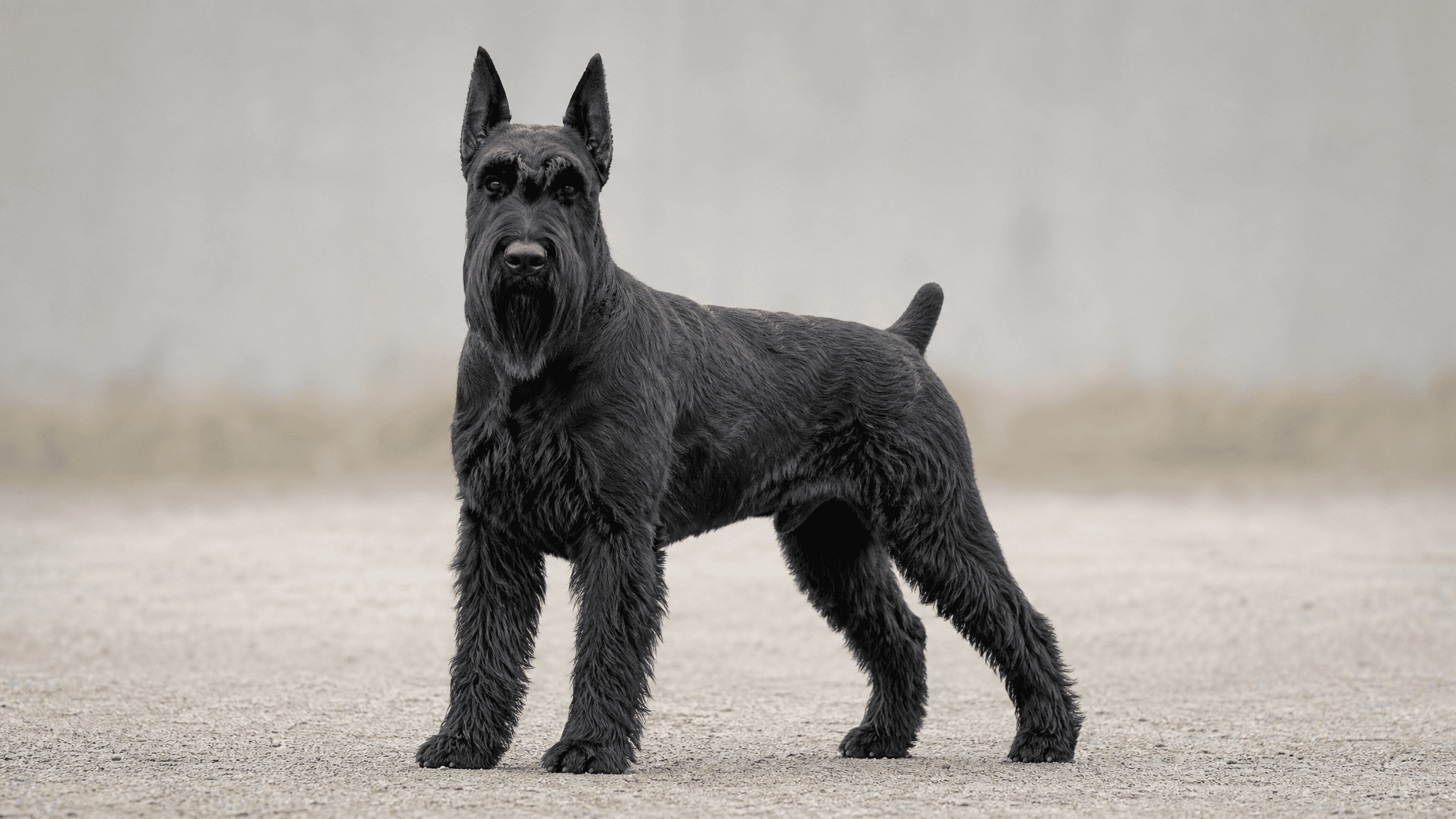
The Giant Schnauzer was developed in Bavaria in the 19th century from the Standard Schnauzer, with crosses with the Bouvier des Flandres and possibly the German Shepherd, to create a larger and more powerful cattle-driving and guard dog. During the world wars, it was widely used as a police and military dog, a role it still performs with distinction in many countries.
Physical Characteristics
- Size
- Large
- Height (male)
- 65–70 cm
- Height (female)
- 60–65 cm
- Weight (male)
- 35–47 kg
- Weight (female)
- 35–47 kg
- Life Expectancy
- 12–15 years
- Coat
- Rough, hard, and dense, with the characteristic whiskers and eyebrows of the Schnauzer family
- Common Colors
- Solid black, pepper-and-salt
Temperament & Personality
The Giant Schnauzer is a working dog par excellence: intelligent, energetic, courageous, and extremely loyal. It needs an experienced owner capable of channelling its physical and mental strength productively. With its family, it is very affectionate and protective, but can be dominant with other dogs. It is one of the breeds most used by European police and security forces precisely because it combines physical power with rare intelligence and ease of training.
Activity & Exercise
- Energy Level
- Very high
- Recommended Daily Exercise
- 120 minutes
- Suitable for Apartment
- Not recommended
Grooming & Care
- Grooming Needs
- High
- Shedding
- Minimal
- Bathing Frequency
- Every 4–6 weeks
Health
- Common Health Issues
- Ear infections
- Epilepsy
- Hip dysplasia
- Hypothyroidism
- Osteochondritis dissecans (OCD)
- Recommended Health Tests
- Eye examination
- Hip radiography
- Thyroid evaluation
Compatibility
- With Children
- Good
- With Other Dogs
- Can be difficult
- With Cats
- Moderate
- For First-Time Owners
- Not recommended
Is a Giant Schnauzer right for you?
A Giant Schnauzer may suit you if:
- You are prepared to provide at least 120 minutes of vigorous exercise daily for your energetic companion.
- You enjoy engaging in advanced training or working dog activities that challenge an intelligent breed.
- You appreciate a loyal, courageous, and protective companion who is deeply affectionate with family.
- You are an experienced owner ready to commit to consistent, firm, and positive training methods.
- You are prepared for high grooming needs, including regular brushing and professional stripping every 4-6 weeks.
- You are willing to manage a naturally dominant personality, especially when interacting with other dogs.
Think twice if:
- You expect a dog to be instantly biddable and easily swayed, as this breed possesses a strong will.
- You have a busy schedule that often leaves a dog alone for long periods, as they thrive on companionship.
- You are seeking a dog that will effortlessly integrate with multiple other dogs or small pets.
- You are unwilling to dedicate significant time daily to exercise or regular, intensive grooming.
- You live in an apartment or small home without ample secure outdoor space for a large, active dog.
- You are a first-time dog owner or prefer a dog that requires minimal physical and mental handling.
Living with a Giant Schnauzer is a rewarding journey for the right family. They offer unparalleled loyalty and protection, yet demand unwavering dedication to their extensive exercise, training, and grooming needs. This intelligent, powerful breed thrives with an experienced owner who embraces their unique spirit and strong will, fostering a truly special bond.
Training a Giant Schnauzer
Giant Schnauzers are incredibly intelligent and loyal working dogs, thriving on purpose and engagement. They learn best through consistent, positive reinforcement, short, fun, and varied training sessions that keep their sharp minds stimulated. Motivation comes from praise, play, and a clear understanding of expectations. If training is inconsistent, lacks clear leadership, or doesn't provide enough mental and physical outlets, these energetic dogs can develop undesirable behaviors like stubbornness, reactivity, or destructive habits. An experienced owner is key to harnessing their impressive capabilities.
Begin with:
- Attention to name around distractions
- Recall on a long line
- Loose-leash walking
- Leave it and drop it
- Calm greetings without jumping
- Settling on a mat or bed
- Cooperative handling for grooming
- Waiting at doors and gates
Managing Strong Drives
Giant Schnauzers are working dogs with strong instincts, including guarding and a keen prey drive, stemming from their cattle-driving and police dog heritage. This high drive, combined with their potential for dominance with other dogs, means early and consistent socialization is paramount.
Channel their energy positively through structured activities like obedience, agility, or scent work. Always supervise interactions with other dogs and continue positive exposure to various environments and people to help them become well-adjusted companions.
Loose-Leash Walking
A Giant Schnauzer's size and strength (up to 47 kg) can make pulling on the leash a significant challenge, especially given their very high energy levels. It's crucial to teach loose-leash walking from puppyhood, establishing good habits before their strength becomes overwhelming.
Use a front-clip harness for better control and reward your Schnauzer frequently for walking calmly by your side. Practice in low-distraction areas first, gradually increasing difficulty. For more in-depth guidance, check out our guide on stopping leash pulling.
Preventing Undesired Behavior
Giant Schnauzers require a minimum of 120 minutes of daily exercise and significant mental stimulation. If under-exercised, under-stimulated, or left alone for extended periods, their high energy and intelligence can manifest as destructive chewing, excessive barking, or even reactivity.
Ensure their physical and mental needs are met with vigorous play, long walks, and engaging training sessions. Puzzle toys and interactive games can help keep their minds busy when you can't actively engage with them. Our training feature can help you build a consistent routine to keep your Schnauzer happy and well-behaved.
Giant Schnauzer — Frequently Asked Questions
What is the Giant Schnauzer?
The Giant Schnauzer (Riesenschnauzer) is the largest of the three Schnauzer breeds, developed in Bavaria and Württemberg, Germany in the 1800s by crossing the Standard Schnauzer with larger working breeds to create a powerful cattle drover and farm guardian. During both World Wars they served as military working dogs. In the modern era they are used by police and military units worldwide, and are increasingly popular as high-drive sport dogs. They are a substantially built, highly capable, and deeply loyal breed — bold, intelligent, and commanding in character, requiring equally experienced and committed ownership.
Is the Giant Schnauzer a good family dog?
The Giant Schnauzer can be an exceptional family dog — but only in the right home. They are deeply loyal, affectionate, and protective with their family, forming powerful bonds with their household. However, their size (65–90 kg), drive, intelligence, and protective instincts mean they need experienced, confident owners who provide strong leadership, consistent training, and significant daily exercise. They are generally good with children they are raised with. Their natural suspicion of strangers and strong protective drive means thorough socialisation from puppyhood is critical. For experienced, active owners committed to the breed, they are magnificent companions.
How much exercise does a Giant Schnauzer need?
Giant Schnauzers need 2+ hours of vigorous daily exercise plus mental stimulation. They are large, powerful, high-drive working dogs with exceptional stamina. Long runs, cycling, hiking, swimming, agility, Schutzhund/IPO, protection sports, and structured play are all appropriate outlets. Mental engagement through training, puzzle work, and scent activities is equally important — their sharp intelligence needs as much stimulation as their body. Under-exercised, under-stimulated Giant Schnauzers become restless, destructive, and can redirect their energy in problematic ways. They are absolutely not apartment dogs and require space, secure fencing, and an active owner lifestyle.
Are Giant Schnauzers easy to train?
Giant Schnauzers are extremely intelligent and highly capable — but their strong will and independent thinking mean they need skilled, experienced training. They are used in demanding police and military roles worldwide precisely because of their trainability and drive, but that same drive and intelligence means they require a handler who is consistent, confident, and engaging. They respond to positive, reward-based training combined with clear, firm expectations. Passive or inconsistent handling produces an unmanageable dog. Early socialisation, puppy classes, and ongoing training are essential. They excel at protection sports, tracking, agility, and working dog activities.
What health issues affect Giant Schnauzers?
Giant Schnauzers have several documented health concerns. Hip and elbow dysplasia are significant — OFA/BVA screening of parents is strongly recommended. Bloat (Gastric Dilatation-Volvulus) is a serious risk in this deep-chested breed — feed 2–3 smaller meals daily and restrict exercise around mealtimes. Hypothyroidism is common in the breed. Squamous Cell Carcinoma of the digit (toe cancer) has a notably higher incidence in black giant schnauzers — monitor feet regularly. Eye conditions including progressive retinal atrophy have been documented. Autoimmune conditions affect some lines. Annual vet check-ups and health-tested parents are important.
How long do Giant Schnauzers live?
Giant Schnauzers have an average lifespan of 12–15 years — excellent for their size. Their robust constitution supports good longevity. Key factors include daily vigorous exercise (maintaining lean, healthy condition), managing GDV risk through sensible feeding practices, regular foot monitoring (for digit carcinoma particularly in black dogs), annual vet check-ups including thyroid and orthopaedic screening, dental care, regular grooming (the coat needs maintenance), and early, thorough socialisation (a calm, well-managed dog has fewer stress-related health impacts). Giants from health-tested lines who receive consistent care often remain vigorous into their early to mid-teens.
How do you groom a Giant Schnauzer?
The Giant Schnauzer's wiry, dense double coat requires regular professional grooming or hand-stripping. Hand-stripping — pulling out the dead outer coat by hand — is the traditional method that preserves the coat's hard, weather-resistant texture and dark colour; it is done every 4–6 months. Many pet owners opt for clipping instead, which is easier but softens the coat over time. Between grooming appointments, the coat needs brushing 2–3 times per week to prevent mats, particularly in the beard and leg furnishings. The distinctive beard requires daily cleaning. Giant Schnauzers are low to moderate shedders for their size.
Are Giant Schnauzers suitable for first-time owners?
No — the Giant Schnauzer is strongly not recommended for first-time owners. Their combination of large size, exceptional strength, high intelligence, strong drive, and protective instincts creates a dog that is genuinely challenging to manage without experience. An inexperienced owner who cannot provide consistent leadership, adequate exercise, and proper socialisation will quickly find themselves with a large, dominant, potentially reactive dog that is very difficult to manage. Anyone drawn to the breed should consult with a Giant Schnauzer breed club, work with an experienced trainer before acquisition, and be fully prepared for the breed's demanding needs.
Community
Talk to real Giant Schnauzer owners
This guide covers the breed on paper. In the app, the Giant Schnauzer community covers it in real life: photos from other owners, questions answered by people who live with the breed, and a directory of dogs you can browse.
- Photos & pollsSee what Giant Schnauzer owners are sharing today.
- Questions & answersAsk anything and hear from people who own one.
- Dog directoryBrowse Giant Schnauzers from around the world.
You join automatically when you add a Giant Schnauzer to your profile.