Dobermann
Summary
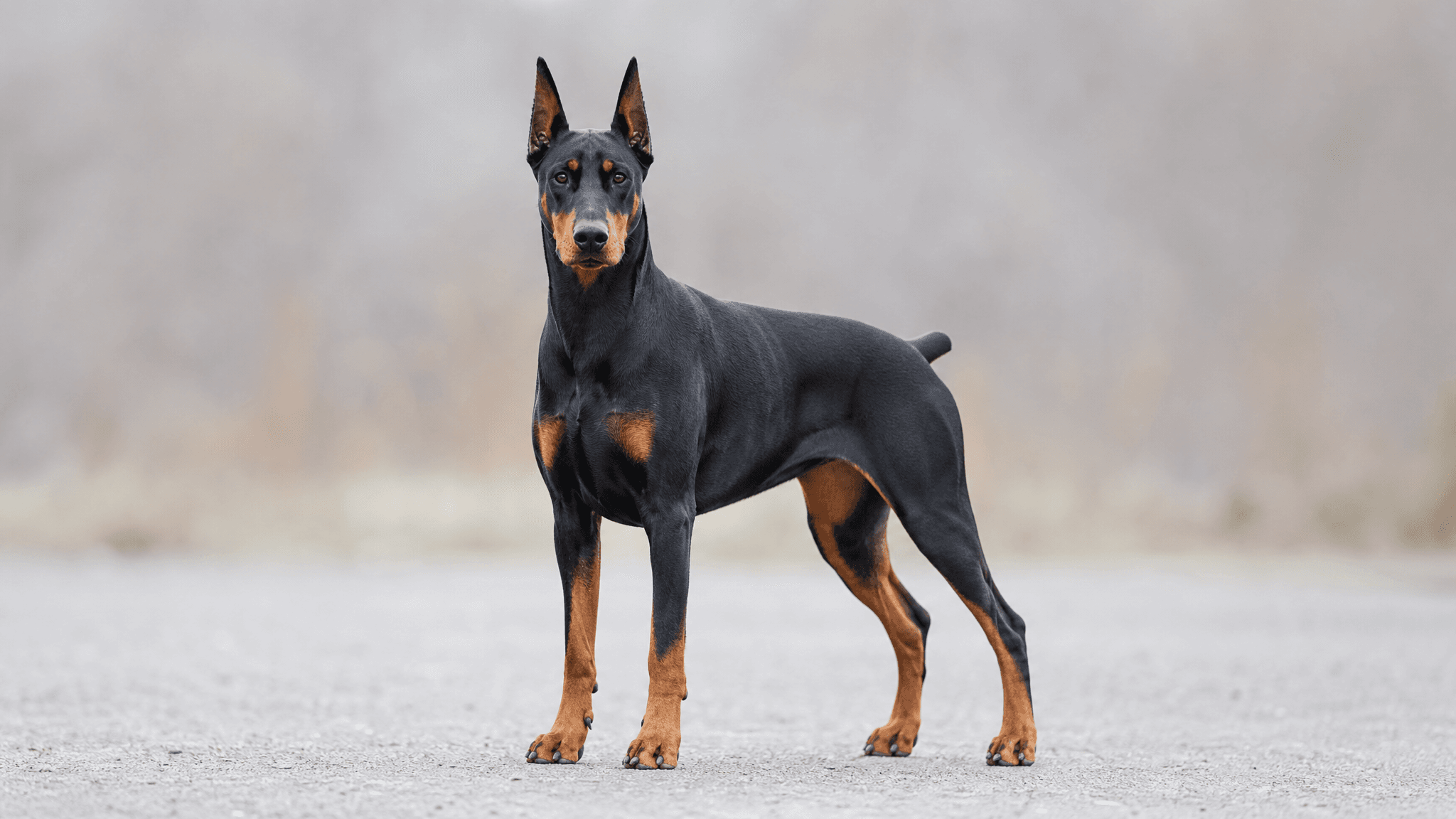
The Dobermann is one of the most recognised working breeds in the world, created in Germany in the second half of the 19th century by tax collector Karl Friedrich Louis Dobermann, who wanted to develop the perfect guard dog to accompany him on his rounds. The result was an animal of exceptional elegance, powerful muscles, and remarkable intelligence, equally capable of working as a police dog, search and rescue dog, and top-tier family companion.
Physical Characteristics
- Size
- Large
- Height (male)
- 68–72 cm
- Height (female)
- 63–68 cm
- Weight (male)
- 40–45 kg
- Weight (female)
- 32–35 kg
- Life Expectancy
- 10–13 years
- Coat
- Short, hard, dense, and close-fitting to the body
- Common Colors
- Black with well-defined rust markings; brown with rust markings
Temperament & Personality
The Dobermann is a dog of balanced temperament: simultaneously courageous and controlled, loyal and independent. It is extremely devoted to its family and naturally suspicious of strangers, making it an excellent guard without the need for unnecessary aggression. It learns with impressive speed and responds very well to positive training, but needs an owner who establishes clear rules from the start. Indoors, it is surprisingly affectionate and loves being present in all family activities.
Activity & Exercise
- Energy Level
- High
- Recommended Daily Exercise
- 90–120 minutes
- Suitable for Apartment
- Not recommended without a yard
Grooming & Care
- Grooming Needs
- Low
- Shedding
- Moderate
Health
- Common Health Issues
- Dilated cardiomyopathy (DCM)
- Gastric dilatation/torsion syndrome
- Hip dysplasia
- Hypothyroidism
- Von Willebrand's disease
- Recommended Health Tests
- Annual echocardiogram
- Hip radiography
- Thyroid function
- Von Willebrand's disease test
Compatibility
- With Children
- Good
- With Other Dogs
- Moderate
- With Cats
- Moderate
- For First-Time Owners
- Not recommended
Is a Dobermann right for you?
A Dobermann may suit you if:
- You can commit to providing 90 to 120 minutes of vigorous daily exercise and engaging mental challenges.
- You enjoy an active lifestyle and are seeking a highly intelligent companion for various activities or working roles.
- You appreciate a dog that is simultaneously courageous, controlled, fiercely loyal, and naturally suspicious of strangers.
- You are prepared to consistently establish clear rules and provide ongoing positive training for a quick learner.
- You are comfortable with moderate shedding but appreciate a low-maintenance, short, and close-fitting coat.
- You are willing to manage a natural guard instinct, channeling their protective nature appropriately.
Think twice if:
- You expect a dog that will always follow commands without question, as they possess an independent streak.
- You have a household routine that requires your dog to be left alone for long periods each day.
- You are looking for a dog that will instantly befriend every other pet or child without careful introductions and supervision.
- You are unwilling to consistently meet the high energy demands of a large and powerful breed.
- You live in an apartment and do not have consistent access to a secure yard or outdoor space.
- You are a first-time dog owner who may struggle to provide the firm, consistent handling this breed requires.
Welcoming a Dobermann into your life means embracing a bond of profound loyalty and intelligent companionship that can last 10-13 years. This magnificent breed offers unwavering devotion and protection, but they truly thrive with an owner who provides consistent leadership, ample exercise, and dedicated training. It's a journey demanding commitment, yet incredibly rewarding.
Training a Dobermann
Your Dobermann is a remarkably intelligent and devoted companion, eager to learn and quick to pick up new commands. They thrive on positive reinforcement and clear, consistent guidance, responding best to short, engaging training sessions that feel like a fun game. Because of their deep loyalty to family, they are highly motivated by praise and connection with you. However, if rules aren't established firmly and fairly from the start, or if training is inconsistent, this courageous and independent breed can quickly develop their own ideas, making future training much more challenging. Consistency is truly key for their balanced temperament.
Begin with:
- Attention and response to name around distractions
- Reliable recall on a long line
- Loose-leash walking
- Leave it and drop it
- Calm greetings without jumping
- Settling on a mat or bed
- Cooperative handling for grooming, ears, feet and teeth
- Waiting at doors and gates
Guarding instincts and strangers
Dobermanns are naturally suspicious of strangers and possess strong guarding instincts, a trait that made them excellent companions for their creator. While this makes them superb protectors, it means early and ongoing socialization is vital. Introduce your Dobermann to a wide variety of people, sights, and sounds in a positive, controlled manner from a young age. Reward calm, polite interactions with new people.
This helps them learn that not every stranger is a threat, allowing their inherent loyalty to shine without unnecessary aggression. Our Behaviour AI feature can be a valuable tool to understand and work on specific reactions to new people or situations.
Leash manners and strength
Given their large size and powerful muscles, a Dobermann pulling on the leash can be a real challenge, especially for an owner new to the breed. It's crucial to teach loose-leash walking from day one. Use positive reinforcement to reward your Dobermann for walking politely by your side, and consider a front-clip harness for better control without discomfort.
Consistency is paramount. Practice in quiet environments first, gradually introducing more distractions. If you're struggling, our guide on stopping leash pulling offers a force-free plan to help you achieve polite walks.
Energy and mental stimulation
Dobermanns are a high-energy breed requiring substantial exercise—90 to 120 minutes daily—and significant mental stimulation. Without enough physical activity or engaging mental tasks, they can become bored, leading to undesirable behaviours like destructive chewing, excessive barking, or even anxiety.
Incorporate varied activities like long walks, runs, scent work, and puzzle toys into their daily routine. Regular training sessions also provide excellent mental enrichment. Tracking your walks with our GPS Walks feature can help ensure they're consistently getting enough physical activity to keep them happy and well-behaved.
Dobermann — Frequently Asked Questions
What is the Dobermann?
The Dobermann is a truly iconic and elegant working breed, originating from Germany in the latter half of the 19th century. Developed by tax collector Karl Friedrich Louis Dobermann, this large and powerful dog belongs to FCI Group 2 (Pinscher) and is celebrated for its remarkable intelligence and striking physique. They possess an exceptional elegance and powerful muscles, making them one of the most recognized working breeds globally. Beyond their impressive looks, Dobermanns are known for their keen minds and versatile capabilities, making them much more than just a beautiful face.
What was the Dobermann originally bred for?
The Dobermann was originally conceived by Karl Friedrich Louis Dobermann with a very specific purpose in mind: to create the perfect guard dog. As a tax collector, he needed a loyal and protective companion to accompany him on his rounds, ensuring his safety. The result was an animal that not only excelled as a personal protector but also proved incredibly adaptable. Over time, their exceptional intelligence and balanced temperament led them to be highly valued as police dogs, search and rescue dogs, and even top-tier family companions, showcasing their incredible versatility and dedication to their human partners.
How much exercise does a Dobermann need?
Dobermanns are known for their high energy levels and truly thrive on activity, so they definitely need a good amount of exercise to stay happy and healthy! We recommend providing your Dobermann with between 90 to 120 minutes of daily exercise. This isn't just about physical exertion; it's also crucial for their mental stimulation. Think about incorporating brisk walks, jogging, playtime in a secure yard, or engaging in dog sports. Consistent and engaging exercise will help channel their energy positively, preventing boredom and ensuring they remain a well-behaved and contented member of your family.
Is the Dobermann a good family dog?
Absolutely, the Dobermann can be a wonderful family dog, often becoming incredibly devoted to their loved ones! They possess a balanced temperament, being simultaneously courageous and controlled, loyal and independent. While they are naturally suspicious of strangers, making them excellent guards without unnecessary aggression, their devotion to their family is paramount. With proper socialization from a young age and an owner who establishes clear rules and consistent training from the start, Dobermanns can integrate beautifully into homes with children and other pets, proving to be a loving and protective companion.
Is the Dobermann easy to train?
Yes, the Dobermann is impressively intelligent and generally considered very easy to train! They learn with remarkable speed and respond exceptionally well to positive training methods, making them a joy for dedicated owners. Their balanced temperament, combining courage with control, and loyalty with independence, contributes to their trainability. However, their intelligence means they need an owner who is consistent and establishes clear rules from the very beginning. With a firm yet gentle approach, plenty of praise, and engaging training sessions, your Dobermann will quickly master commands and enjoy learning new tasks, strengthening your bond.
What health issues are common in the Dobermann?
While the Dobermann is generally a robust and healthy breed, like all purebred dogs, they can be predisposed to certain genetic conditions. It's truly important for prospective owners to be aware of this and to choose a reputable breeder who conducts thorough health screenings on their breeding stock. Regular veterinary check-ups throughout your Dobermann's life are crucial for early detection and management of any potential health concerns. A proactive approach to their health, including a balanced diet and appropriate exercise, will help ensure your Dobermann enjoys a long and vibrant life by your side.
What is the Dobermann's coat like and how much grooming does it need?
The Dobermann boasts a sleek, short, and hard coat that lies close to their body, contributing to their famously elegant and athletic appearance. Thankfully, this means their grooming needs are relatively low-maintenance, which is great news for busy owners! A quick brush once or twice a week with a rubber grooming mitt or a soft bristle brush is usually sufficient to remove loose hairs, keep their coat shiny, and distribute natural oils. Occasional baths will keep them clean and fresh, and don't forget routine nail trims and ear cleaning to keep your Dobermann feeling their absolute best.
What is the typical lifespan of a Dobermann?
Dobermanns typically enjoy a good lifespan, generally living between 10 to 13 years. Providing your Dobermann with excellent care throughout their life is key to helping them reach the upper end of this range and beyond. This includes a high-quality, balanced diet, consistent daily exercise tailored to their high energy levels, regular veterinary check-ups for preventative care, and plenty of love and mental stimulation. With a dedicated and caring owner, your Dobermann companion can look forward to many happy and healthy years by your side, bringing joy and loyalty to your home.
Community
Talk to real Dobermann owners
This guide covers the breed on paper. In the app, the Dobermann community covers it in real life: photos from other owners, questions answered by people who live with the breed, and a directory of dogs you can browse.
- Photos & pollsSee what Dobermann owners are sharing today.
- Questions & answersAsk anything and hear from people who own one.
- Dog directoryBrowse Dobermanns from around the world.
You join automatically when you add a Dobermann to your profile.