Hovawart
Summary
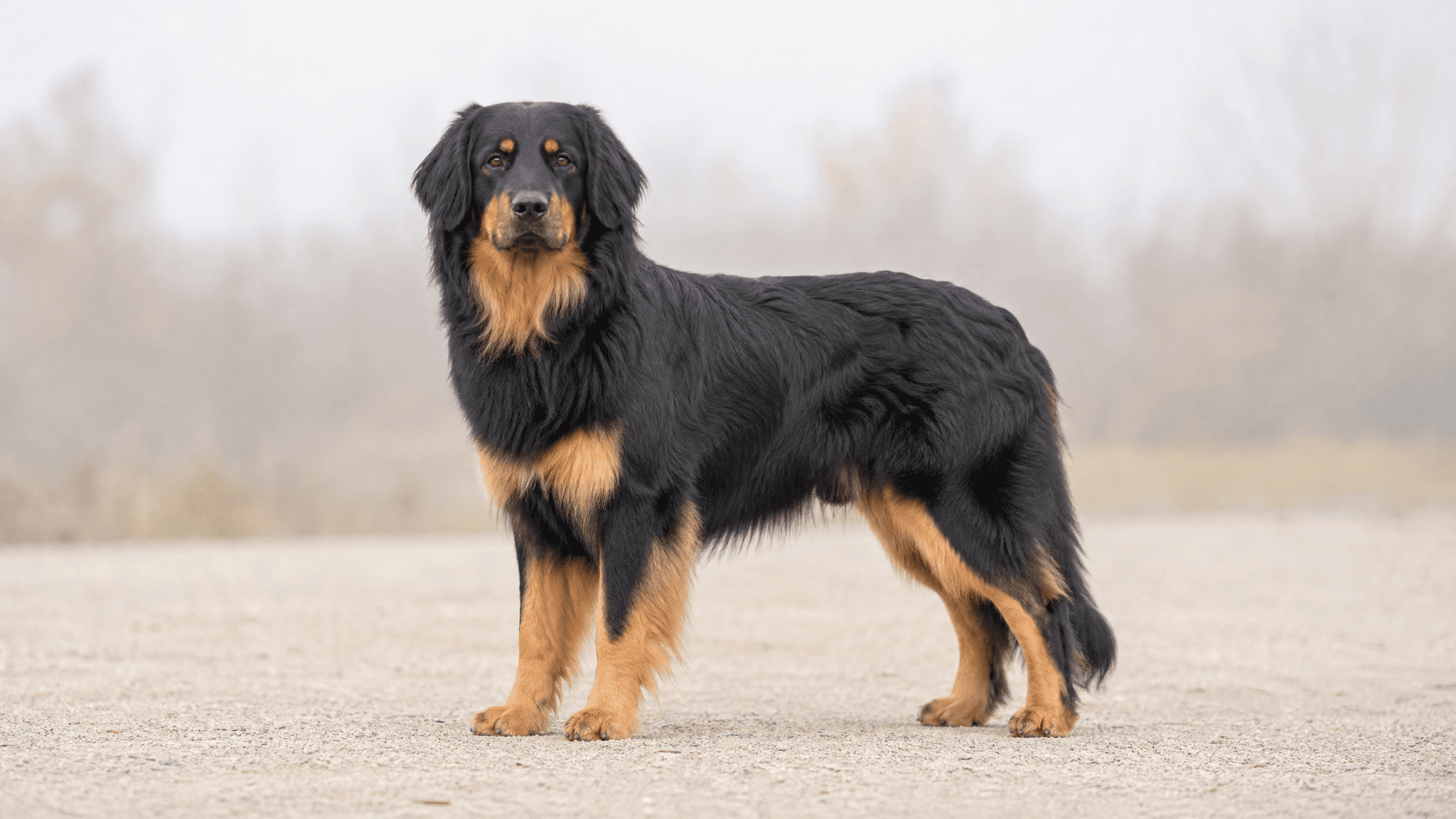
The Hovawart is an ancient German breed whose name means "Farm Guardian" (from "Hova" = farm, and "Wart" = guardian) in medieval German. The breed was practically extinct but was recovered in the 1920s from German rural dogs of a similar type, crossed with Leonbergers, Kuvasz, and Newfoundlands. It is very popular in Germany but relatively little known in other countries.
Physical Characteristics
- Size
- Large
- Height (male)
- 63–70 cm
- Height (female)
- 58–65 cm
- Weight (male)
- 30–50 kg
- Weight (female)
- 25–40 kg
- Life Expectancy
- 10–14 years
- Coat
- Long, dense, slightly wavy; no undercoat
- Common Colors
- Black, golden (honey/blonde), black with golden markings
Temperament & Personality
The Hovawart is a balanced, intelligent working dog that is very devoted to its family. It is an excellent guard dog — suspicious of strangers but never aggressive without reason. It greatly enjoys outdoor activities and has an exceptional sense of smell, which is why it is widely used in search and rescue operations. It needs regular mental and physical stimulation to remain balanced.
Activity & Exercise
- Energy Level
- High
- Recommended Daily Exercise
- 90–120 minutes
- Suitable for Apartment
- Not recommended
Grooming & Care
- Grooming Needs
- Moderate
- Shedding
- Moderate
- Bathing Frequency
- Every 6–8 weeks
Health
- Common Health Issues
- Hip dysplasia
- Hypothyroidism
- Recommended Health Tests
- Hip radiography
- Thyroid evaluation
Compatibility
- With Children
- Good
- With Other Dogs
- Moderate
- With Cats
- Moderate
- For First-Time Owners
- Not recommended
Is a Hovawart right for you?
A Hovawart may suit you if:
- You can commit to providing 90 to 120 minutes of vigorous daily exercise and engaging mental challenges.
- You enjoy spending significant time outdoors, perhaps exploring activities like scent work or hiking.
- You appreciate a loyal, intelligent companion who is naturally watchful and devoted to your family.
- You are prepared for consistent, positive training to guide an intelligent and independent working breed.
- You are willing to provide moderate grooming, including regular brushing of their long, dense, slightly wavy coat.
- You are ready to manage a natural guardian instinct, including their tendency to be wary of new people.
Think twice if:
- You expect instant, unquestioning obedience from a dog, as Hovawarts are intelligent and can be independent thinkers.
- You have a busy schedule that requires your dog to be left alone for long periods each day.
- You are unwilling to carefully introduce and supervise your Hovawart with other household pets.
- You are not prepared for a dog that requires significant daily exercise and regular, consistent grooming.
- You live in an apartment or do not have a securely fenced outdoor space for a large, active dog.
- You are unprepared for the physical demands of managing a large, powerful, and energetic dog through its adolescent phase.
Bringing a Hovawart into your life is a deeply rewarding experience for the right family. Their devotion and protective nature are truly special, but they are also intelligent, energetic working dogs who thrive on purpose and partnership. They need an owner who understands their strength, independence, and need for consistent engagement throughout their 10-14 year lifespan, ensuring a balanced and happy companion.
Training a Hovawart
Hovawarts are intelligent and devoted companions, eager to please their beloved family. They thrive on positive reinforcement, responding best to clear, consistent, and reward-based training methods. Keep sessions short, fun, and engaging to match their high energy and maintain their focus. Inconsistency or harsh corrections will quickly lead to frustration, disengagement, and can even foster unwanted guarding behaviors, making them less cooperative and potentially difficult to manage for handlers who are not experienced with this breed's unique needs.
Begin with:
- Attention and response to name around distractions
- Recall on a long line
- Loose-leash walking
- Leave it and drop it
- Calm greetings without jumping
- Settling on a mat or bed
- Cooperative handling for grooming, ears, feet and teeth
- Waiting at doors and gates
Guarding Instincts
As their name 'Farm Guardian' suggests, Hovawarts possess a natural guarding instinct and are inherently suspicious of strangers. While they are never aggressive without reason, it's crucial to channel this trait appropriately from a young age. Focus on extensive, positive socialization, exposing your Hovawart to a wide variety of people, sights, and sounds in a controlled manner. Reward calm and polite interactions, teaching them that new people can be a source of good things, rather than threats.
Continue this socialization throughout their lives, ensuring they have positive experiences in different environments. This helps them learn to assess situations calmly and respond appropriately, rather than reacting out of an untrained guarding impulse. Consistency is key to building a well-adjusted and confident guardian.
Leash Pulling
Hovawarts are large, strong dogs, with males weighing up to 50 kg and females up to 40 kg. Without proper training, their high energy and strength can quickly make walks challenging. Begin loose-leash walking training as early as possible, using positive reinforcement to reward your Hovawart for walking politely by your side. Consistency is paramount, as even a few instances of pulling can reinforce the habit. Consider using a front-clip harness or head halter if you're struggling to manage their strength.
Remember that a Hovawart needs 90-120 minutes of daily exercise, so teaching them to walk nicely on a leash is essential for both your enjoyment and their well-being. For detailed steps and a structured approach, you might find this guide helpful in mastering loose-leash walking.
Boredom Behaviors
A Hovawart's high energy and intelligence mean they require significant mental and physical stimulation to remain balanced. If under-exercised or left alone for long periods without engaging activities, they can quickly become bored, leading to destructive behaviors like chewing furniture, excessive barking, or digging. Ensure they receive their recommended 90-120 minutes of daily exercise, which should include varied activities like long walks, runs, or active play.
Beyond physical activity, engage their exceptional sense of smell with scent work, tracking games, or puzzle toys. Providing a consistent routine and plenty of enrichment will keep their minds busy and prevent unwanted behaviors. Our training feature can help you build a structured routine to ensure your Hovawart gets the mental and physical workout they need.
Hovawart — Frequently Asked Questions
What is the Hovawart?
The Hovawart (from Middle High German: 'estate warden') is a large, versatile German working and guard dog with medieval origins, first documented in the 13th century, though the modern breed was reconstructed in the early 20th century from dogs found working on German farms. They were bred as estate and livestock guardians — alert, protective, and capable of independent decision-making when guarding. In character they are loyal, courageous, self-assured, and deeply devoted to their family — forming an intense bond with their household that drives their strong protective instinct. They come in three colour variants: black, black-and-gold, and blonde.
Are Hovawarts good family dogs?
Hovawarts are excellent family dogs in experienced, active households. They are deeply loyal and protective — forming intense bonds with their family and treating family members, including children, with great affection and gentleness. They are naturally suspicious of strangers, which can be managed with thorough early socialisation. Their strong guarding instinct and independent nature means they need experienced, confident owners who establish clear boundaries from puppyhood. For active families who want a dog with real depth of character, genuine working capability, and rock-solid family loyalty — and who are prepared for the commitment — Hovawarts are exceptional companions.
How much exercise does a Hovawart need?
Hovawarts need 1.5–2 hours of vigorous daily exercise plus meaningful mental stimulation. They are large, powerful, athletic working dogs bred for endurance work on an estate — they have real stamina and a need to be physically and mentally occupied. Long walks, hiking, running, agility, tracking, search and rescue, and protection sports all suit them. Their intelligent, working nature means mental engagement through training, problem-solving, and structured activity is equally important as physical exercise. An under-exercised and under-stimulated Hovawart becomes restless, destructive, and may redirect their energy inappropriately. A large, securely fenced property is a strong advantage.
Are Hovawarts easy to train?
Hovawarts are highly intelligent but independently minded. They learn quickly but evaluate commands based on context and their own judgment — they were bred to make independent decisions while guarding, and this trait carries into training. They respond well to patient, consistent, positive training with an experienced handler who earns their respect. They do not respond to harsh or forceful methods. Their independent thinking means they need training that explains the 'why' through consistent repetition and clear structure rather than mechanical repetition of commands. Early socialisation and puppy classes from 8 weeks are strongly recommended. They excel at tracking, search and rescue, and therapy work.
What health issues affect Hovawarts?
Hovawarts have several documented health concerns. Hip dysplasia is significant — OFA/BVA screening of breeding parents is strongly recommended. Hypothyroidism is common in the breed — symptoms include weight gain, lethargy, and coat changes. Bloat (GDV) is a serious risk in this deep-chested breed. Progressive Retinal Atrophy (PRA) has been documented — DNA testing is available. A hereditary condition HH (hypophyseal hypoplasia) — affecting the pituitary gland and leading to growth abnormalities and early death in affected puppies — has been found in the breed; DNA testing should be performed on all breeding dogs. Annual vet check-ups, thyroid testing, and health-tested parents are important.
How long do Hovawarts live?
Hovawarts have an average lifespan of 12–14 years. Key longevity factors include sourcing from parents tested for HH and PRA (eliminating serious hereditary risks), annual thyroid testing (hypothyroidism is treatable when caught early), hip screening, managing GDV risk through careful feeding practices (no vigorous exercise within 1–2 hours of meals, feed 2–3 smaller meals), daily vigorous exercise and mental stimulation (maintaining healthy, lean condition), annual vet check-ups, dental care, and early, thorough socialisation (a calm, well-managed Hovawart has fewer stress-related health impacts). Hovawarts from health-tested lines are generally long-lived, healthy dogs.
Is the Hovawart a good guard dog?
The Hovawart is a naturally excellent guard dog — it is literally what the breed was created for over many centuries. They are highly alert, deeply protective of their family and property, and will bark to alert and physically deter intruders when they perceive a genuine threat. Unlike some guard breeds, they typically do not bark unnecessarily — they are discerning and calm about what they consider a genuine threat. They bond intensely with their family, which drives their protective behaviour. With proper socialisation, they learn to distinguish between genuine threats and normal social situations. No additional 'guard dog training' is needed or recommended — it can amplify traits that already need management.
How do you groom a Hovawart?
The Hovawart's long, slightly wavy, dense coat requires moderate grooming commitment. They have a relatively easy-care coat for a large, long-haired breed — it is less prone to tangling than many comparably sized breeds. Thorough brushing 2–3 times per week prevents mats and removes dead hair. During seasonal coat blows (spring and autumn), daily brushing is needed as they shed heavily. Professional grooming is not usually required — most owners manage their coat at home. The ears should be checked and cleaned weekly. Nails need monthly trimming. After outdoor adventures in dense undergrowth, a quick check for burrs and debris in the coat is wise. Their coat is naturally dirt-repellent and odour-resistant.
Community
Talk to real Hovawart owners
This guide covers the breed on paper. In the app, the Hovawart community covers it in real life: photos from other owners, questions answered by people who live with the breed, and a directory of dogs you can browse.
- Photos & pollsSee what Hovawart owners are sharing today.
- Questions & answersAsk anything and hear from people who own one.
- Dog directoryBrowse Hovawarts from around the world.
You join automatically when you add a Hovawart to your profile.