Leonberger
Summary
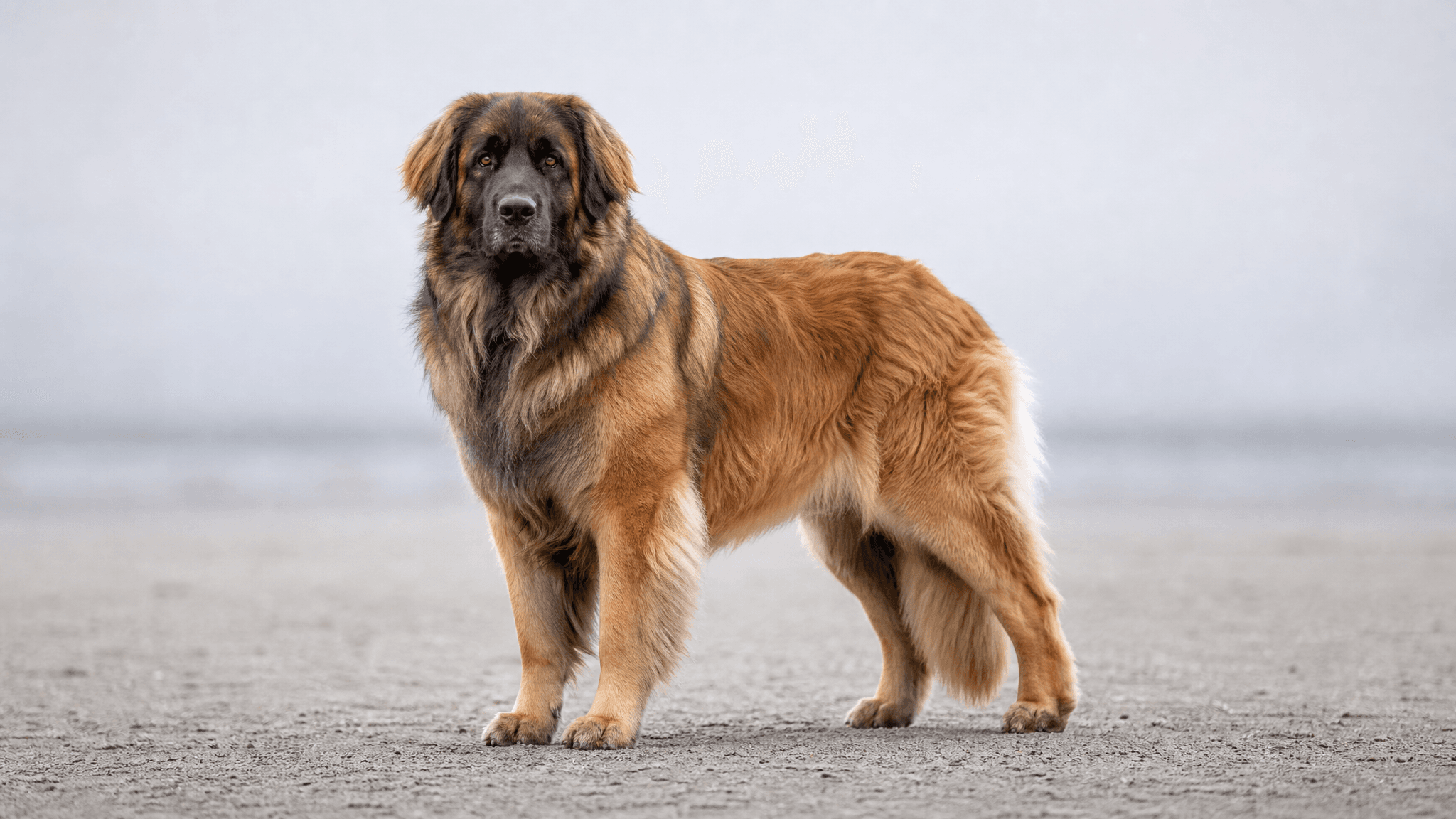
The Leonberger is a German giant created in the city of Leonberg in the 19th century by the mayor Heinrich Essig, who wanted to create a dog that resembled the lion on the city's coat of arms. To do this, he crossed Saint Bernards with Newfoundlands and Pyrenean Mountain Dogs, obtaining an impressive result: an enormous dog with a golden-leonine coat, a large dark mane around the neck, and an extraordinarily gentle temperament.
Physical Characteristics
- Size
- Giant
- Height (male)
- 72–80 cm
- Height (female)
- 65–74 cm
- Weight (male)
- 48–77 kg
- Weight (female)
- 41–61 kg
- Life Expectancy
- 7–9 years
- Coat
- Medium to long, dense, wavy, with characteristic mane on the neck and chest
- Common Colors
- Golden-yellow to reddish-brown, always with a black mask
Temperament & Personality
The Leonberger is one of the gentlest of all "gentle giants". It is extraordinarily balanced, calm, patient with children, sociable with other animals, and generally friendly with strangers. It does not have pronounced guarding instincts — it prefers to socialise rather than watch. It needs a lot of human company and suffers with loneliness. It is a family breed in the truest sense of the word.
Activity & Exercise
- Energy Level
- Moderate
- Recommended Daily Exercise
- 90 minutes
- Suitable for Apartment
- Not recommended
Grooming & Care
- Grooming Needs
- High
- Shedding
- Heavy
- Bathing Frequency
- Every 6–8 weeks
Health
- Common Health Issues
- Cancer (mast cell tumors, hemangiosarcoma, lymphoma)
- Gastric dilatation/torsion
- Hip dysplasia
- Leonberger Hereditary Neuropathy (LPN — a breed-specific neurological disease)
- Osteosarcoma
- Recommended Health Tests
- Cardiac examination
- Genetic test for LPN
- Hip radiography
Compatibility
- With Children
- Excellent
- With Other Dogs
- Excellent
- With Cats
- Good
- For First-Time Owners
- Not recommended
Is a Leonberger right for you?
A Leonberger may suit you if:
- You are prepared to dedicate around 90 minutes each day to their exercise and engaging mental stimulation.
- You enjoy a family-centered lifestyle where your dog is an integral and sociable companion.
- You appreciate a genuinely gentle, balanced, and patient temperament in a giant breed.
- You are committed to consistent, positive training to guide a large, intelligent companion.
- You are ready for a high grooming commitment, including regular brushing of their dense, wavy coat.
- You understand that your Leonberger thrives on constant human company and will not do well left alone frequently.
Think twice if:
- You expect immediate, unwavering obedience from a giant breed not recommended for first-time owners.
- You have a household routine that requires your dog to spend long hours by themselves.
- You are unwilling to commit to their daily 90 minutes of exercise or extensive heavy-shedding coat grooming.
- You live in an apartment or do not have ample space for a dog of giant stature.
- You are unprepared for the physical demands of managing a powerful giant breed, especially during their boisterous adolescence.
- You are seeking a dog with strong guarding instincts, as Leonbergers prefer to socialize.
Living with a Leonberger is a unique journey, offering immense joy from their gentle, devoted nature. Yet, their giant size and deep need for companionship, exercise, and dedicated grooming demand a significant commitment. They are not a casual choice, but for those prepared for the honest challenges, the reward of their loving presence is immeasurable.
Training a Leonberger
Your Leonberger is a truly special companion, a gentle giant eager to please and connect deeply with their human family. They thrive on positive reinforcement, gentle encouragement, and consistent, short training sessions that feel like fun bonding time. Being a highly sociable breed that suffers from loneliness, they are motivated by praise and being close to you. Harsh corrections or prolonged isolation will quickly undermine their confidence and willingness to learn, leading to a withdrawn or anxious temperament rather than the balanced, calm companion they are meant to be. Keep it positive, patient, and always about connection.
Begin with:
- Attention and response to name around distractions
- Recall on a long line
- Loose-leash walking
- Leave it and drop it
- Calm greetings without jumping
- Settling on a mat or bed
- Cooperative handling for grooming, ears, feet and teeth
- Waiting at doors and gates
Over-enthusiastic greetings
Leonbergers are incredibly sociable and love to greet everyone, but their giant size means an excited jump or nudge can easily overwhelm or even injure someone. Start teaching 'four on the floor' from puppyhood, rewarding calm behavior when people approach. Practice with family and friends, asking them to only interact when your Leonberger is calm and all four paws are on the ground. This helps them understand that polite greetings earn attention.
When guests arrive, keep your Leonberger on a leash initially to manage their enthusiasm. Ask them to sit or lie down a short distance away, rewarding them for staying calm as people enter. Gradually reduce the distance as they improve, always reinforcing quiet, controlled interactions. Consistency is key to teaching your gentle giant appropriate manners.
Leash pulling
Even with their moderate energy, a Leonberger can exert immense strength, making leash pulling a significant challenge for any owner, especially since they are not recommended for first-time owners. It's crucial to start loose-leash training early and be absolutely consistent. Use a comfortable, well-fitting harness that discourages pulling, and reward every step your Leonberger takes with a slack leash. If they pull, stop immediately and only resume walking when the leash is loose again. This teaches them that pulling gets them nowhere.
For a dog of this size, consistency is paramount. Consider using a training feature to track your progress and ensure everyone in the household is using the same cues and methods. Remember, 90 minutes of daily exercise is recommended, so ensure they get enough appropriate physical activity to help manage their energy on walks. You can find more tips on managing pulling in our guide to stopping leash pulling.
Loneliness and boredom
Leonbergers are true family dogs who thrive on human companionship and suffer greatly from loneliness if left alone for extended periods. This can manifest as destructive behaviors like chewing furniture or excessive barking, or even signs of stress like changes in appetite. To prevent this, ensure your Leonberger is an integral part of your daily life and receives plenty of interaction.
Provide ample mental stimulation through puzzle toys, training games, and interactive play sessions. Rotate toys to keep things fresh, and ensure they receive their recommended 90 minutes of daily exercise. If you must leave them alone, gradually build up their tolerance to solo time and provide safe, engaging activities. Our guide on stress when left alone can offer further insights.
Leonberger — Frequently Asked Questions
Are Leonbergers good family dogs?
Leonbergers are outstanding family dogs — they are gentle, patient, and deeply loving toward their family. They tend to be excellent with children, tolerant of rough handling, and sociable with other dogs. Their calm, confident temperament makes them wonderful companions in active households. Their main demands are space (they are large dogs), regular grooming (their mane and coat require consistent attention), and daily exercise. With these needs met, they are among the most loving and devoted family breeds.
How much do Leonbergers shed?
Leonbergers are heavy shedders — their long, lion-like double coat sheds year-round and intensifies dramatically twice a year during seasonal coat blows. Regular brushing (3–4 times per week, more during shedding periods) is essential to prevent matts and manage loose hair. Their mane, feathering on the legs, and tail require particular attention. Professional grooming every 8–10 weeks is recommended. Owners of Leonbergers quickly become accustomed to finding significant amounts of golden fur on clothes, furniture, and floors.
How much exercise does a Leonberger need?
Leonbergers need 60–90 minutes of moderate exercise daily. Despite their giant size, they are active dogs that enjoy long walks, swimming, and hiking. However, during puppyhood (up to 18–24 months), avoid excessive or high-impact exercise — their joints are still developing and overexertion can cause lasting damage. As adults, they are versatile and enjoy water activities, tracking, and canine sports like carting and drafting. They should not be left sedentary — they need regular movement to stay healthy.
Are Leonbergers easy to train?
Leonbergers are intelligent and trainable, though they can have a sensitive, gentle quality that requires patient handling. They respond very well to positive reinforcement and enjoy learning — they are willing to please without being servile. They can be independent at times and may test boundaries during adolescence. Early socialisation and obedience training from puppyhood is important because their size and strength at maturity make a well-trained Leonberger essential for safety and manageability.
What health issues affect Leonbergers?
Leonbergers have several significant breed health concerns. Leonberger Polyneuropathy (LEMP) is a progressive neurological disease unique to the breed — DNA testing identifies carriers and affected dogs, and responsible breeders DNA-test before breeding. Hip and elbow dysplasia are common given their size. Bloat (GDV) is a serious risk in this deep-chested giant breed. Heart disease (dilated cardiomyopathy, aortic stenosis) is documented. Osteosarcoma (bone cancer) affects large breeds at higher rates. Health-tested breeders are essential.
How long do Leonbergers live?
Leonbergers have an average lifespan of 8–11 years, which is typical for a giant breed — larger dogs generally have shorter lifespans than smaller ones. DNA testing for LEMP, careful management of bloat risk, hip and cardiac screening, and maintaining a healthy weight are all important factors for longevity. Choosing a puppy from health-tested breeding lines significantly improves the odds of a longer, healthier life. Regular vet check-ups from middle age are essential for monitoring heart and joint health.
Do Leonbergers drool a lot?
Leonbergers are moderate droolers — they drool somewhat, particularly after drinking or eating, but significantly less than breeds like the Mastiff, Bloodhound, or Saint Bernard. Individual variation means some Leonbergers barely drool, while others are messier. Keeping a small towel accessible is practical. If drooling suddenly increases or occurs outside normal contexts (post-eating/drinking), it can signal dental issues, nausea, or health problems and warrants a vet visit. Their heavy mane and coat can collect and retain moisture around the face.
Are Leonbergers good swimmers?
Leonbergers are enthusiastic, natural swimmers. They were bred as versatile working dogs and historically were used for water rescue — their large, muscular build, webbed feet, and water-resistant outer coat make them well-suited to swimming. Most Leonbergers love water and will readily swim and retrieve from rivers, lakes, and the sea. Swimming is excellent, low-impact exercise for them. It's particularly valuable for older dogs or those with joint issues, as it builds fitness without loading the joints. Always supervise water sessions.
Community
Talk to real Leonberger owners
This guide covers the breed on paper. In the app, the Leonberger community covers it in real life: photos from other owners, questions answered by people who live with the breed, and a directory of dogs you can browse.
- Photos & pollsSee what Leonberger owners are sharing today.
- Questions & answersAsk anything and hear from people who own one.
- Dog directoryBrowse Leonbergers from around the world.
You join automatically when you add a Leonberger to your profile.