Italian Sighthound
Summary
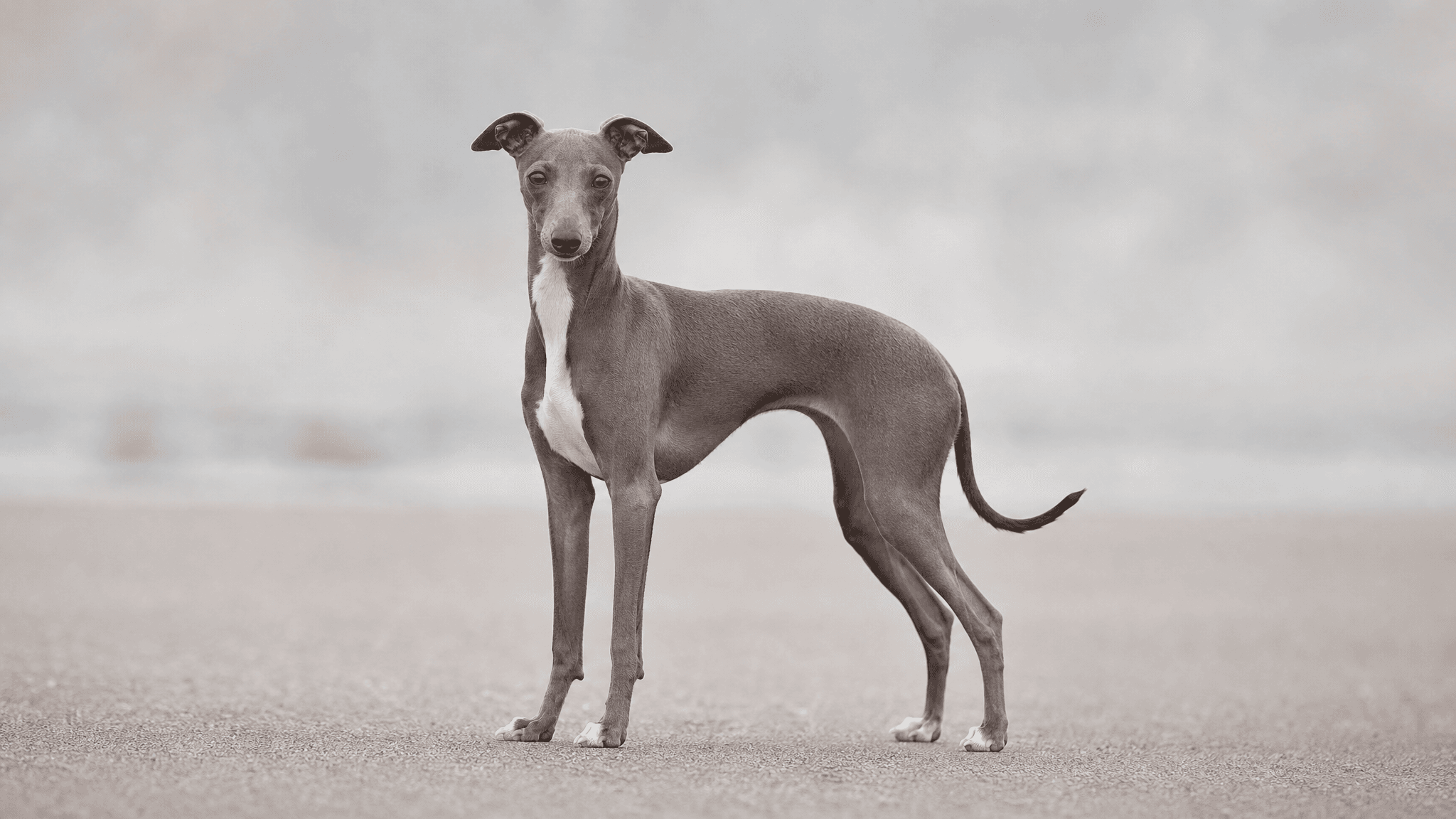
The Italian Greyhound — _Piccolo Levriero Italiano_ in its original language — is the smallest of all sighthounds and an authentic miniature Greyhound. With origins dating back 2,000 years in the Mediterranean, it became the favorite pet of Renaissance European courts: Catherine de' Medici, Frederick the Great of Prussia, Charles I of England, and Queen Victoria were among its illustrious admirers. Despite its fragile appearance, it is an active, alert, and surprisingly courageous dog.
Physical Characteristics
- Size
- Small
- Height (male)
- 32–38 cm
- Height (female)
- 32–38 cm
- Weight (male)
- 3.5–5 kg
- Weight (female)
- 3.5–5 kg
- Life Expectancy
- 14–15 years
- Coat
- Very short, smooth, fine, and silky; no undercoat
- Common Colors
- Grey (blue), black, fawn, sable, red, cream; white patches accepted on the chest and toes
Temperament & Personality
The Italian Greyhound combines the elegance and aloofness typical of sighthounds with a remarkable affectionateness and a playful character. It is very attached to its owner and family, constantly seeking warmth and physical contact (it loves blankets and laps). It can be shy or nervous with strangers if not well socialized from puppyhood. Despite its delicate appearance, it is courageous and curious. Its bone fragility requires special care in interactions with children or large dogs.
Activity & Exercise
- Energy Level
- High
- Recommended Daily Exercise
- 30–45 minutes
- Suitable for Apartment
- Yes
Grooming & Care
- Grooming Needs
- Very low
- Shedding
- Minimal
- Bathing Frequency
- Every 4–6 weeks
Health
- Common Health Issues
- Anesthesia sensitivity
- Autoimmune disorders
- Bone fractures (delicate bones — fracture risk from falls or jumps from furniture)
- Epilepsy
- Hypothyroidism
- Legg-Calvé-Perthes disease
- Patellar luxation
- Progressive retinal atrophy (PRA)
- Recommended Health Tests
- Eye examination
- Inform the veterinarian of anesthesia sensitivity
- Orthopedic evaluation
- Thyroid analysis
Compatibility
- With Children
- Moderate
- With Other Dogs
- Good
- With Cats
- Good
- For First-Time Owners
- Recommended
Is an Italian Sighthound right for you?
An Italian Sighthound may suit you if:
- You enjoy providing 30 to 45 minutes of daily exercise to a high-energy, playful companion.
- You enjoy a cozy, indoor lifestyle where your dog is a constant, affectionate presence on your lap.
- You appreciate a deeply affectionate and playful companion who forms a strong bond with its family.
- You are prepared to commit to consistent, positive training, even as a first-time dog owner.
- You appreciate a very low-maintenance coat that requires minimal grooming and sheds little.
- You are prepared to manage the natural sighthound instincts of an active and alert small dog.
Think twice if:
- You expect immediate and constant obedience from a dog, as Italian Sighthounds retain a sighthound's independent spirit.
- You have a routine that requires your dog to be left alone for long periods, as they thrive on companionship.
- You have very young children who are not yet gentle, as this delicate small breed requires careful handling.
- You are unwilling to provide daily opportunities for your high-energy companion to run and play safely.
- You do not have a secure, fenced area or are unprepared for consistent leash walks.
- You are unprepared for carefully supervising a small, delicate dog, especially during its energetic puppy and adolescent phases.
Living with an Italian Sighthound is a beautiful dance between their elegant, sometimes aloof sighthound nature and their profound need for affection. They'll fill your lap with warmth and your life with playful energy, but their delicate build and independent spirit mean you'll need patience and a commitment to their unique needs. It's a rewarding journey for those ready to embrace their charming complexities.
Training an Italian Sighthound
Italian Sighthounds are incredibly intelligent and eager to please their beloved humans, making training a joyful experience when approached correctly. They thrive on positive reinforcement, especially high-value treats, praise, and plenty of physical affection – they adore being close to you! Keep training sessions short, fun, and varied, around 5-10 minutes, to maintain their focus and prevent boredom. If training becomes repetitive or harsh, these sensitive souls can quickly become shy, shut down, or develop a reluctance to participate, so patience and a gentle touch are key.
Begin with:
- Attention and response to name around distractions
- Recall on a long line
- Loose-leash walking
- Leave it and drop it
- Calm greetings without jumping
- Settling on a mat or bed
- Cooperative handling for grooming, ears, feet and teeth
- Waiting at doors and gates
Recall and prey drive
Italian Sighthounds, true to their sighthound heritage, possess a powerful instinct to chase anything that moves. Their keen eyesight means a squirrel or a blowing leaf can instantly capture their attention, and once they're off, their hearing often becomes secondary. This strong prey drive makes a reliable recall absolutely critical for their safety, especially given their small size and speed.
Start recall training in a secure, enclosed area, gradually introducing distractions. Always use a long line in open spaces until their recall is rock-solid, and ensure they wear a well-fitting harness, not just a collar, to prevent injury if they bolt. Remember, consistency and high-value rewards are your best friends when teaching your Italian Sighthound to come when called. For more guidance, check out our article on how to teach a dog to come when called.
Leash manners for a delicate dog
Despite their delicate appearance, Italian Sighthounds can pull with surprising strength, or react nervously to leash pressure, especially if they are feeling shy or overwhelmed by new sights and sounds. Their fine, slender necks are particularly vulnerable, so always opt for a comfortable, well-fitting harness over a collar for walks to protect them from strain or injury.
Focus on positive reinforcement techniques for loose-leash walking, rewarding them for staying by your side with treats and praise. If your Italian Sighthound becomes nervous on walks, try to identify triggers and create a positive association with those situations. Our guide to stopping leash pulling offers excellent force-free advice.
Boredom or separation anxiety
While Italian Sighthounds are small and perfectly suited for apartment living, their high energy level means they still require their recommended 30-45 minutes of daily exercise, along with plenty of mental stimulation. If their needs aren't met, or if they are left alone for extended periods without proper preparation, these deeply affectionate dogs can develop destructive behaviors, excessive barking, or even separation anxiety.
To prevent these issues, ensure they get their daily walks and engage them with puzzle toys or short training games throughout the day. Since they are so attached to their owners, gradually accustoming them to alone time is crucial. Watch for signs of stress when you leave and build up their independence slowly.
Italian Sighthound — Frequently Asked Questions
What is the Piccolo Levriero Italiano (Italian Sighthound)?
The Piccolo Levriero Italiano, or Italian Sighthound, is a truly elegant and captivating breed originating from Italy, with a history stretching back over 2,000 years in the Mediterranean. As the smallest of all sighthounds, it's often described as an authentic miniature Greyhound. Belonging to FCI Group 10 (Short-Haired Sighthounds), this breed combines a delicate and refined appearance with an active, alert, and surprisingly courageous spirit. They are renowned for their graceful lines and gentle nature, making them a unique and cherished companion.
What was the Piccolo Levriero Italiano (Italian Sighthound) originally bred for?
With a history dating back two millennia, the Piccolo Levriero Italiano was originally cherished as a beloved companion dog, particularly by royalty and nobility. These charming sighthounds became the favorite pets of Renaissance European courts, captivating illustrious admirers such as Catherine de' Medici, Frederick the Great of Prussia, Charles I of England, and Queen Victoria. While sighthounds are known for their hunting prowess, the Italian Sighthound's primary role evolved into that of an affectionate and elegant lapdog, providing warmth and companionship within aristocratic households.
How much exercise does a Piccolo Levriero Italiano (Italian Sighthound) need?
Despite their delicate appearance, Italian Sighthounds have a surprisingly high energy level and need regular opportunities to burn off steam! We recommend around 30–45 minutes of exercise per day, which can include brisk walks, supervised playtime in a securely fenced area, or even short bursts of running. They absolutely adore a good sprint, so a safe space where they can really stretch their legs is wonderful. Mental stimulation is also important to keep their clever minds engaged, ensuring they are happy, healthy, and well-behaved companions.
Is the Piccolo Levriero Italiano (Italian Sighthound) a good family dog?
The Italian Sighthound is a wonderfully affectionate and playful dog, deeply attached to its owner and family, constantly seeking warmth and physical contact. They truly thrive on being part of the family action! While they adore their human companions, their delicate bone structure means interactions with very young children should always be supervised to prevent accidental injury. Early and consistent socialization is key to helping them feel comfortable and confident around new people and other pets, as they can be a bit shy or nervous with strangers otherwise. With a gentle approach, they can integrate beautifully into a loving home.
Is the Piccolo Levriero Italiano (Italian Sighthound) easy to train?
The Italian Sighthound is an intelligent and affectionate breed, eager to please its beloved owner, which can make training a rewarding experience. However, like many sighthounds, they possess an independent spirit and can sometimes be a bit sensitive. Positive reinforcement methods, patience, and consistency are your best friends when training these clever pups. Early socialization is also crucial to help them develop into well-adjusted adults, ensuring they are confident and comfortable in various situations. With the right approach, you'll find them quite capable of learning and thriving, becoming a well-mannered and cherished member of your family.
What health issues are common in the Piccolo Levriero Italiano (Italian Sighthound)?
Like all breeds, the Italian Sighthound can be prone to certain health concerns, and it's good to be aware of them. They are known for their delicate bones, which means bone fractures from falls or jumps from furniture can be a risk, so care is needed. Other documented health issues include anesthesia sensitivity, autoimmune disorders, epilepsy, hypothyroidism, Legg-Calvé-Perthes disease, patellar luxation, and progressive retinal atrophy (PRA). Regular veterinary check-ups and being mindful of their environment can help keep your precious companion healthy and happy.
What is the Piccolo Levriero Italiano (Italian Sighthound)'s coat like and how much grooming does it need?
The Piccolo Levriero Italiano boasts a wonderfully short, fine, and sleek coat that is incredibly low-maintenance, making grooming a breeze! A quick weekly brush with a soft brush or a grooming mitt is usually all it takes to keep their coat gleaming and to remove any loose hairs. They are generally clean dogs, so baths are only needed occasionally when they get particularly dirty. This minimal grooming requirement means more time for cuddles and playtime with your elegant companion, keeping them looking their best with very little effort.
What is the typical lifespan of a Piccolo Levriero Italiano (Italian Sighthound)?
The Piccolo Levriero Italiano is a relatively long-lived breed, often gracing families with their charming presence for many years. With proper care, a healthy diet, regular veterinary check-ups, and plenty of love, you can typically expect your Italian Sighthound to be a cherished companion for 14–15 years. Their longevity is a testament to their robust spirit, despite their delicate appearance, allowing for many wonderful memories together.
Community
Talk to real Italian Sighthound owners
This guide covers the breed on paper. In the app, the Italian Sighthound community covers it in real life: photos from other owners, questions answered by people who live with the breed, and a directory of dogs you can browse.
- Photos & pollsSee what Italian Sighthound owners are sharing today.
- Questions & answersAsk anything and hear from people who own one.
- Dog directoryBrowse Italian Sighthounds from around the world.
You join automatically when you add a Italian Sighthound to your profile.