Bichon Frise
Summary
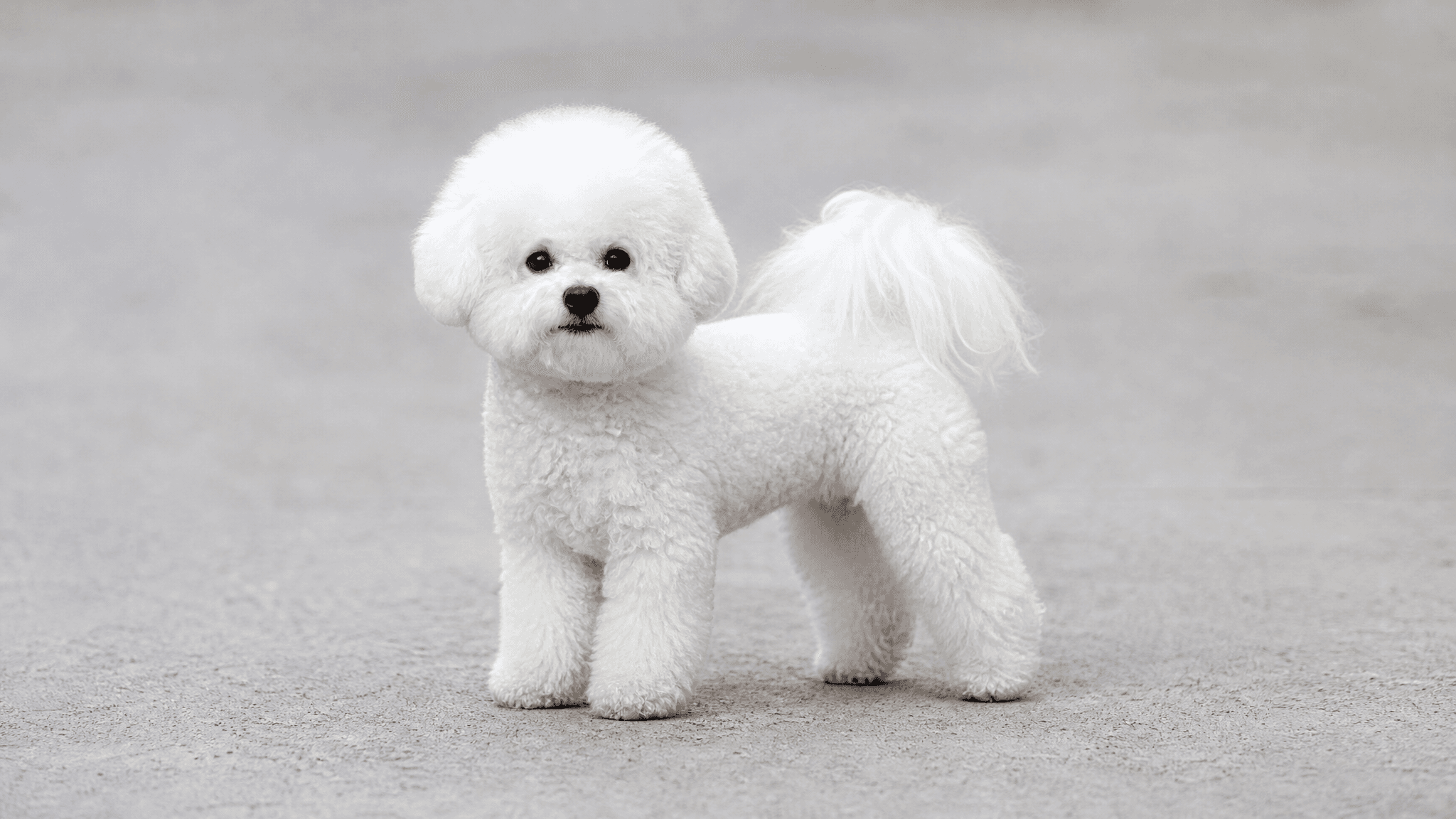
The Bichon Frisé, whose origins trace back to the Mediterranean islands — namely Tenerife — was for centuries a favorite of French and Spanish royalty. It is distinguished by its white, thick coat of tight curls, its cheerful temperament, and the fact that it practically does not shed, making it a popular choice for people with allergies. It is a vigorous, intelligent, and very sociable dog.
Physical Characteristics
- Size
- Small
- Height (male)
- 23–30 cm
- Height (female)
- 23–28 cm
- Weight (male)
- 5–8 kg
- Weight (female)
- 5–7 kg
- Life Expectancy
- 14–15 years
- Coat
- Double — soft undercoat and outer coat of loose, abundant curls
- Common Colors
- Pure white; slight cream, apricot, or grey tones are accepted in puppies
Temperament & Personality
The Bichon Frisé is a cheerful, affectionate, and energetic dog that easily adapts to different lifestyles. It is curious and sociable, getting along well with children, other dogs, and even cats when properly socialized. Its intelligence and eagerness to please make it relatively easy to train. The greatest behavioral challenge is housetraining, as this breed is notoriously difficult to housetrain.
Activity & Exercise
- Energy Level
- Moderate to high
- Recommended Daily Exercise
- 30–45 minutes
- Suitable for Apartment
- Yes with exercise
Grooming & Care
- Grooming Needs
- High
- Shedding
- Minimal
- Bathing Frequency
- Every 4 weeks
Health
- Common Health Issues
- Corneal dystrophy
- Diabetes mellitus
- Hereditary cataracts
- Patellar luxation
- Periodontal disease
- Skin allergies
- Recommended Health Tests
- Eye examination
- Orthopedic evaluation
Compatibility
- With Children
- Excellent
- With Other Dogs
- Excellent
- With Cats
- Good
- For First-Time Owners
- Recommended
Is a Bichon Frise right for you?
A Bichon Frise may suit you if:
- You can commit to providing 30-45 minutes of daily exercise and engaging mental games.
- You enjoy a lively companion who thrives on being involved in family activities and outings.
- You appreciate a cheerful, curious, and affectionate dog with a truly vivacious personality.
- You are prepared to engage in consistent, positive-reinforcement training, especially for housetraining challenges.
- You are prepared for a high grooming commitment, including professional grooming every four weeks and daily brushing.
- You are willing to manage a dog that is very sociable and loves to be the center of attention.
Think twice if:
- You expect immediate and perfect obedience, as Bichons have a charmingly independent streak.
- You often leave your dog alone for long periods, as Bichons thrive on companionship and can develop separation anxiety.
- You prefer a quiet, independent dog that doesn't demand constant interaction with family or visitors.
- You are not prepared for the significant daily grooming routine required to maintain their beautiful curly coat.
- You cannot provide a secure, indoor living environment where they can thrive as part of the family.
- You are not prepared for the patience and consistency needed to housetrain a Bichon, which can be a lengthy process.
Living with a Bichon Frise is a joyful experience, filled with laughter and affection, but it's also a commitment to consistent care and training. Their charming personalities and minimal shedding make them wonderful companions, yet their need for companionship and dedicated grooming means they thrive best with owners who are truly prepared for their specific needs over their 14-15 year lifespan.
Training a Bichon Frise
Your cheerful Bichon Frise is a bright and eager-to-please companion, making training a joyful experience! They thrive on positive reinforcement, responding wonderfully to praise, tasty treats, and playful interaction. Keep training sessions short and sweet, around 5-10 minutes, to match their moderate energy and prevent boredom. Consistency is key; a little bit often is far more effective than long, infrequent sessions. If training becomes repetitive or frustrating, your Bichon might lose interest or become confused, so always aim for fun and clear communication to keep that tail wagging and their mind engaged.
Begin with:
- Responding to name and attention around distractions
- Recall on a long line
- Loose-leash walking
- Leave it and drop it
- Calm greetings without jumping
- Settling on a mat or bed
- Cooperative handling for grooming
- Waiting at doors and gates
Housetraining Hurdles
Housetraining can be the trickiest part of raising a Bichon Frise, as they are notoriously difficult to house train. Their small size means a smaller bladder, requiring very frequent trips outside, especially for puppies. Establish a consistent schedule for potty breaks – every 1-2 hours for young puppies, immediately after waking, eating, and playing. Always go to the same spot and praise lavishly with treats when they go outside.
Avoid scolding for accidents indoors; simply clean them thoroughly with an enzymatic cleaner to remove odors that might attract them back to the same spot. Consider using a crate as a den, as dogs are naturally reluctant to soil their sleeping area, which can greatly aid in establishing good habits. Consistency and patience are your best friends here!
Leash Manners
Despite their small size, Bichons can still develop a habit of pulling on the leash, especially when excited by new sights and smells. This can make walks less enjoyable for both of you. Start practicing loose-leash walking in a quiet, low-distraction environment, rewarding your Bichon with treats and praise every time the leash is slack.
If your Bichon pulls, simply stop walking until the leash loosens, then resume. Using a comfortable, well-fitting harness rather than just a collar can also help prevent discomfort and give you better control without straining their neck. For more detailed guidance, check out our tips on stopping leash pulling.
Alone Time Woes
Bichons are true companion dogs, thriving on interaction and attention. While adaptable, they can become anxious or destructive if left alone for too long or if their moderate to high energy isn't adequately managed with 30-45 minutes of daily exercise. Signs of stress when left alone might include excessive barking, chewing inappropriate items, or even accidents indoors.
To help your Bichon cope, ensure they receive their daily exercise and mental stimulation through training and puzzle toys before you leave. Gradually increase the time they spend alone, starting with very short periods, and always make your departures and arrivals low-key. Providing engaging toys can keep their curious minds busy. If you notice signs of distress, understanding these signals can help you address their anxiety.
Bichon Frise — Frequently Asked Questions
Do Bichon Frises shed?
Bichon Frises are one of the lowest-shedding breeds — their curly, cotton-like coat traps loose hairs rather than shedding them onto furniture and clothes. This makes them popular with allergy sufferers, though no dog is truly hypoallergenic. The trade-off is significant grooming: their coat grows continuously and mats quickly without regular brushing (daily or every other day) and professional grooming every 6–8 weeks to keep that signature fluffy, rounded look.
Are Bichon Frises good apartment dogs?
Bichon Frises are excellent apartment dogs — compact, relatively quiet, gentle, and adaptable to smaller spaces. They're not high-energy dogs and are perfectly happy with two short daily walks and indoor play. Their social, affectionate nature means they do best when people are home regularly; they're not suited to long hours alone. Their low-shedding coat is also a bonus in smaller living spaces where dog hair would be more noticeable.
Are Bichon Frises good with children?
Bichon Frises are gentle, playful, and patient — making them wonderful companions for children. They love attention and joining in games, and their small but sturdy build means they can handle moderate play without being as fragile as some toy breeds. They're rarely aggressive and tend to be joyful, social dogs who enjoy family life. As always, very young children should be supervised to ensure gentle handling.
Do Bichon Frises have health problems?
Bichon Frises are generally healthy but prone to a few conditions. Allergies — both food and environmental — are common in the breed, often manifesting as itchy skin or recurring ear infections. Bladder stones and urinary issues are seen in some lines. Patella luxation (loose kneecaps) occurs occasionally, and dental disease is typical of all small breeds. Regular vet check-ups, a quality diet, dental care, and ear cleaning go a long way to keeping them well.
Are Bichon Frises easy to train?
Bichon Frises are intelligent, eager to please, and respond very well to positive reinforcement — they pick up new commands quickly and enjoy the engagement of training sessions. They can be a little stubborn at times, but patience and consistency resolve this easily. Like many small breeds, housetraining can take a bit longer, so consistent crate training is recommended from day one. They excel in tricks and basic obedience, and their showmanship makes them natural performers.
Do Bichon Frises suffer from separation anxiety?
Bichon Frises are devoted companion dogs who bond deeply with their people — and yes, they can develop separation anxiety if left alone frequently for long periods. They're at their happiest with company and thrive in households where someone is usually home. Gradual alone-time training from puppyhood, enrichment toys (puzzle feeders, Kongs), and keeping alone time to a reasonable maximum help significantly. Some Bichon owners keep two dogs so they have each other for company.
How long do Bichon Frises live?
Bichon Frises are a robust, long-lived breed, typically reaching 12–15 years and sometimes beyond. Their longevity is supported by managing their allergy tendencies (quality food, regular ear cleaning), dental care, keeping them at a healthy weight, and annual vet check-ups. Despite the grooming commitment, their minimal shedding and generally cheerful health profile make them a rewarding long-term companion.
What is the personality of a Bichon Frise?
Bichon Frises are cheerful, affectionate, and playful — often described as 'little bundles of joy'. They're social with everyone: family, strangers, and other dogs alike, and they love being the centre of attention. Despite their fluffy, cuddly appearance they have real personality and a mischievous streak, which makes training them entertaining. Their gentle, happy-go-lucky nature makes them one of the most consistently pleasant companion breeds in the world.
Community
Talk to real Bichon Frise owners
This guide covers the breed on paper. In the app, the Bichon Frise community covers it in real life: photos from other owners, questions answered by people who live with the breed, and a directory of dogs you can browse.
- Photos & pollsSee what Bichon Frise owners are sharing today.
- Questions & answersAsk anything and hear from people who own one.
- Dog directoryBrowse Bichon Frises from around the world.
You join automatically when you add a Bichon Frise to your profile.