French Bulldog
Summary
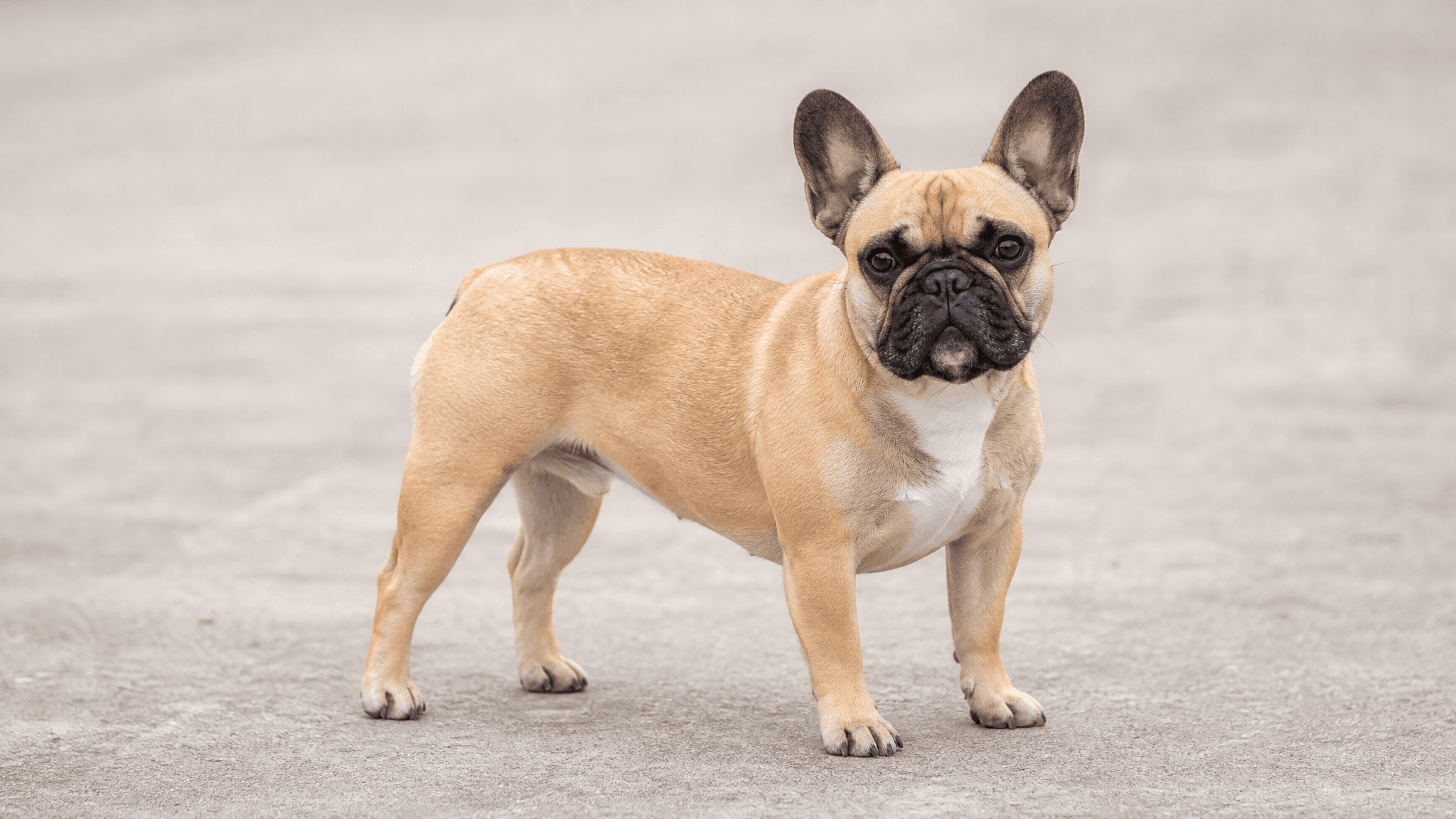
The French Bulldog is one of the most popular companion dogs in the world and the most popular in many countries, including the United States and Portugal. Descended from English Bulldogs crossed with local terriers in France in the 19th century, it is distinguished by its bat-shaped ears, flat face, and extraordinarily sociable and good-natured temperament. It is the quintessential apartment dog — adaptable, quiet, and very affectionate.
Physical Characteristics
- Size
- Small
- Height (male)
- 27–35 cm
- Height (female)
- 24–32 cm
- Weight (male)
- 14 kg
- Weight (female)
- 13 kg
- Life Expectancy
- 10–14 years
- Coat
- Short, smooth, shiny, and soft
- Common Colors
- Fawn, with or without black mask, brindle, white with patches (pied); merle and chocolate are not accepted by the FCI standard
Temperament & Personality
The French Bulldog is an affectionate, playful, and very sociable dog that loves being with people — any people. It is rarely aggressive and gets along well with children, other dogs, and cats. It adapts to practically any lifestyle as long as it has company, as it hates being alone. Despite being very intelligent, it can be stubborn in training, responding better to positive reinforcement with treats.
Activity & Exercise
- Energy Level
- Low to moderate
- Recommended Daily Exercise
- 20–30 minutes
- Suitable for Apartment
- Yes
Grooming & Care
- Grooming Needs
- Low
- Shedding
- Moderate
- Bathing Frequency
- Every 3–4 weeks
Health
- Common Health Issues
- Brachycephalic obstructive airway syndrome (BOAS) — the most serious and prevalent condition in the breed
- Cataracts
- Food and skin allergies
- Hemivertebra (vertebral malformation)
- Hiatal hernia
- Hip dysplasia
- Intervertebral disc disease (IVDD)
- Pyloric stenosis
- Skin fold infections
- Von Willebrand's disease
- Recommended Health Tests
- Airway evaluation
- Cardiac examination
- Eye examination
- Genetic test for Von Willebrand's disease
- Spinal and hip X-rays
Compatibility
- With Children
- Excellent
- With Other Dogs
- Excellent
- With Cats
- Excellent
- For First-Time Owners
- Recommended
Is a French Bulldog right for you?
A French Bulldog may suit you if:
- You enjoy daily strolls or short play sessions, as they only need 20 to 30 minutes of exercise each day.
- You appreciate a companion who thrives on being part of your daily activities and adapts well to apartment living.
- You are looking for an affectionate, playful, and very sociable dog that genuinely loves being around people.
- You are prepared to use consistent, positive reinforcement for their intelligent yet stubborn nature during training.
- You don't mind moderate shedding and are comfortable with low grooming needs, including bathing every 3 to 4 weeks.
- You are willing to provide constant companionship, as they thrive on being with you and genuinely dislike being left alone.
Think twice if:
- You expect immediate and unwavering obedience from your dog, as their intelligence is often paired with a stubborn streak.
- You have a lifestyle that often requires leaving your dog alone for long periods, as they truly thrive on constant company.
- You prefer a dog that is more independent and less reliant on constant human interaction throughout the day.
- You are unwilling to commit to their moderate shedding or their daily requirement of 20 to 30 minutes of exercise.
- You are not prepared for potential separation anxiety if their deep need for companionship is not consistently met.
- You are not patient with a dog that can be quite stubborn, even during simple daily routines or when being handled.
French Bulldogs are truly charming companions, offering boundless affection and adapting beautifully to many homes. Yet, their deep need for companionship means they thrive best when they are truly part of your daily life. Their delightful stubbornness requires a patient and positive approach, but the joy they bring to a well-suited home is immeasurable, making every effort worthwhile for their devoted families.
Training a French Bulldog
French Bulldogs are intelligent and eager to please their people, making them receptive to training when approached correctly. They thrive on positive reinforcement, especially with high-value treats and enthusiastic praise, as they are very sociable and love attention. Keep training sessions short, fun, and engaging, ideally 5-10 minutes a few times a day, to maintain their focus. If training becomes repetitive or unrewarding, their charmingly stubborn streak can emerge, leading to disinterest and making progress much slower. Consistency and patience are key to harnessing their desire to be with you.
Begin with:
- Attention and name response around distractions
- Recall on a long line
- Loose-leash walking
- Leave it and drop it
- Calm greetings without jumping
- Settling on a mat or bed
- Cooperative handling for grooming, ears, feet and teeth
- Waiting at doors and gates
Stubbornness and focus
French Bulldogs are known for their charmingly stubborn nature, which can sometimes make training a test of patience. While they are very intelligent, if a task isn't immediately rewarding or engaging, they might decide it's not worth their effort. To overcome this, always make yourself the most exciting thing in the room. Use their love for people and high-value treats to your advantage, keeping sessions short and incredibly fun.
Vary your rewards and training locations to keep them guessing and engaged, ensuring they see you as the source of all good things. This consistent positive reinforcement will help them stay focused and eager to learn, even when their independent spirit kicks in.
Leash manners
Despite their small size, French Bulldogs can be surprisingly strong and determined when they want to go somewhere, leading to pulling on the leash. Early and consistent training is crucial to teach them polite leash manners. Start in a quiet environment and gradually introduce distractions, always rewarding them for walking calmly by your side.
Practice loose-leash walking from the very beginning, using positive reinforcement to reward slack in the leash. Remember, their daily exercise needs are low to moderate, around 20-30 minutes, so quality walks focused on good behavior are more important than long, strenuous ones.
Alone time
French Bulldogs are quintessential companion dogs who thrive on human company and genuinely hate being left alone. If they don't get enough interaction or are left by themselves for too long, they can develop separation anxiety, leading to destructive chewing, excessive barking, or house-soiling.
It's vital to teach them gradually that being alone can be a positive experience. Start with very short periods and slowly increase the duration, always ensuring they have engaging toys or a puzzle feeder. Providing their recommended 20-30 minutes of daily exercise before you leave can also help them settle. Keep an eye out for signs of stress when you're away.
French Bulldog — Frequently Asked Questions
Why do French Bulldogs have trouble breathing?
French Bulldogs are a brachycephalic breed — their flat faces mean their airways are compressed, which makes breathing less efficient than in longer-nosed dogs. Many Frenchies have narrowed nostrils, an elongated soft palate, or a narrow trachea, all of which restrict airflow. This is why they snore, snort, and can overheat quickly — and why many vets now recommend corrective surgery (BOAS surgery) to improve their quality of life.
Are French Bulldogs good apartment dogs?
French Bulldogs are arguably the ideal apartment dog — they're small, quiet (they rarely bark), low on exercise demand, and deeply attached to their owner rather than needing a garden to roam. They're perfectly content with a couple of short walks and plenty of indoor play. The main apartment consideration is ensuring they have air-conditioning in summer, as they can't tolerate heat.
Can French Bulldogs swim?
French Bulldogs cannot swim safely — their heavy front-loaded bodies and short legs mean they sink rather than float, and their compressed airways make swimming exhausting. Never leave a Frenchie near pools, lakes, or the sea without a properly fitting dog life jacket. Even paddling in shallow water requires supervision. This is one of the few breeds for which swimming is genuinely dangerous rather than a fun activity.
Are French Bulldogs expensive to own?
Yes — French Bulldogs are one of the more expensive breeds to own beyond the initial purchase price. Their brachycephalic anatomy means higher veterinary bills (potential BOAS surgery, breathing-related consultations, and they often need C-sections to give birth). Pet insurance is strongly recommended. Budget for premium food, regular vet visits, and the possibility of costly health interventions over their lifetime.
What is the temperament of a French Bulldog like?
Frenchies are affectionate, playful, and wonderfully entertaining companions — they have a clown-like quality that makes them endlessly amusing. They bond deeply with their owners and tend to shadow them from room to room. They're adaptable, generally calm indoors, and while they can be stubborn, they're rarely aggressive. Their charm and low-maintenance personality make them one of the world's most popular companion breeds.
How much exercise do French Bulldogs need?
French Bulldogs need moderate, gentle exercise — around 20–30 minutes of walking per day is usually sufficient. Avoid vigorous exercise in warm weather, and always exercise them in the cooler morning or evening hours. Short, frequent outings are better than one long walk. They love indoor play and mental stimulation through puzzle toys, which tire them out without stressing their airways.
Are French Bulldogs good with children and other pets?
French Bulldogs are generally excellent with children — they're playful, patient, and love being part of a busy household. They bond well with other dogs and typically coexist peacefully with cats. Their calm, adaptable temperament makes them versatile family dogs. As always, supervise interactions with very young children and introduce new pets gradually to ensure harmony.
What is the average lifespan of a French Bulldog?
French Bulldogs typically live 10–12 years. Their lifespan is influenced significantly by the severity of their brachycephalic issues — dogs who have corrective BOAS surgery often live longer and more comfortably than those who don't. Keeping them cool, lean, and well-monitored by a vet familiar with the breed's specific health challenges will give your Frenchie the best chance of a long, happy life.
Community
Talk to real French Bulldog owners
This guide covers the breed on paper. In the app, the French Bulldog community covers it in real life: photos from other owners, questions answered by people who live with the breed, and a directory of dogs you can browse.
- Photos & pollsSee what French Bulldog owners are sharing today.
- Questions & answersAsk anything and hear from people who own one.
- Dog directoryBrowse French Bulldogs from around the world.
You join automatically when you add a French Bulldog to your profile.