Irish Wolfhound
Summary
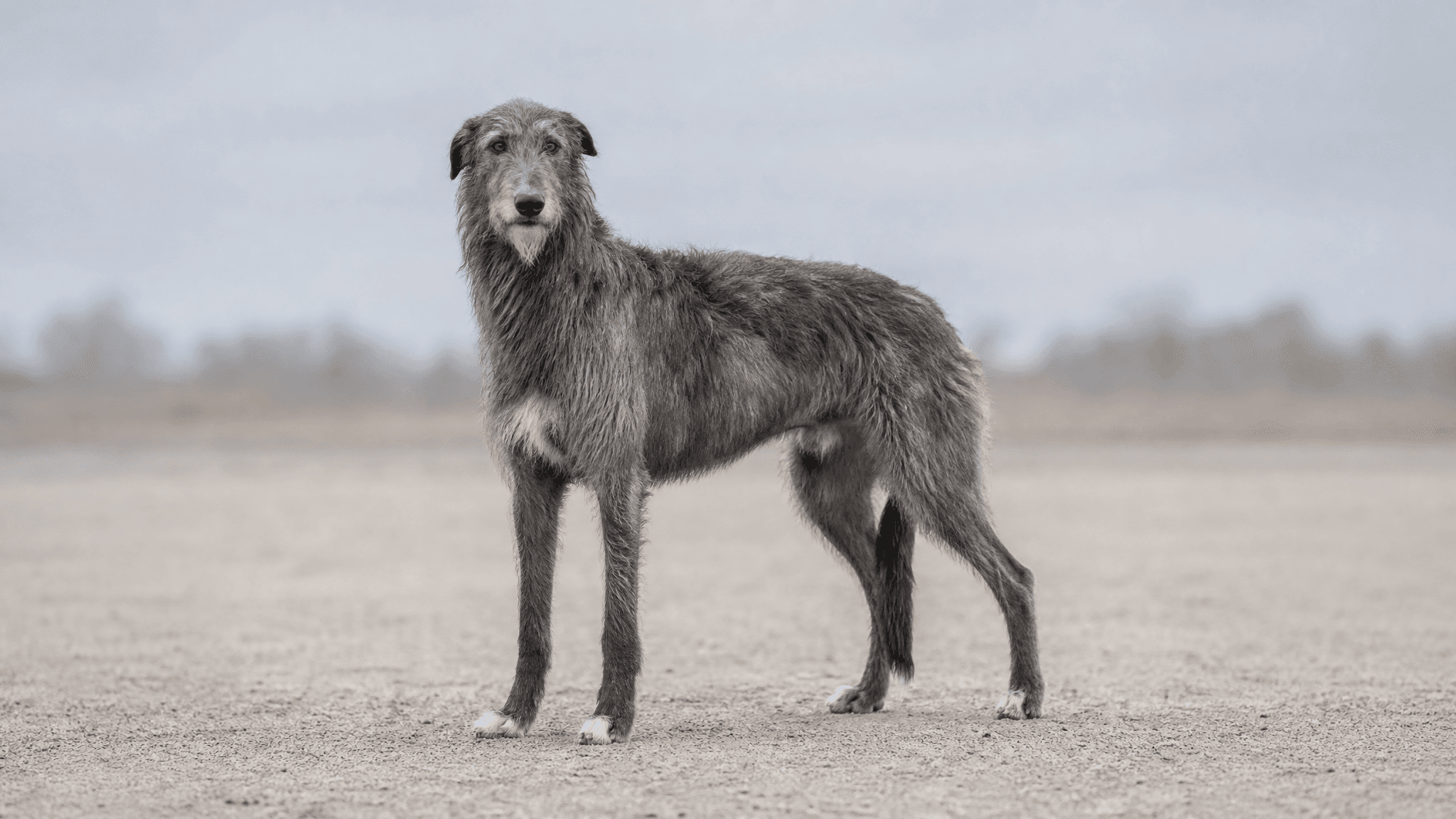
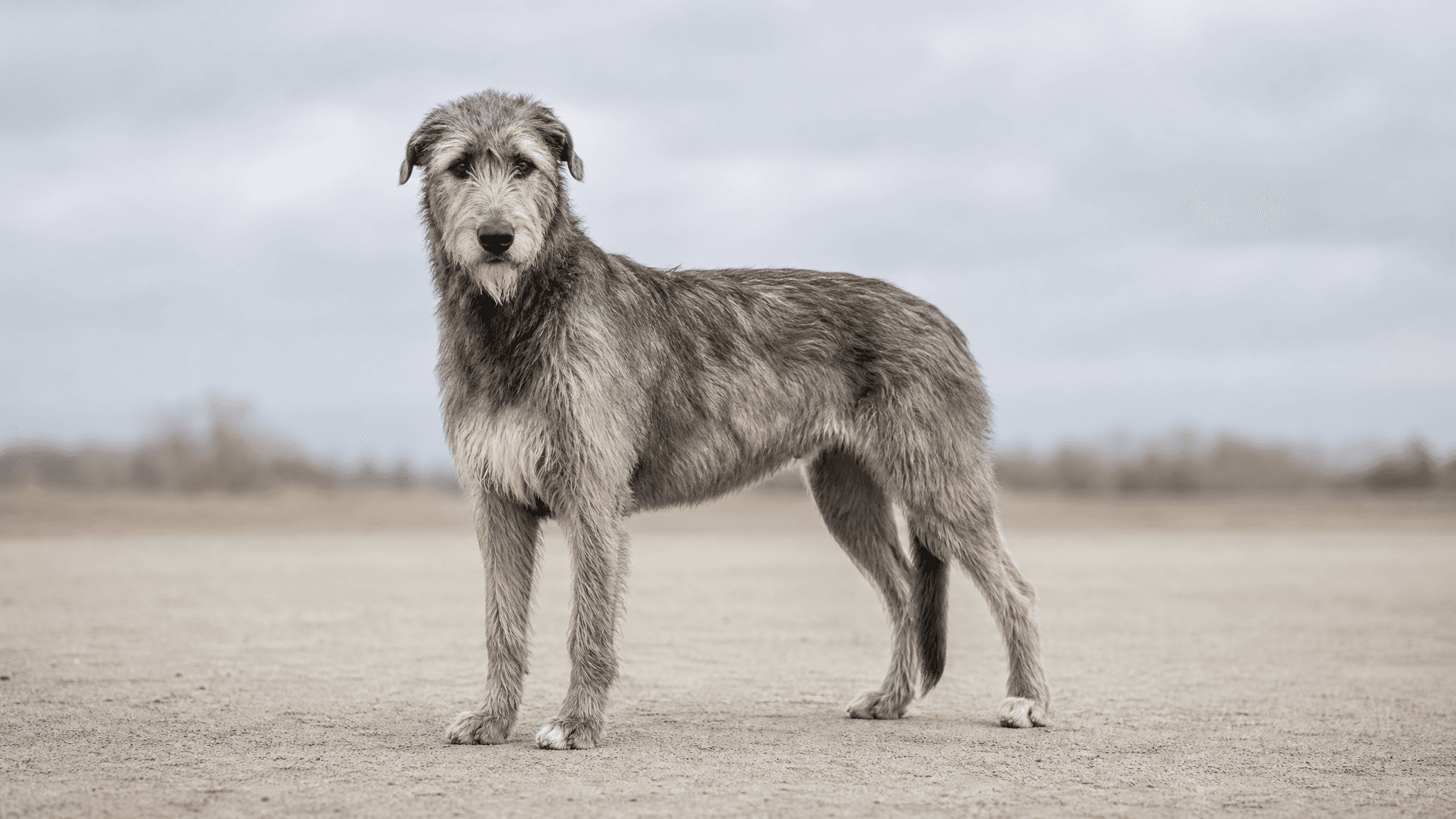
The Irish Wolfhound is the tallest dog in the world and one of the most imposing breeds in existence. With roots in Ancient Ireland, where it was used to hunt wolves and Irish elk and for warfare, its historical motto is "gentle when stroked, fierce when provoked." After the extinction of the wolf in Ireland and the consequent loss of utility, the breed nearly disappeared in the 19th century, being reconstituted by Captain George Graham from the 1860s onward. Despite its giant size, it is an exceptionally docile and affectionate companion.
Physical Characteristics
- Size
- Giant
- Height (male)
- 79–86 cm
- Height (female)
- 71–79 cm
- Weight (male)
- 68–90 kg
- Weight (female)
- 48–68 kg
- Life Expectancy
- 6–9 years
- Coat
- Hard, wiry, and rough; soft undercoat; longer hair over the eyes and under the chin
- Common Colors
- Grey, brindle, red, black, pure white, fawn
Temperament & Personality
The Irish Wolfhound is renowned for the paradoxical combination of physical gigantism and serene temperament. It is calm, intelligent, reserved, and deeply loyal to the family. It is rarely destructive or hyperactive at home, being generally patient with children and tolerant of other dogs. It can develop strong separation anxiety, as it forms very deep bonds with its humans. The hunting instinct remains active — it should always be kept on leash in open spaces.
Activity & Exercise
- Energy Level
- Moderate
- Recommended Daily Exercise
- 40–60 minutes
- Suitable for Apartment
- Not recommended
Grooming & Care
- Grooming Needs
- Moderate
- Shedding
- Moderate
- Bathing Frequency
- Every 6–8 weeks
Health
- Common Health Issues
- Dilated cardiomyopathy (DCM)
- Gastric dilatation-volvulus (GDV — less frequent than in larger breeds)
- Hip and elbow dysplasia
- Osteochondrosis
- Osteosarcoma
- Startle Disease (breed-specific, in the USA)
- Recommended Health Tests
- Annual electrocardiogram (ECG/echocardiogram)
- Genetic screening for cardiomyopathy
- Hip and elbow evaluation (OFA)
Compatibility
- With Children
- Good
- With Other Dogs
- Excellent
- With Cats
- Can be difficult
- For First-Time Owners
- Acceptable
Is an Irish Wolfhound right for you?
An Irish Wolfhound may suit you if:
- You can provide 40 to 60 minutes of daily exercise, ensuring both their moderate energy and keen mind are engaged.
- You enjoy a calm, settled home environment, cherishing the deep, loyal bond an Irish Wolfhound forms with its family.
- You appreciate a giant dog with a serene, intelligent, and reserved temperament that is wonderfully patient with children.
- You are prepared to commit to consistent, positive training, knowing they are responsive and generally acceptable for first-time owners.
- You are willing to provide moderate grooming for their distinctive hard, wiry coat, including regular brushing and bathing every 6 to 8 weeks.
- You understand and are prepared to manage their natural sighthound instincts, particularly regarding smaller, fast-moving creatures.
Think twice if:
- You expect unwavering, instant obedience, as Irish Wolfhounds possess an independent sighthound nature.
- You have a lifestyle that requires leaving your dog alone for extended periods, as they form deep bonds and can develop separation anxiety.
- You have cats or other very small, fast-moving pets, as their strong hunting instinct can make cohabitation challenging.
- You are not prepared to commit to at least 40 minutes of daily exercise or the moderate grooming their wiry coat requires.
- You live in an apartment or lack a spacious, securely fenced area suitable for a dog of giant size.
- You are unable to manage the physical strength and size of a dog that can weigh up to 90 kg, particularly during their energetic youth.
Living with an Irish Wolfhound is a unique experience, balancing their imposing size with their incredibly gentle nature. While they offer immense loyalty and calm companionship, their relatively short lifespan of 6 to 9 years means every moment is precious. Be prepared for a giant heart that demands a giant commitment, offering unparalleled love in return.
Training an Irish Wolfhound
Irish Wolfhounds, with their serene and intelligent nature, thrive on positive reinforcement and a deep bond with their families. They learn best through short, engaging sessions that leverage their loyalty and calm demeanor. Consistency is key; harsh corrections or impatience will only confuse and shut down these sensitive giants. When handlers fail to provide clear, gentle guidance, or neglect their need for companionship, these deeply loyal dogs can become anxious or withdrawn, making training much harder. Focus on building trust and making learning a positive experience.
Begin with:
- Attention and response to name around distractions
- Recall on a long line
- Loose-leash walking
- Leave it and drop it
- Calm greetings without jumping
- Settling on a mat or bed
- Cooperative handling for grooming
- Waiting at doors and gates
Prey Drive and Recall
As a sighthound, your Irish Wolfhound possesses a strong natural hunting instinct, honed over centuries to pursue game like wolves and elk. This powerful drive can make recall challenging, especially in open spaces where they might spot something interesting. Start recall training early and consistently in a safe, enclosed area, gradually adding distractions.
Always use a long line in unfenced areas until their recall is rock-solid, and even then, be aware of their instincts. Positive reinforcement, like high-value treats and enthusiastic praise, will make coming back to you the most rewarding choice. Remember, their loyalty is immense, but instinct is powerful. Our guide on teaching recall can help.
Managing Giant Strength
An Irish Wolfhound's sheer size and strength mean that pulling on the leash can quickly become unmanageable, even for a strong adult. Early and consistent loose-leash training is crucial. Start in quiet environments and gradually introduce more distractions, always rewarding walks with a slack leash. Using a front-clip harness can provide better control without causing discomfort.
Their sensitivity means harsh leash corrections are counterproductive. Focus on teaching them that walking politely by your side is the most rewarding experience. Consistency across all family members is vital for success. Our tips for stopping leash pulling offer more strategies.
Separation Anxiety
Irish Wolfhounds form incredibly deep bonds with their humans and can be prone to separation anxiety if left alone for extended periods without proper preparation. While generally calm at home, an anxious Wolfhound might become distressed, leading to vocalization or destructive behaviors. Start by leaving them for very short periods, gradually increasing the duration as they become comfortable.
Ensure they receive their recommended 40-60 minutes of daily exercise and plenty of mental stimulation before you leave. Provide engaging puzzle toys or a stuffed Kong to keep them occupied. Watch for signs of stress when you depart, and consider seeking professional help if the anxiety is severe. Understanding signs of stress can be very helpful.
Irish Wolfhound — Frequently Asked Questions
How big do Irish Wolfhounds get?
Irish Wolfhounds are the tallest dog breed in the world. Males stand at least 79 cm (31 inches) at the shoulder and can reach 90 cm or more; females are slightly smaller. They typically weigh between 54–70 kg (120–155 lbs). Their sheer presence is remarkable — standing on their hind legs, they can reach 2 metres or more. Their size means they need substantial space indoors and out, and everything from their bed to their food bowls and vet bills scales accordingly.
What health problems do Irish Wolfhounds have?
Irish Wolfhounds have one of the most challenging health profiles of any breed. Heart disease — particularly Dilated Cardiomyopathy (DCM) — is the leading cause of death. Osteosarcoma (bone cancer) is tragically common. Bloat (GDV) is a serious risk in this deep-chested breed and prophylactic stomach tacking (gastropexy) is often recommended. Liver shunt and pneumonia also affect the breed. Hip and elbow dysplasia occur. Annual cardiac screening with echocardiograms from age 2, regular health check-ups, and choosing puppies from health-tested parents are essential practices.
How long do Irish Wolfhounds live?
Irish Wolfhounds have one of the shortest lifespans of any breed, typically 6–8 years, with 10 considered exceptional. Their rapid growth, giant size, and elevated disease risk all contribute to a shorter life. Families considering an Irish Wolfhound need to genuinely prepare for this reality — the love given and received in those years is profound, but the grief comes sooner than with most breeds. Proactive cardiac screening, a carefully managed diet, prophylactic gastropexy, and regular specialist vet care can maximise both the length and quality of their time with you.
Are Irish Wolfhounds gentle with children?
Irish Wolfhounds are famously gentle giants — calm, patient, and deeply affectionate. Despite their formidable size, they are one of the softest-tempered breeds. They're generally wonderful with children, though their sheer size means they can accidentally knock over small children simply by moving around. They also have a sight-hound's instinct to chase fast movement, so supervision with toddlers and running children is sensible. For school-age children and above, a well-raised Wolfhound is a devoted, wonderful companion.
How much exercise does an Irish Wolfhound need?
Irish Wolfhounds need moderate exercise — around 40–60 minutes daily — but this must be carefully managed, especially in puppyhood. Their rapid growth rate (puppies can gain 2+ kg per week) means over-exercising before skeletal maturity (around 18–24 months) can seriously damage developing joints. Puppies should have free, self-directed play rather than forced exercise. Adult Wolfhounds enjoy long walks and occasional galloping in a safe space. Despite their size, they're not marathon runners — they're sprinters who prefer short bursts of speed followed by lounging.
Are Irish Wolfhounds easy to train?
Irish Wolfhounds are gentle, sensitive, and generally willing to cooperate — they respond well to calm, positive training from an early age. They're not as biddable as working breeds, and their sight-hound independence means recall can be unreliable if a prey animal captures their attention. Basic obedience, leash manners, and polite greeting are particularly important given their size. They respond best to kind, low-key training that respects their sensitive temperament. Harsh methods create anxiety and shutdown, never reliable obedience.
Do Irish Wolfhounds make good apartment dogs?
Irish Wolfhounds are not suited to apartment life — their sheer size makes most apartments completely impractical. They need a large home with enough indoor space to move around comfortably, and ideally a secure garden for outdoor time. Their relatively calm indoor temperament is a plus, but a dog who stands 80+ cm at the shoulder needs space that reflects this. A large house with a good-sized garden, near open spaces for walking, is the ideal environment for an Irish Wolfhound family.
What is the personality of an Irish Wolfhound?
Irish Wolfhounds are gentle, calm, and quietly dignified — their ancient history as royal dogs of Ireland is reflected in their serene, unhurried nature. They're deeply affectionate with their family, patient, and undemanding. Despite their hunting heritage, they're not aggressive or high-strung. They have a quiet, soulful quality that many owners describe as almost human — they observe, connect, and communicate with remarkable depth. They're not typically high-energy dogs indoors; they're content to be with their people, which makes the years with them — however brief — deeply special.
Community
Talk to real Irish Wolfhound owners
This guide covers the breed on paper. In the app, the Irish Wolfhound community covers it in real life: photos from other owners, questions answered by people who live with the breed, and a directory of dogs you can browse.
- Photos & pollsSee what Irish Wolfhound owners are sharing today.
- Questions & answersAsk anything and hear from people who own one.
- Dog directoryBrowse Irish Wolfhounds from around the world.
You join automatically when you add a Irish Wolfhound to your profile.