Afghan Hound
Summary
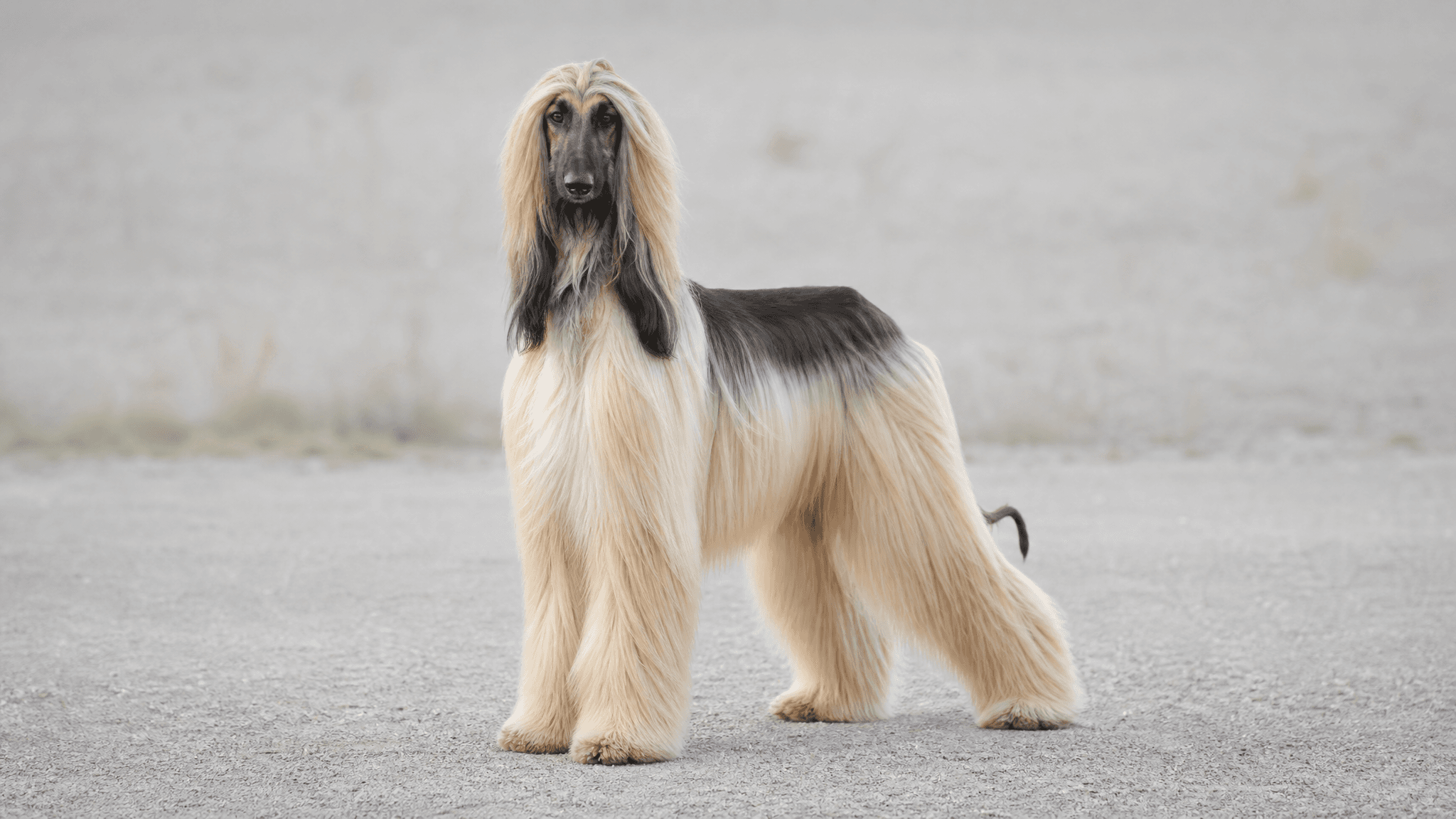
The Afghan Hound is one of the oldest dog breeds in the world, originating from the mountains and deserts of Afghanistan, where it hunted foxes, hares, and leopards on rocky terrain. Its exuberant, long, and silky coat emerged as an adaptation to the extreme climate of the Afghan mountains. It is distinguished by a singular beauty, an aristocratic bearing, and a temperament that combines aloofness with genuine affection for the family.
Physical Characteristics
- Size
- Large
- Height (male)
- 68–73 cm
- Height (female)
- 63–69 cm
- Weight (male)
- 25–27 kg
- Weight (female)
- 22–25 kg
- Life Expectancy
- 12–14 years
- Coat
- Long, fine, and silky; pronounced saddle on the back; abundant topknot on the head
- Common Colors
- All colors are accepted; white markings on the head are discouraged; black facial mask is common
Temperament & Personality
The Afghan Hound is described in official standards as "aloof and dignified, without being timid." It forms deep and loyal bonds with its family but tends to be reserved or indifferent toward strangers. It possesses a sense of humor and can be surprisingly playful, especially in puppies and young adults. Its independence makes it less oriented toward pleasing the owner than other breeds, which requires patience and consistency in training.
Activity & Exercise
- Energy Level
- High
- Recommended Daily Exercise
- 60–90 minutes
- Suitable for Apartment
- Yes with exercise
Grooming & Care
- Grooming Needs
- High
- Shedding
- Moderate
- Bathing Frequency
- Every 1–2 weeks
Health
- Common Health Issues
- Chylothorax (fluid accumulation in the chest — rare but serious condition)
- Dilated cardiomyopathy (DCM)
- Gastric dilatation-volvulus (GDV — less frequent than in larger breeds)
- Hip dysplasia
- Hypothyroidism
- Laryngeal paralysis
- Recommended Health Tests
- Cardiac examination
- Eye examination
- Hip evaluation
- Thyroid analysis
Compatibility
- With Children
- Moderate
- With Other Dogs
- Good
- With Cats
- Can be difficult
- For First-Time Owners
- Not recommended
Is an Afghan Hound right for you?
An Afghan Hound may suit you if:
- You are prepared to provide 60 to 90 minutes of vigorous exercise daily, like long runs or lure coursing.
- You enjoy an active lifestyle that includes engaging your dog in sighthound-specific activities.
- You appreciate a loyal companion with an independent, dignified spirit and a playful side once they trust you.
- You are patient and consistent in training, understanding that an Afghan Hound learns on its own terms.
- You are dedicated to a rigorous grooming routine, including frequent brushing and bathing every one to two weeks.
- You are willing to manage a strong prey drive and provide a secure, fenced environment for their safety.
Think twice if:
- You expect a dog that is highly biddable and eager to please in traditional obedience settings.
- You have a schedule that requires your dog to be left alone for long periods each day.
- You have small children or cats in the home and are not prepared for careful introductions and supervision.
- You are unwilling to commit to daily extensive exercise or the significant time required for their coat care.
- You do not have a securely fenced yard or are unable to supervise them closely outdoors.
- You are a first-time dog owner seeking an easy-to-manage breed from puppyhood through adolescence.
Living with an Afghan Hound is a unique journey. Their stunning beauty and deep loyalty are matched by an independent spirit and high demands for exercise and grooming. While they form profound bonds with their families, their aloofness and strong will mean you'll earn their affection and cooperation. For the right owner, embracing their aristocratic charm and specific needs leads to an incredibly rewarding partnership.
Training an Afghan Hound
Afghan Hounds are truly unique learners, possessing an independent spirit that makes them less inclined to simply 'please' their human. Training success hinges on making sessions fun, short, and highly rewarding with positive reinforcement and play. They thrive on engagement, not repetition or harsh corrections. If training becomes a chore or too forceful, your Afghan will likely disengage, becoming aloof or even stubborn, making progress much harder. Keep it light, keep it positive, and tap into their playful side, especially when they're young, to build a strong, trusting bond.
Begin with:
- Attention and response to name around distractions
- Recall on a long line
- Loose-leash walking
- Leave it and drop it
- Calm greetings without jumping
- Settling on a mat or bed
- Cooperative handling for grooming, ears, feet and teeth
- Waiting at doors and gates
Recall and prey drive
Afghan Hounds are sighthounds, bred to hunt foxes and hares over vast distances. This strong prey drive means that off-leash recall can be incredibly challenging, as their instinct to chase will often override any command. Begin recall training in a secure, distraction-free area, gradually introducing distractions. Always use a long line in unfenced areas until their recall is absolutely bulletproof, and even then, exercise extreme caution. High-value treats and enthusiastic praise are essential to make coming back to you more rewarding than the chase.
Consistency is key, and remember that even the most well-trained Afghan might succumb to instinct if a squirrel or rabbit darts by. For more detailed guidance, check out our recall training guide.
Leash pulling
Given their large size and strength, an Afghan Hound pulling on the leash can be a real handful. Early and consistent loose-leash training is vital to ensure enjoyable walks for both of you. Start in a quiet area and reward every step they take with a loose leash, gradually increasing distractions. Using a front-clip harness can also provide better control without causing discomfort.
Never rely on physical force, as their sensitivity means this can damage your bond and make them resistant. Instead, focus on positive reinforcement and making walking beside you the most rewarding option. You can find more tips in this guide on stopping leash pulling.
Boredom and destruction
Afghan Hounds have a high energy level and require 60-90 minutes of exercise daily. Without adequate physical and mental stimulation, they can become bored, which often manifests as destructive chewing, excessive barking, or general restlessness. Ensure they get their daily walks, and consider activities like lure coursing or puzzle toys to engage their minds.
They also form deep bonds with their families, and while dignified, they are not suited to being left alone for long periods. If you notice signs of stress when you leave, such as destructive behavior or excessive vocalization, it's important to address it. Learn more about how to tell if your dog is stressed when you leave.
Afghan Hound — Frequently Asked Questions
Are Afghan Hounds good family pets?
Afghan Hounds can be affectionate and loyal family companions, but they are not the typical family dog. They are aloof, independent, and can be selectively affectionate — they bond deeply but on their own terms. They tend to be reserved with strangers. Their strong prey drive makes them risky around small animals. They are dignified and sensitive dogs that do best in calm, patient households that appreciate their unique, cat-like personality rather than expecting the unconditional enthusiasm of other breeds.
Are Afghan Hounds easy to train?
Afghan Hounds are considered one of the most challenging breeds to train. They are highly intelligent but also deeply independent and were bred to make autonomous hunting decisions without human direction. They understand commands perfectly but may choose not to comply — especially in a distraction-filled environment. Patient, persistent, positive reinforcement is the only approach that works; harsh corrections make things significantly worse. Many Afghan owners find they achieve coexistence rather than obedience, and consider this part of the breed's charm.
How much exercise does an Afghan Hound need?
Afghan Hounds need daily vigorous exercise — they are sighthounds built for speed and require regular opportunities to run. A safely enclosed field or large garden where they can sprint freely (they can reach 65 km/h) is ideal. On-leash walks alone will not satisfy them. They should never be trusted off-leash in unsecured areas — their prey drive and speed make recall in open spaces nearly impossible. Two good runs per week plus moderate daily walks works for many Afghan owners.
Do Afghan Hounds have a strong prey drive?
Yes — Afghan Hounds have an extremely strong prey drive. They were bred in Afghanistan to hunt large prey like deer, leopards, and rabbits across vast, rugged terrain independently. Any small, fast-moving animal — cats, small dogs, rabbits — can trigger a full chase response. Even well-socialised Afghans can suddenly switch into hunting mode. They should never be trusted off-leash in unsecured areas. Introducing them carefully to household cats from puppyhood is possible, but any unknown small animal remains at risk.
How much grooming does an Afghan Hound need?
The Afghan Hound's long, flowing coat is one of the most demanding in dogdom. To maintain a full show coat, daily brushing is required. For pet owners, regular brushing 3–4 times per week prevents matts, with particular attention to behind the ears, armpits, and leg feathering. Professional grooming every 6–8 weeks is strongly recommended. Many owners opt for a shorter, more manageable clip. The coat should be bathed regularly and dried carefully. Neglected coats form painful matts that require full shaving.
What health issues affect Afghan Hounds?
Afghan Hounds are generally healthy but have some documented concerns. Hip dysplasia and elbow dysplasia can occur. Cataracts and Progressive Retinal Atrophy (PRA) affect vision. Thyroid disorders are noted in the breed. Like all large, deep-chested breeds, Bloat (GDV) is a risk — feeding smaller meals and avoiding vigorous exercise around mealtimes helps. They are sensitive to anaesthesia due to their very low body fat — always inform your vet. Regular annual check-ups are important.
How long do Afghan Hounds live?
Afghan Hounds have an average lifespan of 11–14 years. Their lean, athletic build contributes to their longevity compared to heavier breeds. Managing the risk of bloat with careful feeding practices, regular exercise, annual vet check-ups, and careful anaesthesia management are the most impactful factors. Their dense coat, while demanding to maintain, offers protection from the elements. Afghan Hounds from responsible, health-tested breeding lines tend to live healthy, full lives within this range.
Are Afghan Hounds good with other dogs?
Afghan Hounds are generally tolerant and peaceful with other dogs, especially other sighthounds. They tend not to be dog-aggressive, and lure coursing events and sighthound meetups often include multiple Afghan Hounds running and socialising together harmoniously. Their prey drive, however, means small dogs that move quickly can accidentally trigger a chase. Introductions should always be calm and managed. Afghans that are raised alongside other dogs typically coexist very well, maintaining their characteristically dignified composure.
Community
Talk to real Afghan Hound owners
This guide covers the breed on paper. In the app, the Afghan Hound community covers it in real life: photos from other owners, questions answered by people who live with the breed, and a directory of dogs you can browse.
- Photos & pollsSee what Afghan Hound owners are sharing today.
- Questions & answersAsk anything and hear from people who own one.
- Dog directoryBrowse Afghan Hounds from around the world.
You join automatically when you add a Afghan Hound to your profile.