Azawakh
Summary
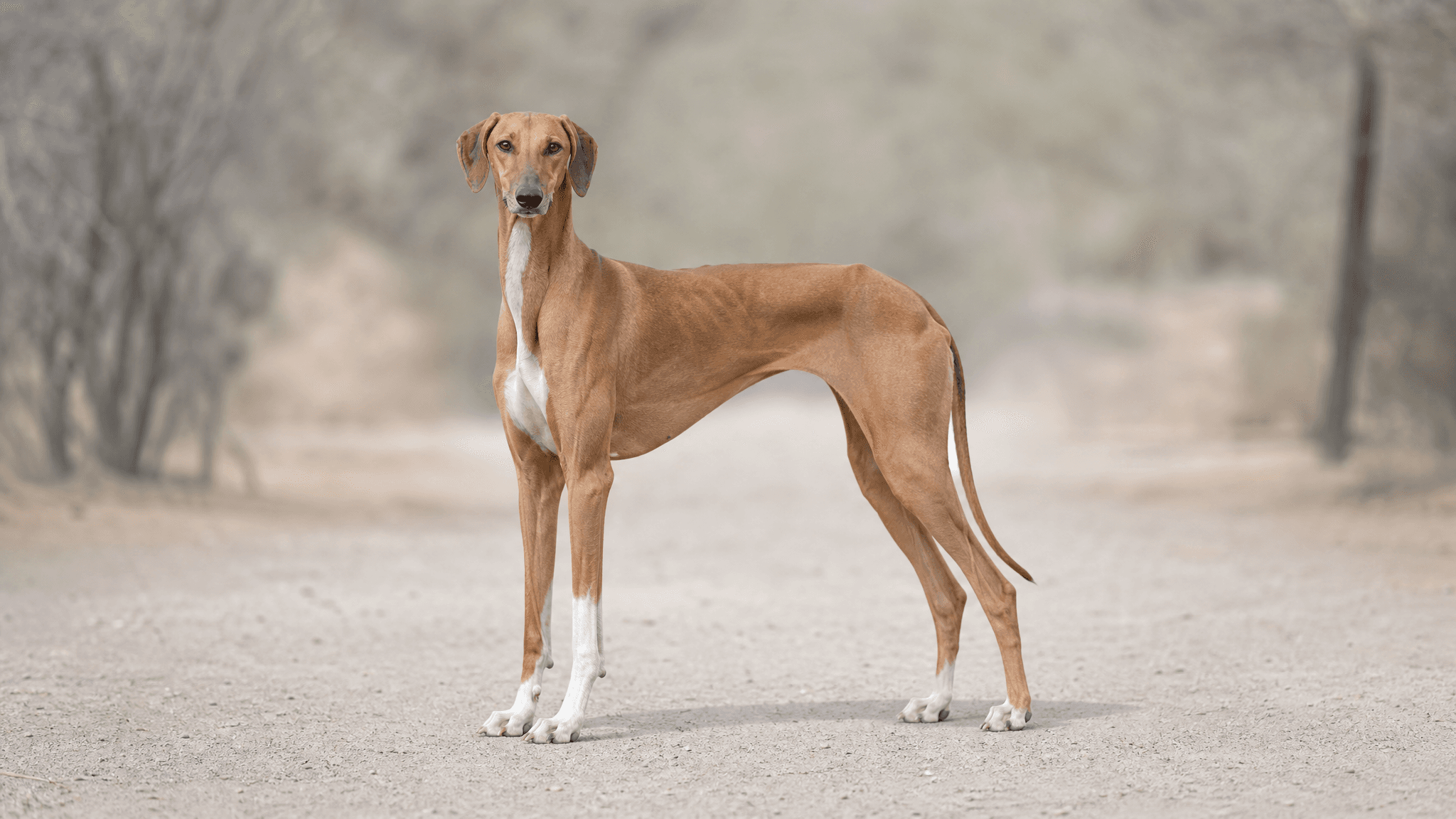
The Azawakh (pronounced _aza-vak_) is a West African sighthound bred by the nomadic Tuareg and Fulani peoples of the Sahel to hunt gazelles, hares, and ostriches, and to guard the camp. Among Group 10 breeds, it is the one with the most vertical proportions: body length is only 90% of the height at the withers, giving it a uniquely tall and slender silhouette. It is a rare breed, with keen intelligence, marked independence, and an intense but selective loyalty.
Physical Characteristics
- Size
- Large
- Height (male)
- 64–74 cm
- Height (female)
- 60–70 cm
- Weight (male)
- 20–25 kg
- Weight (female)
- 15–20 kg
- Life Expectancy
- 12–15 years
- Coat
- Extremely short, fine, and smooth; practically no undercoat; thin skin with bones and muscles visibly outlined
- Common Colors
- FCI standard: fawn (light sand to dark reddish) with or without brindle and white markings limited to the extremities; black mask possible in brindle; AKC standard accepts all colors
Temperament & Personality
The Azawakh is described as "swift, attentive, distant" in the official standard — a dog of reserved elegance that carefully chooses to whom it gives affection. With the family it is extraordinarily loyal and protective; with strangers it is cold or even distrustful. It is sensitive to the environment and human emotions: in tense or noisy environments it can become withdrawn or reactive. It differs from other sighthounds by having a genuine guarding instinct. It requires very early and consistent socialization to ensure a balanced temperament.
Activity & Exercise
- Energy Level
- High
- Recommended Daily Exercise
- 60–90 minutes
- Suitable for Apartment
- Yes with exercise
Grooming & Care
- Grooming Needs
- Very low
- Shedding
- Minimal
- Bathing Frequency
- Every 6–8 weeks
Health
- Common Health Issues
- Anesthesia sensitivity
- Autoimmune diseases
- Entropion/ectropion
- Gastric dilatation
- Heart problems (murmurs)
- Hip dysplasia
- Hypothyroidism
- Recommended Health Tests
- Cardiac examination
- Complete blood and immunological analysis
- Eye examination
- Hip evaluation
- Thyroid analysis
Compatibility
- With Children
- Moderate
- With Other Dogs
- Good
- With Cats
- Can be difficult
- For First-Time Owners
- Not recommended
Is an Azawakh right for you?
An Azawakh may suit you if:
- You can provide 60 to 90 minutes of vigorous daily exercise and engaging mental challenges.
- You enjoy activities like lure coursing or long, fast runs where your dog can stretch their legs.
- You appreciate a dog with a reserved elegance and a deep, selective loyalty to its chosen family.
- You are prepared to commit to consistent, positive reinforcement training that respects their independent nature.
- You prefer a low-maintenance dog when it comes to grooming, as their coat requires very little attention.
- You are willing to manage their strong sighthound instincts and natural protective tendencies with patience.
Think twice if:
- You expect a dog that is consistently eager to please and highly biddable in all situations.
- You have a busy household where your dog would frequently be left alone for long periods.
- You have cats or other small, fast-moving pets that could trigger their strong prey drive.
- You are unable to provide at least 60 to 90 minutes of vigorous exercise every single day.
- You do not have a securely fenced yard or safe, open spaces for them to run freely.
- You are not prepared for a sensitive and sometimes reactive dog that requires gentle, consistent handling.
The Azawakh offers a unique companionship, a blend of profound loyalty to their chosen family and a dignified independence. While they thrive on vigorous exercise and consistent, gentle guidance, they will reward you with an unwavering bond. Embracing their sensitive and reserved nature means welcoming a truly special, elegant companion into your life.
Training an Azawakh
Azawakh learn best through consistent, positive reinforcement that respects their keen intelligence and independent spirit. Short, engaging sessions, filled with praise and high-value rewards, will keep them motivated. Given their sensitive nature, harsh corrections or a tense training environment will cause them to withdraw or become reactive, making progress difficult. Building a strong bond of trust and mutual respect is paramount; they thrive when they feel understood and safe, offering their deep loyalty to those who earn it.
Begin with:
- Attention and response to name around distractions
- Reliable recall on a long line
- Loose-leash walking manners
- Leave it and drop it cues
- Calm greetings without jumping
- Settling calmly on a mat
- Cooperative handling for grooming and health checks
- Waiting patiently at doors and gates
Prey drive and recall
As sighthounds, Azawakh possess a powerful natural instinct to chase anything that moves quickly. A distant squirrel, a blowing leaf, or a running child can instantly capture their attention and override all prior training, making recall particularly challenging in unfenced areas. This strong prey drive is part of their heritage, bred to hunt gazelles and hares.
To manage this, focus intensely on recall training in a secure, fenced environment first, gradually introducing distractions. Always use a long line in any unfenced area, even if you trust your Azawakh's recall, as their instinct can be incredibly strong. Never rely on their recall around small, fast-moving animals in an open space, as their drive can be too powerful to resist.
Leash pulling and reactivity
The Azawakh's large size and strength, combined with their inherent sensitivity, can make leash walking a significant challenge. They are also known to be reserved and can become reactive or distrustful in tense or noisy environments, which can manifest as pulling, lunging, or withdrawing on walks. Their thin skin and visible bones also mean they are particularly sensitive to physical discomfort from harsh collars.
Prioritise positive reinforcement for loose-leash walking from the very beginning, making walks a pleasant experience. Avoid any harsh corrections or yanking, as this will likely worsen their reactivity and erode trust. Gradually desensitize them to new sights and sounds in urban environments, perhaps with the help of our Behaviour AI feature, ensuring they feel safe and secure by your side.
Underexercise and boredom
Azawakh are high-energy dogs that require a significant amount of physical and mental stimulation, typically 60-90 minutes of exercise daily. Without sufficient outlets for their energy and keen intelligence, they can quickly become bored, leading to destructive behaviours around the home or developing anxiety. Their sensitive nature also means they can become withdrawn or reactive if left alone for extended periods without proper engagement.
Ensure your Azawakh receives their recommended daily exercise, ideally including opportunities to run freely in a safe, fenced area. Provide plenty of puzzle toys and engaging activities to keep their intelligent minds active when indoors. A consistent routine and ample companionship are crucial to preventing boredom, anxiety, and the development of unwanted habits in this loyal and sensitive breed.
Azawakh — Frequently Asked Questions
What is the Azawakh?
The Azawakh is an ancient West African sighthound from the Sahara desert and sub-Saharan Sahel region — particularly the Azawakh Valley of Mali, Burkina Faso, and Niger. They are one of the few dog breeds that originated in Africa and were traditionally kept by the Tuareg nomads as hunting and coursing dogs, guard dogs, and status symbols. They are exceptionally lean and elegant — a visual image of speed and power contained in a minimal frame. Their build is strikingly tall and narrow, with prominent bone structure and very little body fat. Their coat is short, very thin, and often nearly absent on the underside. In character they are loyal, affectionate with their family, independent, aloof with strangers, alert, and instinctively reserved — one of the most ancient and distinct of all sighthound breeds.
Are Azawakhs good family dogs?
Azawakhs can make extraordinary companions for the right household, but they are a highly specialised breed with specific needs. They are deeply loyal and affectionate with their own family — forming intense, almost exclusive bonds. However, they are very reserved or aloof with strangers and rarely warm up quickly to outsiders. They can be gentle and playful with children they know well, but their sensitive nature means rough handling or chaotic environments cause distress. They can be dog-social within their own group but may chase small animals. They need experienced owners who understand the sighthound temperament. Their independence, sensitivity, and strong prey drive are not suited to inexperienced or very young-child families.
How much exercise does an Azawakh need?
Azawakhs need 1–1.5 hours of vigorous daily exercise. They are coursing dogs built for speed — they can reach 60+ km/h — and need the opportunity to sprint freely on a regular basis. Critically, all off-leash exercise must be in a completely and securely fenced area: their prey drive is intense, their speed extraordinary, and they cannot be recalled reliably when in pursuit of prey. Long walks, free running in secure fields, lure coursing, and agility suit them. After a good run, they are calm and relaxed indoors — they enjoy lounging and are not restless inside when adequately exercised. Like all sighthounds, they are sensitive to cold due to very low body fat and thin coats — they need a dog coat in cold weather.
What health issues affect Azawakhs?
Azawakhs are generally a healthy, robust primitive breed with good genetic diversity from their ancient origins. Key health concerns include anaesthesia sensitivity — like all sighthounds, their extremely low body fat means they metabolise drugs very differently; a vet experienced with sighthounds is essential for any procedure requiring sedation or anaesthesia. Autoimmune-mediated conditions including inflammatory myopathy and autoimmune thyroiditis have been documented in the breed. Seizures/epilepsy occurs. Hip dysplasia has been noted. Their very thin coat makes them vulnerable to skin injuries and cold. Regular annual vet check-ups with a sighthound-aware veterinarian are strongly recommended.
How long do Azawakhs live?
Azawakhs have an average lifespan of 12–15 years — excellent for a large breed. Key longevity factors include ensuring any veterinarian treating them is familiar with sighthound drug metabolism (critical for any anaesthetic procedure — standard doses can be fatal), protecting them from cold (coats in winter, warm sleeping areas — their very low body fat makes cold dangerous), providing a consistent, safe, low-stress environment (they are sensitive dogs who age better in calm, secure settings), daily adequate exercise (maintaining good lean muscle mass), annual vet check-ups, dental care, and maintaining a healthy weight (sighthounds should always look lean — obesity significantly shortens their lifespan). Their ancient constitution generally supports good longevity when their specific needs are well managed.
Are Azawakhs easy to train?
Azawakhs are intelligent but highly independent — they are not eager-to-please dogs like retrievers. They were developed to make independent hunting decisions without human direction and this self-determination is fundamental to their character. They respond to patient, positive, respectful training — they are sensitive dogs and harsh corrections damage the relationship irreparably. They can achieve good basic obedience and excel in lure coursing and agility. They respond to their trusted person and perform well for owners they respect and are bonded to. Training requires patience, consistency, and understanding of sighthound psychology — they are not fast obedience-competition dogs. Early socialisation is critical to prevent their natural reserve from developing into fear-based behaviour.
What is the Azawakh's cultural significance?
The Azawakh holds profound cultural significance among the Tuareg and other Saharan nomadic peoples. Traditionally, they were among the few possessions a Tuareg family would never sell — they were given as precious gifts to mark important alliances and relationships. They were not merely hunting tools but valued companions and status symbols, sleeping inside tents alongside their owners rather than outside like most other dogs. Their ownership was restricted to the noble castes of Tuareg society. The name 'Azawakh' comes from the valley in Mali where they were traditionally found. They were almost unknown outside their native region until the early 1970s, when European diplomats and travellers first brought specimens to Europe. They remain rare globally and are considered an important part of Saharan cultural heritage.
What does an Azawakh look like?
The Azawakh has one of the most visually striking and distinctive builds of any dog breed. They are tall, extremely slender, and deeply angular — their prominent bone structure, tucked abdomen, and visible musculature give them a sculpture-like quality. Males typically stand 64–74 cm at the shoulder; females slightly smaller. They are built for explosive speed — their deep chest provides lung capacity; their long, lean legs provide stride. Their coat is extremely short and fine — often nearly absent on the underside — coming in colours including fawn (the most common), red, sand, blue-fawn, and brindle, with white markings on the chest and extremities. Their head is long and narrow with a flat skull, and their large almond-shaped eyes are dark and expressive. Their overall impression is one of refined, austere elegance — power expressed through extreme economy of form.
Community
Talk to real Azawakh owners
This guide covers the breed on paper. In the app, the Azawakh community covers it in real life: photos from other owners, questions answered by people who live with the breed, and a directory of dogs you can browse.
- Photos & pollsSee what Azawakh owners are sharing today.
- Questions & answersAsk anything and hear from people who own one.
- Dog directoryBrowse Azawakhs from around the world.
You join automatically when you add a Azawakh to your profile.