English Foxhound
Summary
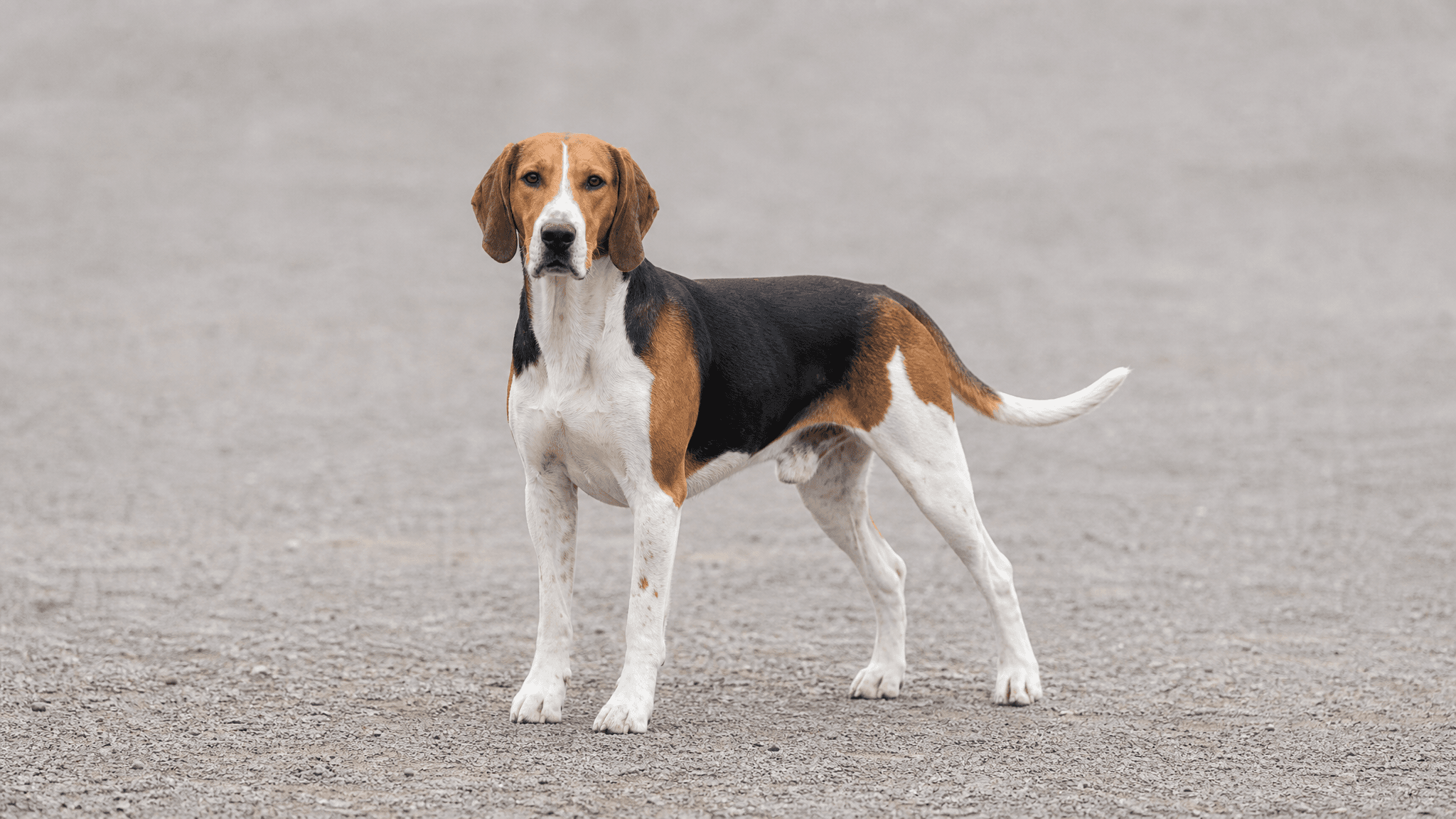
The English Foxhound is one of the oldest dog breeds in England, developed in the 16th century for fox hunting in packs of 20 to 40 dogs. It is an animal of athletic build, extraordinary endurance, and a highly developed pack sense. Rarely kept as a pure companion animal, it is a breed dedicated to hunting and work, being one of the most popular dogs in the British hunting tradition.
Physical Characteristics
- Size
- Large
- Height (male)
- 58–64 cm
- Height (female)
- 56–61 cm
- Weight (male)
- 29–32 kg
- Weight (female)
- 25–29 kg
- Life Expectancy
- 10–13 years
- Coat
- Short, dense, and resistant
- Common Colors
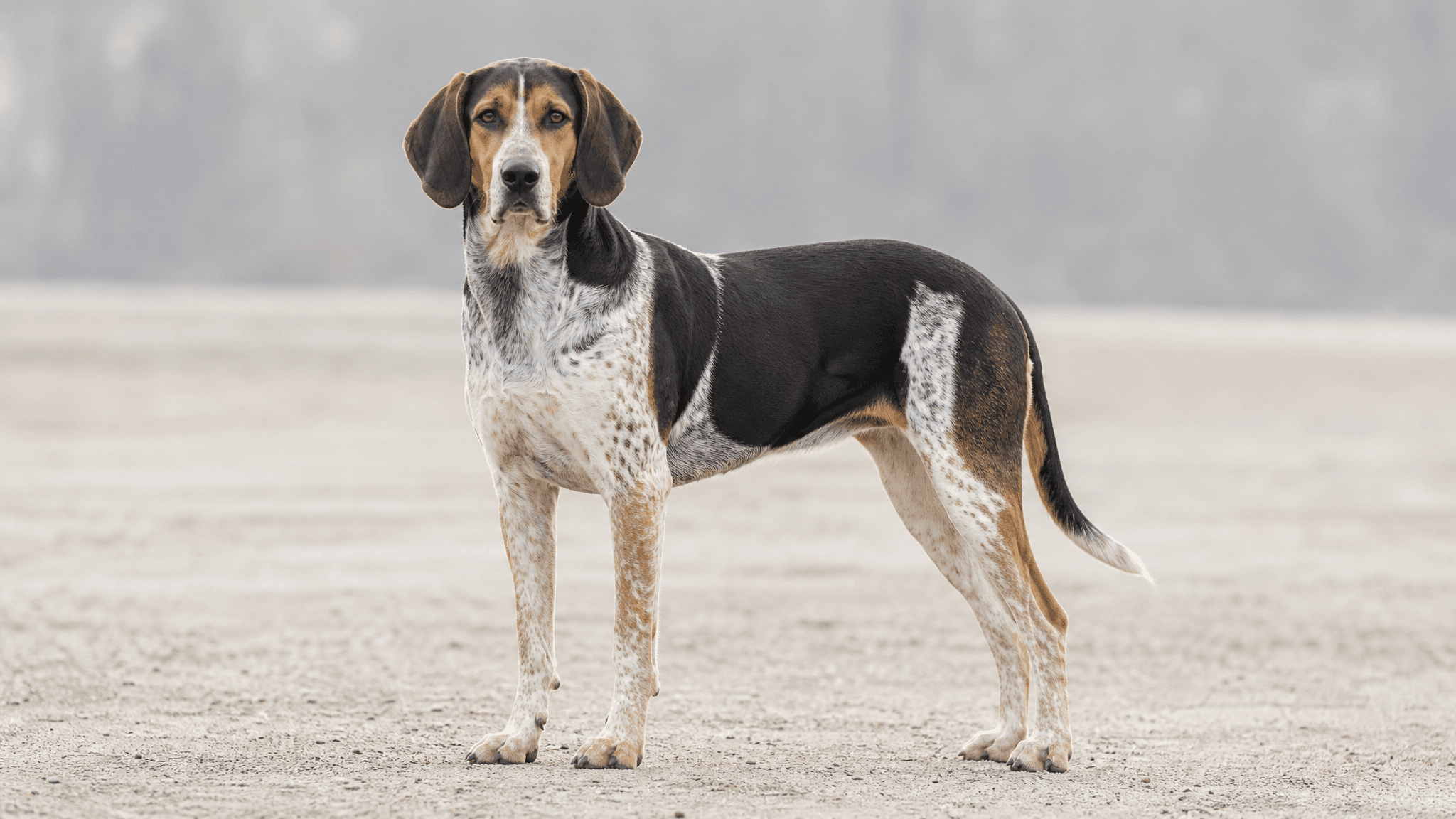
- Tricolor (black, white, and tan), bicolor, or mottled
Temperament & Personality
The English Foxhound is a sociable, energetic, and well-balanced dog. It is a pack animal par excellence — highly social with other dogs, although it can be reserved with strangers. Its endless energy and strong hunting instincts make it unsuitable for sedentary apartment life.
Activity & Exercise
- Energy Level
- Very high
- Recommended Daily Exercise
- 120 minutes
- Suitable for Apartment
- Not recommended
Grooming & Care
- Grooming Needs
- Low
- Shedding
- Moderate
- Bathing Frequency
- Every 4 weeks
Health
- Common Health Issues
- Epilepsy
- Hip dysplasia
- Kidney disease
- Recommended Health Tests
- Orthopedic evaluation
- Renal examination
Compatibility
- With Children
- Good
- With Other Dogs
- Excellent
- With Cats
- Can be difficult
- For First-Time Owners
- Not recommended
Is an English Foxhound right for you?
An English Foxhound may suit you if:
- You are prepared to provide at least 120 minutes of vigorous daily exercise and engaging mental stimulation.
- You enjoy an active, outdoor lifestyle, perhaps involving long hikes, running, or scent work adventures.
- You appreciate a sociable, energetic companion who thrives on canine companionship and is well-balanced.
- You are committed to consistent, patient training to guide a strong-willed, scent-driven breed.
- You prefer a low-maintenance coat, requiring only occasional brushing and bathing every four weeks.
- You are willing to manage a dog with a powerful prey drive and a deep need for social interaction.
Think twice if:
- You expect immediate, unwavering obedience from a dog whose powerful nose often dictates their focus.
- Your household routine involves leaving a dog alone for extended periods, as they thrive on constant companionship.
- You have cats or other small, non-canine pets that might be viewed as potential prey by a hound.
- You are unable or unwilling to commit to at least 120 minutes of vigorous, stimulating exercise daily.
- Your living space is an apartment, or you lack a securely fenced outdoor area for safe exploration.
- You are a first-time dog owner seeking a low-energy, highly biddable breed for an easy start.
The English Foxhound is a truly magnificent, athletic companion, brimming with joy for life and other dogs. However, their deep-seated hunting instincts and boundless energy demand an owner who embraces an active, outdoor lifestyle. They offer incredible loyalty and companionship to the right home, but will not thrive in a sedentary environment.
Training an English Foxhound
English Foxhounds are highly motivated by their strong scent drive and desire to work, making positive reinforcement with high-value treats and enthusiastic praise very effective. Keep training sessions short, fun, and engaging to match their very high energy level and prevent boredom. These intelligent hounds need clear guidance and a purpose to channel their energy. Inconsistent training or a lack of understanding of their natural instincts can lead to frustration for both dog and owner, as their natural curiosity and independence can manifest as unwanted behaviors.
Begin with:
- Attention and response to name around distractions
- Recall on a long line
- Loose-leash walking
- Leave it and drop it
- Calm greetings without jumping
- Settling on a mat or bed
- Cooperative handling for grooming, ears, feet and teeth
- Waiting at doors and gates
Scent and Prey Drive
English Foxhounds are Scent Hounds with an extraordinary sense of smell and a strong prey drive, developed over centuries for hunting. This means a captivating scent can easily override their focus on you. Start recall training in a secure, distraction-free area, gradually introducing mild distractions, and always use a long line in open spaces until their recall is rock-solid. Make coming to you the most rewarding thing ever with enthusiastic praise and high-value treats. For more detailed guidance, check out our guide on teaching recall.
Their instinct to follow a scent trail means they might ignore you completely once they're 'on the hunt.' Early and consistent training is crucial. Consider incorporating scent work games at home to channel this natural drive positively and keep their keen noses busy.
Leash Pulling
Given their large size and strength (males typically weigh 29-32 kg, females 25-29 kg), an English Foxhound pulling on the leash can be a significant challenge, especially with their very high energy level. They are bred for endurance, so they can pull for a long time! Start teaching loose-leash walking from day one with a comfortable, well-fitting harness that discourages pulling, rather than a collar alone.
Practice walking in quiet areas first, rewarding every step taken without tension on the leash. If they pull, stop immediately until the leash slackens, then continue. Consistency is key, and you might find this guide on stopping leash pulling helpful for building good habits.
Boredom and Destructive Habits
An English Foxhound requires a minimum of 120 minutes of exercise daily and thrives on mental stimulation. If under-exercised or left alone for too long, their very high energy and intelligence can lead to boredom, which often manifests as destructive chewing, excessive barking, or digging. They are not recommended for apartment living precisely because of these extensive needs.
Ensure they get their full daily exercise, including opportunities for running and exploring safely. Provide puzzle toys, rotate chew toys, and consider enrolling in dog sports like scent work or agility to keep their minds and bodies engaged. A tired Foxhound is a well-behaved Foxhound! If you're concerned about separation, our article on separation stress might offer insights.
English Foxhound — Frequently Asked Questions
What is the English Foxhound?
The English Foxhound is one of Britain's oldest and most distinguished dog breeds, developed over centuries specifically to hunt foxes in large, coordinated packs. Athletic, sturdy, and sociable by design, it is the definitive pack hound — bred not for solitary life but for working in harmony with dozens of other dogs and their human huntsmen. Today, while traditional fox hunting with hounds is restricted in Britain, English Foxhounds are still kept for drag hunting, and a small number find their way into family homes where their gentle, affectionate nature shines.
Are English Foxhounds good family pets?
English Foxhounds can make excellent family companions for the right household — one that can meet their significant exercise needs and is comfortable with a dog that has strong pack instincts. They are gentle, affectionate, and very good with children. They rarely show aggression. However, they are not couch dogs — they will be unhappy and destructive if they don't get enough daily exercise. They also have powerful noses and can be easily distracted by scents, which requires a secure garden and careful off-lead management.
How much exercise does an English Foxhound need?
English Foxhounds have a working dog's stamina and need a substantial amount of exercise — a minimum of 2 hours per day for an adult. They were bred to run for hours across countryside, and a short garden jog will barely take the edge off their energy. Long runs, cycling alongside you, or joining you for hiking are ideal. Access to a securely fenced area where they can run freely is important. Without adequate exercise, they can develop anxiety, excessive vocalisation, and destructive behaviours.
Are English Foxhounds easy to train?
English Foxhounds are intelligent but have a strong independent streak bred into them for working in the field without constant handler direction. They respond well to positive reinforcement and enjoy learning when training is fun and rewarding. Recall is a genuine challenge — a whiff of an interesting scent and they can disappear at speed. Establishing reliable recall from puppyhood requires consistent, patient work. They are also natural vocalisers and some training is needed to manage baying in residential settings.
Do English Foxhounds get along well with other dogs?
Exceptionally well — this is one of the defining traits of the breed. English Foxhounds were literally bred to live and work in packs of 20, 40, or even more dogs, so they are naturally social, tolerant, and non-aggressive with other dogs. They often prefer the company of other dogs to solitude. If being kept as a family pet, having a second dog can significantly improve their contentment, particularly during periods when the family is out. Their sociability with other dogs is one of the breed's most reliable characteristics.
What health issues are common in English Foxhounds?
The English Foxhound is generally considered a hardy, healthy breed with fewer hereditary health problems than many other breeds, partly due to the large gene pool maintained by working packs. Hip dysplasia is the most commonly noted concern, so hip scoring in breeding lines is worthwhile. Renal disease has been recorded at higher rates in some lines — specifically a condition called Amyloidosis — making kidney health monitoring relevant. As a large active breed, joint health management and maintaining a lean body weight are important throughout their life.
What is the typical lifespan of an English Foxhound?
English Foxhounds typically live between 10 and 13 years. Their working-bred constitution contributes to relatively good health across their lifespan. Maintaining a healthy weight is particularly important, as excess weight stresses joints significantly in an active breed. Adequate daily exercise keeps their cardiovascular health strong, and regular veterinary check-ups catch any issues early. Those kept active, well-fed, and loved typically live toward the upper end of their expected range.
What is the English Foxhound's coat like and how do you groom it?
English Foxhounds have a short, dense, hard coat that is naturally weather-resistant and very low-maintenance. A weekly brush with a bristle brush or hound mitt to remove loose hair and keep the coat gleaming is all that's normally needed. They have a 'houndy' scent that some owners notice more than others, and occasional baths (every 4–6 weeks) help manage this. Their ears should be checked and gently cleaned regularly, as drop ears can trap moisture. Nails require monthly trimming if they're not worn down naturally by exercise on hard surfaces.
Community
Talk to real English Foxhound owners
This guide covers the breed on paper. In the app, the English Foxhound community covers it in real life: photos from other owners, questions answered by people who live with the breed, and a directory of dogs you can browse.
- Photos & pollsSee what English Foxhound owners are sharing today.
- Questions & answersAsk anything and hear from people who own one.
- Dog directoryBrowse English Foxhounds from around the world.
You join automatically when you add a English Foxhound to your profile.