Bullmastiff
Summary
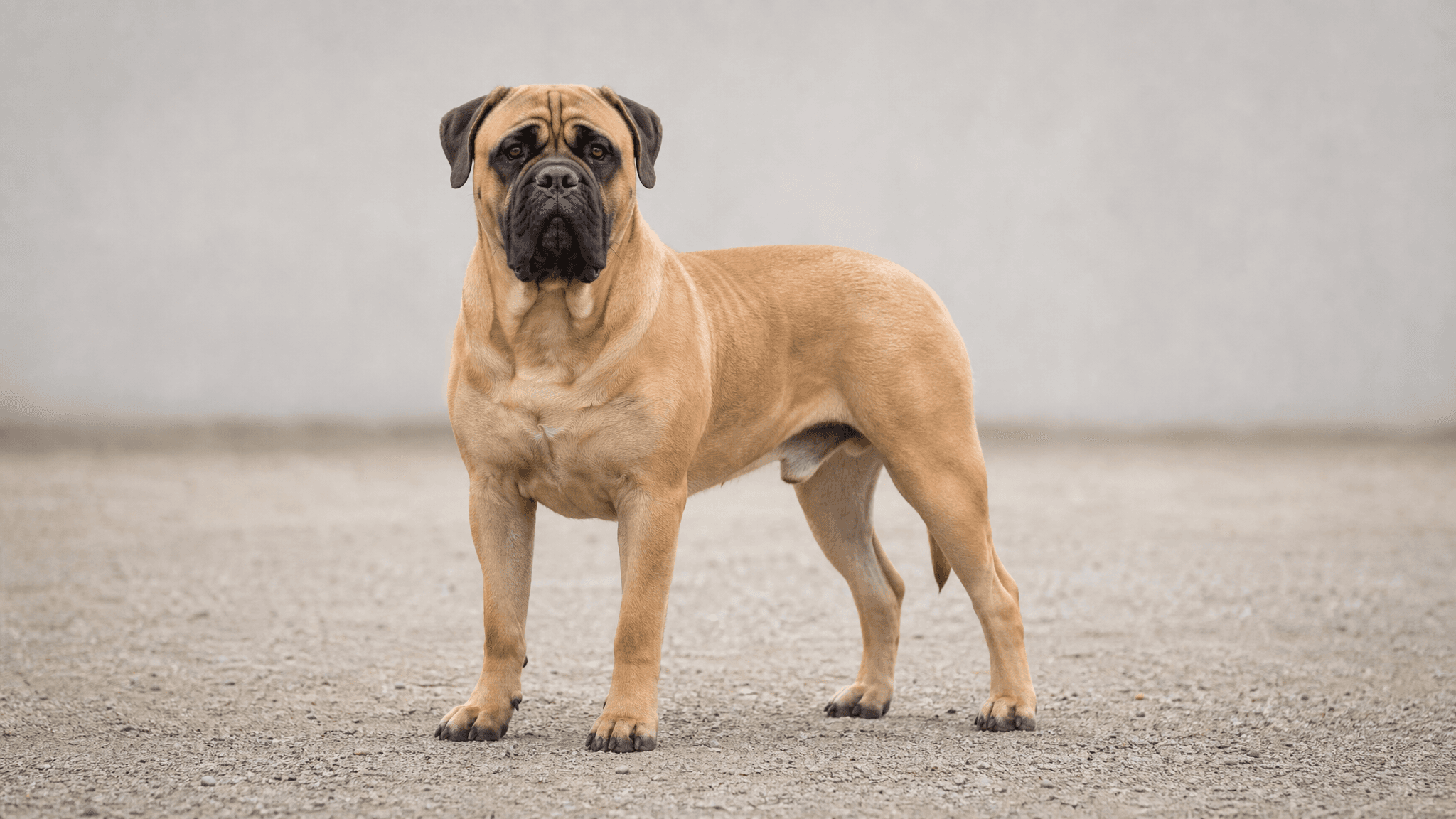
The Bullmastiff was created in England in the 19th century by the gamekeepers of large rural estates to intercept and pin down poachers without killing them. Developed from a cross of 60% English Mastiff with 40% Bulldog, the result was a dog with the mass and strength of the Mastiff and the agility and courage of the Bulldog — the "Gamekeeper's Night Dog", as it was called.
Physical Characteristics
- Size
- Large
- Height (male)
- 63–68 cm
- Height (female)
- 61–66 cm
- Weight (male)
- 50–59 kg
- Weight (female)
- 41–50 kg
- Life Expectancy
- 7–10 years
- Coat
- Short, dense, and hard
- Common Colors
- Fawn, red, brindle — all with a black mask on the muzzle
Temperament & Personality
The Bullmastiff is a natural guardian with a remarkably calm personality for its size. It is very loyal and affectionate with its family, generally good with children, but always maintains a natural reserve with strangers. It is not a dog that barks excessively — it prefers to observe and assess. Its courage is unquestionable, but it is controlled by a balanced temperament that makes it a predictable and reliable companion.
Activity & Exercise
- Energy Level
- Moderate
- Recommended Daily Exercise
- 60–90 minutes
- Suitable for Apartment
- Not recommended
Grooming & Care
- Grooming Needs
- Low
- Shedding
- Moderate
- Bathing Frequency
- Every 6–8 weeks
Health
- Common Health Issues
- Cancer (mast cell tumors, hemangiosarcoma, lymphoma)
- Gastric dilatation/torsion
- Heart disease
- Hip and elbow dysplasia
- Hypothyroidism
- Recommended Health Tests
- Cardiac examination
- Hip and elbow X-rays
- Thyroid evaluation
Compatibility
- With Children
- Good
- With Other Dogs
- Moderate
- With Cats
- Moderate
- For First-Time Owners
- Not recommended
Is a Bullmastiff right for you?
A Bullmastiff may suit you if:
- You can commit to providing 60 to 90 minutes of moderate daily exercise to keep them happy and healthy.
- You enjoy a calm, watchful companion who thrives on being a protective, loving part of your family's daily life.
- You appreciate a dog with a naturally calm, observant demeanor and a deep, unwavering loyalty to its loved ones.
- You are prepared to invest in consistent, positive training and early socialization to guide a strong-willed, intelligent breed.
- You don't mind moderate shedding and appreciate a short, low-maintenance coat that needs minimal regular grooming.
- You are ready to manage a dog with a strong natural protective instinct and a reserved approach to new people.
Think twice if:
- You expect instant, eager obedience, as Bullmastiffs are intelligent but can be independently minded.
- You frequently leave your dog alone for long periods, as these loyal companions thrive on family presence.
- You are unwilling to carefully introduce and supervise your Bullmastiff with other household pets.
- You are not prepared for the moderate daily exercise requirements or the consistent management of moderate shedding.
- You live in an apartment or do not have a securely fenced yard for a large, watchful breed.
- You are unable to physically manage a powerful, large-sized dog, especially during its boisterous adolescent phase.
The Bullmastiff offers immense loyalty and a calm, protective presence, making them truly wonderful family members. However, their substantial size and guardian instincts demand a committed owner who understands their specific needs for training, socialization, and secure space. Living with a Bullmastiff is a rewarding journey, but it requires dedication to nurture their best qualities.
Training a Bullmastiff
Training a Bullmastiff is a rewarding journey that requires consistency, patience, and a deep understanding of their unique temperament. These intelligent and loyal dogs thrive on positive reinforcement, responding best to calm, firm guidance rather than harsh corrections. Short, engaging training sessions, perhaps 5-10 minutes each, are far more effective than long, repetitive drills, keeping their attention focused. They are motivated by praise, treats, and quality time with their beloved family. If training is inconsistent or overly forceful, a Bullmastiff may become stubborn, withdrawn, or use their impressive size and strength to make their own decisions, making management challenging.
Begin with:
- attention and response to name around distractions
- recall on a long line
- loose-leash walking
- leave it and drop it
- calm greetings without jumping
- settling on a mat or bed
- cooperative handling for grooming, ears, feet and teeth
- waiting at doors and gates
Guardian instincts
Your Bullmastiff is a natural guardian, bred to observe and assess, and will naturally be reserved with strangers. While their courage is unquestionable, their balanced temperament means they prefer to assess rather than react impulsively. It's crucial to socialize them extensively from a young age, exposing them positively to a wide variety of people, sounds, and environments. Always manage introductions carefully, ensuring positive experiences and reinforcing calm, polite behavior. This helps them understand that new people are not a threat, allowing their calm nature to shine through.
Managing strength on leash
With males weighing up to 59 kg and females up to 50 kg, a Bullmastiff's sheer size and strength can make leash pulling a significant challenge if not addressed early. Start teaching loose-leash walking from puppyhood, using positive reinforcement to reward walking calmly by your side. A well-fitting harness designed for large, strong breeds can help manage their power and prevent pulling from becoming a deeply ingrained habit. Remember, consistency is key; every walk is a training opportunity. For more detailed guidance, check out our guide on stopping puppy pulling.
Boredom and destruction
Despite their moderate energy level and needing 60-90 minutes of exercise daily, Bullmastiffs are not suitable for apartment living and can become bored or destructive if under-exercised, under-stimulated, or left alone for extended periods. Their loyalty and affection for their family mean they thrive on companionship. Ensure they receive adequate physical activity and mental enrichment through training sessions, puzzle toys, and interactive play. Providing a comfortable, safe space, like a crate, can also help prevent destructive behaviors when you can't supervise them directly. If you notice signs of stress when left alone, our article on separation stress might be helpful.
Bullmastiff — Frequently Asked Questions
Are Bullmastiffs good guard dogs?
Absolutely — the Bullmastiff was bred specifically to be a guardian. Originally developed in 19th-century England to deter poachers, they combine natural protective instincts with a calm, confident temperament. They rarely bark unnecessarily, but their imposing size and unwavering loyalty make them highly effective deterrents. A well-trained Bullmastiff will hold an intruder at bay rather than attack, making them one of the most controlled guard dogs available.
How much exercise does a Bullmastiff need?
Bullmastiffs have moderate exercise needs — about 30 to 45 minutes of daily activity is sufficient for most adults. They enjoy leisurely walks and some garden play, but are not built for high-intensity sport. Puppies should avoid strenuous exercise until their joints are fully developed (around 18 months), as overexertion can strain their large frame. Quality over quantity is the right approach.
Do Bullmastiffs drool a lot?
Yes — drooling is part of the Bullmastiff's charm! Their short, broad muzzle and loose lips mean that drooling after drinking, eating, or getting excited is perfectly normal. Keeping a small towel handy is a time-honoured tip among owners. If you prefer a dry-mouth dog, the Bullmastiff may not be the right match for you — but those who love them see it as just another endearing quirk.
How big do Bullmastiffs get?
Bullmastiffs are large, powerful dogs. Males typically weigh 50–59 kg (110–130 lbs) and stand 63–68 cm (25–27 in) at the shoulder. Females are slightly smaller at 45–54 kg (100–120 lbs) and 61–66 cm (24–26 in). Full size is generally reached between 18 months and 2 years of age. Despite their imposing frame, they move with surprising agility and natural dignity.
Are Bullmastiffs good with children?
Bullmastiffs can be wonderful family companions and tend to be gentle and patient with children they grow up with. However, their sheer size means they can accidentally knock over small children, so supervision is always recommended. Teaching children to interact respectfully with the dog is just as important as training the dog itself. When raised together from puppyhood, a Bullmastiff often becomes a devoted, watchful protector of the whole family.
How long do Bullmastiffs live?
The Bullmastiff has a typical lifespan of 7 to 9 years, which is common for giant breeds. Like many large dogs, they are prone to hip and elbow dysplasia, bloat (GDV), and certain cancers. Regular veterinary check-ups, a balanced diet, appropriate exercise, and maintaining a healthy weight all contribute to a longer, higher-quality life. Choosing a reputable breeder who health-tests their breeding stock is essential from the start.
Do Bullmastiffs shed a lot?
Bullmastiffs are moderate shedders. Their short, dense coat sheds steadily throughout the year, with heavier periods in spring and autumn. Weekly brushing with a rubber grooming mitt or firm bristle brush is usually enough to manage loose hair and keep the coat looking healthy. They don't require professional grooming, but regular attention to their coat, nails, ears, and any facial wrinkles is important for overall hygiene.
Are Bullmastiffs easy to train?
Bullmastiffs are intelligent but can be independent and stubborn, which makes early, consistent training essential. They respond best to positive reinforcement — firm corrections often cause them to shut down. Socialization from a young age is equally important, as they can become overly wary of strangers and other dogs without it. Due to their size and strength, investing in puppy classes and continued obedience training is strongly recommended.
Community
Talk to real Bullmastiff owners
This guide covers the breed on paper. In the app, the Bullmastiff community covers it in real life: photos from other owners, questions answered by people who live with the breed, and a directory of dogs you can browse.
- Photos & pollsSee what Bullmastiff owners are sharing today.
- Questions & answersAsk anything and hear from people who own one.
- Dog directoryBrowse Bullmastiffs from around the world.
You join automatically when you add a Bullmastiff to your profile.