Bernese Mountain Dog
Summary
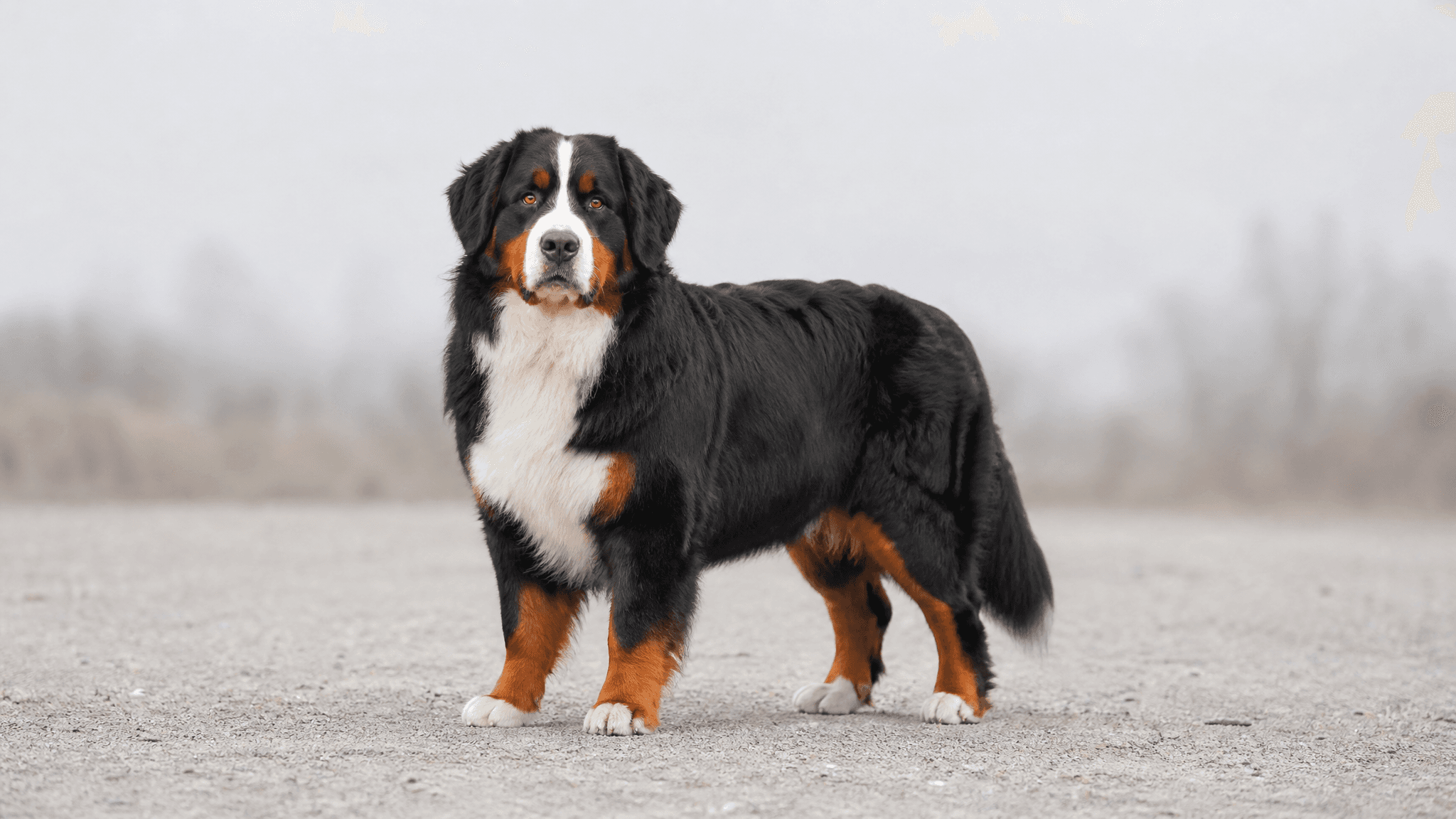
The Bernese Mountain Dog is the most popular of the four Swiss Sennenhunde, bred in the farmlands of the Canton of Bern for multiple functions: guarding property, driving cattle, and pulling carts loaded with milk and cheese to market. Today it is primarily a family dog with a gentle temperament, but it retains its athletic robustness and working instincts. It is easily recognisable by its dense tricolour coat and unmistakable white chest.
Physical Characteristics
- Size
- Large
- Height (male)
- 64–70 cm
- Height (female)
- 58–66 cm
- Weight (male)
- 38–50 kg
- Weight (female)
- 36–48 kg
- Life Expectancy
- 7–10 years
- Coat
- Long, dense, slightly wavy; double coat
- Common Colors
- Tricolour: black, rust, and white with a cross-shaped white marking on the chest
Temperament & Personality
The Bernese Mountain Dog has an exceptionally balanced character — it is affectionate, gentle, and extremely devoted to the family. It is a dog that thrives in the company of people, especially children, and tends to develop deep bonds with household members. It can be slightly reserved with strangers but is rarely aggressive. Its intelligence is above average and it learns easily through positive methods.
Activity & Exercise
- Energy Level
- Moderate
- Recommended Daily Exercise
- 60–90 minutes
- Suitable for Apartment
- Not recommended
Grooming & Care
- Grooming Needs
- High
- Shedding
- Heavy
- Bathing Frequency
- Every 4–6 weeks
Health
- Common Health Issues
- Autoimmune diseases
- Cancer (mast cell tumors, hemangiosarcoma, lymphoma)
- Gastric dilatation/torsion
- Hip and elbow dysplasia
- Recommended Health Tests
- Hip and elbow X-rays
- Screening for hereditary eye conditions
- Von Willebrand test
Compatibility
- With Children
- Excellent
- With Other Dogs
- Excellent
- With Cats
- Good
- For First-Time Owners
- Acceptable
Is a Bernese Mountain Dog right for you?
A Bernese Mountain Dog may suit you if:
- You are prepared to provide 60 to 90 minutes of daily activity to satisfy their moderate energy and working instincts.
- You enjoy including your dog in family-oriented outdoor adventures and social gatherings.
- You are seeking a gentle, affectionate, and deeply devoted companion who thrives on human companionship.
- You are committed to consistent, positive reinforcement training to harness their above-average intelligence.
- You are ready for significant grooming, including regular brushing of their dense, heavy-shedding double coat.
- You appreciate a dog with a natural protective instinct and a calm, watchful presence around your family.
Think twice if:
- You expect constant, unquestioning obedience, as their intelligence comes with an independent streak.
- You have a lifestyle that requires leaving your dog alone for extended periods, as they thrive on family companionship.
- You are not prepared for the relatively shorter lifespan of 7 to 10 years typical for a large breed.
- You are unwilling to commit to 60 to 90 minutes of daily exercise and consistent, high-level grooming.
- You live in an apartment or lack a securely fenced yard suitable for a large, robust dog.
- You are unprepared to manage the strength and size of a large, powerful dog, particularly during their boisterous youth.
Bernese Mountain Dogs offer immense love and devotion, becoming cherished family members with their gentle, affectionate nature. Yet, this deep bond comes with significant commitments: managing their substantial size and strength, providing consistent grooming for their beautiful coat, and accepting their relatively shorter lifespan. They are truly wonderful companions for those prepared to embrace these honest realities.
Training a Bernese Mountain Dog
Your Bernese Mountain Dog is a wonderfully intelligent and devoted companion, eager to please and thrive in your company. They learn best through positive reinforcement, responding beautifully to praise, treats, and gentle guidance. Keep training sessions short, fun, and consistent to maintain their focus and enthusiasm. Because they form such deep bonds, harsh corrections or inconsistent training can easily undermine their confidence and trust, leading to a reserved or confused response rather than the eager participation you're looking for. Patience and understanding will unlock their full potential.
Begin with:
- Attention and name response
- Recall on a long line
- Loose-leash walking
- Leave it and drop it
- Calm greetings without jumping
- Settling on a mat or bed
- Cooperative handling for grooming
- Waiting at doors and gates
Guarding Instincts
Your Bernese Mountain Dog was originally bred to guard property, and while they are gentle family dogs today, these instincts can surface. They might be reserved with strangers or bark to alert you to new arrivals. Focus on early, positive socialization to a wide variety of people, places, and sounds. Reward calm behavior around new experiences and teach a "quiet" command to manage barking. Channel their desire for purpose with engaging tasks or dog sports.
Leash Pulling Power
Bernese Mountain Dogs are large and strong, meaning a determined pull on the leash can be quite a challenge for an owner. Despite their moderate energy, they enjoy purposeful walks, and without proper training, they can easily develop the habit of pulling. Start loose-leash training early with positive reinforcement, rewarding every step taken with a slack leash. Consider a front-clip harness for better control without discomfort, and remember that consistency is key. You can find more tips on managing this with this guide.
Loneliness and Boredom
Your Bernese Mountain Dog thrives on companionship and deep bonds with their family. If left alone for extended periods without sufficient exercise or mental stimulation, they can become bored, stressed, and potentially destructive. Aim for their recommended 60-90 minutes of daily exercise and incorporate puzzle toys or training sessions to keep their intelligent minds active. Teach them to enjoy quiet time in a comfortable, safe space, but avoid leaving them isolated for too long. If you're concerned about separation stress, recognizing the signs is the first step.
Bernese Mountain Dog — Frequently Asked Questions
What is the Bernese Mountain Dog?
The Bernese Mountain Dog is a truly magnificent and beloved breed originating from the farmlands of the Canton of Bern in Switzerland. They are the most popular of the four Swiss Sennenhunde and belong to FCI Group 2, which includes Swiss Mountain- and Cattledogs. These gentle giants are easily recognized by their large size, striking dense tricolour coat, and that unmistakable white chest that gives them such a distinguished look. They carry a noble presence, yet their hearts are full of warmth and affection, making them wonderful companions.
What was the Bernese Mountain Dog originally bred for?
Originally, the Bernese Mountain Dog was a versatile working dog, bred for a variety of tasks on Swiss farms. They were invaluable helpers, guarding property with their watchful eyes, driving cattle across pastures, and even pulling carts laden with milk and cheese to market. Their strength and robust nature made them perfectly suited for these demanding jobs. While today they are primarily cherished family dogs, they still retain that athletic robustness and strong working instincts, a lovely nod to their industrious heritage.
How much exercise does a Bernese Mountain Dog need?
Bernese Mountain Dogs have a moderate energy level, so while they're not hyperactive, they definitely enjoy and benefit from regular activity! We recommend providing your Bernese with about 60 to 90 minutes of exercise each day. This could include lovely walks, playtime in a secure yard, or even some gentle hiking adventures. Consistent exercise helps keep them physically fit and mentally stimulated, ensuring they remain happy and well-behaved companions. They love being active with their families!
Is the Bernese Mountain Dog a good family dog?
Absolutely! The Bernese Mountain Dog is renowned for being an exceptionally good family dog. They possess an incredibly balanced character, being affectionate, gentle, and extremely devoted to their human family members. They truly thrive in the company of people, especially children, and tend to develop deep, loving bonds with everyone in the household. While they might be a little reserved with strangers initially, they are rarely aggressive, making them wonderful, gentle protectors and loving companions for families with children and other pets.
Is the Bernese Mountain Dog easy to train?
Yes, the Bernese Mountain Dog is generally considered quite easy to train! They have an above-average intelligence and a wonderfully balanced temperament, which makes them very receptive to learning. They respond best to positive reinforcement methods, thriving on praise, treats, and gentle encouragement. Consistency and patience are key, and starting early with socialization and basic obedience will help your Bernese grow into a well-mannered and delightful companion. They genuinely enjoy engaging with their owners during training sessions.
What health issues are common in the Bernese Mountain Dog?
Like all breeds, Bernese Mountain Dogs can be predisposed to certain health conditions, and it's important for prospective owners to be aware. While they are generally robust dogs, responsible breeding practices and regular veterinary care are crucial for their well-being. Ensuring your Bernese receives routine check-ups, a balanced diet, and appropriate exercise will help support their overall health throughout their life. Always discuss any health concerns with your veterinarian to keep your furry family member happy and thriving.
What is the Bernese Mountain Dog's coat like and how much grooming does it need?
The Bernese Mountain Dog boasts a truly beautiful and distinctive dense tricolour coat, which is one of their most defining features! To keep this lovely coat looking its best and to manage shedding, regular grooming is definitely recommended. Brushing them a few times a week helps to remove loose hair, prevent mats and tangles, and distribute natural oils, keeping their skin healthy and their coat shiny. It's also a wonderful opportunity for some quality bonding time with your beloved Bernese!
What is the typical lifespan of a Bernese Mountain Dog?
The typical lifespan for a Bernese Mountain Dog is generally between 7 and 10 years. While this might seem shorter than some other breeds, these years are often filled with immense love, loyalty, and joy. Providing them with excellent nutrition, regular veterinary care, appropriate exercise, and a loving home environment can help ensure they live their fullest and happiest lives with you. Every moment with a Bernese is truly precious!
Community
Talk to real Bernese Mountain Dog owners
This guide covers the breed on paper. In the app, the Bernese Mountain Dog community covers it in real life: photos from other owners, questions answered by people who live with the breed, and a directory of dogs you can browse.
- Photos & pollsSee what Bernese Mountain Dog owners are sharing today.
- Questions & answersAsk anything and hear from people who own one.
- Dog directoryBrowse Bernese Mountain Dogs from around the world.
You join automatically when you add a Bernese Mountain Dog to your profile.