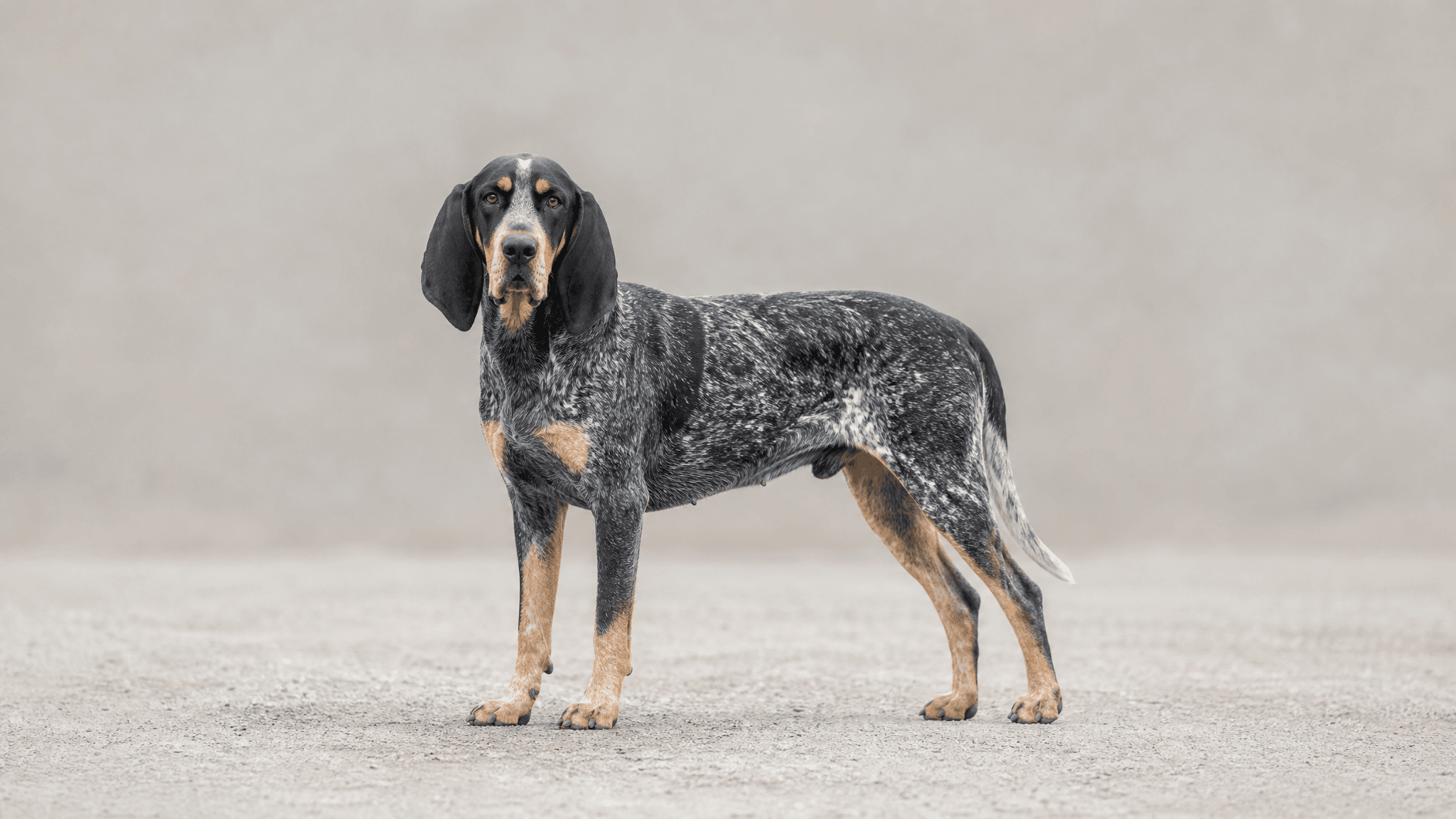
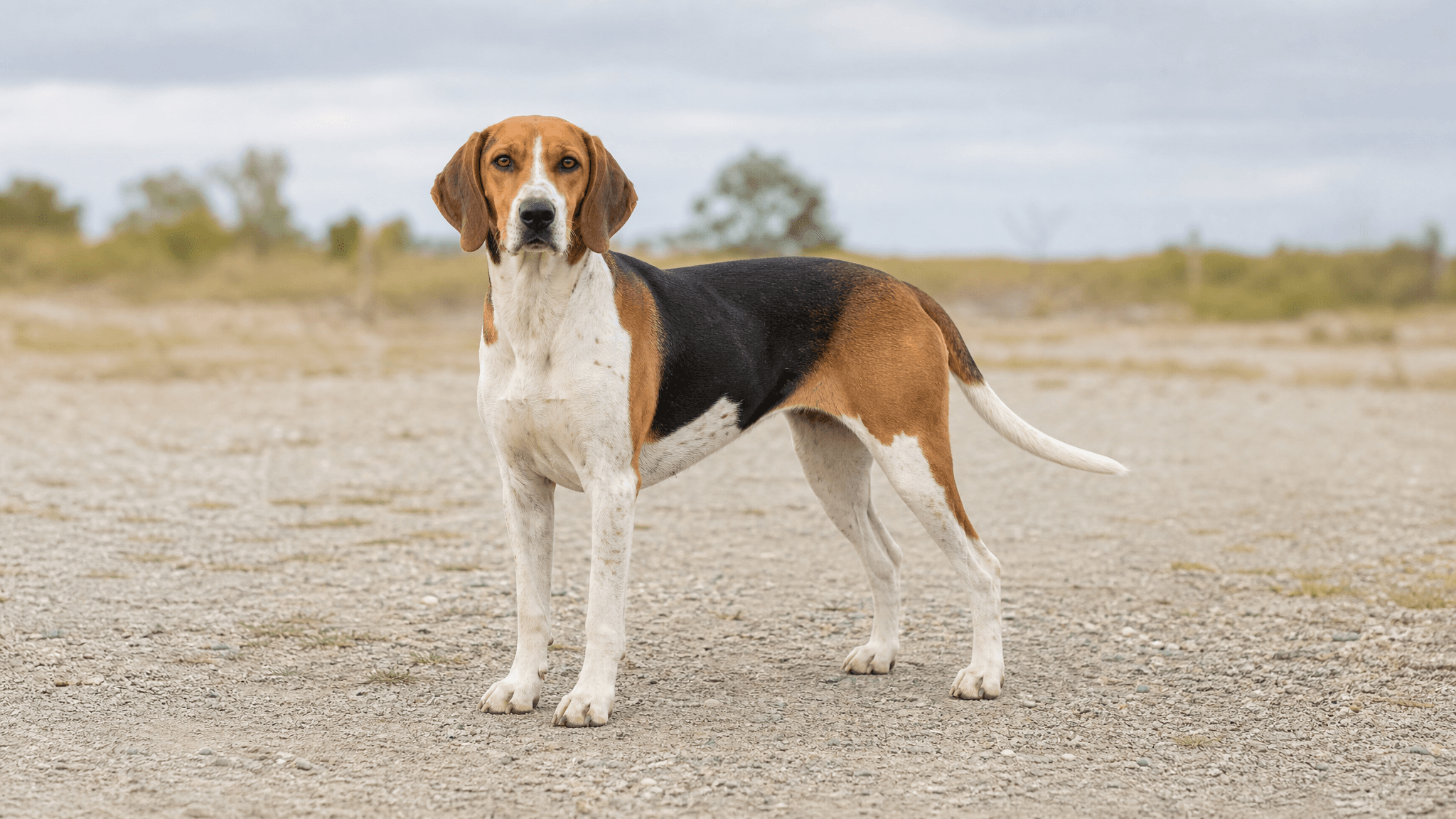
American English Coonhound
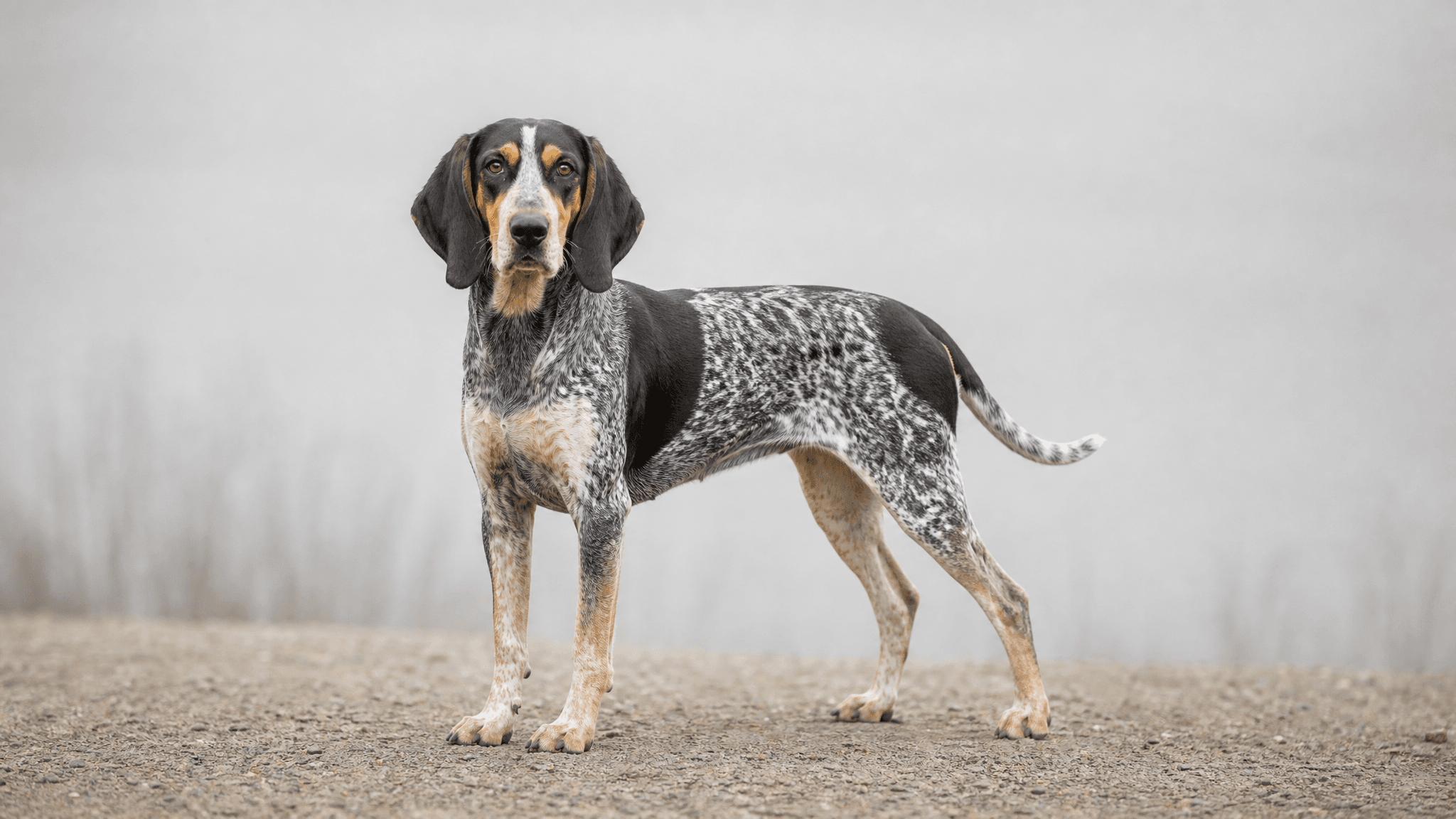
Summary
The American English Coonhound is an American scenthound descended from English Foxhound stock and developed for raccoon and fox hunting.
Physical Characteristics
- Size
- Large
- Height (male)
- 61–66 cm
- Height (female)
- 58.5–63.5 cm
- Weight (male)
- 20.5–29.5 kg
- Weight (female)
- 20.5–29.5 kg
- Life Expectancy
- 11–12 years
- Coat
- Short, hard, protective hound coat
- Common Colors
- Red and white ticked, blue and white ticked, tricolor with ticking, red and white, or white and black
Temperament & Personality
The American English Coonhound is sweet, athletic, alert, sociable, and highly vocal. It is affectionate at home but needs serious exercise and scent work.
Activity & Exercise
- Energy Level
- High
- Recommended Daily Exercise
- 60–120 minutes
- Suitable for Apartment
- Not recommended
Grooming & Care
- Grooming Needs
- Low
- Shedding
- Moderate
- Bathing Frequency
- Every 6–8 weeks
Health
- Common Health Issues
- Bloat
- Ear infections
- Hip dysplasia
- Recommended Health Tests
- Cardiac examination
- Ear examination
- Hip evaluation
Compatibility
- With Children
- Good
- With Other Dogs
- Good
- With Cats
- Can be difficult
- For First-Time Owners
- Acceptable
Is an American English Coonhound right for you?
An American English Coonhound may suit you if:
- You are prepared to provide 60 to 120 minutes of vigorous daily exercise and engaging scent work.
- You enjoy an active, outdoorsy lifestyle that includes long walks, runs, or engaging in dog sports.
- You appreciate a highly sociable and affectionate companion who will alert you with their distinctive vocalizations.
- You are committed to consistent, positive reinforcement training to channel their natural hound instincts.
- You are comfortable with moderate shedding and a straightforward grooming routine for their short, hard coat.
- You are ready to manage a dog with a strong prey drive and a tendency to follow interesting scents.
Think twice if:
- You expect immediate, perfect obedience from a dog, as their independent hound nature often leads them to follow their nose.
- You frequently leave a dog alone for long periods, as these social hounds thrive on companionship and activity.
- You have cats or other small, non-canine pets that might be seen as prey by a dog with a strong hunting instinct.
- You are unable to commit to providing at least an hour of vigorous daily exercise, regardless of the weather.
- You live in an apartment or do not have a securely fenced yard to contain an active, scent-driven large dog.
- You are unprepared for the strength and boisterous energy of a large, athletic hound, especially during their adolescent phase.
The American English Coonhound is a truly special companion for the right family. While their sweet nature and affectionate loyalty are incredibly rewarding, their strong drive for scent work and high energy mean they need a dedicated owner who embraces an active lifestyle. Be ready for a vocal, adventurous friend who will fill your home with love and lively hound antics for 11 to 12 years.
Training an American English Coonhound
Your American English Coonhound is a bright, athletic companion eager to please, especially when their incredible nose is involved! They thrive on positive reinforcement, so keep training sessions short, fun, and reward-based, using high-value treats or favorite toys. Consistency is key, and if training becomes repetitive or frustrating, your clever Coonhound might become bored, distracted, or even vocal, making progress difficult. Always end on a positive note to keep them enthusiastic about learning!
Begin with:
- Attention and response to name
- Recall on a long line
- Loose-leash walking
- Leave it and drop it
- Calm greetings without jumping
- Settling on a mat
- Cooperative handling
- Waiting at doors and gates
Scent Drive and Recall
Your American English Coonhound's powerful scent drive, honed for hunting, means a captivating smell can easily override other commands. This is especially true for recall, where their focus on a scent trail can make them seem deaf to your calls. It's crucial to start recall training in a low-distraction environment and gradually introduce more complex settings.
Always use a long line in unfenced areas until their recall is rock-solid, especially given their "can be difficult" rating with cats and other small prey. High-value, irresistible treats are your best friend here! For more detailed guidance, check out our guide on teaching recall.
Leash Pulling
Given their large size and high energy, American English Coonhounds can be strong pullers on the leash, especially when an exciting scent catches their attention. This isn't just uncomfortable for you; it can also be a safety concern. Start teaching loose-leash walking from day one, using a front-clip harness for better control.
Ensure your Coonhound gets plenty of exercise, ideally 60-120 minutes daily, before walks to help burn off some of that energy. Consistent, positive reinforcement for walking politely will make a huge difference. You can find more tips in our article on how to stop leash pulling.
Boredom and Vocalization
An American English Coonhound with high energy and a need for serious exercise and scent work can become bored or under-stimulated if left alone too long or not adequately exercised. This often manifests as excessive vocalization—their characteristic baying—or destructive chewing. They thrive on having a "job" to do.
Provide ample mental stimulation through puzzle toys, scent games, and regular training sessions. Ensure they receive their recommended daily exercise. If you suspect your Coonhound is experiencing separation anxiety, our guide on stress signs when left alone can offer helpful insights.
American English Coonhound — Frequently Asked Questions
What is the American English Coonhound?
The American English Coonhound (also known as the Redtick Coonhound) is one of the six AKC-recognised coonhound breeds, developed in the American South from English Foxhounds brought to the colonies in the 17th and 18th centuries. It was bred specifically to hunt raccoon and fox across the challenging terrain of the American landscape — faster and more versatile than many of its coonhound cousins. It is known for its striking ticked or parti-coloured coat, exceptional speed, powerful nose, and enduring stamina. The AKC recognised it as a separate breed in 2011, though it had long been established as a working and hunting dog.
How much exercise does an American English Coonhound need?
The American English Coonhound is a high-energy, athletic working breed that needs a minimum of 1.5–2 hours of vigorous exercise per day. It was developed to hunt at speed across long distances, and this stamina is deeply bred in. Long runs, hikes, and safe free-running in enclosed areas are ideal. Without sufficient exercise, American English Coonhounds become restless, vocal, and destructive. They are among the faster coonhound breeds and have real endurance, making them excellent jogging or trail running companions for active owners. They are definitively not a low-exercise breed.
Is the American English Coonhound good with families?
The American English Coonhound is an affectionate, loyal, and gentle breed that makes a wonderful family companion in the right environment. It bonds warmly with its people and is generally good with children who enjoy active outdoor play. Due to its pack hunting heritage, it typically gets along very well with other dogs and enjoys canine companionship. Its strong prey drive makes it unreliable around cats and small animals. It needs space — a large, securely fenced property and an active family. For the right active, outdoor-loving household, it is a devoted and joyful companion.
Is the American English Coonhound easy to train?
The American English Coonhound is intelligent but has the characteristic scent hound independence — it thinks for itself, especially when a scent captures its attention. It responds well to positive reinforcement training using food and praise. Recall is the most critical and most challenging skill to establish: a Coonhound on a trail ignores commands. Consistent, patient training from puppyhood builds the best foundations. It thrives in field trials and competitive hunting events where its natural intelligence and tracking ability are channelled productively. It can learn obedience commands reliably with the right training approach, but requires an experienced or committed handler.
What is the American English Coonhound's voice like?
The American English Coonhound has a loud, melodious, and far-carrying voice — it bays and howls with great enthusiasm both on the trail and when it wants attention. This voice was a prized trait in hunting, allowing hunters to locate their dogs over long distances in dense woodland. In a domestic setting, this vocality is one of the breed's most significant challenges — neighbours will hear it. The American English Coonhound bays when bored, when it detects a scent, when it wants company, and when excited. Prospective owners must be fully prepared for this level of noise, and it is not suited to close-proximity urban living.
What health issues are common in the American English Coonhound?
The American English Coonhound is a generally healthy breed. Hip dysplasia occurs at moderate rates in large working breeds. Ear infections are a recurring concern due to their long, droopy ears — regular ear inspection and cleaning after outdoor activity are essential preventive habits. Bloat (gastric dilatation-volvulus) is a risk for deep-chested breeds — feeding two smaller meals and restricting vigorous exercise directly after eating reduces this risk. Polyradiculoneuritis (a neurological condition causing acute weakness or paralysis) has been noted in coonhounds as a rare but breed-relevant condition. Regular veterinary check-ups maintain overall health.
Does the American English Coonhound get along with other dogs?
The American English Coonhound was developed for pack hunting and is naturally very dog-sociable. It genuinely enjoys the company of other dogs and typically gets along well with dogs of all sizes. Multi-dog households suit it very well. Having canine companions can significantly improve its wellbeing when owners are away. The prey drive that makes it challenging around cats and small pets does not extend to other dogs — it is cooperative and rarely aggressive. Proper socialisation from puppyhood maintains and reinforces these positive dog-dog interactions throughout its life.
What is the typical lifespan of an American English Coonhound?
The American English Coonhound typically lives between 11 and 12 years, a standard lifespan for a large working hound. Its robust working constitution contributes to overall resilience. The main longevity factors are maintaining a healthy body weight, providing vigorous daily exercise, proactive ear care to prevent chronic infections, appropriate feeding practices to reduce bloat risk, and routine veterinary care. Dogs in active working or hunting environments that receive regular purposeful exercise and attentive care tend to age well and maintain good health throughout their senior years.
Community
Talk to real American English Coonhound owners
This guide covers the breed on paper. In the app, the American English Coonhound community covers it in real life: photos from other owners, questions answered by people who live with the breed, and a directory of dogs you can browse.
- Photos & pollsSee what American English Coonhound owners are sharing today.
- Questions & answersAsk anything and hear from people who own one.
- Dog directoryBrowse American English Coonhounds from around the world.
You join automatically when you add a American English Coonhound to your profile.