Bluetick Coonhound
Summary
The Bluetick Coonhound is an American scenthound known for its blue-ticked coat, cold nose, and persistent raccoon-trailing ability.
Physical Characteristics
- Size
- Large
- Height (male)
- 56–68.5 cm
- Height (female)
- 53.5–63.5 cm
- Weight (male)
- 25–36.5 kg
- Weight (female)
- 20.5–29.5 kg
- Life Expectancy
- 11–12 years
- Coat
- Short, glossy, moderately coarse hound coat
- Common Colors
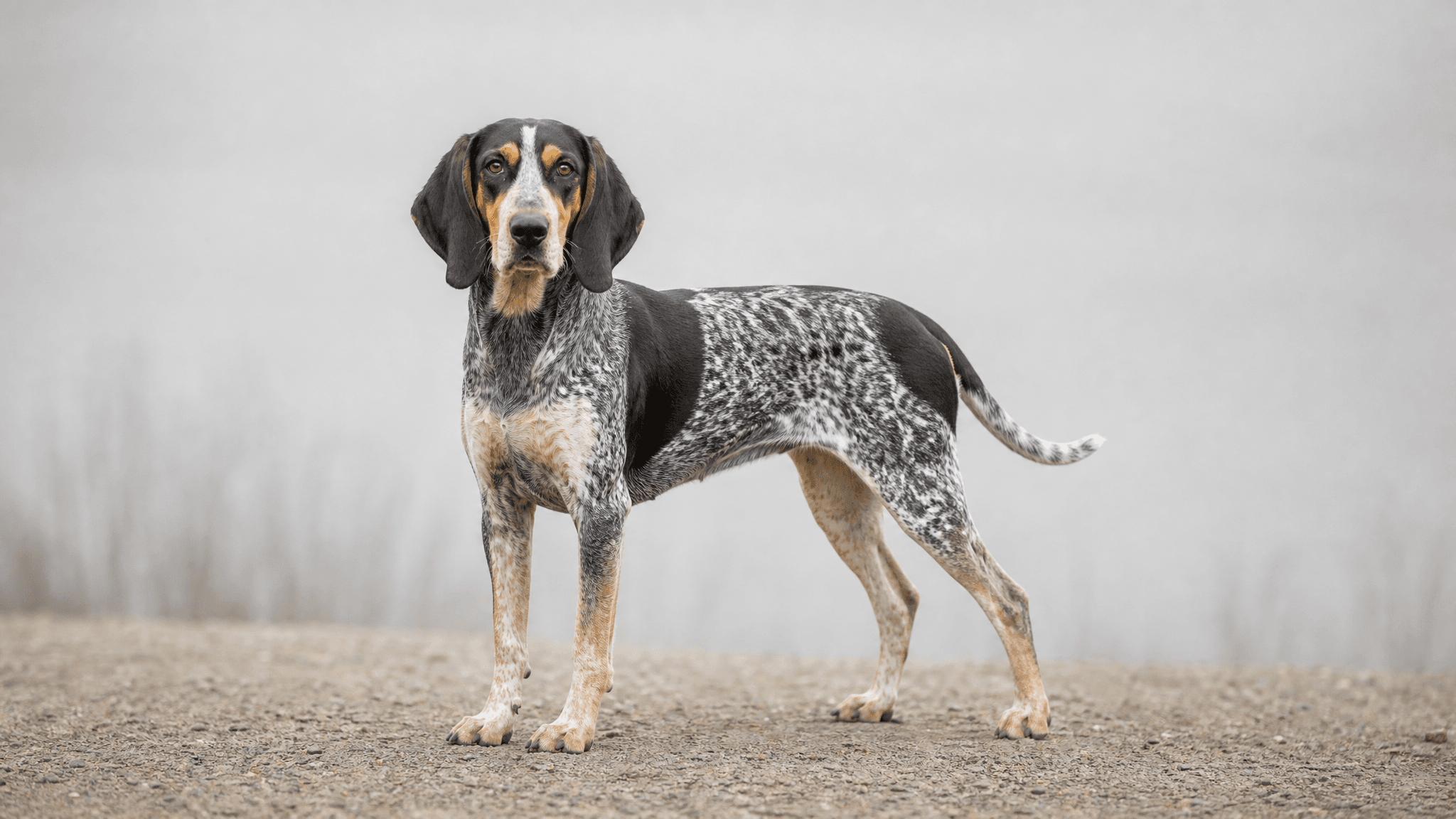
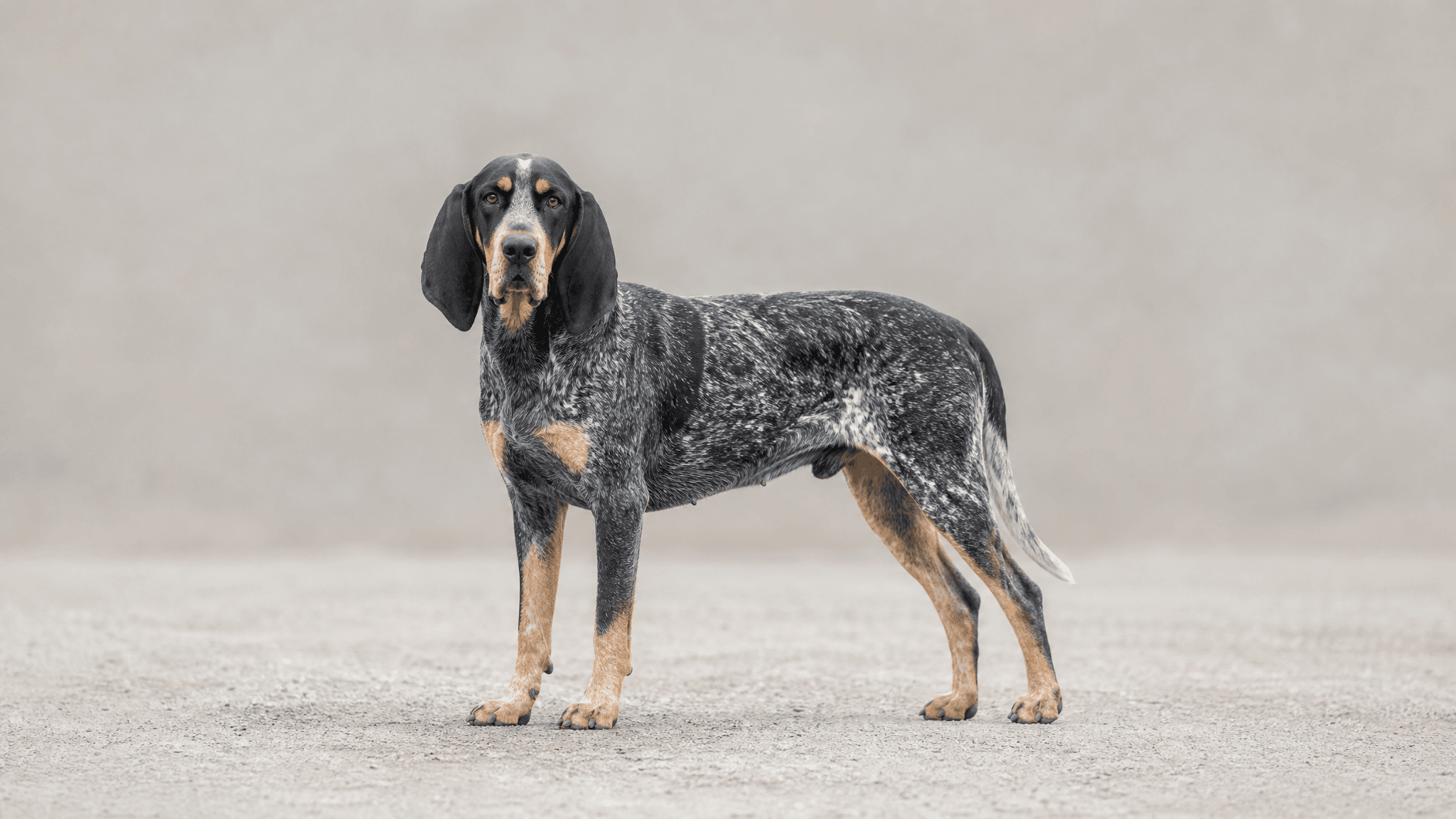
- Dark blue ticking with black spots; tan markings may appear on muzzle, chest, legs, and over eyes
Temperament & Personality
The Bluetick Coonhound is loyal, affectionate, bold, tenacious, and vocal. It is relaxed at home when exercised but highly driven when following scent.
Activity & Exercise
- Energy Level
- High
- Recommended Daily Exercise
- 60–90 minutes
- Suitable for Apartment
- Not recommended
Grooming & Care
- Grooming Needs
- Low
- Shedding
- Moderate
- Bathing Frequency
- Every 6–8 weeks
Health
- Common Health Issues
- Bloat
- Ear infections
- Hip dysplasia
- Recommended Health Tests
- Cardiac examination
- Ear examination
- Hip evaluation
Compatibility
- With Children
- Good
- With Other Dogs
- Good
- With Cats
- Can be difficult
- For First-Time Owners
- Acceptable
Is a Bluetick Coonhound right for you?
A Bluetick Coonhound may suit you if:
- You enjoy daily vigorous activities like long hikes or scent work to satisfy their high energy and keen nose.
- You appreciate a loyal, affectionate companion who thrives on outdoor adventures and exploring new scents.
- You are drawn to a bold and tenacious personality that is also loving and relaxed after a good day's exercise.
- You are prepared to invest in consistent, positive training to channel their intelligence and strong scent drive.
- You appreciate a low-maintenance grooming routine, with their short, glossy coat needing minimal regular care.
- You are willing to manage their vocal nature and strong instinct to follow an intriguing scent trail.
Think twice if:
- You expect immediate, unwavering obedience when your dog has caught an interesting scent.
- You often leave your dog alone for long periods or live in a quiet environment sensitive to vocal breeds.
- You have cats in the household and are not prepared for careful, supervised introductions and management.
- You are unable to commit to providing 60 to 90 minutes of vigorous daily exercise for a high-energy dog.
- You live in an apartment or do not have a securely fenced yard to contain a large, scent-driven hound.
- You are not prepared for a strong, large dog that can be quite persistent when following a captivating trail.
Living with a Bluetick Coonhound is a unique joy, offering unwavering loyalty and deep affection. While their tenacious spirit and vocal nature can be a delightful quirk for some, it requires an owner who truly understands and appreciates their hound instincts. With the right blend of exercise, training, and love, they become cherished, relaxed family members for their 11-12 year lifespan.
Training a Bluetick Coonhound
Bluetick Coonhounds are intelligent and eager to please their beloved people, learning best through positive reinforcement and consistent, engaging sessions. Their tenacious, scent-driven nature means they respond wonderfully to rewards like treats, praise, and opportunities for nose work. Keep training sessions short, fun, and varied to hold their attention. If training becomes repetitive, harsh, or inconsistent, a Bluetick may become stubborn or disengage, as their bold spirit needs a handler who understands their drive and makes learning a rewarding adventure.
Begin with:
- Attention around distractions
- Recall on a long line
- Loose-leash walking
- Leave it and drop it
- Calm greetings without jumping
- Settling on a mat or bed
- Cooperative handling for grooming, ears, feet and teeth
- Waiting at doors and gates
Scent drive and recall
Bluetick Coonhounds are true Scent Hounds, with an incredible "cold nose" and a powerful drive to follow a trail. This means that when a compelling scent hits their nose, their natural instinct to pursue it can override everything else, making recall particularly challenging. Start recall training in a quiet, fenced area, making coming back to you the most rewarding thing ever. Gradually introduce distractions and always use a long line in unfenced areas until their recall is rock-solid. Remember, their nose is their world, so understanding this drive is key to successful training. For more help, check out our guide on teaching recall.
Consistency is paramount. Never call your Bluetick if you can't enforce the recall, as this teaches them that the command is optional. Instead, go get them. Always reward generously when they do come, even if it took a moment. Building a strong bond and making yourself more interesting than the environment will significantly improve their response.
Pulling on the leash
Given their large size and high energy level, Blueticks can be incredibly strong pullers, especially when hot on a scent trail. Their tenacity means they will lean into the leash with all their might if not taught otherwise, making walks difficult and potentially unsafe. Begin loose-leash training early and consistently. Use a front-clip harness to help manage their strength and redirect their focus back to you. Reward every step they take with a loose leash. Consistency and patience are vital for teaching your Bluetick good leash manners. You can find more tips in our guide to stopping leash pulling and our top dog walking tips.
Make walks an engaging experience by incorporating short training bursts and allowing controlled sniffing opportunities. If your Bluetick starts to pull, stop walking immediately. Only resume when the leash slackens. This teaches them that pulling gets them nowhere, while a loose leash means forward movement.
Boredom and vocalization
A Bluetick Coonhound needs a significant amount of exercise, ideally 60-90 minutes daily, to be a calm and relaxed companion at home. If under-exercised, under-stimulated, or left alone for too long, their bold and vocal nature can manifest as excessive barking, baying, or destructive behaviors. They are not recommended for apartment living for this reason. Ensure your Bluetick gets plenty of physical activity, but also engage their keen mind with scent games, puzzle toys, and training sessions. A tired Bluetick is a happy, quiet Bluetick!
Provide a secure, stimulating environment with plenty of appropriate chew toys. Consider enrolling in a scent work class or setting up your own "hide and seek" games with treats to tap into their natural abilities. If you must leave them alone, ensure they've had ample exercise and mental stimulation beforehand to help them settle.
Bluetick Coonhound — Frequently Asked Questions
What is the Bluetick Coonhound?
The Bluetick Coonhound is an American scent hound developed in the southern United States, descending from French hounds brought to Louisiana (particularly the Grand Bleu de Gascogne) crossed with English foxhounds. It gets its name from its distinctive mottled blue-black coat pattern ('ticked' refers to the dark-coloured spots on a lighter background). Bred primarily for night-time raccoon hunting — treeing and baying at the prey — it is known for its relentless nose, resonant voice, and tremendous stamina. It is recognised by the AKC in the Hound Group and remains a popular working hunting dog in the American South.
How much exercise does a Bluetick Coonhound need?
The Bluetick Coonhound is an energetic, high-stamina working hound that needs substantial daily exercise — a minimum of 1.5–2 hours of vigorous activity per day. It was bred to work all night on a hunt, so a short walk will not satisfy its needs. Long runs, hikes, swimming, and safe off-lead activity in securely fenced areas are ideal. Without sufficient exercise, Bluetick Coonhounds become restless, anxious, and destructive — and very vocal. They are not suitable for apartment living or for owners who cannot provide consistent, substantial daily outdoor activity. In the right active environment, they are joyful, enthusiastic exercise companions.
Is the Bluetick Coonhound a good family dog?
The Bluetick Coonhound has a gentle, affectionate temperament and bonds warmly with its family. It is typically good with children who engage in active, outdoor play, and it thrives when it has human companionship. It gets along very well with other dogs due to its pack hunting heritage. However, its strong prey drive means it may not be safe around cats and smaller pets. Its incredibly loud, musical howl — characteristic and distinctive — can be a challenge in residential neighbourhoods. It needs a large, securely fenced property and an active, outdoorsy family to truly thrive as a household companion.
Is the Bluetick Coonhound easy to train?
The Bluetick Coonhound is intelligent but notoriously independent-minded — a quality bred in for working alone on scent trails without handler guidance. It is persistent, determined, and easily distracted by scents, which makes training a patient process. Positive reinforcement works best; harsh methods are counterproductive. Recall training is essential and very challenging — once on a scent, a Bluetick will follow its nose regardless of commands. Basic obedience is achievable with consistency and patience. It is not the ideal choice for first-time dog owners but is deeply rewarding for experienced handlers who understand scent hound psychology.
What is the Bluetick Coonhound's voice like?
The Bluetick Coonhound has one of the most distinctive voices in the dog world — a deep, melodious, resonant howl and bay that can carry for miles. In hunting contexts, this voice is invaluable: hunters follow the sound to locate where the dog has treed its quarry. In a domestic setting, this voice can be a significant challenge — Bluetick Coonhounds are not quiet dogs. They howl, bay, and bark with enthusiasm and at volume. Neighbours will notice. Owners should be prepared for vocality and ensure they have the right living situation (rural or suburban with space and tolerant neighbours) before getting a Bluetick.
Does the Bluetick Coonhound get along with other dogs?
Bluetick Coonhounds were bred to hunt in packs and are naturally very dog-friendly. They typically get along well with other dogs, enjoying the company of canine companions. Multi-dog households suit them well, and having another dog can significantly improve their wellbeing when left home alone. Their pack instinct makes them cooperative and non-aggressive with dogs of all sizes. With cats and small animals, however, their strong raccoon-hunting prey drive makes coexistence risky — they should not be trusted unsupervised with small pets, particularly those that run or move unpredictably.
What health issues are common in the Bluetick Coonhound?
The Bluetick Coonhound is generally a hardy breed. Hip and elbow dysplasia occur at moderate rates. Ear infections are a common concern — their long, floppy ears trap moisture and debris after outdoor activity, and regular cleaning after exercise or swimming is important. Bloat (gastric dilatation-volvulus) is a risk for large, deep-chested breeds and can be life-threatening — feeding two smaller meals rather than one large meal and avoiding vigorous exercise for an hour after eating are important preventive measures. Cataracts and thyroid issues have also been observed. Regular veterinary check-ups support overall long-term health.
What is the typical lifespan of a Bluetick Coonhound?
The Bluetick Coonhound typically lives between 11 and 12 years, which is standard for a large working hound breed. Its working heritage contributes to a generally robust constitution. The main longevity factors are maintaining a healthy body weight, providing vigorous daily exercise, proactive ear care to prevent chronic infections, monitoring for bloat risk, and regular veterinary check-ups. Dogs in active working or rural environments that receive regular exercise and attentive care tend to live long, vigorous lives within and sometimes beyond this range.
Community
Talk to real Bluetick Coonhound owners
This guide covers the breed on paper. In the app, the Bluetick Coonhound community covers it in real life: photos from other owners, questions answered by people who live with the breed, and a directory of dogs you can browse.
- Photos & pollsSee what Bluetick Coonhound owners are sharing today.
- Questions & answersAsk anything and hear from people who own one.
- Dog directoryBrowse Bluetick Coonhounds from around the world.
You join automatically when you add a Bluetick Coonhound to your profile.