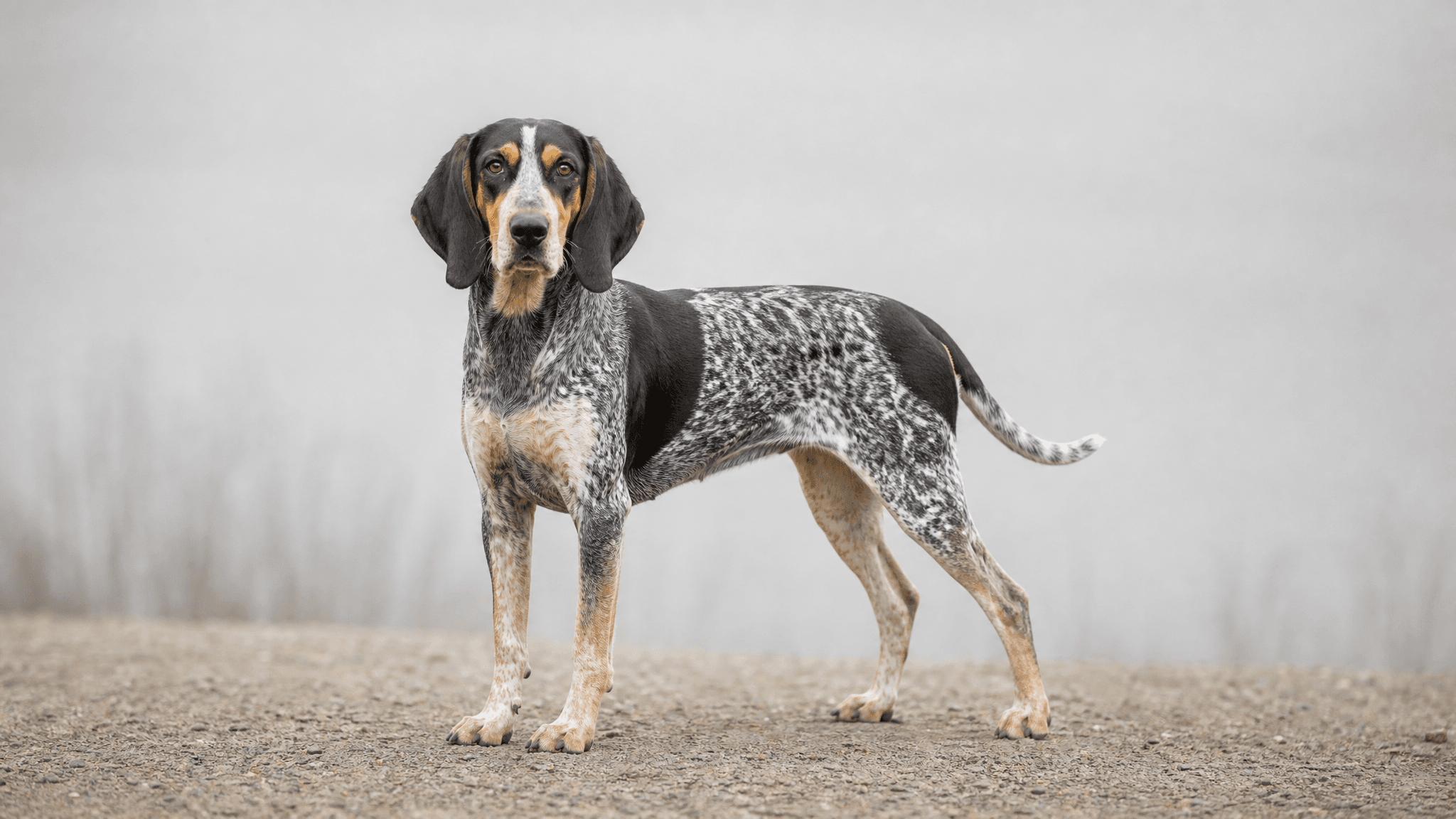
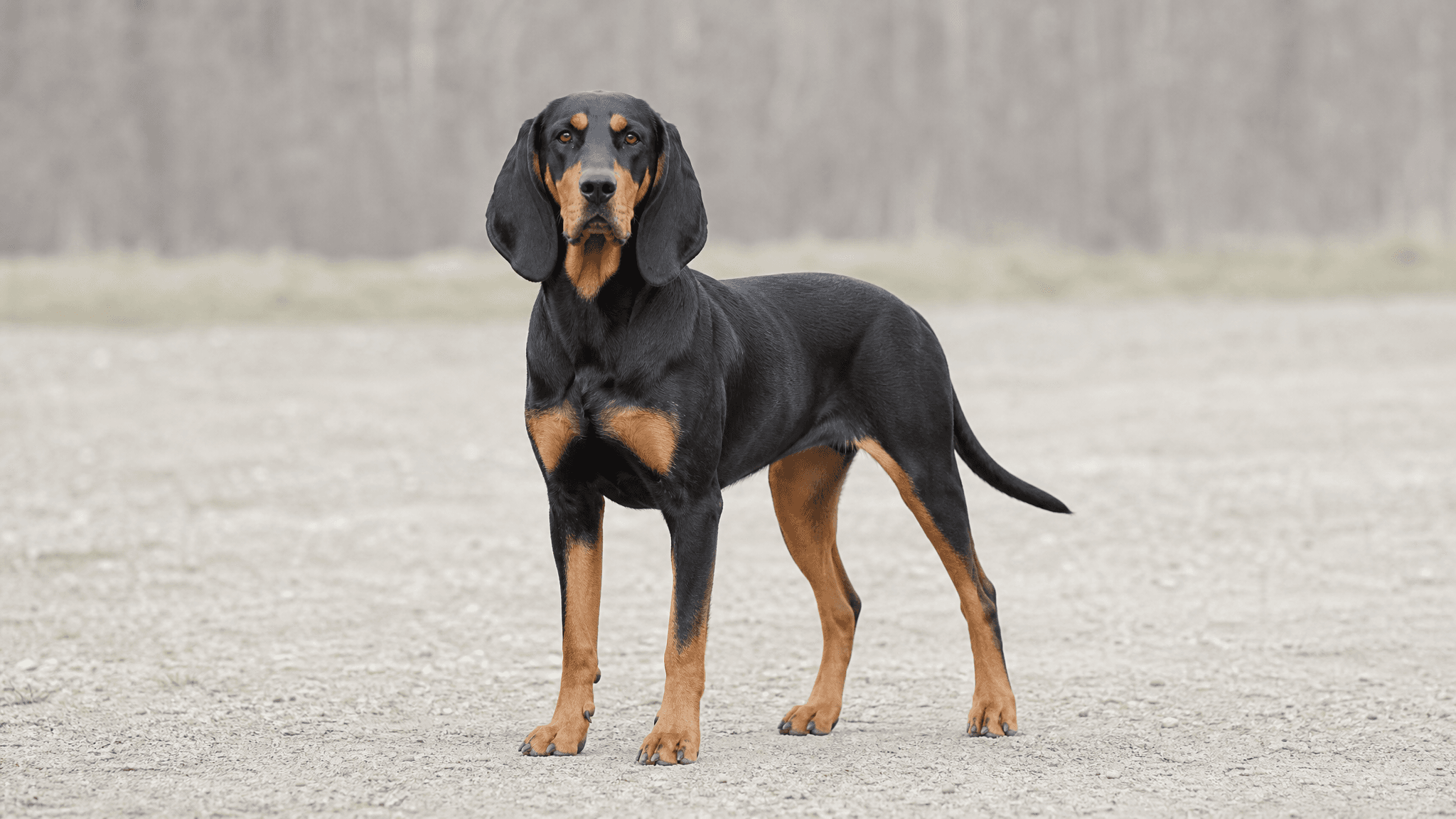
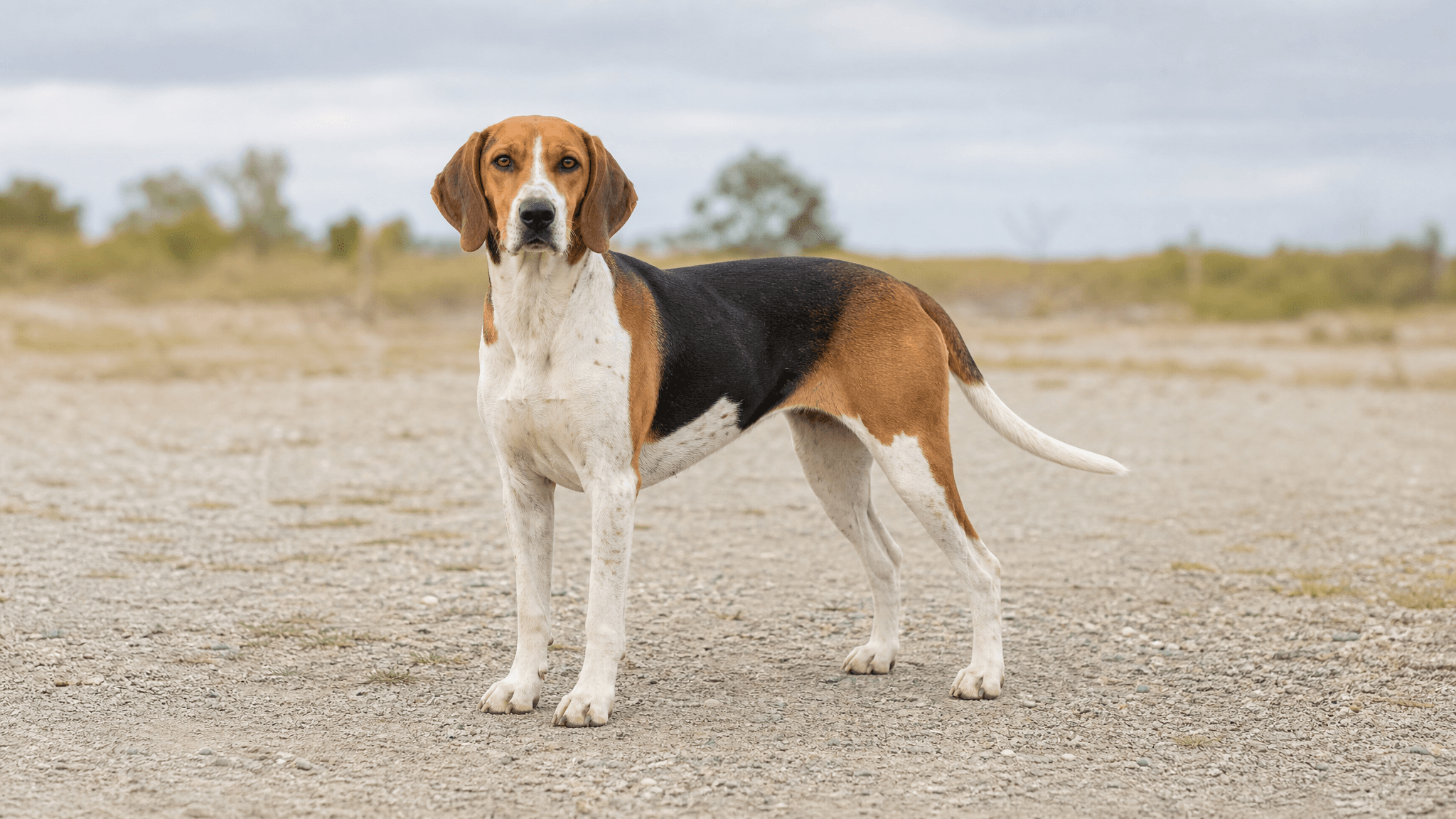
American Foxhound
Summary
The American Foxhound is the American version of the English Foxhound, developed in the United States from the 17th century onward based on dogs brought to America by European colonists. George Washington is frequently cited as one of its most influential breeders. Over generations, American breeders introduced blood from Irish, French, and English scent hounds to create a faster dog adapted to the American terrain.
Physical Characteristics
- Size
- Large
- Height (male)
- 56–64 cm
- Height (female)
- 53–61 cm
- Weight (male)
- 20–34 kg
- Weight (female)
- 18–29 kg
- Life Expectancy
- 11–13 years
- Coat
- Short, dense, and resistant
- Common Colors
- Any hound color combination — tricolor, bicolor, etc.
Temperament & Personality
The American Foxhound is a gentle, independent, and docile-tempered dog. It is affectionate with the family but very independent — a characteristic deliberately selected for hunting in vast open spaces. It has an intense and persistent vocalization when excited.
Activity & Exercise
- Energy Level
- Very high
- Recommended Daily Exercise
- 120 minutes
- Suitable for Apartment
- Not recommended
Grooming & Care
- Grooming Needs
- Low
- Shedding
- Moderate
- Bathing Frequency
- Every 4 weeks
Health
- Common Health Issues
- Hip dysplasia
- Otitis
- Thrombocytopenia (hereditary platelet disorder)
- Recommended Health Tests
- Blood test
- Orthopedic evaluation
Compatibility
- With Children
- Good
- With Other Dogs
- Excellent
- With Cats
- Can be difficult
- For First-Time Owners
- Not recommended
Is an American Foxhound right for you?
An American Foxhound may suit you if:
- You are prepared to provide at least 120 minutes of vigorous exercise daily, like long runs or engaging scent work.
- You enjoy an active, outdoorsy lifestyle and appreciate a dog with a strong natural drive to explore and follow scents.
- You appreciate an independent yet affectionate companion who enjoys family time but also has a mind of their own.
- You are prepared for consistent, patient training that respects their independent nature and strong scent drive.
- You appreciate a low-maintenance coat that requires minimal grooming beyond regular brushing and bathing every four weeks.
- You are comfortable with a dog that expresses excitement through persistent vocalization, especially when on a scent.
Think twice if:
- You expect a dog with instant recall or unwavering obedience, as their scent drive often takes precedence.
- You frequently leave your dog alone for long periods in a small space, as they thrive on companionship and activity.
- You have cats and are unwilling to commit to careful, supervised introductions and ongoing management.
- You are unwilling to dedicate at least two hours daily to vigorous exercise, regardless of weather.
- You live in an apartment or lack a securely fenced yard, as they need space and can easily follow a scent.
- You are not prepared to manage a large, powerful, and energetic dog during their boisterous adolescent phase.
Bringing an American Foxhound into your life is a commitment to a unique and rewarding partnership. While their independent spirit and high energy require dedication, their gentle nature and affectionate loyalty make them wonderful family members for the right active home. Embrace their hound instincts, and you'll discover a joyfully devoted companion.
Training an American Foxhound
Your American Foxhound is a gentle, independent soul, driven by an incredible nose. Training success hinges on understanding their deeply ingrained scent hound instincts and independent nature. Keep sessions short, fun, and highly rewarding, especially with high-value treats or scent-based games. Inconsistency or trying to force compliance will quickly lead to disengagement from this intelligent but self-reliant breed, making training a frustrating battle rather than a joyful partnership. Patience and positive reinforcement are your best tools.
Begin with:
- Attention to name around distractions
- Recall on a long line
- Loose-leash walking
- Leave it and drop it
- Calm greetings without jumping
- Settling on a mat or bed
- Cooperative handling for grooming
- Waiting at doors and gates
Scent and prey drive
American Foxhounds are scent hounds through and through, with a very high energy level and an instinct bred for hunting. Their nose will lead them, often ignoring your calls when a captivating scent is present. Start recall training early and consistently in a secure area, gradually introducing distractions. A long line is invaluable for practicing recall safely in open spaces, allowing them to explore scents while still under your control. Remember, their independence means they'll need a strong reason to choose you over a fascinating trail.
Because of their strong prey drive, particularly with small, fast-moving animals, it's wise to be cautious around cats and other small pets. Always supervise interactions and ensure secure enclosures. Consistent positive reinforcement for checking in with you and ignoring distractions will build a reliable recall, which is essential for their safety and your peace of mind. For more detailed guidance, check out our guide on teaching a dog to come when called.
Leash pulling
Given their large size, strength (up to 34 kg), and very high energy, an American Foxhound can easily pull you off your feet if not properly trained. They are built for endurance and will want to move! Begin loose-leash walking training from day one, rewarding every step taken without tension on the leash. Use a comfortable, well-fitting harness that discourages pulling, rather than a collar that can strain their neck.
Consistency is key; every walk is a training opportunity. Ensure your Foxhound receives their recommended 120 minutes of daily exercise through varied activities like long walks, runs, or scent games to help burn off excess energy that might otherwise manifest as pulling. For practical tips, refer to our guide on stopping leash pulling.
Boredom and vocalization
An under-exercised or under-stimulated American Foxhound can quickly become a frustrated one, leading to unwanted behaviors. Their very high energy and natural inclination for vocalization, especially when excited or bored, mean they need plenty of physical and mental engagement. Provide ample opportunities for running and exploring in secure areas, and incorporate scent work games or puzzle toys to challenge their intelligent noses and minds.
These dogs are not recommended for apartment living and thrive in environments where they have space and activity. If left alone for too long without sufficient exercise and mental stimulation, their intense and persistent vocalizations can become a nuisance, and they may resort to destructive chewing or attempts to escape. Our training feature can help you build a consistent routine to keep your Foxhound happy and engaged.
American Foxhound — Frequently Asked Questions
What is the American Foxhound?
The American Foxhound is one of the oldest and most distinctly American dog breeds, developed in the 17th and 18th centuries by colonists — most notably George Washington — who crossed English Foxhounds with French hounds to create a faster, leaner dog better suited to the vast open terrain of North America. It is a scent hound built for speed, endurance, and pack work, with a musical, resonant baying voice that carries across open countryside. Though rare as a household pet, it is a dog of genuine historical and cultural significance in the United States.
How does the American Foxhound differ from the English Foxhound?
American and English Foxhounds are closely related but have distinct differences shaped by their development environments. The American Foxhound is taller, more lightly built, and faster — bred for the wide open spaces of North America where speed was as important as scenting ability. The English Foxhound is heavier, sturdier, and more measured in pace, designed for the enclosed countryside of Britain. The American version also has a sweeter, more musical voice and is considered slightly more adaptable as a family companion, though both breeds are primarily working hounds.
How much exercise does an American Foxhound need?
American Foxhounds have extraordinary stamina and need a substantial amount of exercise — ideally 2 or more hours per day. They were bred to run for hours across open countryside, and insufficient exercise results in destructive behaviour, excessive howling, and anxiety. Access to a safely fenced area where they can run freely is important. They are excellent running or cycling companions for athletic owners. Without adequate daily exercise, this breed is very difficult to live with in a domestic setting — their exercise needs are one of the main reasons they rarely make suitable urban pets.
Is the American Foxhound a good family pet?
American Foxhounds are gentle, sociable, and affectionate dogs that can be good family pets — but only for the right family. They need an active, outdoorsy household that can provide hours of daily exercise, a securely fenced property, and tolerance for their distinctive voice (they howl, and they do it loudly). They are excellent with children and other dogs. They can be shy with strangers initially. They are not suitable for apartment living or for families who cannot commit to vigorous daily exercise. In the right environment, they are loyal, sweet-natured, and wonderful companions.
Are American Foxhounds easy to train?
American Foxhounds are intelligent but notoriously independent — a trait bred into them for working unsupervised in the field. They can be stubborn and easily distracted by scents. Positive reinforcement training works best; they respond poorly to harsh or forceful methods. Recall is the biggest training challenge and requires consistent work from puppyhood — once on a scent trail, their nose takes over entirely. Basic obedience is achievable with patience and consistency, but experienced dog owners will find them easier to handle than first-timers.
Do American Foxhounds get along well with other dogs?
Exceptionally well — American Foxhounds were bred to work in packs and are among the most dog-sociable breeds that exist. They are naturally tolerant, non-aggressive with other dogs, and often actively seek canine companionship. A second dog can significantly improve their wellbeing, especially if they are left alone for periods of time. With smaller animals like cats, early socialisation is important, as their hunting instincts are strong. Their pack instinct means they can be quite vocal and unsettled when separated from their canine companions.
What health issues are common in American Foxhounds?
American Foxhounds are generally a healthy breed with good genetic diversity due to their working history. Thrombocytopathy (a platelet disorder) has been noted in the breed and can cause abnormal bleeding. Hip dysplasia occurs at low to moderate rates. Their long, floppy ears make them susceptible to ear infections — regular ear cleaning after exercise or exposure to water is important. Being a large, active breed, maintaining a healthy weight and joint health through appropriate exercise are important long-term considerations. Regular vet check-ups help catch any issues early.
What is the typical lifespan of an American Foxhound?
American Foxhounds typically live between 11 and 13 years. Their working-bred constitution gives them good baseline health, and their active lifestyle when properly exercised contributes to cardiovascular and joint health. The main longevity factors are maintaining a lean, healthy weight, providing daily vigorous exercise, and attending regular vet check-ups. Their ears should be monitored throughout their life to prevent chronic ear infections. Dogs kept in appropriate conditions — with plenty of exercise and companionship — tend to live active, happy lives well into their senior years.
Community
Talk to real American Foxhound owners
This guide covers the breed on paper. In the app, the American Foxhound community covers it in real life: photos from other owners, questions answered by people who live with the breed, and a directory of dogs you can browse.
- Photos & pollsSee what American Foxhound owners are sharing today.
- Questions & answersAsk anything and hear from people who own one.
- Dog directoryBrowse American Foxhounds from around the world.
You join automatically when you add a American Foxhound to your profile.