Black And Tan Coonhound
Summary
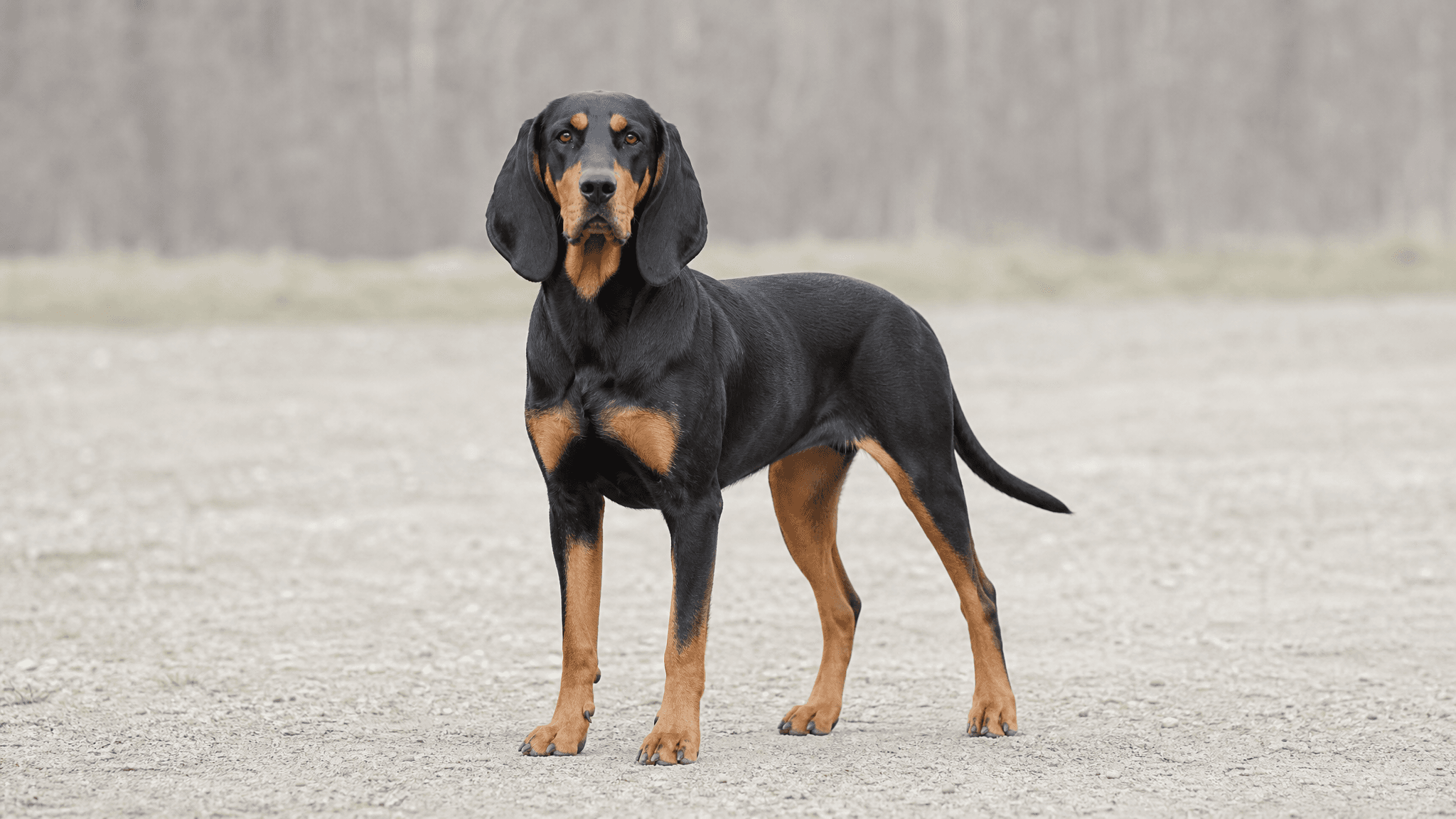
The Black and Tan Coonhound is an American breed developed in the Appalachians for raccoon hunting and other tree-climbing animals. Descended from the Bloodhound, the English Foxhound, and other American scent hounds, it was selected for its ability to track scents even in difficult conditions and for "treeing" — forcing the prey up trees and barking upward until the hunter arrives.
Physical Characteristics
- Size
- Large
- Height (male)
- 58–68 cm
- Height (female)
- 53–63 cm
- Weight (male)
- 23–34 kg
- Weight (female)
- 18–27 kg
- Life Expectancy
- 10–12 years
- Coat
- Short, dense, and glossy
- Common Colors
- Black with tan markings over the eyes, on the cheeks, legs, and chest
Temperament & Personality
The Black and Tan Coonhound is a friendly, confident, and well-balanced dog. Outside of hunting, it is a gentle and affectionate companion. Its deep and powerful voice is one of the most impressive in the canine world — it can be heard from miles away.
Activity & Exercise
- Energy Level
- High
- Recommended Daily Exercise
- 60–90 minutes
- Suitable for Apartment
- Not recommended
Grooming & Care
- Grooming Needs
- Low
- Shedding
- Moderate
- Bathing Frequency
- Every 4 weeks
Health
- Common Health Issues
- Ectropion (eyelid)
- Hip dysplasia
- Hypothyroidism
- Otitis
- Recommended Health Tests
- Eye examination
- Orthopedic evaluation
- Thyroid examination
Compatibility
- With Children
- Excellent
- With Other Dogs
- Excellent
- With Cats
- Can be difficult
- For First-Time Owners
- Not recommended
Is a Black and Tan Coonhound right for you?
A Black and Tan Coonhound may suit you if:
- You can provide 60 to 90 minutes of vigorous exercise daily, including engaging their powerful nose.
- You enjoy outdoor adventures like long hikes or scent work, allowing them to follow their nose.
- You appreciate a loyal, affectionate companion with a confident and generally laid-back demeanor indoors.
- You are prepared to invest consistent, positive reinforcement training to manage their independent scent hound nature.
- You are willing to commit to regular brushing and bathing every four weeks to manage their moderate shedding.
- You are prepared to manage a deep, powerful baying voice, which they use to express themselves joyfully.
Think twice if:
- You expect instant obedience from a dog, as their strong scent drive often takes priority.
- You frequently leave a dog alone for long periods, as they thrive on companionship and activity.
- You have cats or other small, non-canine pets that you expect to coexist peacefully without careful introductions.
- You are unwilling to provide at least an hour of daily exercise or tolerate moderate shedding.
- You live in an apartment or do not have a securely fenced yard to contain a large, adventurous dog.
- You are not prepared for a strong, energetic large dog during its boisterous adolescent phase.
The Black and Tan Coonhound is a truly devoted and affectionate companion, bringing a unique blend of mellow charm indoors and boundless energy outdoors. While their gentle nature makes them wonderful family dogs, their powerful scent drive and impressive voice require dedicated management. They thrive with active owners who appreciate their independent spirit and are prepared to meet their substantial exercise and training needs.
Training a Black and Tan Coonhound
Black and Tan Coonhounds learn best through positive reinforcement, especially when motivated by delicious treats and enthusiastic praise. Their keen sense of smell means they are easily distracted by the world of scents, so training sessions should be short, engaging, and fun to hold their attention. Repetitive or harsh methods will quickly lead to a stubborn and disengaged hound. Inconsistent handling or a lack of clear direction often results in a dog that follows its nose rather than your cues, making early, consistent training crucial for a well-behaved companion.
Begin with:
- Attention and response to name around distractions
- Recall on a long line
- Loose-leash walking
- Leave it and drop it
- Calm greetings without jumping
- Settling on a mat or bed
- Cooperative handling for grooming, ears, feet and teeth
- Waiting at doors and gates
Prey drive and recall
As true scent hounds, Black and Tans possess an incredibly strong prey drive, having been bred for tracking raccoons. This means that when a compelling scent crosses their path, their nose can often override all other commands, especially in an open environment. Start recall training in a secure, low-distraction area, making it a super fun game with high-value rewards. Gradually introduce more distractions, always keeping your hound on a long line until their recall is absolutely reliable. You need to be more exciting than the most intriguing smell! For more detailed guidance, check out our guide on teaching recall.
Remember, their world is largely defined by scent, so understanding this instinct is key to successful training. Never punish them for following a scent, but rather redirect their attention positively and reward them for choosing to engage with you.
Strong leash pulling
Black and Tan Coonhounds are large, powerful dogs, with males weighing up to 34 kg and females up to 27 kg. Their strength, combined with their unwavering desire to follow a scent trail, can make loose-leash walking a significant challenge. Begin loose-leash training early and consistently, using positive reinforcement to reward them for walking politely by your side. A comfortable, well-fitting front-clip harness can be very helpful in discouraging pulling.
Practice in quiet areas first, gradually moving to more stimulating environments as they improve. Consistency is paramount; teach them that walking nicely gets them to their sniffing adventures much faster and more enjoyably. You might find this article on stopping leash pulling particularly useful.
Boredom and destruction
Black and Tan Coonhounds are high-energy dogs that require a good 60-90 minutes of daily exercise to stay happy and healthy. If they don't get enough physical activity or mental stimulation, or if they are left alone for extended periods, they can quickly become bored. This boredom often manifests as destructive behaviors like excessive barking (their powerful voice can be heard from miles away!), chewing on furniture, or digging up your yard.
To prevent this, ensure they receive ample exercise, including varied walks and opportunities for scent work. Provide plenty of appropriate chew toys and puzzle feeders to keep their intelligent minds engaged. A consistent routine and plenty of enrichment are vital for a well-adjusted hound. Our training feature can help you build a consistent routine to keep your Black and Tan Coonhound mentally and physically satisfied.
Black And Tan Coonhound — Frequently Asked Questions
What is the Black and Tan Coonhound?
The Black and Tan Coonhound is the first distinct coonhound breed to be officially recognised by the AKC — it received recognition in 1945. It is a large, striking American scent hound descended primarily from the Talbot Hound, the Bloodhound, and the Black and Tan Virginia Foxhound. Developed in the American South for treeing raccoon and hunting large game including bear and deer, it is instantly recognisable by its rich black and tan coat (reminiscent of the Dobermann's colouring), long pendulous ears, and deep-set, soulful eyes. It is known for its powerful cold-nose ability, exceptional endurance, and melodious voice.
Is the Black and Tan Coonhound a good family dog?
The Black and Tan Coonhound is a loyal, mellow, and affectionate dog that can make a wonderful family companion in the right environment. It is gentle and patient with children, particularly those who enjoy active, outdoor activities. It is naturally very dog-sociable due to its pack hunting heritage and typically gets along well with other dogs. Its strong prey drive means cats and small animals need careful management. Its musical, carrying voice can be challenging in residential settings. It needs large, securely fenced outdoor space and an active family. In a rural setting with room to run and a committed family, it is a devoted and warm-hearted companion.
How much exercise does a Black and Tan Coonhound need?
The Black and Tan Coonhound is a large, powerful working hound with considerable stamina and needs at least 1.5–2 hours of vigorous exercise per day. It was developed for extended endurance hunting across rough terrain, and its energy needs reflect this heritage. Long walks, running, hiking, and safe off-lead exercise in securely enclosed areas are ideal. The Black and Tan is actually somewhat calmer than some other coonhound breeds at home — it can be a relaxed house dog when its exercise needs are met. Without sufficient daily exercise, however, it becomes restless, noisy, and potentially destructive.
Is the Black and Tan Coonhound easy to train?
The Black and Tan Coonhound is intelligent and capable but is a classic independent scent hound — it thinks for itself and its nose overrides commands when it detects an interesting trail. Training requires patience, consistency, and a thorough understanding of scent hound psychology. Positive reinforcement with food rewards works best; it is sensitive and does not respond well to harsh methods. Recall training is the most critical and challenging skill — reliable recall for a motivated hunting hound is always a work in progress. Basic obedience and household manners are achievable with consistent, positive training from an experienced owner.
What health issues are common in the Black and Tan Coonhound?
The Black and Tan Coonhound is generally a healthy, hardy breed. Hip and elbow dysplasia are concerns in large working breeds and responsible breeders screen for them. Ear infections are a frequent recurring issue — the breed's long, heavy ears trap moisture and debris, making the ear canal warm and humid, ideal for infections; weekly ear inspection and cleaning after outdoor exercise are essential. Bloat (gastric dilatation-volvulus) is a serious risk for large, deep-chested breeds. Cataracts and hypothyroidism have been observed in some lines. Regular veterinary check-ups, attentive ear care, and weight management support long-term health.
What is the Black and Tan Coonhound's voice like?
The Black and Tan Coonhound has one of the most famous voices in the hunting dog world — a deep, resonant, bell-like baying that is unmistakably powerful and melodious. This voice allowed hunters to follow their hounds through dark forests and across long distances at night. In a domestic setting, this voice is both a personality feature and a management consideration. Black and Tans bay when they pick up a scent, when they are bored, when they want attention, and when they hear interesting sounds. Managing vocality through exercise, enrichment, and training is part of responsible ownership. Rural living with neighbours who understand and appreciate the breed's nature is strongly advised.
What is the typical lifespan of a Black and Tan Coonhound?
The Black and Tan Coonhound typically lives between 10 and 12 years, a standard lifespan for a large working hound. Its robust working constitution contributes to general health resilience. The main longevity factors are maintaining a healthy body weight, providing vigorous daily exercise, proactive ear care to prevent chronic infection, appropriate feeding practices to minimise bloat risk, monitoring for dysplasia and hypothyroidism as the dog ages, and routine veterinary care. Dogs in active, rural environments that receive purposeful daily exercise and attentive care tend to age gracefully and maintain their characteristic gentle, soulful disposition well into their senior years.
Does the Black and Tan Coonhound get along with other dogs?
The Black and Tan Coonhound is naturally very dog-sociable — it was bred to hunt in large packs and has deeply cooperative instincts toward other dogs. It typically gets along well with dogs of all sizes and genuinely enjoys canine companionship. Multi-dog households are well suited to this breed, and having another dog at home can significantly ease separation anxiety when owners are away. Its powerful prey drive is directed toward game animals rather than dogs, making it reliably cooperative within its canine social group. Early socialisation from puppyhood helps reinforce and broaden these positive interactions. It is one of the more reliably dog-friendly of the large hound breeds.
Community
Talk to real Black And Tan Coonhound owners
This guide covers the breed on paper. In the app, the Black And Tan Coonhound community covers it in real life: photos from other owners, questions answered by people who live with the breed, and a directory of dogs you can browse.
- Photos & pollsSee what Black And Tan Coonhound owners are sharing today.
- Questions & answersAsk anything and hear from people who own one.
- Dog directoryBrowse Black And Tan Coonhounds from around the world.
You join automatically when you add a Black And Tan Coonhound to your profile.