Spanish Water Dog
Summary
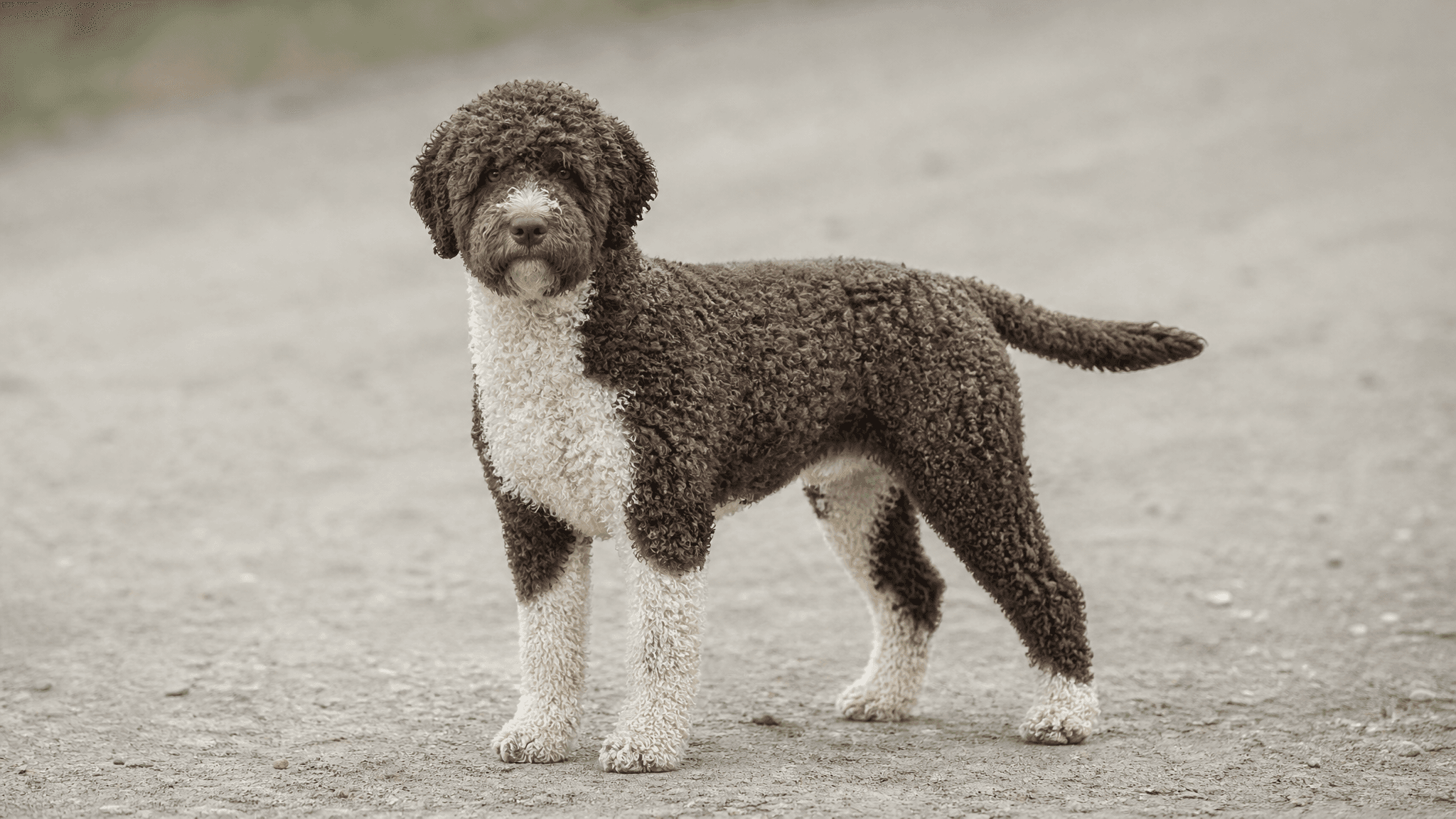
The Spanish Water Dog, known in Spanish as "Perro de Agua Español," is an Iberian breed of multiple uses, historically employed as a livestock herder, waterfowl hunting dog, net-hauling dog, and guard dog throughout the southern and coastal regions of Spain. Its versatility is remarkable: the same breed that herded flocks in the Andalusian mountains worked equally as a water dog in the coastal lagoons and estuaries. Approximately half of the specimens are born with a naturally short tail.
Physical Characteristics
- Size
- Medium
- Height (male)
- 44–50 cm
- Height (female)
- 40–46 cm
- Weight (male)
- 18–22 kg
- Weight (female)
- 14–18 kg
- Life Expectancy
- 12–14 years
- Coat
- Curly, woolly, of homogeneous texture throughout the body; when long, naturally forms cords (dreadlocks); never brushed — only clipped uniformly; highly water-resistant
- Common Colors
- Solid white, solid black, solid brown; bicolor (white and black, white and brown); tricolor not permitted
Temperament & Personality
The Spanish Water Dog is an athletic, loyal, obedient, and quick-witted dog. It is very energetic and enthusiastic, especially in outdoor activities. It has a vigilant nature and pronounced guarding instinct, and can be reserved with strangers. It is very devoted to its family and adaptable to different roles — hunting, dog sports, guarding, or companionship. Its intelligence and ease of training make it exceptional in agility, obedience, and search and rescue work.
Activity & Exercise
- Energy Level
- Very high
- Recommended Daily Exercise
- 60–90 minutes
- Suitable for Apartment
- Not recommended
Grooming & Care
- Grooming Needs
- Low
- Shedding
- Minimal
- Bathing Frequency
- Every 6–8 weeks
Health
- Common Health Issues
- Allergies
- Cataracts
- Congenital hypothyroidism with goiter (CHG)
- Exocrine pancreatic insufficiency
- Hip dysplasia
- Hypoadrenocorticism (Addison's disease)
- Hypothyroidism
- Progressive retinal atrophy (PRA)
- Recommended Health Tests
- Eye examination
- Genetic test for PRA (_rod-cone dysplasia 1a_)
- Hip radiography
- Thyroid function test
Compatibility
- With Children
- Good
- With Other Dogs
- Good
- With Cats
- Moderate
- For First-Time Owners
- Not recommended
Is a Spanish Water Dog right for you?
A Spanish Water Dog may suit you if:
- You are prepared to provide 60 to 90 minutes of vigorous daily exercise and engaging mental challenges.
- You enjoy an active, outdoor lifestyle that can include dog sports, hiking, or water activities.
- You appreciate a loyal, quick-witted companion who is deeply devoted to their family.
- You are committed to consistent, positive training to channel their intelligence and enthusiasm.
- You are comfortable with their unique corded or clipped coat that requires specific, minimal grooming, never brushing.
- You are prepared to manage their natural guarding instinct and initial reservation towards new people.
Think twice if:
- You expect a dog that is always immediately biddable, as their intelligence can come with an independent streak.
- You have a busy schedule that often leaves a dog alone for long periods, as they thrive on companionship and activity.
- You are unwilling to carefully introduce and supervise them with cats, given their moderate suitability with felines.
- You are unable to commit to their daily exercise needs or their unique, non-brushing coat care routine.
- You live in an apartment or do not have a securely fenced outdoor space for their energetic play.
- You are not prepared for the consistent guidance needed to manage a highly energetic, intelligent, and sometimes reserved adolescent dog.
The Spanish Water Dog is a truly versatile and devoted companion, offering boundless energy and sharp intelligence to the right family. While their loyalty is unwavering and their spirit enthusiastic, their pronounced guarding instincts and need for consistent engagement mean they thrive best with experienced owners prepared for an active, involved life. They are a rewarding challenge, not a casual choice.
Training a Spanish Water Dog
Your Spanish Water Dog is a wonderfully intelligent and quick-witted companion, eager to learn and devoted to their family. They thrive on positive reinforcement, especially when training sessions are short, engaging, and feel like a fun game or a job to do. Their very high energy means they need mental stimulation as much as physical, so keep things varied! Inconsistency or harsh methods will quickly lead to a reserved, disengaged, or even reactive dog, as their vigilant nature and pronounced guarding instincts can surface if they feel insecure or misunderstood.
Begin with:
- Attention and response to name around distractions
- Reliable recall, starting on a long line
- Loose-leash walking basics
- "Leave it" and "drop it" cues
- Calm greetings without jumping
- Settling on a mat or bed
- Cooperative handling for grooming and health checks
- Waiting patiently at doors and gates
Herding and Guarding Instincts
Spanish Water Dogs have a strong heritage as herders and guard dogs, which means they can be prone to "corralling" moving objects, including children or other pets, and can be reserved with strangers. This instinct needs careful management to prevent nipping or excessive barking.
Channel this energy into appropriate outlets. Consider dog sports like agility or herding trials if available. Teach a strong "leave it" cue and practice impulse control games. Early and consistent socialization with a variety of people and environments is crucial to help them distinguish between a genuine threat and a friendly visitor.
Leash Pulling
Given their medium size, very high energy, and strength (up to 22 kg for males), a Spanish Water Dog can be a formidable puller on the leash, especially when their prey drive or guarding instinct kicks in. This can make walks less enjoyable and even unsafe.
Start loose-leash training early and consistently. Use a front-clip harness or head halter for better control, and reward heavily for walking politely by your side. Practice in low-distraction environments first, gradually increasing the challenge. If your dog pulls towards something, stop walking until the leash slackens, then continue. For more help, check out this guide on stopping leash pulling.
Destructive Boredom
Spanish Water Dogs are highly intelligent and possess very high energy levels, requiring 60-90 minutes of exercise daily. If under-exercised, under-stimulated, or left alone for too long, they can become bored and channel their energy into destructive behaviours like chewing furniture, excessive barking, or digging.
Ensure they receive adequate physical activity and plenty of mental enrichment. Puzzle toys, training sessions, and interactive games are vital. A tired Spanish Water Dog is a well-behaved one! Consider doggy daycare or a trusted walker if you're away for extended periods. For tracking their activity, our GPS Walks feature can help you ensure they get their daily dose of adventure.
Spanish Water Dog — Frequently Asked Questions
What is the Spanish Water Dog?
The Spanish Water Dog (Perro de Agua Español) is a medium-sized, versatile working dog from Spain with a long history of multipurpose service — herding livestock (particularly sheep and goats), retrieving waterfowl, and assisting fishermen. They are distinctive for their corded or curly coat, which forms natural cords or tight curls in an ungroomed state and acts as water-resistant protection. Their coats can be solid (black, brown, beige, white) or bicolour. In character they are athletic, highly intelligent, loyal, and strongly work-driven — they form intense bonds with their family and excel at almost any task they are trained for.
Are Spanish Water Dogs good family pets?
Spanish Water Dogs can make wonderful family pets for the right household — active, experienced, and engaged. They are intensely loyal and devoted to their family, forming deep bonds with their people. They are generally good with children they are raised with. However, they are a strongly work-driven, high-energy breed that needs significant daily exercise and mental challenge; without it they become anxious and destructive. They can be wary of strangers and need thorough early socialisation. For families who love outdoor activities, dog sports, or working dog pursuits, the Spanish Water Dog is an outstanding, energetic companion.
How much exercise does a Spanish Water Dog need?
Spanish Water Dogs need 1.5–2 hours of vigorous daily exercise. They are working dogs through and through — bred for all-day activity herding, retrieving, and working in varied terrain. Long walks, running, swimming (they are excellent swimmers), agility, herding, flyball, nose work, and dock diving all suit them perfectly. Their exceptional intelligence means mental stimulation is as important as physical exercise — a bored Spanish Water Dog will find their own entertainment, usually destructively. A large, securely fenced garden is strongly advantageous. They thrive with a job or regular dog sport participation.
Are Spanish Water Dogs easy to train?
Spanish Water Dogs are exceptionally intelligent and highly trainable — they pick up new tasks rapidly and have real aptitude for complex work. They are food-motivated and respond well to positive, reward-based training. Their working heritage means they have natural initiative and can think independently — which makes them excel at high-level dog sports but also means they need clear, consistent leadership. They can be sensitive to inconsistency or conflict in training. Early, thorough socialisation is essential to prevent excessive wariness toward strangers. They shine at agility, flyball, obedience, herding, tracking, and search and rescue.
How do you groom a Spanish Water Dog?
Spanish Water Dog grooming is very different from most breeds. Their curly coat should never be brushed — brushing destroys the natural cord/curl structure. Instead, the coat is either left to cord naturally (cords forming as the curls entangle together over time) or kept clipped short all over — typically once or twice a year. The coat must be thoroughly dried after bathing or swimming — if left damp, the dense texture can develop mildew or skin problems underneath. Most owners keep their dogs in a practical short clip. Ears need weekly checking and cleaning. Nails need monthly trimming.
What health issues affect Spanish Water Dogs?
Spanish Water Dogs are generally a healthy, robust breed with good genetic diversity thanks to their working-dog origins. Key health concerns include hip dysplasia — OFA/BVA screening is recommended. Progressive Retinal Atrophy (PRA) has been documented — DNA testing is available. Congenital hypothyroidism with goitre — a hereditary thyroid condition — occurs in Spanish Water Dogs; DNA testing exists and responsible breeders screen for it. Ear infections are a risk due to their drop ears and love of water — regular ear drying and cleaning is important. Annual vet check-ups and health-tested parents are recommended.
How long do Spanish Water Dogs live?
Spanish Water Dogs have an average lifespan of 12–14 years. Key longevity factors include sourcing from PRA and congenital hypothyroidism DNA-tested parents (avoiding serious hereditary conditions), regular ear cleaning and drying after water activities, hip screening, proper coat management (ensuring the coat is fully dried to prevent skin problems), daily vigorous exercise (maintaining lean, healthy condition), annual vet check-ups, dental care, and healthy weight management. Their working-dog robustness generally supports good longevity when well managed. Dogs from health-conscious lines in an active, engaged home commonly live into their early-to-mid teens.
Do Spanish Water Dogs like swimming?
Yes — Spanish Water Dogs are natural, enthusiastic swimmers. Their name and origins say it all: they were developed to work in and around water as water retrievers and fishing boat assistants. Their curly, water-resistant coat, strong build, and webbed feet make them exceptionally well-adapted for aquatic activity. Most Spanish Water Dogs take to water instinctively and with great joy. Swimming is excellent exercise for them — it engages their muscles and instincts simultaneously. Access to safe, clean water for regular swimming — whether lakes, rivers, or a pool — is a tremendous enrichment for this breed.
Community
Talk to real Spanish Water Dog owners
This guide covers the breed on paper. In the app, the Spanish Water Dog community covers it in real life: photos from other owners, questions answered by people who live with the breed, and a directory of dogs you can browse.
- Photos & pollsSee what Spanish Water Dog owners are sharing today.
- Questions & answersAsk anything and hear from people who own one.
- Dog directoryBrowse Spanish Water Dogs from around the world.
You join automatically when you add a Spanish Water Dog to your profile.