Saluki
Summary
The Saluki is one of the oldest and most prestigious dog breeds in history, with representations in Egyptian tombs 4,000 years old and references to its qualities in Middle Eastern manuscripts. Considered sacred among nomadic Arab tribes, it was used to hunt gazelles and hares with falcons. It is distinguished by the variety of types accepted in the standard — with or without fringes — and by the remarkable physical endurance that allows it to run at high speed over long distances.
Physical Characteristics
- Size
- Medium to large
- Height (male)
- 58–71 cm
- Height (female)
- 54–68 cm
- Weight (male)
- 16–29 kg
- Weight (female)
- 14–25 kg
- Life Expectancy
- 12–17 years
- Coat
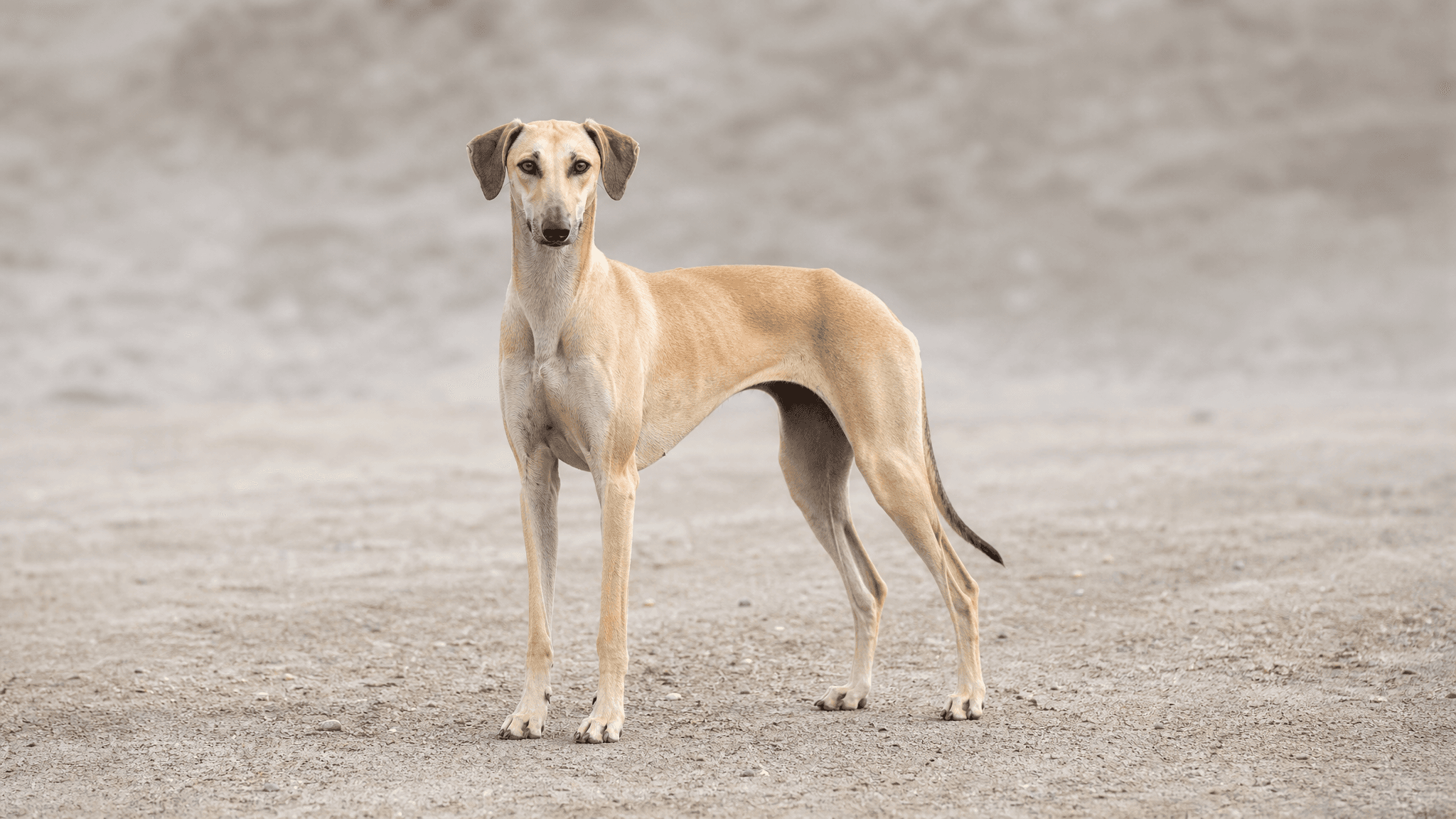
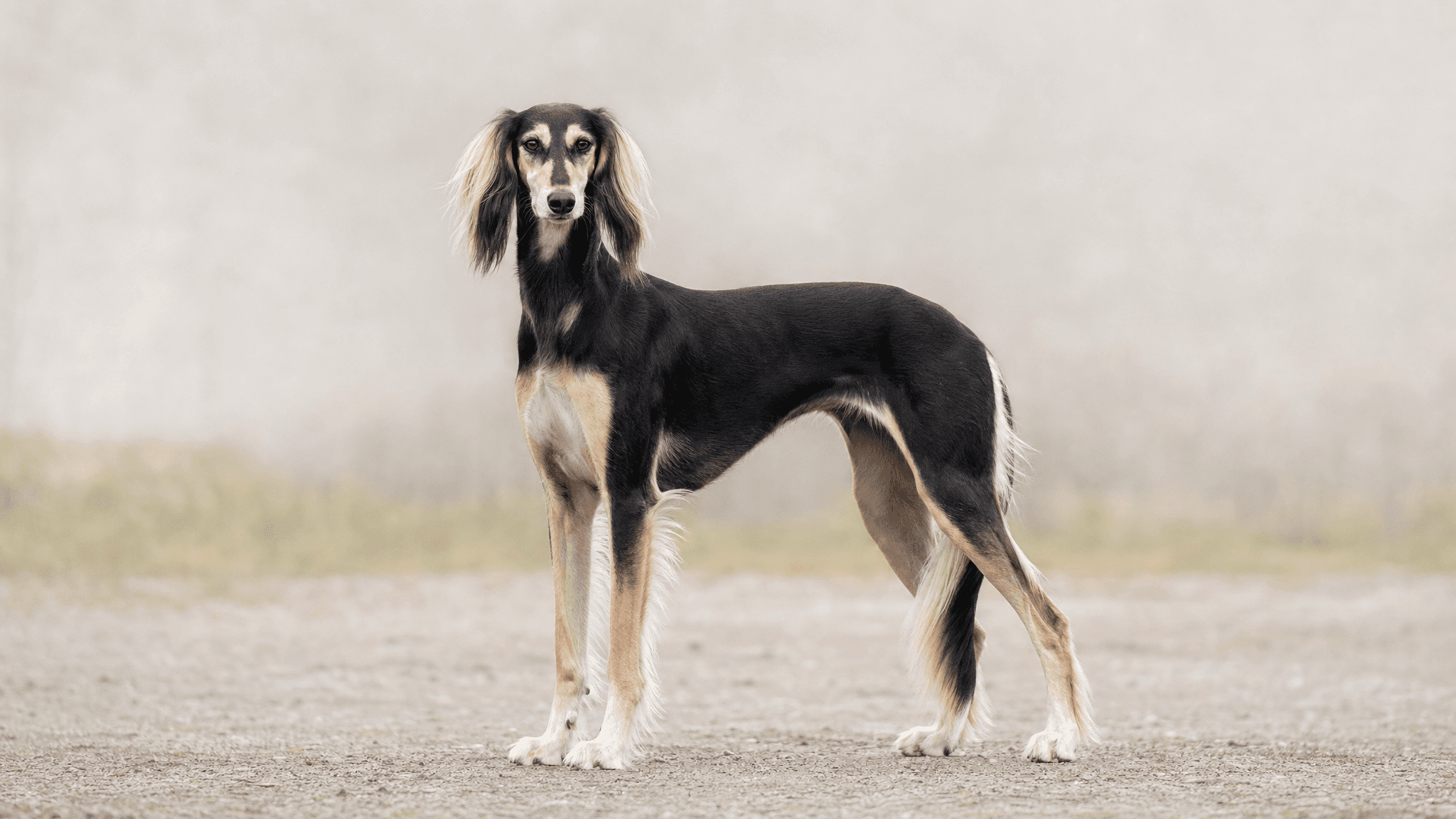
- Two varieties: feathered (silky fringes on the ears, limbs, tail, and sometimes neck) or smooth; short and soft hair on the body
- Common Colors
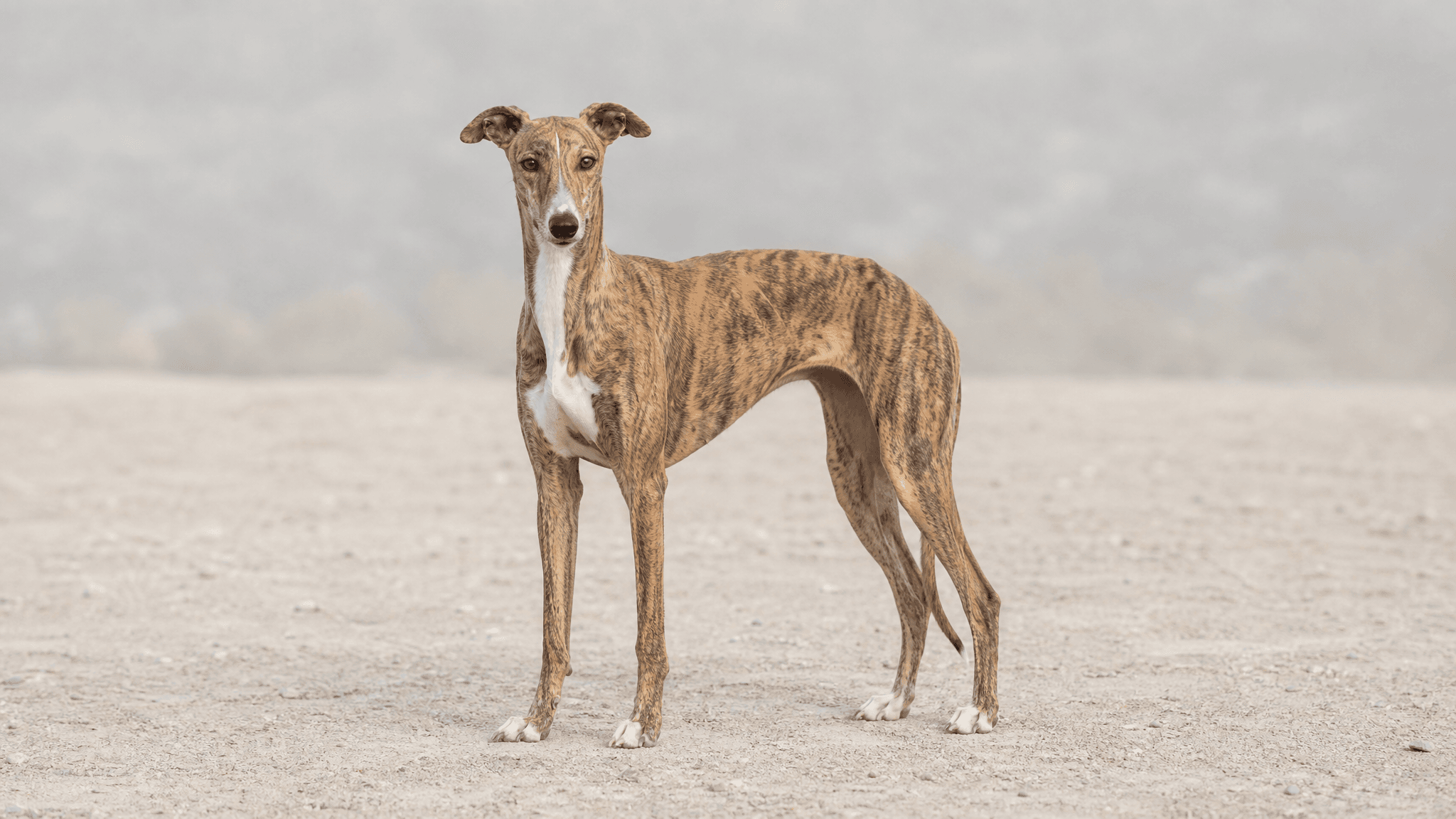
- All colors are accepted — white, cream, fawn, gold, red, brown, tricolor, black and tan, blue and tan
Temperament & Personality
The Saluki is an elegant, gentle, and deeply loyal dog to the family, but distant and reserved with strangers. It is a soft-natured animal that does not respond well to pressure or rigid discipline. At home it is calm and discreet; in open fields it transforms into a tireless hunter with a very pronounced prey drive. It appreciates close human company and does not like being left alone for extended periods.
Activity & Exercise
- Energy Level
- High
- Recommended Daily Exercise
- 90–120 minutes
- Suitable for Apartment
- Yes with exercise
Grooming & Care
- Grooming Needs
- Low to moderate
- Shedding
- Low to moderate
- Bathing Frequency
- Every 4–6 weeks
Health
- Common Health Issues
- Anesthesia sensitivity
- Cancer (mast cell tumors, hemangiosarcoma, lymphoma)
- Dilated cardiomyopathy (DCM)
- Gastric dilatation-volvulus (GDV — less frequent than in larger breeds)
- Hip dysplasia
- Neuronal ceroid lipofuscinosis (NCL)
- Recommended Health Tests
- Annual cardiac evaluation
- Eye examination
- Genetic test for NCL
- Hip evaluation
Compatibility
- With Children
- Good
- With Other Dogs
- Excellent
- With Cats
- Can be difficult
- For First-Time Owners
- Not recommended
Is a Saluki right for you?
A Saluki may suit you if:
- You can provide 90 to 120 minutes of daily exercise, including safe opportunities for full-speed running.
- You enjoy a calm home life balanced with exhilarating outdoor activities like lure coursing or long, fast runs.
- You appreciate a gentle, deeply loyal companion who is reserved with strangers but devoted to family.
- You are prepared to use positive, gentle training methods, understanding that rigid discipline won't work.
- You are willing to provide low to moderate grooming, including regular brushing for feathered coats.
- You can manage a very pronounced prey drive, ensuring secure outdoor spaces for their safety.
- You enjoy close human company and can ensure your dog isn't left alone for extended periods.
Think twice if:
- You expect immediate and unwavering obedience from your dog in all situations.
- You frequently leave your dog alone for long hours during the day.
- You have cats or other small, fast-moving pets that could trigger their strong prey drive.
- You are unable to commit to daily exercise of 90 to 120 minutes or regular coat care.
- You live in an unsecured area where your dog could easily run off during a chase.
- You are a first-time dog owner seeking a breed known for easy handling and biddability.
Salukis are truly unique, blending ancient grace with athletic power. They offer deep, quiet companionship but demand understanding of their independent spirit and intense prey drive. Living with one is a journey of respect for their heritage and a commitment to their specific needs, rewarding you with an elegant, devoted friend for 12 to 17 years.
Training a Saluki
Training a Saluki requires a gentle, consistent approach, as these elegant sighthounds are sensitive and do not respond well to pressure or rigid discipline. They are highly intelligent but can be independent, so motivation comes from making training fun, rewarding, and building a strong, trusting bond. Short, positive sessions with high-value treats and praise work best, preventing boredom and frustration. If a handler is harsh, impatient, or inconsistent, a Saluki may become withdrawn, anxious, or simply choose not to cooperate, making progress difficult and potentially damaging your relationship.
Begin with:
- Attention and response to name around distractions
- Recall on a long line
- Loose-leash walking
- Leave it and drop it
- Calm greetings without jumping
- Settling on a mat or bed
- Cooperative handling for grooming, ears, feet and teeth
- Waiting at doors and gates
Prey Drive and Recall
Salukis possess a very pronounced prey drive, an instinct that can easily override training in open spaces. This means that even the best-trained Saluki might bolt after a squirrel or rabbit. Always prioritize safety by using a long line in unfenced areas until you are absolutely certain of their recall, and even then, remain vigilant. Start recall training in a secure, distraction-free environment, making coming back to you the most rewarding experience possible with high-value treats and enthusiastic praise. Gradually introduce controlled distractions as your Saluki's reliability grows. Our guide on how to teach a dog to come when called offers excellent strategies.
Given their high energy and speed, a Saluki can cover a lot of ground quickly, making a strong recall vital. Never rely solely on voice commands in areas where prey might appear if there's any doubt about their response. Instead, focus on building a strong bond and making yourself the most interesting thing in their environment.
Leash Pulling Challenges
As medium to large dogs (14-29 kg) with substantial strength and a desire to move, Salukis can be powerful pullers on the leash, especially when their prey drive is triggered. This can make their recommended 90-120 minutes of daily exercise less enjoyable for both of you. Begin loose-leash training early, focusing on positive reinforcement to reward walking calmly by your side. Avoid harsh corrections or jerking the leash, as their sensitive nature means this can be counterproductive and damage trust. Instead, stop walking when they pull, resuming only when the leash is slack.
Consistency is crucial. Practice in quiet areas first, gradually introducing more distractions. Using a front-clip harness can help manage pulling without causing discomfort. For more detailed guidance, check out our article on how to stop a puppy pulling on the leash.
Coping with Loneliness
Salukis are deeply loyal and appreciate close human company, meaning they do not like being left alone for extended periods. If under-exercised, under-stimulated, or experiencing separation anxiety, they can resort to destructive behaviors, excessive barking, or other signs of distress. Ensure your Saluki receives their full daily exercise requirement and plenty of mental enrichment through puzzle toys or training sessions.
Gradually introduce alone time, starting with short durations and slowly increasing. Provide engaging activities to keep them occupied. If you notice signs of stress when you leave, such as excessive vocalization or destructive chewing, consider using our Behaviour AI feature to help understand and address these behaviors. A comfortable, safe space like a crate can also be beneficial, but it's not a substitute for addressing their need for companionship and activity.
Saluki — Frequently Asked Questions
What is the history of the Saluki?
The Saluki is one of the oldest dog breeds in human history — often called the 'Royal Dog of Egypt'. Archaeological evidence suggests Saluki-type dogs existed in ancient Egypt, Mesopotamia, and the Middle East as far back as 7,000–9,000 years ago. They were kept by nomadic Bedouin tribes to hunt gazelle, hare, and foxes across desert terrain — using both their exceptional sight and speed. They were so highly valued that they were gifted between rulers and treated with a reverence unusual for dogs in that culture. They are recognised as one of the founding breeds of the modern sighthound group.
What is the Saluki's temperament like?
The Saluki is gentle, sensitive, and quietly devoted — but distinctly unlike the typical eager-to-please family dog. They are aristocratic in temperament, reserved with strangers, and deeply loyal to their own family while rarely demonstrative in an effusive way. They bond closely with one or two people in particular. They are peaceful, intelligent, and sensitive — they respond poorly to raised voices or tension in the household. Despite their calm indoor manner, outdoors they have explosive speed and an intense instinct to chase. They are described as 'cat-like' in their independence and self-possession.
How much exercise does a Saluki need?
Salukis need about 60–90 minutes of daily exercise — but critically, they need opportunities for real free running at full speed several times a week, not just walking. They are one of the fastest dog breeds on earth, built for explosive acceleration over desert terrain. Without the chance to run, they become restless and frustrated. This free running must always be in a fully enclosed, secure area — their chase instinct when a hare or squirrel appears is absolute and will override all recall training instantly. A large, securely fenced field or dog park is a non-negotiable requirement for Saluki ownership.
Are Salukis easy to train?
Salukis are intelligent but profoundly independent. They understand what you want — they simply don't see why they should always comply. As coursing hounds bred to hunt autonomously at speed across vast distances, they were never selected for the tight handler-connection that herding or retriever breeds have. They respond to gentle, patient, positive training — never to harsh methods, which create anxiety and withdrawal in these sensitive dogs. Their recall around prey is essentially non-existent without a completely enclosed space. Lure coursing, sighthound racing, and free running are much better outlets for their true nature than formal obedience.
What health issues affect Salukis?
Salukis are generally healthy for a purebred, with good genetic diversity. Key concerns include cardiac conditions — particularly dilated cardiomyopathy (DCM); cardiac screening of breeding animals is important. Hypothyroidism is documented. Hip dysplasia can occur. Progressive Retinal Atrophy (PRA) has been found in some lines. They are notably sensitive to anaesthesia — as a sighthound with low body fat, standard anaesthetic doses can be dangerous; always inform your vet of this characteristic. Cancer occurs with higher frequency, particularly in older dogs. Their lean physique means they feel the cold acutely and need a warm sleeping area.
How long do Salukis live?
Salukis have an average lifespan of 12–14 years. Key longevity factors include daily exercise (essential for their physical and mental health), warmth (their lean, low-fat physique means they are genuinely cold-sensitive and need warm bedding and indoor access in cold weather), cardiac monitoring from middle age onward, regular vet check-ups, dental care, and managing their anaesthesia sensitivity carefully when medical procedures are needed. Their ancient, genetically diverse lineage contributes to generally good constitutional health. Many Salukis remain graceful and active well into their senior years.
Can Salukis live with cats or small animals?
Salukis have a powerful, instinctive prey drive specifically bred for chasing and catching fast-moving prey. Small animals — cats, rabbits, hamsters, guinea pigs — are at genuine risk. Some Salukis that have been raised with cats from puppyhood learn to accept them as part of the household 'pack', but this requires careful, gradual introduction and ongoing vigilance. Even Salukis that seem perfectly calm with a familiar cat indoors can switch instantly outdoors when the cat runs. Small caged animals should always be kept securely separated. Caution with unknown cats or small animals must always be exercised.
What does a Saluki look like?
The Saluki is a breathtakingly elegant, long-legged, deep-chested sighthound built entirely for speed and endurance. Their long, narrow head with large, oval, dark eyes conveys dignity and gentle intelligence. The feathered variety has long, silky feathering on the ears, tail, and between the toes; the smooth variety has no feathering at all. Coat colours include white, cream, fawn, golden, red, grizzle, tan, black and tan, tricolour, and parti-colour. They stand 58–71 cm at the shoulder and weigh 16–29 kg. Their angular, muscled, yet graceful body represents thousands of years of refinement for desert coursing.
Community
Talk to real Saluki owners
This guide covers the breed on paper. In the app, the Saluki community covers it in real life: photos from other owners, questions answered by people who live with the breed, and a directory of dogs you can browse.
- Photos & pollsSee what Saluki owners are sharing today.
- Questions & answersAsk anything and hear from people who own one.
- Dog directoryBrowse Salukis from around the world.
You join automatically when you add a Saluki to your profile.