Redbone Coonhound
Summary
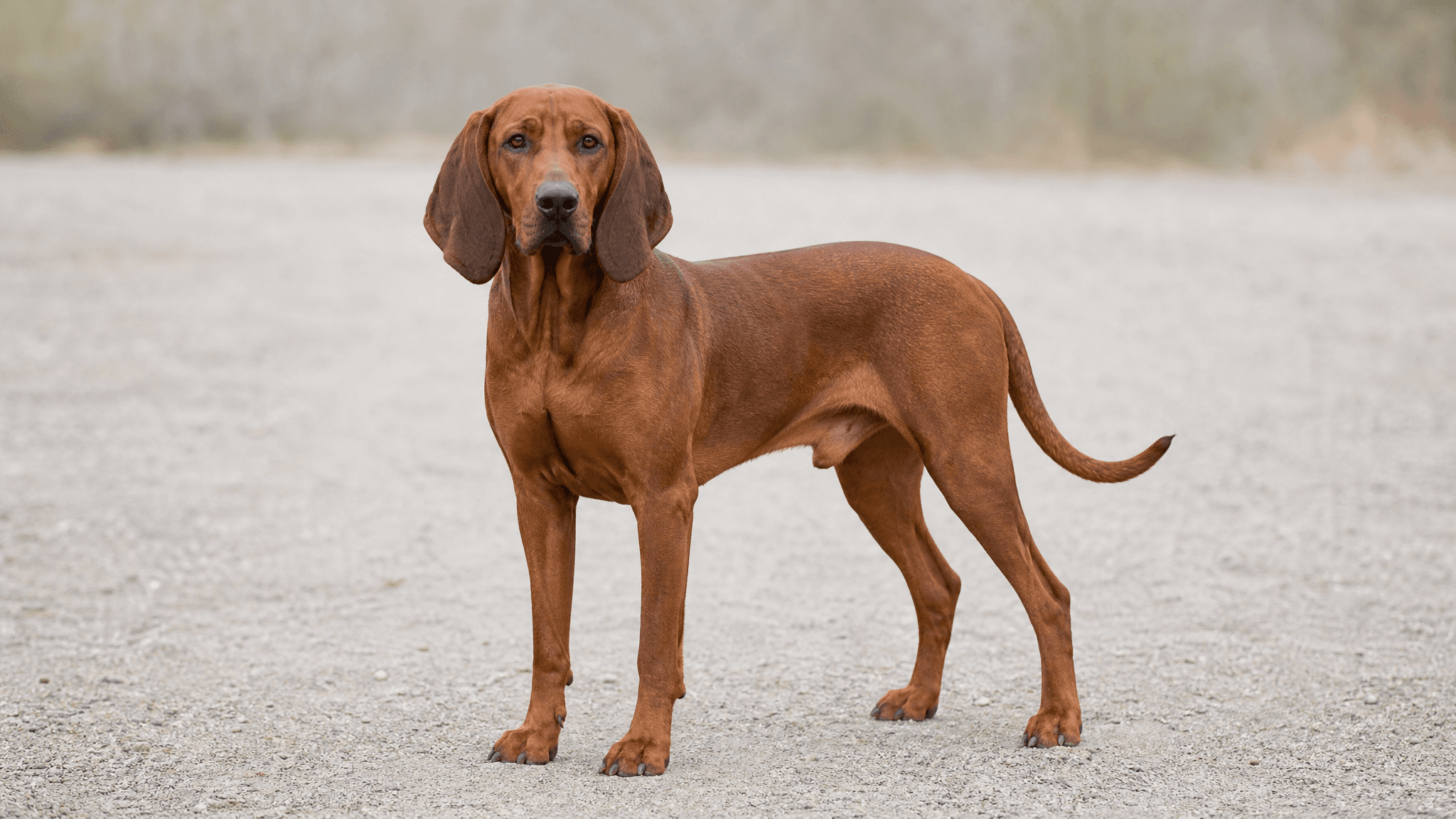
The Redbone Coonhound is an American scenthound recognized for its solid red coat, agile body, and strong trailing and treeing ability.
Physical Characteristics
- Size
- Large
- Height (male)
- 56–68.5 cm
- Height (female)
- 53.5–66 cm
- Weight (male)
- 20.5–32 kg
- Weight (female)
- 20.5–32 kg
- Life Expectancy
- 12–15 years
- Coat
- Short, smooth, protective hound coat
- Common Colors
- Solid red, ranging from rich red to deep mahogany
Temperament & Personality
The Redbone Coonhound is even-tempered, affectionate, energetic, and determined. It is mellow with family when exercised but remains a purposeful hunting hound.
Activity & Exercise
- Energy Level
- High
- Recommended Daily Exercise
- 60–90 minutes
- Suitable for Apartment
- Not recommended
Grooming & Care
- Grooming Needs
- Low
- Shedding
- Moderate
- Bathing Frequency
- Every 6–8 weeks
Health
- Common Health Issues
- Bloat
- Ear infections
- Hip dysplasia
- Recommended Health Tests
- Cardiac examination
- Ear examination
- Hip evaluation
Compatibility
- With Children
- Good
- With Other Dogs
- Good
- With Cats
- Can be difficult
- For First-Time Owners
- Acceptable
Is a Redbone Coonhound right for you?
A Redbone Coonhound may suit you if:
- You can provide at least 60 to 90 minutes of vigorous exercise and mental challenges daily.
- You enjoy outdoor activities like hiking, scent work, or even hunting with a determined companion.
- You appreciate an affectionate, even-tempered companion who is energetic outdoors and mellow indoors after exercise.
- You are prepared to engage in consistent, positive training to channel their intelligent, determined nature.
- You are comfortable with moderate shedding and minimal grooming, including baths every six to eight weeks.
- You are willing to manage a strong scent drive, understanding their natural inclination to follow a trail.
Think twice if:
- You expect immediate obedience in all situations, as their scent drive can override commands.
- You frequently leave dogs alone for long periods, as they thrive on companionship and activity.
- You have cats or other small, fast-moving pets that might trigger their strong prey drive.
- You are unwilling to commit to daily vigorous exercise, which is essential for their well-being.
- You live in an apartment or lack a securely fenced yard to contain their adventurous spirit.
- You are not prepared for the strength and exuberance of a large, energetic hound during their long adolescence.
Redbone Coonhounds are truly wonderful companions, offering boundless affection and a joyful spirit to the right home. Their determined, energetic nature means they need an owner who understands their hound instincts and is ready for an active partnership. With consistent exercise and a loving, engaged family, they transform into devoted, mellow household members for their 12 to 15 years.
Training a Redbone Coonhound
Redbone Coonhounds are intelligent, energetic, and determined learners who thrive on positive reinforcement. Their strong scent drive makes food-based rewards, especially high-value treats, incredibly motivating. Keep training sessions short, fun, and consistent to match their high energy level and prevent boredom. Inconsistent training or harsh methods can lead to stubbornness and a lack of focus, as their independent nature means they respond best to clear, patient guidance and a strong, trusting bond. They are acceptable for first-time owners who are committed to this approach.
Begin with:
- Attention and name response around distractions
- Recall on a long line
- Loose-leash walking
- Leave it and drop it
- Calm greetings without jumping
- Settling on a mat or bed
- Cooperative handling for grooming, ears, feet and teeth
- Waiting at doors and gates
Prey Drive and Recall
Redbones are scent hounds with an incredibly powerful prey drive. Once they catch an interesting scent, their determination kicks in, making it very difficult to break their focus. This means a reliable recall is not just important, it's essential for their safety.
Start recall training in a quiet environment and gradually introduce distractions. Always use a long line in unfenced areas until their recall is absolutely rock-solid, as their instinct can lead them to follow a scent for miles. Practice regularly, making coming back to you the most rewarding thing ever, perhaps with a high-value treat or a favorite toy. You can find more helpful advice in our guide on teaching recall.
Leash Pulling
As large, strong dogs with a high energy level, Redbones can be formidable pullers on the leash, especially when their powerful nose detects a tempting scent. Early and consistent training is crucial to teaching them to walk politely by your side.
Use a front-clip harness or a head halter for better control, and reward heavily for any moments of slack leash. Avoid letting them practice pulling, as this only reinforces the behavior. Remember, they need 60-90 minutes of exercise daily, so make those walks enjoyable for both of you. For more tips, check out our guide to stopping leash pulling.
Boredom & Destructive Behavior
An under-exercised or under-stimulated Redbone Coonhound, with its high energy and determined nature, can quickly become bored and resort to destructive behaviors like chewing furniture, excessive barking, or digging. They are not recommended for apartments and truly need space and plenty of activity to thrive.
Ensure they receive their recommended 60-90 minutes of daily exercise, split into varied activities like long walks, scent work games, or supervised play in a secure yard. Provide mental stimulation with puzzle toys or training sessions, and consider enrolling in dog sports like tracking or agility to channel their natural instincts positively. A tired Redbone is a happy, well-behaved Redbone!
Redbone Coonhound — Frequently Asked Questions
What is the Redbone Coonhound?
The Redbone Coonhound is a striking American scent hound, distinguished by its deep, rich red mahogany coat — one of the most visually distinctive of all coonhound breeds. Developed in the southern United States from foxhounds brought by Scottish and Irish immigrants in the 18th century, it was refined specifically for hunting raccoon, bear, mountain lion, and deer. Named for Peter Redbone, a Tennessee breeder who promoted the breed in the early 1800s, the Redbone is known for its powerful nose, melodious voice, and excellent cold-nose ability (the ability to track very old scent trails). It is recognised by the AKC in the Hound Group.
How much exercise does a Redbone Coonhound need?
The Redbone Coonhound is a high-energy working hound that needs substantial daily exercise — at least 1.5–2 hours of vigorous activity. It was developed for endurance hunting across varied terrain, and its stamina is considerable. Long walks, jogging, hiking, swimming, and safe off-lead running in securely fenced areas are all ideal activities. Without adequate exercise, Redbone Coonhounds become restless, destructive, and excessively vocal — their musical howl can be relentless. It is not a dog suited to apartment or city life without extraordinary commitment to daily outdoor exercise. In active rural settings, it is an enthusiastic and tireless companion.
Is the Redbone Coonhound a good family dog?
The Redbone Coonhound has a warm, affectionate, and gentle temperament that makes it a wonderful family companion in the right setting. It is loyal and loving with its people, typically good with children who enjoy active, outdoor play, and very sociable with other dogs due to its pack hunting background. Its strong prey drive means it may not be safe with cats or small pets. Its musical, carry-far howl can be a challenge in residential areas. It needs a large, securely fenced property and an active family committed to substantial daily exercise. Given the right environment, it is a devoted, warm-hearted companion.
Is the Redbone Coonhound easy to train?
The Redbone Coonhound is intelligent but has the characteristic scent hound independence — once on a scent, training takes a back seat to instinct. It is persistent, driven, and can be stubborn. Positive reinforcement training works well; the breed is sensitive and responds poorly to harsh corrections. Recall training is particularly important and requires patient, consistent work from puppyhood — the Redbone's nose is its most powerful sense and it will follow a trail regardless of commands when motivated. Basic obedience and house manners are achievable with patience and consistency, but this is a breed that truly shines in its working role.
What makes the Redbone Coonhound's coat distinctive?
The Redbone Coonhound's coat is its most immediately striking feature — a rich, deep mahogany red that is uniform across the body, sometimes with small white markings on the chest or feet. This stunning, lustrous red coat is short, dense, and coarse enough to provide protection during hunting through brush and briar. Grooming needs are minimal — a weekly brushing with a rubber grooming mitt or bristle brush removes loose hair and maintains the coat's sheen. They shed moderately year-round. Their coat's density and colour make dirt and debris visible, so a wipe-down or occasional bath after muddy outdoor sessions keeps them looking their best.
Does the Redbone Coonhound get along with other pets?
The Redbone Coonhound is exceptionally dog-friendly — it was bred to work in packs and is naturally cooperative and sociable with other dogs of all sizes. Multi-dog households suit it well. With cats and small animals, however, the situation is very different: the Redbone has a powerful hunting drive and strong instinct to chase and bay at prey animals. It generally cannot be trusted reliably with cats, rabbits, birds, or other small pets — its prey drive is simply too strong. This should be clearly understood before bringing a Redbone Coonhound into a home with existing small pets.
What health issues are common in the Redbone Coonhound?
The Redbone Coonhound is generally a healthy breed. Hip dysplasia occurs at moderate rates in large working breeds. Ear infections are a frequent concern — their long, pendulous ears trap moisture and warmth, creating ideal conditions for infections; weekly ear inspection and cleaning after outdoor activity are essential. Bloat (gastric dilatation-volvulus) is a serious risk for deep-chested breeds — preventive feeding practices (smaller meals, no vigorous exercise after eating) are important. Eye conditions including progressive retinal atrophy have been observed. Regular veterinary check-ups, weight management, and attentive ear care support a long, healthy life.
What is the typical lifespan of a Redbone Coonhound?
The Redbone Coonhound typically lives between 12 and 15 years, which is notably good for a large working hound breed — longer than many large breeds. Their robust working constitution contributes to a healthy baseline. The most important factors for longevity are maintaining a healthy body weight, providing vigorous daily exercise (a sedentary Redbone ages poorly), proactive and regular ear care to prevent chronic infections, appropriate bloat prevention measures, and routine veterinary check-ups. A Redbone Coonhound that is well-exercised, well-cared-for, and living in an appropriate active environment can be a long-term, deeply loyal companion.
Community
Talk to real Redbone Coonhound owners
This guide covers the breed on paper. In the app, the Redbone Coonhound community covers it in real life: photos from other owners, questions answered by people who live with the breed, and a directory of dogs you can browse.
- Photos & pollsSee what Redbone Coonhound owners are sharing today.
- Questions & answersAsk anything and hear from people who own one.
- Dog directoryBrowse Redbone Coonhounds from around the world.
You join automatically when you add a Redbone Coonhound to your profile.