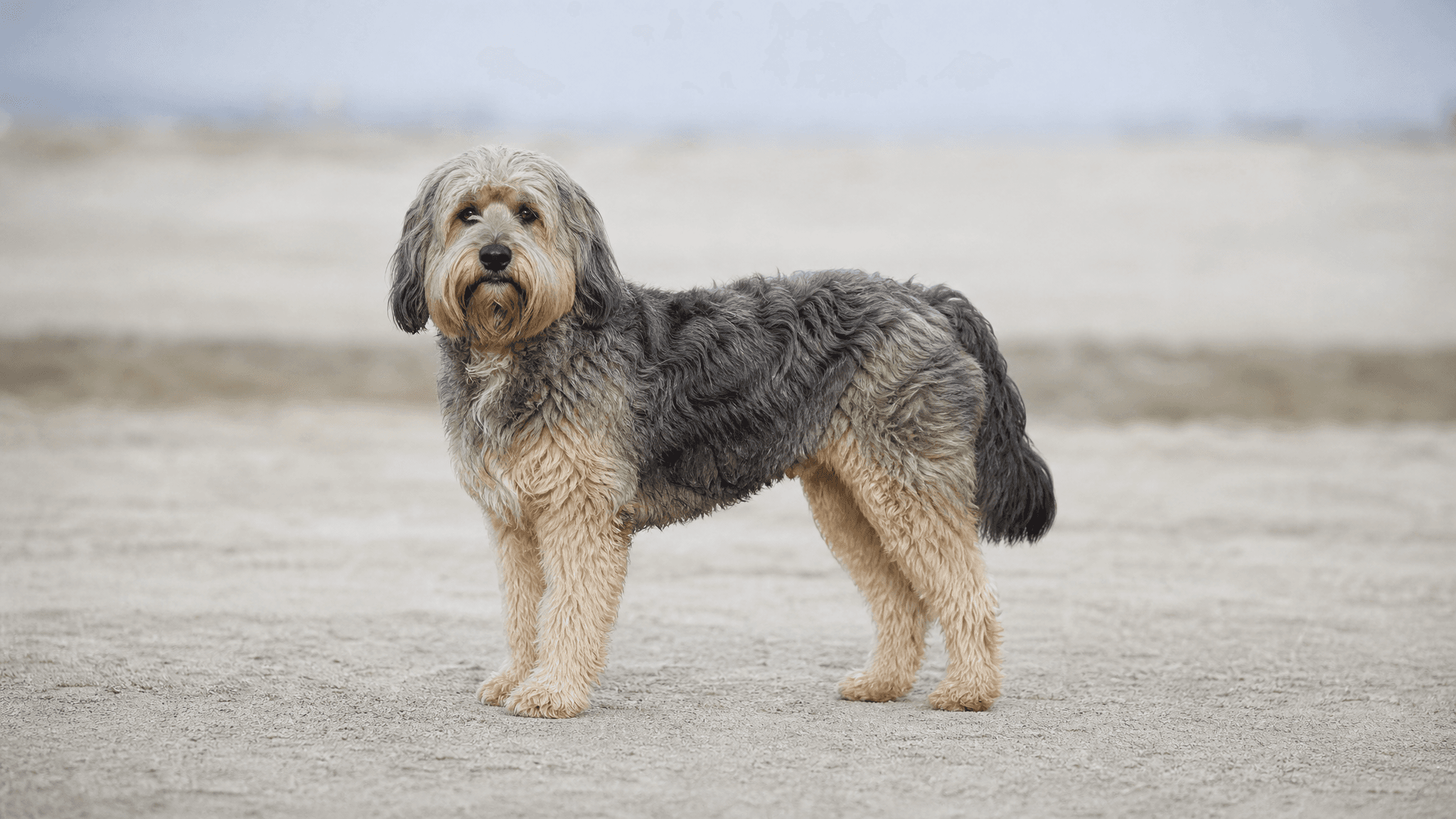
Portuguese Water Dog
Summary
The Portuguese Water Dog is a primitive breed that accompanied Portuguese fishermen along the coast of the Algarve and the Alentejo coast for centuries. It was indispensable in tuna fishing traps and on fishing voyages, where it served as an assistant to herd fish schools toward nets, retrieve fishing gear fallen into the sea, carry messages between boats, and as a faithful guard of ships and fishermen's belongings. It is an exceptional swimmer and diver, with full interdigital webbing and a water-resistant coat. In the 1970s, the breed was considered the rarest in the world (Guinness Book of Records, 1981), but it was recovered thanks to dedicated breeders. Today it is internationally known and gained enormous notoriety when President Obama chose two Portuguese Water Dogs for his family during his presidency (2009–2017).
Physical Characteristics
- Size
- Medium
- Height (male)
- 50–57 cm
- Height (female)
- 43–52 cm
- Weight (male)
- 19–25 kg
- Weight (female)
- 16–22 kg
- Life Expectancy
- 12–15 years
- Coat
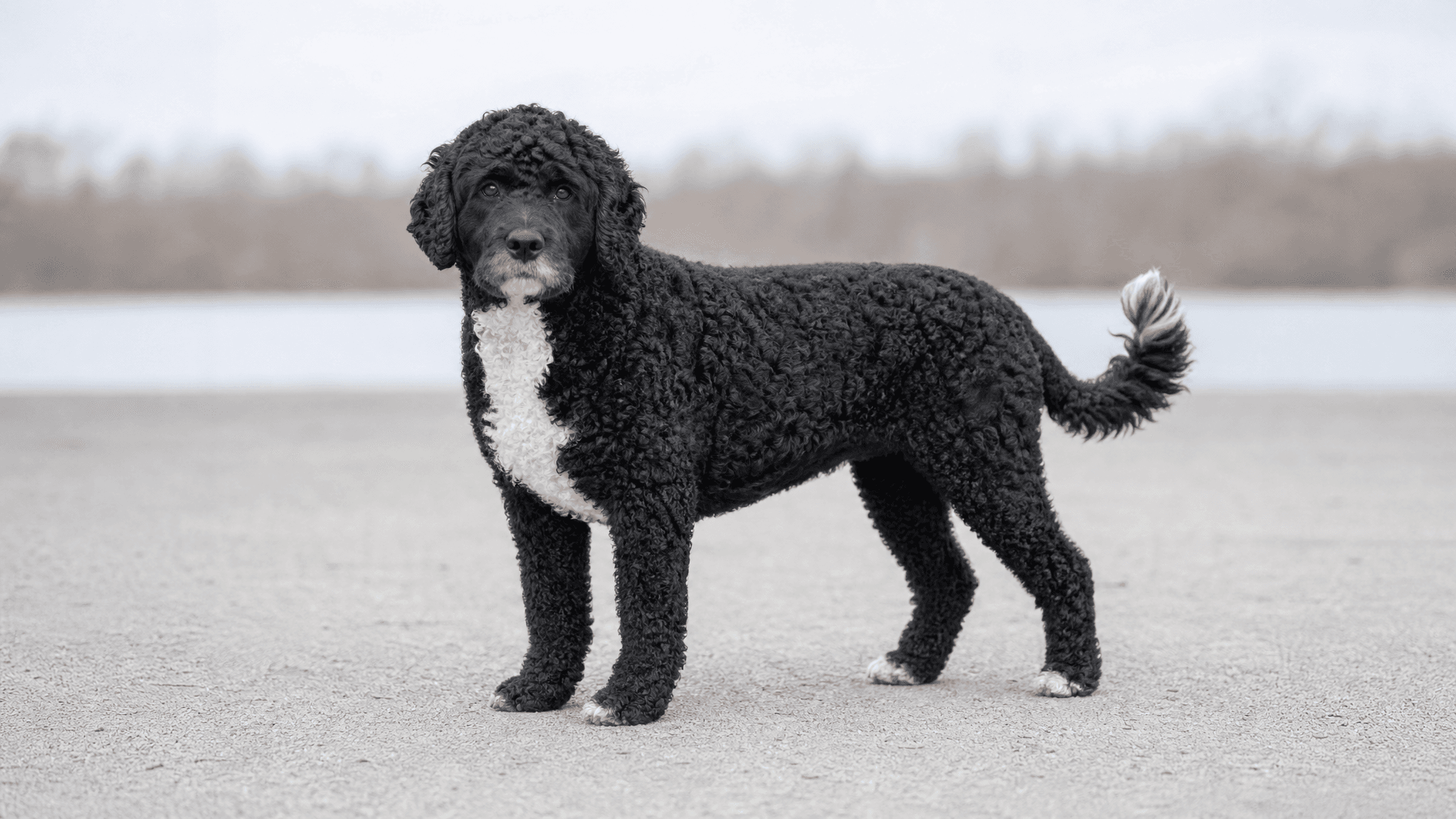
- Two varieties — **wavy** (long, slightly lustrous and soft hair) and **curly** (shorter, dense hair in cylindrical spirals); no undercoat; full body coverage; interdigital webbing extending to the tips of the toes
- Common Colors
- Solid black, brown (in various shades), or uniform white; in black or brown dogs, white markings on the muzzle, tail, chest, belly, and limb tips are permitted; white should not be albino
Temperament & Personality
The Portuguese Water Dog has an impetuous, willful, courageous, sober, and extraordinarily fatigue-resistant temperament — characteristics shaped by centuries of intense work in open sea. It is a dog with a serious expression and penetrating gaze, with excellent vision and sense of smell. It is intelligent, loyal, and obedient to those who handle and work with it, revealing a deep sense of partnership with humans. It is a dog of great energy that needs regular physical and mental exercise. It is active, playful, and very affectionate with the family.
Activity & Exercise
- Energy Level
- High
- Recommended Daily Exercise
- 60–90 minutes
- Suitable for Apartment
- Yes with exercise
Grooming & Care
- Grooming Needs
- High
- Shedding
- Minimal
- Bathing Frequency
- Every 4–6 weeks
Health
- Common Health Issues
- - **Hip dysplasia** — radiological screening recommended before breeding
- Recommended Health Tests
- And Microphthalmia
- Annual ophthalmologic examination (glaucoma)
- Cardiac evaluation — **all breeding stock must be tested**
- Genetic test for GM-1
- Hip radiography
- JDCM
- Progressive retinal atrophy (PRA)
Compatibility
- With Children
- Excellent
- With Other Dogs
- Good
- With Cats
- Good
- For First-Time Owners
- Acceptable
Is a Portuguese Water Dog right for you?
A Portuguese Water Dog may suit you if:
- You are excited to provide at least 60 to 90 minutes of vigorous daily exercise, coupled with engaging mental challenges.
- You enjoy an active, water-centric lifestyle, eager to include your dog in swimming, retrieving, and adventurous outdoor activities.
- You appreciate a loyal, intelligent, and courageous companion with a serious expression and penetrating gaze.
- You are prepared for consistent, positive training to channel their intelligence and strong, willful spirit effectively.
- You are committed to regular grooming, including brushing and professional trims, to maintain their unique wavy or curly, non-shedding coat.
- You are willing to manage their natural instincts for herding, retrieving, and exploring with their excellent vision and sense of smell.
Think twice if:
- You expect immediate and unquestioning obedience, as their impetuous and willful nature requires patient, consistent guidance.
- You have a routine that leaves a dog alone for long stretches, as this breed thrives on companionship and a deep sense of partnership.
- You are unwilling to manage their high energy and boisterous play around very young children or smaller, easily overwhelmed pets.
- You are unwilling to dedicate significant time daily to their exercise needs or weekly to their demanding grooming regimen.
- You have limited secure outdoor space and cannot provide consistent, supervised activity for a medium-sized, high-energy dog.
- You are not prepared to handle a strong, energetic adolescent dog who will test boundaries with their intelligent and determined spirit.
Living with a Portuguese Water Dog is a journey of joyful partnership, but it demands commitment. Their vibrant spirit and deep loyalty are incredibly rewarding, yet their intelligence and energy require consistent engagement and training. Embrace their zest for life, and you'll find an unparalleled companion; neglect it, and their strong will may prove challenging.
Training a Portuguese Water Dog
Portuguese Water Dogs are incredibly intelligent and eager to please, especially when they feel a deep sense of partnership with their handler. Their historical role as working companions means they thrive on purpose and mental engagement. Keep training sessions short, fun, and positive, using rewards like praise, treats, and play to keep their keen minds focused. If training becomes repetitive or inconsistent, their impetuous and willful nature, a hallmark of this ancient breed, can lead to them becoming bored or deciding to take matters into their own paws, making progress much harder.
Begin with:
- Attention and response to name around distractions
- Recall on a long line
- Loose-leash walking
- Leave it and drop it
- Calm greetings without jumping
- Settling on a mat or bed
- Cooperative handling for grooming, ears, feet and teeth
- Waiting at doors and gates
Retrieving Drive & Focus
Portuguese Water Dogs are born to work and retrieve, especially around water. This powerful instinct, honed over centuries of working with fishermen, means they can be easily distracted by anything that moves or resembles a 'job' to be done. To channel this, integrate retrieving games into your training, especially for recall. Practice in varied environments, starting calm and gradually introducing more distractions. Always make yourself the most exciting option, rewarding generously when they choose to engage with you over their natural urges. You can find more tips on teaching a reliable recall here.
Leash Pulling
With their high energy and medium size, Portuguese Water Dogs can become quite strong on the leash, especially when their keen senses pick up an interesting scent or sight. To avoid being pulled along, start loose-leash training from day one. Reward every step they take with a slack leash, making it clear that walking calmly by your side brings good things. A front-clip harness can be a valuable tool to help manage their strength and redirect their focus back to you. Remember, they need 60-90 minutes of exercise daily, so ensure they're adequately exercised to help them focus better on walks. For more specific guidance, check out our guide on stopping leash pulling.
Boredom & Destructive Habits
If a Portuguese Water Dog isn't given enough physical exercise or mental stimulation, their intelligent and 'impetuous' nature can lead to unwanted behaviors. They might become destructive chewers, bark excessively, or even invent their own 'jobs' around the house, which can be disruptive. These dogs thrive on having a purpose. Ensure they receive their full 60-90 minutes of recommended daily exercise, and supplement this with engaging activities like puzzle toys, scent games, and regular training sessions. Keeping their minds busy is just as important as tiring out their bodies to prevent boredom-induced mischief.
Portuguese Water Dog — Frequently Asked Questions
Are Portuguese Water Dogs hypoallergenic?
Portuguese Water Dogs are considered a low-shedding breed and are often recommended for people with dog allergies. Their curly or wavy single coat sheds very little, which means less dander in the home. However, no dog is truly hypoallergenic — all dogs produce dander, saliva proteins, and urine that can trigger allergic reactions. If you're allergic, spending time with the breed before committing is the only reliable way to assess your individual reaction.
Are Portuguese Water Dogs good family pets?
Portuguese Water Dogs are excellent family pets — they are energetic, playful, and deeply affectionate. They tend to get on well with children and other dogs. Their working dog background means they are adaptable, eager to please, and love being involved in family activities. They need significant exercise and mental stimulation, so they suit active families best. Their low-shedding coat is a bonus for households that prefer less hair.
How much exercise does a Portuguese Water Dog need?
Portuguese Water Dogs need 60–90 minutes of vigorous exercise daily. They were bred as working water dogs — retrieving fishing gear, herding fish, and swimming alongside boats — so they have genuine endurance. They excel at swimming, fetch, agility, and dock diving. Mental stimulation is equally important: they are highly intelligent and will become bored and destructive without regular challenges. A tired Portuguese Water Dog is a well-behaved Portuguese Water Dog.
Are Portuguese Water Dogs easy to train?
Portuguese Water Dogs are highly trainable and eager to please. They are quick learners, food motivated, and enjoy working with their handlers. They respond best to positive reinforcement — they have a sensitive side that means harsh corrections can damage confidence. Early socialisation and puppy classes are recommended. They excel at obedience, agility, water sports, and search and rescue. Their intelligence means they need ongoing mental challenges, not just repetitive basic commands.
What health issues affect Portuguese Water Dogs?
Portuguese Water Dogs have several breed-specific health concerns. Progressive Retinal Atrophy (PRA) — particularly the prcd-PRA variant — can cause vision loss; a DNA test is available. Juvenile Dilated Cardiomyopathy (JDCM) is a fatal heart condition in puppies — DNA testing identifies affected litters. Hip dysplasia and elbow dysplasia can occur. Addison's Disease (adrenal insufficiency) is more common in this breed than average. Responsible breeders DNA test for PRA and JDCM.
How long do Portuguese Water Dogs live?
Portuguese Water Dogs have an average lifespan of 11–13 years. Their working dog constitution contributes to their robustness. Key factors for longevity include good nutrition, regular vigorous exercise, maintaining a healthy weight, dental care, and annual vet check-ups. DNA testing for Juvenile Dilated Cardiomyopathy and PRA in breeding lines is critical — affected dogs often do not live long. Buying from a health-tested breeder dramatically improves the odds of a long, healthy life.
Do Portuguese Water Dogs need a lot of grooming?
Portuguese Water Dogs have a curly or wavy single coat that requires moderate grooming. Unlike double-coated breeds, they don't have heavy seasonal shedding. However, their coat grows continuously and needs trimming every 6–8 weeks by a professional groomer. Brushing 2–3 times per week prevents matts. The traditional "lion clip" (short over the hindquarters, full on the front) or the "retriever clip" (uniform length all over) are both popular options. Without regular grooming, the coat can become matted and uncomfortable.
Are Portuguese Water Dogs good swimmers?
Portuguese Water Dogs are exceptional, natural swimmers — they were literally bred for aquatic work. Their webbed feet, waterproof coat, and powerful build make them ideally suited to water. They love swimming and can retrieve from water for extended periods. Swimming is an excellent, low-impact exercise for them that burns energy without stressing their joints. If you have access to a safe, clean swimming area, a Portuguese Water Dog will happily use it every day. Water play is one of the greatest joys of the breed.
Community
Talk to real Portuguese Water Dog owners
This guide covers the breed on paper. In the app, the Portuguese Water Dog community covers it in real life: photos from other owners, questions answered by people who live with the breed, and a directory of dogs you can browse.
- Photos & pollsSee what Portuguese Water Dog owners are sharing today.
- Questions & answersAsk anything and hear from people who own one.
- Dog directoryBrowse Portuguese Water Dogs from around the world.
You join automatically when you add a Portuguese Water Dog to your profile.