Welsh Springer Spaniel
Summary
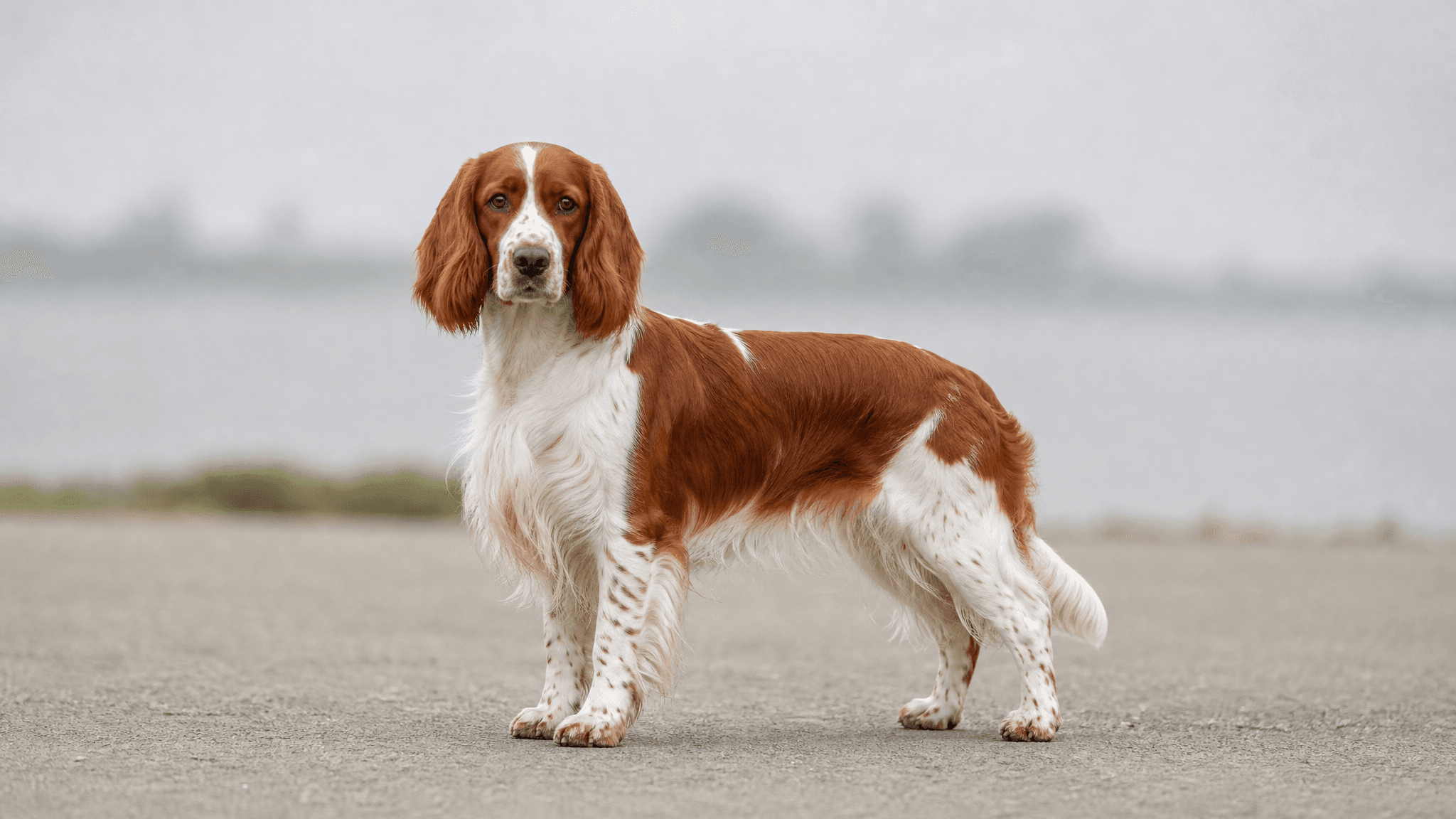
The Welsh Springer Spaniel is one of the oldest British breeds, with evidence of existence dating back to the 13th century, and is considered one of the predecessors of several modern spaniels. It is a robust and resilient hunting dog, developed in Wales to work in difficult terrain and humid climates. It is slightly smaller than its English counterpart and is distinguished by its exclusively red and white coat.
Physical Characteristics
- Size
- Medium
- Height (male)
- 46–48 cm
- Height (female)
- 43–46 cm
- Weight (male)
- 18–20 kg
- Weight (female)
- 16–20 kg
- Life Expectancy
- 12–15 years
- Coat
- Straight, dense, and silky, weather-resistant; with feathering on the ears, chest, belly, and legs
- Common Colors
- Exclusively rich red and white (any pattern is accepted)
Temperament & Personality
The Welsh Springer is a loyal, affectionate dog with a more reserved character than its English cousin. It tends to form very strong bonds with its family and can be cautious or shy with strangers, needing early socialization. It is very dedicated to its owners — sometimes excessively, following them throughout the house. It is a resilient worker in the field and a faithful and calm companion at home.
Activity & Exercise
- Energy Level
- High
- Recommended Daily Exercise
- 60–90 minutes
- Suitable for Apartment
- Not recommended
Grooming & Care
- Grooming Needs
- Moderate
- Shedding
- Moderate
- Bathing Frequency
- Every 4–6 weeks
Health
- Common Health Issues
- Closed-angle glaucoma (hereditary autosomal dominant condition)
- Hip dysplasia
- Hypothyroidism
- Otitis
- Recommended Health Tests
- Annual ophthalmologic examination (glaucoma)
- Hip radiography
- Thyroid function test
Compatibility
- With Children
- Excellent
- With Other Dogs
- Good
- With Cats
- Good
- For First-Time Owners
- Acceptable
Is a Welsh Springer Spaniel right for you?
A Welsh Springer Spaniel may suit you if:
- You are prepared to provide at least 60 to 90 minutes of vigorous daily exercise and engaging mental stimulation.
- You enjoy an active lifestyle, including outdoor adventures or dog sports, where your companion can thrive.
- You appreciate a deeply loyal and affectionate companion who forms strong bonds and loves being by your side.
- You are committed to consistent, positive training and early socialization to help them confidently navigate the world.
- You are prepared for moderate grooming, including regular brushing of their beautiful, weather-resistant feathered coat.
- You are happy to have a dedicated shadow, as they often follow their beloved family members throughout the home.
Think twice if:
- You expect a dog that is instantly obedient and always eager to please without consistent, patient guidance.
- You need a dog that is comfortable being left alone for long periods each day, as they thrive on companionship.
- You prefer a dog that is immediately outgoing and boisterous with every new person it encounters.
- You are unwilling to commit to daily vigorous exercise or regular grooming to maintain their health and coat.
- You live in an apartment and cannot provide ample outdoor space or frequent, enriching excursions.
- You are not prepared for a high-energy adolescent who requires consistent boundaries and engaging activities.
Living with a Welsh Springer Spaniel is a joyful dance between their devoted affection and their spirited energy. They offer unwavering loyalty and a calm presence indoors, yet they yearn for adventure and mental challenges outdoors. Embrace their need for engagement, and you'll discover a truly devoted and resilient companion for 12 to 15 wonderful years.
Training a Welsh Springer Spaniel
The Welsh Springer Spaniel is a highly intelligent and dedicated companion, eager to please its beloved family. They thrive on positive reinforcement, especially when training is framed as a fun, engaging game with their favorite people. Short, consistent, and upbeat sessions are key to keeping their high energy and focus engaged. Due to their strong bond and sensitive nature, harsh corrections or inconsistent training can lead to shyness or a reluctance to engage, making them withdraw rather than learn. Early socialization is crucial to help them overcome their natural caution with strangers and build confidence.
Begin with:
- Attention and response to name around distractions
- Recall on a long line
- Loose-leash walking
- Leave it and drop it
- Calm greetings without jumping
- Settling on a mat or bed
- Cooperative handling for grooming, ears, feet and teeth
- Waiting at doors and gates
Prey drive and recall
Welsh Springers were bred to be resilient hunting dogs, and their natural instinct to flush birds and follow scents is incredibly strong. This can make recall a significant challenge, especially in stimulating outdoor environments. They might be dedicated to you, but a fleeing squirrel or an interesting scent trail can easily override their desire to return.
Start recall training in a low-distraction environment, gradually increasing the difficulty. Always make coming back to you the most rewarding thing ever, with high-value treats and praise. Practice recall on a long line so you can gently guide them back if they get distracted, preventing them from learning that ignoring you leads to fun chases. Consistency is key here; every successful recall builds a stronger habit. Our guide on teaching recall has more tips.
Enthusiastic leash pulling
With their high energy and enthusiasm for exploring, Welsh Springers can become quite strong pullers on the leash. Their medium size and robust nature mean they can exert a surprising amount of force, making walks less enjoyable for both of you. This isn't out of malice, but pure excitement and a desire to get to the next sniff or adventure.
Focus on positive reinforcement for loose-leash walking from the very beginning. Reward every step they take with a slack leash. If they pull, stop walking immediately and only resume when the leash loosens. You might feel like you're not going anywhere at first, but consistency pays off. Consider using a front-clip harness for better control without causing discomfort. This guide can help you stop puppy pulling.
Boredom and separation
Welsh Springers are highly energetic dogs who thrive on activity and companionship. If they don't receive their recommended 60-90 minutes of daily exercise and sufficient mental stimulation, or if they're left alone for long periods, they can become bored, frustrated, and even destructive. Their strong bond with their family also means they can struggle with separation anxiety.
Ensure your Welsh Springer has plenty of opportunities for physical exercise and engaging mental games. Puzzle toys, training sessions, and interactive play can help burn off energy and keep their minds active. For separation issues, practice gradually increasing the time you leave them alone, making departures and arrivals low-key. A comfortable, safe space like a crate can also help. Understanding signs of stress can help you tailor your approach.
Welsh Springer Spaniel — Frequently Asked Questions
What is the Welsh Springer Spaniel?
The Welsh Springer Spaniel is a medium-sized, elegant, and versatile gundog from Wales, with a history stretching back at least to the 16th century and references in Welsh law that may be even older. They are one of Britain's oldest sporting breeds, distinct from the English Springer Spaniel — the Welsh Springer is characterised by its rich red and white coat (only this colour is acceptable), slightly smaller, more compact build, and somewhat more independent character. They were bred to flush, hunt, and retrieve game in the challenging Welsh terrain. In character they are loyal, devoted, active, and affectionate — with a cheerful, energetic personality and deep attachment to their family.
Are Welsh Springer Spaniels good family dogs?
Welsh Springer Spaniels are excellent family dogs. They are affectionate, playful, and devoted — particularly loving with children and forming deep bonds with their whole family. They are generally good with other dogs and household pets. They are active dogs and genuinely enjoy taking part in family activities. They can be somewhat reserved with strangers — unlike some more gregarious spaniels, Welsh Springers tend to be more selective about who they embrace. This makes them naturally watchful, but early socialisation is important to ensure they don't become overly cautious. For active families who want a beautiful, loyal, and genuinely athletic spaniel, the Welsh Springer is outstanding.
How much exercise does a Welsh Springer Spaniel need?
Welsh Springer Spaniels need 1–2 hours of vigorous daily exercise. They are energetic, athletic gundogs bred for sustained work in the field. Long walks, off-leash running in secure areas, swimming (they love water), fetch, agility, and fieldwork all suit them. They also benefit from mental stimulation — nose work, training sessions, and interactive play engage their working intelligence. Without adequate daily exercise, Welsh Springers become restless, vocal, and may develop unwanted behaviours. An active lifestyle and outdoor activities are very well suited to this breed. They are emphatically not a breed for very sedentary households.
Are Welsh Springer Spaniels easy to train?
Welsh Springer Spaniels are intelligent and capable, but more independently minded than English Springers. They are food-motivated and respond well to positive, reward-based training, but they can be somewhat selective in their attention and have a characteristically independent streak. Early puppy training and socialisation are important — they are quicker to become shy or reserved without it. They can achieve excellent results in gundog work, obedience, agility, flyball, and nose work. Their recall in open spaces can be unreliable when interesting scents are present — off-leash work in unsecured areas should be approached carefully. Consistent, positive, engaging training produces the best results.
What health issues affect Welsh Springer Spaniels?
Welsh Springer Spaniels have several documented health concerns. Hip dysplasia — OFA/BVA screening is recommended. Epilepsy is a significant concern in the breed — it has a hereditary basis in Welsh Springers; reputable breeders should be aware of their bloodlines' history with epilepsy. Glaucoma (increased eye pressure leading to blindness) is documented in the breed — regular eye screening is recommended. Hypothyroidism has been noted. Ear infections are common due to their pendulous, feathered ears — regular cleaning and drying after water activities is important. Annual vet check-ups, eye monitoring, and health-tested parents are important.
How long do Welsh Springer Spaniels live?
Welsh Springer Spaniels have an average lifespan of 12–15 years. Key longevity factors include sourcing from epilepsy-aware breeders (understanding bloodline epilepsy history), annual eye examinations (glaucoma is manageable if caught early — urgent treatment is needed once detected, as it progresses quickly), regular ear cleaning and drying (preventing chronic ear disease), daily vigorous exercise (maintaining lean, healthy muscle mass), maintaining healthy weight, annual vet check-ups including thyroid testing, dental care, and thorough early socialisation (well-adjusted, calm dogs tend to have fewer stress-related health issues). Welsh Springers from health-conscious lines commonly live into their mid-teens.
How do you recognise a Welsh Springer Spaniel?
The Welsh Springer Spaniel is a medium-sized, well-balanced sporting dog with a very specific and distinctive appearance. Their most recognisable feature is their rich red and white coat — this is the only acceptable colour, and the red is a distinctive warm, rich shade (not orange). Their coat is straight or flat, silky in texture, and never wavy or curly. They have characteristic pendulous, vine-leaf shaped ears, a straight, strong muzzle, and a warm, dark brown eye with a kind expression. They are slightly smaller and less heavily built than the English Springer Spaniel. They stand 46–48 cm at the shoulder and weigh 16–20 kg. Their overall impression is of a dog that is athletic, elegant, and enduringly beautiful.
Are Welsh Springer Spaniels good with other dogs?
Welsh Springer Spaniels are generally good with other dogs. They are sociable and enjoy canine company — they were bred to work in groups with other gundogs. Early socialisation from puppyhood reinforces their natural friendliness and helps ensure they are confident and well-behaved around dogs of all sizes. They are not typically dog-aggressive, though like all dogs they benefit from positive early experiences with other breeds. They are usually good with family cats they have been raised with, though their hunting instinct means they may chase unfamiliar small animals. Their social, pack-oriented working background means they generally thrive with canine companionship and can do well in multi-dog households with proper introductions.
Community
Talk to real Welsh Springer Spaniel owners
This guide covers the breed on paper. In the app, the Welsh Springer Spaniel community covers it in real life: photos from other owners, questions answered by people who live with the breed, and a directory of dogs you can browse.
- Photos & pollsSee what Welsh Springer Spaniel owners are sharing today.
- Questions & answersAsk anything and hear from people who own one.
- Dog directoryBrowse Welsh Springer Spaniels from around the world.
You join automatically when you add a Welsh Springer Spaniel to your profile.