Parson Russell Terrier
Summary
The Parson Russell Terrier owes its name to Reverend John "The Sporting Parson" Russell, a passionate hunting enthusiast who, in the second half of the 19th century, developed his ideal line of white terrier: fast enough to keep up with horses, small enough to enter burrows, and with a white pattern to be distinguished from the fox. It is the taller, longer-legged version of the Russell terrier family.
Physical Characteristics
- Size
- Small to medium
- Height (male)
- 34–38 cm
- Height (female)
- 31–35 cm
- Weight (male)
- 6–8 kg
- Weight (female)
- 5–7 kg
- Life Expectancy
- 13–15 years
- Coat
- two accepted varieties: smooth and rough (wire); both dense and hard; "broken" coat is also common
- Common Colors
- predominantly white; tan, black, or tricolor markings on the head and tail
Temperament & Personality
The Parson Russell is a dog of extremely high energy, superior intelligence, and fierce determination. It is entertaining, affectionate, and absolutely irreverent — an excellent companion for active owners. It has a tendency to dig, bark, chase, and explore. The intelligence it possesses is used to decide on its own criteria when it obeys. It needs intense exercise and daily mental stimulation; otherwise, it destroys everything it finds.
Activity & Exercise
- Energy Level
- Very high
- Recommended Daily Exercise
- 60–90 minutes
- Suitable for Apartment
- Not recommended
Grooming & Care
- Grooming Needs
- Moderate
- Shedding
- Moderate
- Bathing Frequency
- Every 4–6 weeks
Health
- Common Health Issues
- Deafness
- Hip dysplasia
- Patellar luxation
- Primary lens luxation
- Spinocerebellar ataxia
- Recommended Health Tests
- Eye examination
- Hearing evaluation (BAER)
- PLL genetic test
Compatibility
- With Children
- Good
- With Other Dogs
- Moderate
- With Cats
- Can be difficult
- For First-Time Owners
- Not recommended
Is a Parson Russell Terrier right for you?
A Parson Russell Terrier may suit you if:
- You are prepared to provide 60 to 90 minutes of vigorous daily exercise and engaging mental challenges.
- You enjoy an active, adventurous lifestyle that includes outdoor sports and exploration.
- You appreciate a highly intelligent, determined, and spirited companion with an irreverent charm.
- You are committed to consistent, positive training to channel their cleverness effectively.
- You can commit to moderate grooming, including regular brushing for their dense coat.
- You are willing to manage their natural instincts to dig, bark, chase, and explore.
Think twice if:
- You expect a dog that is always eager to please and easily compliant with every command.
- You need a dog that can comfortably be left alone for extended periods during the day.
- You have cats or other small pets that might become targets for their strong prey drive.
- You are unwilling to dedicate significant time daily to exercise or regular coat care.
- You live in an apartment or lack a securely fenced yard where they can safely explore.
- You prefer a dog that is consistently calm and requires minimal guidance during adolescence.
Living with a Parson Russell Terrier means embracing a whirlwind of energy and intelligence. They demand consistent engagement and a firm, loving hand, but in return, they offer boundless affection, endless entertainment, and a truly spirited companionship that enriches an active home for their 13 to 15 year lifespan.
Training a Parson Russell Terrier
Parson Russell Terriers are brilliant, determined learners who thrive on engaging, positive reinforcement. Their superior intelligence means they pick things up quickly, but also that they'll "decide on their own criteria" if training isn't consistent and stimulating. Keep sessions short, fun, and varied, using high-value treats and toys to capture their high energy. If training becomes repetitive or lacks mental challenge, your clever Terrier will get bored and find their own "fun," which often means undesirable behaviours. Inconsistency will teach them that rules are optional, making progress much harder.
Begin with:
- Attention and response to name around distractions
- Reliable recall on a long line
- Loose-leash walking
- Leave it and drop it
- Calm greetings without jumping
- Settling on a mat or bed
- Cooperative handling for grooming and vet checks
- Waiting at doors and gates
Recall and prey drive
Parson Russells were bred to hunt, so their chase instinct is incredibly strong. This means a squirrel or a moving leaf can be far more interesting than you! To build a reliable recall, start in a quiet, enclosed area and gradually introduce distractions. Use high-value rewards and make coming back to you the most exciting thing ever.
Practice how to teach a reliable recall frequently, even when you don't need it, so it becomes second nature. Always keep them on a long line in unfenced areas until their recall is bulletproof, especially given their "very high" energy and "fierce determination" to explore.
Leash pulling
Their "very high" energy and "fierce determination" mean Parson Russells often pull on the leash, eager to explore the world. This small to medium dog can feel surprisingly strong! Start leash training early with positive reinforcement, rewarding every moment of slack leash. Avoid letting them pull you to their desired destination, as this reinforces the behavior.
Focus on teaching them that walking politely gets them to where they want to go faster. Consider a front-clip harness for better control without discomfort. For more detailed guidance, check out our guide to stopping leash pulling.
Destructive boredom
A Parson Russell Terrier needs "intense exercise and daily mental stimulation" – at least 60-90 minutes of exercise per day. If they don't get enough, their "superior intelligence" and "high energy" will lead them to create their own entertainment, which often manifests as digging, excessive barking, or chewing. They are "not recommended" for apartment living for a reason!
Provide puzzle toys, scent games, and regular training sessions to engage their minds. A bored Parson is a destructive Parson. Our training feature can help you build a consistent routine to keep their brilliant minds busy and happy.
Parson Russell Terrier — Frequently Asked Questions
What is the difference between a Parson Russell Terrier, Jack Russell Terrier, and Russell Terrier?
These three breeds share the same working terrier heritage from Reverend John Russell's original fox-hunting terriers but are now recognised as distinct breeds. The Parson Russell Terrier is the tallest and most square-built: 33–36 cm, with a predominantly white coat and patches of colour, and a chest that can be spanned by average adult hands. The Jack Russell Terrier is medium-sized (25–38 cm) and more variable in type. The Russell Terrier is the smallest (20–30 cm) with a longer body relative to height. All share the same bold, energetic, hunting terrier character, but the Parson is the closest to the original working fox terrier type used alongside mounted foxhounds.
Are Parson Russell Terriers good family dogs?
Parson Russell Terriers can be brilliant family dogs for the right household. They are lively, playful, and genuinely enjoy the company of active children who match their energy. Their compact size is practical, and their bold, funny personality makes them enormously entertaining companions. However, they need experienced owners — they are independent, persistent, and will test boundaries. Their prey drive means management around cats and small animals is necessary. They absolutely require significant daily exercise and mental stimulation. For active families who enjoy a dog with a huge personality and are prepared for the terrier challenge, Parsons are wonderfully rewarding.
How much exercise does a Parson Russell Terrier need?
Parson Russell Terriers need at least 60–90 minutes of vigorous daily exercise — more than their size suggests. They were bred to run with horses and foxhounds all day across rough hunting country, and their stamina is remarkable. They love running, fetch, agility, earth dog trials, hiking, and active play. Off-leash exercise must be in completely secure, fenced areas — their prey drive is powerful and recall near scent trails or small animals is essentially non-functional. Bored, under-exercised Parsons become highly destructive, vocal, and difficult. An outlet for their terrier energy and intelligence is absolutely non-negotiable.
Are Parson Russell Terriers easy to train?
Parson Russell Terriers are very intelligent but fiercely independent — one of the more challenging terriers to train in the conventional obedience sense. They learn commands extremely quickly but regularly evaluate whether compliance is in their interest at any given moment. They respond to confident, positive, food-motivated training — harsh methods cause them to become evasive or stubborn. Short, varied, fun sessions work best. Their recall in open spaces near wildlife or small animals is essentially unreliable and requires management through fencing rather than relying on training alone. They can excel at agility, earth dog, nose work, and dog sports.
What health issues affect Parson Russell Terriers?
Parson Russell Terriers are generally a robust, healthy breed. Key concerns include Primary Lens Luxation (PLL) — a serious, potentially blinding eye condition where the lens moves out of position; this is DNA-testable and responsible breeders screen for it. Patellar luxation (slipping kneecap) occurs. Hereditary cataracts are documented. Legg-Calvé-Perthes disease (hip joint degeneration) can affect some. Deafness (linked to white coat genetics in some lines) occurs rarely. Ataxia (a neurological condition) has been found in some lines. Annual vet check-ups and sourcing from PLL-tested parents are important.
How long do Parson Russell Terriers live?
Parson Russell Terriers have an average lifespan of 13–16 years — excellent longevity for any breed. Key factors include sourcing from PLL DNA-tested parents (the breed's most serious hereditary eye risk), daily vigorous exercise (maintaining their lean, active constitution), dental care (important for smaller terrier breeds), regular vet check-ups including eye and joint monitoring, protecting from injury (their fearlessness means they will launch themselves at much larger dogs without hesitation), and maintaining a healthy weight. Parsons from health-tested lines who are well cared for and managed safely commonly remain remarkably active and healthy well into their mid-teens.
What do Parson Russell Terriers look like?
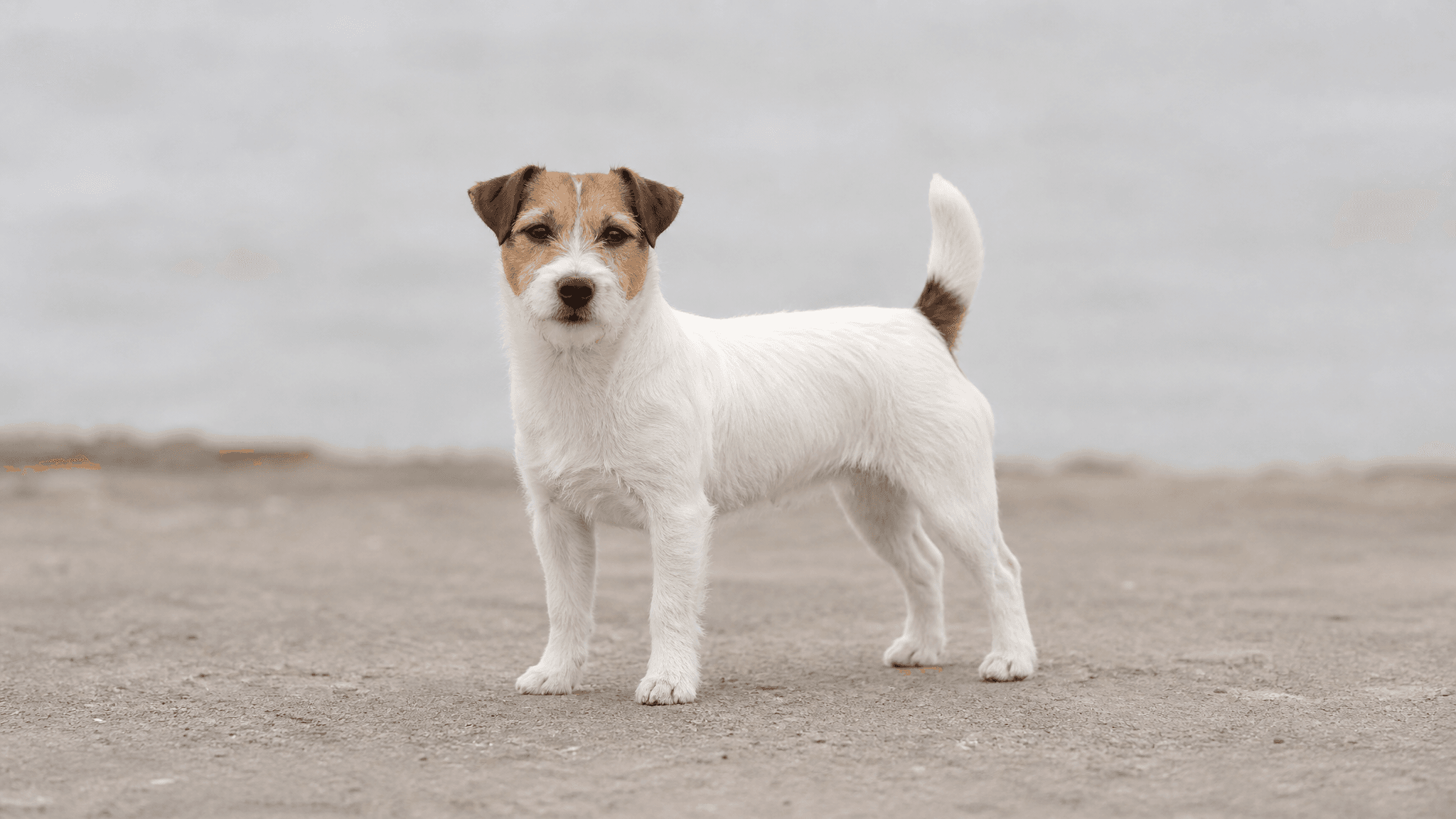
The Parson Russell Terrier is a compact, athletic, well-balanced terrier with a predominantly white coat marked with patches of tan, black, or tricolour — usually on the head and base of the tail. They have a flat, broad skull, a strong jaw, small V-shaped drop ears, and a keen, alert, dark eye. The body is square — equal in height and length — with a deep chest that an adult human can span with both hands (a functional requirement for working in fox earths). They stand 33–36 cm at the shoulder. Their coat may be smooth, broken (rough), or rough. Overall they project boundless energy and functional athleticism.
Do Parson Russell Terriers bark a lot?
Parson Russell Terriers are vocal dogs. They were bred to alert their huntsman to a quarry's location underground — barking was a working tool. They will bark at perceived intruders, squirrels, sounds through the window, visitors, when excited, and when bored or under-exercised. With training and adequate physical and mental stimulation their barking can be managed, but will never be completely eliminated — it is part of their nature. A 'quiet' command taught from puppyhood is helpful. Sufficient daily exercise is the most effective way to reduce nuisance barking. They are generally not suited to apartments or close-neighbour living without diligent management.
Community
Talk to real Parson Russell Terrier owners
This guide covers the breed on paper. In the app, the Parson Russell Terrier community covers it in real life: photos from other owners, questions answered by people who live with the breed, and a directory of dogs you can browse.
- Photos & pollsSee what Parson Russell Terrier owners are sharing today.
- Questions & answersAsk anything and hear from people who own one.
- Dog directoryBrowse Parson Russell Terriers from around the world.
You join automatically when you add a Parson Russell Terrier to your profile.