Cairn Terrier
Summary
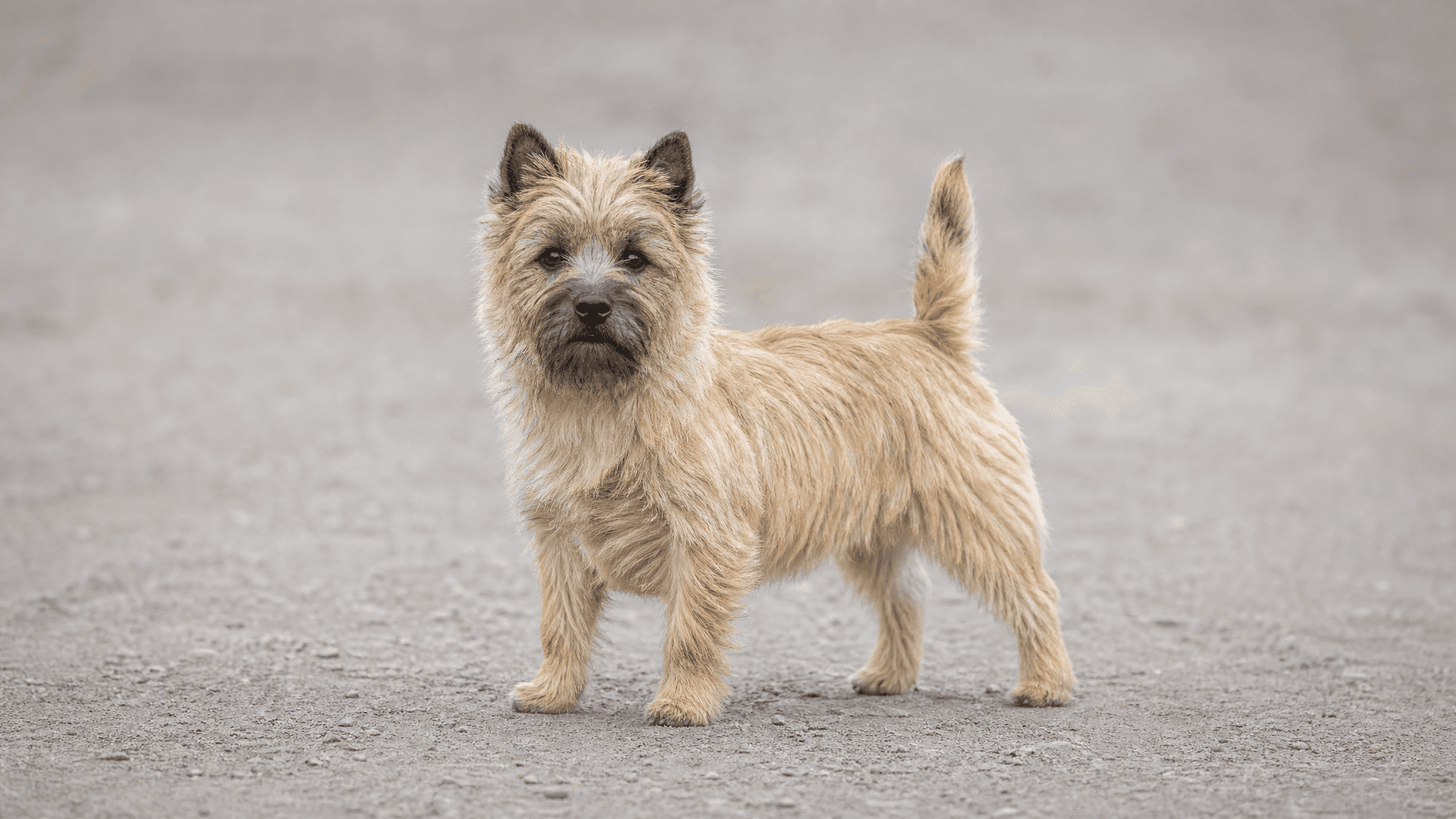
The Cairn Terrier is one of the oldest Scottish terriers and, possibly, the progenitor of many other Scottish terrier breeds. Its name comes from the "cairns" — stone mounds that marked paths and tombs in the Scottish Highlands — where it pursued foxes, badgers, and rodents. It is a robust breed, with a natural appearance and rough coat, that retains today the same practical character of its ancestors.
Physical Characteristics
- Size
- Small
- Height (male)
- 28–31 cm
- Height (female)
- 25–28 cm
- Weight (male)
- 6–7.5 kg
- Weight (female)
- 5.5–7 kg
- Life Expectancy
- 13–15 years
- Coat
- double; hard and rough outer coat; soft and woolly undercoat
- Common Colors
- cream, wheaten, red, sandy, grizzle, or any variant of these; black, black-and-tan, and white are not accepted
Temperament & Personality
The Cairn is active, curious, cheerful, and independent. It has a genuine terrier spirit: it digs, chases, explores — and does all of this with a contagious enthusiasm. It is very attached to the family and, despite its independence, adapts well to domestic life. It tends to be vocal and to express its disagreement very clearly. A loyal and entertaining companion for those who accept its terrier characteristics.
Activity & Exercise
- Energy Level
- High
- Recommended Daily Exercise
- 45–60 minutes
- Suitable for Apartment
- Yes with exercise
Grooming & Care
- Grooming Needs
- Moderate
- Shedding
- Moderate
- Bathing Frequency
- Every 4–6 weeks
Health
- Common Health Issues
- Allergies
- Hypoglycemia
- Legg-Calvé-Perthes disease
- Patellar luxation
- Progressive retinal atrophy (PRA)
- Recommended Health Tests
- Eye examination
- Joint evaluation
Compatibility
- With Children
- Good
- With Other Dogs
- Good
- With Cats
- Moderate
- For First-Time Owners
- Acceptable
Is a Cairn Terrier right for you?
A Cairn Terrier may suit you if:
- You enjoy providing daily adventures and mental puzzles to satisfy a curious, high-energy spirit.
- You thrive on outdoor exploration, embracing a companion who loves to dig, chase, and investigate the world around them.
- You appreciate an independent, cheerful companion with a strong personality and a contagious enthusiasm for life.
- You are prepared to engage in consistent, positive training to guide an intelligent and sometimes opinionated terrier.
- You are willing to commit to moderate grooming, including regular brushing and occasional hand-stripping, to maintain their distinctive coat.
- You are ready to manage typical terrier behaviors like enthusiastic digging and vocal expressions, understanding they are part of their charm.
Think twice if:
- You expect unwavering obedience and a dog that always follows commands without question, as Cairns have an independent streak.
- You frequently leave your dog alone for long periods, as these family-oriented terriers thrive on companionship and may become vocal.
- You are unwilling to carefully introduce and supervise a dog with smaller, non-canine pets, given their strong prey drive.
- You are not prepared to provide 45-60 minutes of daily vigorous exercise or commit to their moderate grooming needs.
- You do not have a securely fenced yard or are unprepared for their determined efforts to dig and explore beyond boundaries.
- You are uncomfortable with a dog that may challenge boundaries during adolescence or express its opinions quite vocally.
Living with a Cairn Terrier is a joyful dance between their affectionate devotion and their spirited independence. They offer unwavering loyalty and endless entertainment, enriching your home with their cheerful presence. However, their genuine terrier nature means embracing a companion who will voice their opinions and enthusiastically pursue their instincts, requiring consistent guidance and a good sense of humor. They are a robust, loyal, and entertaining companion for those who accept their terrier ways.
Training a Cairn Terrier
Training a Cairn Terrier is a joyful adventure, as these little dogs are brimming with intelligence, curiosity, and a genuine desire to engage with their beloved family. They thrive on positive reinforcement, so keep high-value treats and enthusiastic praise handy! Due to their independent and energetic nature, short, frequent training sessions (5-10 minutes) are far more effective than long, repetitive ones that can quickly lead to boredom or stubbornness. Consistency is key, but always keep it fun and engaging. If training becomes a chore or uses harsh methods, your Cairn's independent spirit will likely lead to disengagement or vocal 'disagreement'.
Begin with:
- Attention and name response
- Recall on a long line
- Loose-leash walking manners
- Leave it and drop it
- Calm greetings without jumping
- Settling on a mat or bed
- Cooperative handling for grooming
- Waiting at doors and gates
Recall and prey drive
Cairn Terriers possess a strong, innate prey drive, a legacy from their days hunting foxes and rodents in the Scottish Highlands. This means that a squirrel, a leaf blowing in the wind, or even a distant bird can instantly capture their attention and trigger a chase instinct, making recall a significant challenge. Always prioritize safety by keeping your Cairn on a leash in unfenced areas, especially during their recommended 45-60 minutes of daily exercise.
To build a reliable recall, start in a quiet, distraction-free environment and gradually introduce more stimulating settings. Use high-value rewards and make coming to you the most exciting thing ever! For detailed guidance, check out our guide on teaching recall. A long line can be an invaluable tool during this process, allowing them some freedom to explore while you maintain control.
Leash manners
Despite their small size (males 6-7.5 kg, females 5.5-7 kg), Cairn Terriers have a surprising amount of strength and a boundless curiosity that makes them eager explorers. This combination can often lead to enthusiastic leash pulling, as they want to investigate every scent and sight. It's not about being disobedient; it's their terrier spirit driving them forward!
Focus on positive reinforcement for loose-leash walking from day one. Reward every moment your Cairn walks beside you with a slack leash. Avoid pulling back or yanking, as this can make them pull harder. Consistency and patience are key. Our guide on stopping leash pulling offers excellent force-free strategies to help your Cairn learn to walk politely by your side.
Boredom and mischief
Cairn Terriers are high-energy dogs that require a solid 45-60 minutes of daily exercise to stay happy and healthy. Beyond physical activity, their intelligent and curious minds need mental stimulation to prevent boredom. If under-exercised, under-stimulated, or left alone for extended periods, their natural terrier instincts to dig, explore, and be vocal can manifest in undesirable ways, such as excessive barking, destructive chewing, or excavating your flowerbeds.
Provide plenty of interactive toys, puzzle feeders, and regular training sessions to keep their minds engaged. A consistent routine, along with opportunities for safe digging (like a designated sandpit), can channel their natural behaviours constructively. Remember, a tired and mentally stimulated Cairn is a well-behaved Cairn!
Cairn Terrier — Frequently Asked Questions
Are Cairn Terriers good for first-time owners?
Cairn Terriers can be a good choice for first-time dog owners who are prepared for their terrier personality. They are small, sturdy, and adaptable — but they are feisty, curious, and independent dogs with a strong will of their own. They need consistent training, regular exercise, and firm but gentle boundaries. Their small size makes them more manageable than many other terriers, but don't be fooled — a Cairn will test every rule you set. With patience and positive reinforcement, they are tremendously rewarding companions.
Are Cairn Terriers good with children?
Cairn Terriers are generally good with children, especially those old enough to interact respectfully. They are playful, energetic, and enjoy joining in family games. However, they are terriers with a bold, spirited personality — they can be snappy if handled roughly or cornered. They do best with children who understand not to tease, chase, or grab them unexpectedly. A Cairn raised with children from puppyhood typically forms a strong, affectionate bond and becomes a wonderful playmate.
Do Cairn Terriers bark a lot?
Cairn Terriers are moderate to heavy barkers. They were bred to flush out foxes and other vermin from rocky terrain, so alerting to anything they hear or see is instinctive. They will bark at sounds, passers-by, other animals, and interesting smells. Training a quiet command from puppyhood helps significantly. Adequate exercise and mental stimulation reduce nuisance barking. They are not ideal for noise-sensitive environments without training investment, but they can be managed with consistency.
Do Cairn Terriers like to dig?
Digging is hardwired into Cairn Terriers — they were literally bred to dig into cairns (rock formations) to pursue prey. A Cairn Terrier with access to a garden will almost certainly dig, and attempts to stop them entirely are usually futile. The most effective approach is to provide a designated digging area (a sandbox or section of the garden) where digging is allowed and rewarded, while discouraging it in other areas. This gives the dog an acceptable outlet for a natural drive.
How much exercise does a Cairn Terrier need?
Despite their small size, Cairn Terriers need 45–60 minutes of daily exercise. They are active, curious dogs that enjoy exploring and will quickly become frustrated without adequate outlets. Daily walks plus off-leash play in a safely enclosed area are ideal. They also need mental stimulation — puzzle toys, scent work, and trick training all help. A bored Cairn Terrier will find its own entertainment, which typically involves barking, digging, or chewing things they shouldn't.
What health problems are common in Cairn Terriers?
Cairn Terriers are generally hardy but have some breed predispositions. Globoid Cell Leukodystrophy (Krabbe's Disease) is a fatal neurological condition that can be tested with DNA. Portosystemic liver shunts can affect young Cairns. Ocular conditions, including cataracts, occur. Allergies — including food and environmental — are common. Hypothyroidism and Legg-Calvé-Perthes disease (hip joint degeneration) also affect the breed. Responsible breeders DNA-test for Krabbe's Disease before breeding.
How long do Cairn Terriers live?
Cairn Terriers are a long-lived breed, with an average lifespan of 13–15 years. Their small size and hardy terrier constitution contribute to their longevity. Good nutrition, a healthy weight, regular veterinary care, dental hygiene, and adequate exercise all support a long life. Avoiding obesity is particularly important in Cairn Terriers, as excess weight puts pressure on their relatively small frames. Many Cairns remain active and spirited well into their teens, making them excellent long-term companions.
Are Cairn Terriers hypoallergenic?
Cairn Terriers are considered low-shedding and are sometimes recommended for allergy sufferers. Their wiry double coat sheds very little, which means less dander (the primary allergen) is distributed around the home. However, no dog breed is truly hypoallergenic — all dogs produce dander, saliva, and urine proteins that can trigger reactions. People with dog allergies respond differently to different breeds. If you're allergic, spending time with a Cairn before committing is the only reliable way to know if they're tolerable for you.
Community
Talk to real Cairn Terrier owners
This guide covers the breed on paper. In the app, the Cairn Terrier community covers it in real life: photos from other owners, questions answered by people who live with the breed, and a directory of dogs you can browse.
- Photos & pollsSee what Cairn Terrier owners are sharing today.
- Questions & answersAsk anything and hear from people who own one.
- Dog directoryBrowse Cairn Terriers from around the world.
You join automatically when you add a Cairn Terrier to your profile.