Border Terrier
Summary
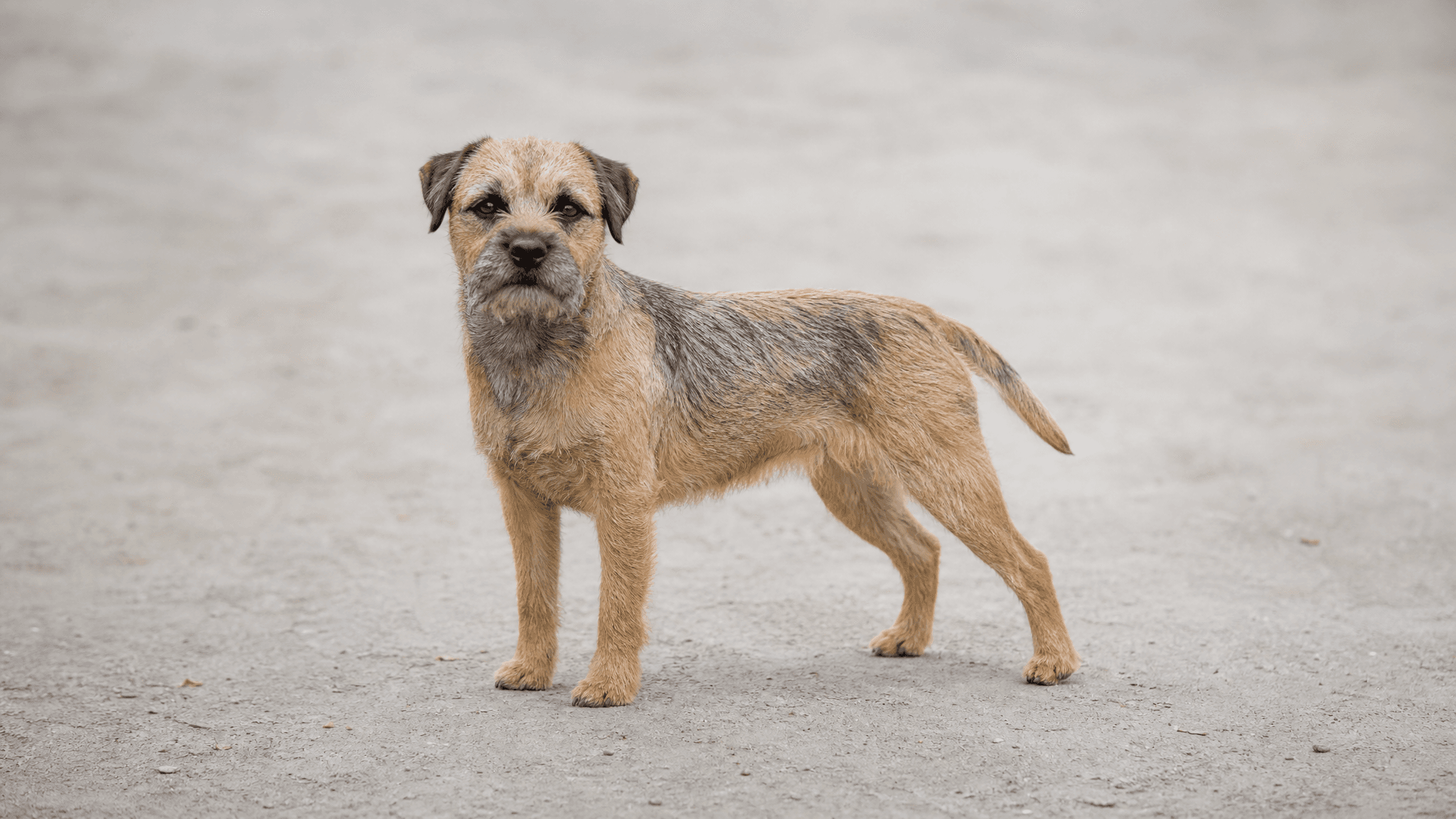
The Border Terrier originates from the border region between England and Scotland (the "Borders"), having been developed to accompany mounted riders at a gallop while also being able to enter burrows to pursue foxes and other flock predators. Its rounded head, similar to that of an otter, and its thick skin are adaptive characteristics from this hunting function. It is one of the oldest terrier breeds and, today, one of the most popular family companions in Portugal and worldwide.
Physical Characteristics
- Size
- Small to medium
- Height (male)
- 33–38 cm
- Height (female)
- 30–35 cm
- Weight (male)
- 5.9–7.1 kg
- Weight (female)
- 5.1–6.4 kg
- Life Expectancy
- 12–15 years
- Coat
- double; hard and dense outer coat; soft and insulating undercoat; thick skin
- Common Colors
- red, grizzle-and-tan, blue-and-tan, or wheaten
Temperament & Personality
The Border Terrier is frequently described as the most docile and balanced terrier. Very affectionate with the family, excellent with children, and unusually tolerant of other dogs thanks to its pack origin. It has a strong prey drive and considerable energy, but is rarely aggressive or difficult to manage. Its intelligence and desire to please make it one of the easiest terriers to train. Caution with cats and small animals — the chase instinct remains active.
Activity & Exercise
- Energy Level
- High
- Recommended Daily Exercise
- 60 minutes
- Suitable for Apartment
- Yes with exercise
Grooming & Care
- Grooming Needs
- Moderate
- Shedding
- Moderate
- Bathing Frequency
- Every 4–8 weeks
Health
- Common Health Issues
- Cardiac problems
- Elbow dysplasia
- Hip dysplasia
- Spike's disease (CECS — neurological disorder)
- Recommended Health Tests
- Cardiac examination
- CECS screening
- Joint X-ray
Compatibility
- With Children
- Excellent
- With Other Dogs
- Excellent
- With Cats
- Moderate
- For First-Time Owners
- Recommended
Is a Border Terrier right for you?
A Border Terrier may suit you if:
- You are ready to provide at least 60 minutes of daily exercise and engaging mental challenges.
- You enjoy an active outdoor lifestyle, perhaps even hiking or running, that this energetic companion can share.
- You appreciate a balanced, affectionate, and intelligent companion known for its desire to please its family.
- You are prepared to invest in consistent, positive training to harness their intelligence and biddable nature.
- You are willing to commit to moderate grooming, including regular brushing and occasional hand-stripping, to maintain their distinctive coat.
- You can manage a natural prey drive with secure environments and appropriate outlets for their keen hunting instincts.
Think twice if:
- You expect a dog that will always drop everything to obey, as their independent terrier spirit and prey drive can be strong.
- You have a household routine that leaves a dog alone for long stretches, as these affectionate companions thrive on family interaction.
- You already have cats and are not prepared to carefully manage interactions due to the Border Terrier's strong prey drive.
- You are unwilling to provide consistent daily exercise or maintain their unique double coat with regular grooming.
- You cannot provide a securely fenced yard or are unprepared for their determination to explore any perceived escape route.
- You are not prepared for the energetic exuberance of a growing terrier, which requires patient and consistent guidance.
Living with a Border Terrier means embracing a delightful blend of affectionate companionship and spirited independence. They offer immense joy and loyalty, but their strong instincts and need for engagement mean a truly happy Border Terrier thrives with an owner who understands their unique terrier heart.
Training a Border Terrier
Border Terriers are often described as the most docile and balanced terriers, possessing an intelligence and a strong desire to please that makes them one of the easiest terriers to train. They thrive on positive reinforcement, especially when treats, praise, and engaging play are involved. Keep training sessions short, fun, and consistent to maintain their focus and enthusiasm. Longer, repetitive drills can lead to boredom and disengagement. Inconsistency or harsh methods will quickly frustrate this sensitive breed, potentially leading to a shutdown or a refusal to cooperate, making progress much harder.
Begin with:
- Attention and response to name around distractions
- Recall on a long line
- Loose-leash walking
- Leave it and drop it
- Calm greetings without jumping
- Settling on a mat or bed
- Cooperative handling for grooming, ears, feet and teeth
- Waiting at doors and gates
Recall and Prey Drive
Border Terriers were bred to pursue foxes and other predators, giving them a strong prey drive. This instinct means a squirrel or a moving leaf can easily override their recall. Start recall training in a quiet, enclosed area, gradually adding distractions. Use high-value treats and make coming back to you the most rewarding thing ever. Always practice recall on a long line in open spaces until their response is rock-solid, especially given their considerable energy. For more detailed steps, check out our guide on teaching recall.
Consistency and patience are key. Never punish your Border Terrier for coming back slowly, as this will only teach them not to come at all. Instead, celebrate every successful recall with enthusiasm and a tasty reward.
Pulling on Leash
Despite their small to medium size, Border Terriers have considerable energy and can be surprisingly strong on the leash, especially when their prey drive kicks in. Early and consistent training is key to teaching them to walk politely. Use a front-clip harness or head halter if needed, and reward them frequently for walking with a loose leash. Avoid letting them pull, as this only reinforces the behavior.
If they pull, stop walking until the leash loosens, then continue. This teaches them that pulling gets them nowhere. For a comprehensive approach, consider following this force-free plan for stopping leash pulling.
Boredom and Destructive Habits
With their high energy level and intelligence, Border Terriers require at least 60 minutes of daily exercise and plenty of mental stimulation. An under-exercised or bored Border Terrier can quickly become destructive, chewing on furniture, digging, or barking excessively. Provide a variety of puzzle toys, regular training sessions, and interactive play to keep their minds engaged.
If you must leave them alone, ensure they have safe chew toys and have had sufficient exercise beforehand. Consider using a dog-proofed space or crate training to prevent destructive behaviors when unsupervised. Recognizing signs of stress can also help you address potential separation issues before they escalate.
Border Terrier — Frequently Asked Questions
What makes the Border Terrier a popular family pet?
The Border Terrier is one of the most adaptable, good-natured, and genuinely hardy little dogs you can find. They combine a big terrier personality with a manageable size, an easygoing temperament, and a minimal-shedding, practical coat. They are affectionate with their family, typically great with children, and sociable with other dogs. Unlike many terriers, they have a reputation for being somewhat easier to manage due to their less intense personality. Their working-dog heritage means they're happy hiking all day or settling for a cuddle on the sofa — they are genuinely versatile companions.
How much exercise does a Border Terrier need?
Border Terriers need about 1–1.5 hours of daily exercise. Bred to keep pace with horses and hunt fox and badger across the Border country, they have surprising endurance for their small frame. They love running, hiking, agility, fetch, and off-leash adventures in secure areas. Their robust constitution means they can handle varied terrain and weather. Mental stimulation through scent work and training is equally important. A well-exercised Border Terrier is calm and companionable at home; an under-exercised one will find mischief. They make excellent companions for active owners.
Are Border Terriers easy to train?
Border Terriers are intelligent and willing to learn, but like all terriers they have an independent streak and selective hearing when something more interesting catches their attention. They respond very well to positive, reward-based training and are quick to learn. Their sensitivity means harsh corrections are counterproductive. Early puppy training and consistent, fun sessions work best. They excel at agility, rally, nose work, and earthdog trials. Their recall can be unreliable near scent trails, so a secure off-leash area is important. With engaged training, they can achieve very high levels of obedience.
Do Border Terriers get along with cats and other small animals?
Border Terriers have a strong prey drive — they were bred to chase and kill vermin and small animals. Cats and small household pets (rabbits, guinea pigs, hamsters) can trigger a strong chase response, particularly outdoors. Many Border Terriers live successfully with cats they have been raised with from puppyhood through careful, gradual introduction and management. However, their hunting instinct means this cohabitation requires vigilance. Small caged animals should always be securely separated. Outdoors, a Border Terrier should always be on a leash or within a secure fence near small animals.
What health issues affect Border Terriers?
Border Terriers are generally a hardy, healthy breed with fewer hereditary issues than many breeds. However, some concerns exist. Canine Epileptoid Cramping Syndrome (CECS) — also known as 'Spike's Disease' — is a disorder specific to Border Terriers causing sudden episodes of cramping; it appears to be linked to gluten sensitivity in some cases. Hip dysplasia occurs. Heart conditions, including pulmonic stenosis and patent ductus arteriosus, have been documented. Eye conditions (progressive retinal atrophy) are testable. Overall, the breed is considered robust.
How long do Border Terriers live?
Border Terriers are one of the longest-lived of all terrier breeds, with an average lifespan of 12–15 years. Their generally robust health and working constitution contribute to their longevity. Key factors include regular exercise, maintaining a healthy weight, dental care, monitoring for CECS symptoms (and adjusting diet if sensitivity is identified), annual vet check-ups, and sourcing from health-tested lines. Border Terriers often remain active and energetic well into their senior years, with many living healthy, happy lives into their early to mid-teens.
Are Border Terriers good for first-time owners?
Border Terriers are among the better terrier choices for first-time owners. Their manageable size, relatively easy-going temperament, trainability, and good health make them more accessible than many terrier breeds. The main challenges are their prey drive (recall near small animals requires dedicated training), their need for regular exercise, and occasional stubbornness in training. First-time owners who commit to basic training classes, meet their exercise needs, and manage their environment around small animals will find the Border Terrier a rewarding, cheerful, and deeply affectionate companion.
What does a Border Terrier's coat require?
The Border Terrier has a dense, wiry outer coat over a short, dense undercoat that is designed to protect it from thorns, weather, and the terrain of the Border hills. The coat requires hand-stripping twice a year (ideally) to maintain its natural texture and colour — clipping softens the coat and affects its weather-resistance over time. Between stripping, a quick brush once or twice a week keeps the coat neat. Border Terriers are low-shedding, which is a significant advantage for households sensitive to dog hair. Regular ear, teeth, and nail care complete the basic grooming routine.
Community
Talk to real Border Terrier owners
This guide covers the breed on paper. In the app, the Border Terrier community covers it in real life: photos from other owners, questions answered by people who live with the breed, and a directory of dogs you can browse.
- Photos & pollsSee what Border Terrier owners are sharing today.
- Questions & answersAsk anything and hear from people who own one.
- Dog directoryBrowse Border Terriers from around the world.
You join automatically when you add a Border Terrier to your profile.