Miniature Bull Terrier
Summary
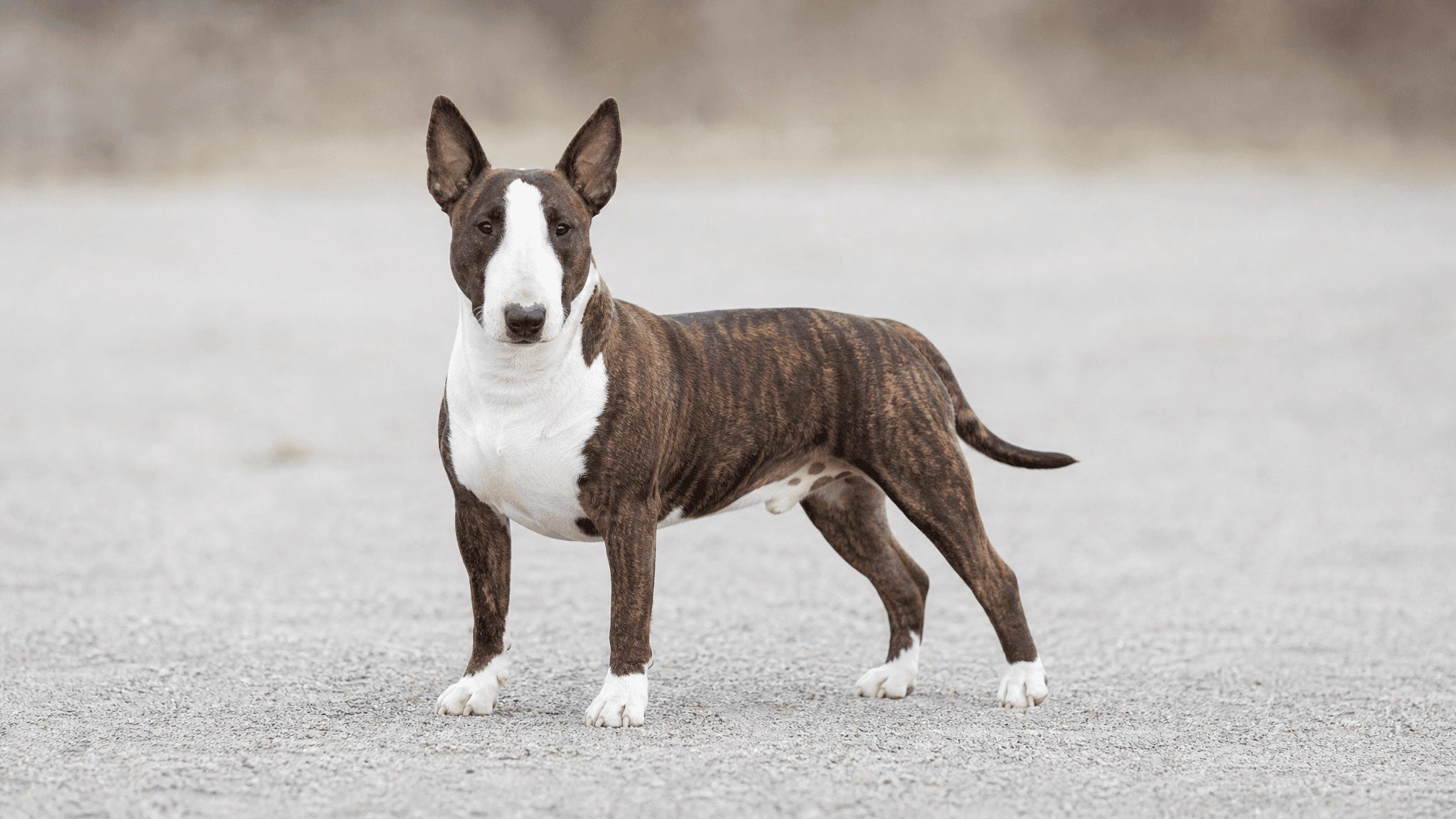
The Miniature Bull Terrier is the compact version of the Standard Bull Terrier, with the same physical characteristics and the same character, simply in a reduced size. There is no weight limit in the FCI standard; the only restriction is the maximum height of 35.5 cm. The Miniature shares the same development history as the Standard — smaller specimens always existed in the breed — but it was separated and recognized as an independent breed by the British Kennel Club in 1939 and by the FCI later.
Physical Characteristics
- Size
- Small to medium
- Height (male)
- 25–36 cm
- Height (female)
- 25–36 cm
- Weight (male)
- 11–16 kg
- Weight (female)
- 9–16 kg
- Life Expectancy
- 11–14 years
- Coat
- short, smooth hair, hard to the touch and with a fine sheen
- Common Colors
- Pure white (markings on the head accepted); Colored — brindle preferred; red, fawn, tricolor
Temperament & Personality
The Miniature Bull Terrier has exactly the same character as the Standard: courageous, spirited, very affectionate with people, and with a notable sense of humor. It is an ideal companion dog for those who love the Bull Terrier type but prefer a more manageable size. It has the same characteristic stubbornness of the breed, so early and consistent training is essential.
Activity & Exercise
- Energy Level
- High
- Recommended Daily Exercise
- 45–60 minutes
- Suitable for Apartment
- Yes with exercise
Grooming & Care
- Grooming Needs
- Low
- Shedding
- Moderate
- Bathing Frequency
- Every 4–6 weeks
Health
- Common Health Issues
- Eye problems
- Hereditary deafness
- Hereditary nephropathy
- Patellar luxation
- Recommended Health Tests
- BAER hearing test
- Eye examination
- Kidney evaluation
Compatibility
- With Children
- Good
- With Other Dogs
- Moderate
- With Cats
- Can be difficult
- For First-Time Owners
- Not recommended
Is a Miniature Bull Terrier right for you?
A Miniature Bull Terrier may suit you if:
- You are prepared to provide 45 to 60 minutes of daily exercise and engaging mental challenges for your spirited companion.
- You enjoy an active lifestyle and want a courageous, affectionate companion for adventures or playful home life.
- You appreciate a dog with a unique, humorous personality and a deep, loving bond with its human family.
- You are committed to early, consistent training and patient guidance to navigate their intelligent stubbornness.
- You prefer a low-maintenance grooming routine for a short-coated dog, with moderate shedding to manage.
- You are ready to embrace a dog's playful antics and spirited nature, finding joy in their distinctive character.
Think twice if:
- You expect immediate, eager obedience from your dog, as this breed has a notable stubborn streak.
- You frequently leave your dog alone for long periods, as Miniature Bull Terriers thrive on companionship.
- You have cats or other small pets and are not prepared for the significant effort required for safe introductions.
- You are unable to commit to at least 45 minutes of vigorous daily activity to satisfy their high energy needs.
- You lack a securely fenced yard or are not prepared for diligent leash training in open spaces.
- You are a first-time dog owner seeking an easy-to-manage puppy without a strong will or energetic adolescence.
The Miniature Bull Terrier offers a unique blend of spirited courage, deep affection, and a delightful sense of humor. While their compact size might suggest an easy pet, their high energy and characteristic stubbornness demand a committed owner. They thrive with consistent training and active engagement, rewarding their human with an unparalleled, loyal, and entertaining companionship that truly enriches life.
Training a Miniature Bull Terrier
Your Miniature Bull Terrier is a bright, spirited companion with a wonderful sense of humor, but also a famous streak of terrier stubbornness! They learn best through positive reinforcement, short, engaging sessions that feel like a game, and consistent boundaries. Because they are so affectionate, praise and play are powerful motivators. Inconsistency or harsh methods will quickly lead to frustration for both of you, making them dig in their heels and potentially creating a standoff, which is why they aren't typically recommended for first-time owners.
Begin with:
- Attention and response to name around distractions
- Reliable recall, starting on a long line
- Loose-leash walking without pulling
- Leave it and drop it cues
- Calm greetings without jumping
- Settling calmly on a mat or bed
- Cooperative handling for grooming and health checks
- Waiting politely at doors and gates
Prey Drive and Stubbornness
Miniature Bull Terriers, as true terriers, often possess a strong prey drive, which can make recall particularly challenging outdoors. Their characteristic stubbornness means they need a compelling reason to listen, especially when a squirrel or bird catches their eye. Focus on making recall the most rewarding thing ever, using high-value treats and enthusiastic praise. Always train recall in a safe, enclosed area first, gradually introducing distractions. Consider using a long line during walks to give them freedom while maintaining safety, especially around wildlife. Our guide on recall can provide more detailed steps.
Consistency is paramount when dealing with their stubborn streak. Ensure everyone in the household uses the same commands and expectations. Short, fun training sessions will keep their spirited minds engaged without pushing them to dig in their heels. If you find yourself getting frustrated, take a break and come back to it later with a fresh perspective.
Leash Pulling
Despite their "small to medium" size (typically 9-16 kg), Miniature Bull Terriers are strong and energetic, making leash pulling a common issue. Their high energy level means they are eager to explore the world, and if not taught otherwise, they will pull you along. Start training loose-leash walking in a low-distraction environment, rewarding every step they take with a slack leash. Use a front-clip harness for better control and less strain on their neck.
Remember, consistency is key, and ensuring they receive their recommended 45-60 minutes of daily exercise is essential for their physical and mental well-being. A tired Mini Bull Terrier is often a better-behaved one. This article on stopping leash pulling offers a great force-free plan to help you achieve enjoyable walks together.
Boredom and Destructive Behavior
Miniature Bull Terriers are high-energy dogs with a notable sense of humor, meaning they thrive on mental and physical engagement. If under-exercised or left alone without sufficient stimulation, they can become bored and channel their energy into unwanted behaviors like chewing, digging, or excessive barking. Ensure they receive their recommended 45-60 minutes of daily exercise, split into walks, playtime, and training sessions.
Provide a variety of puzzle toys, durable chew toys, and engage them in interactive games to keep their intelligent minds busy, especially when you can't be actively playing with them. A well-exercised and mentally stimulated Miniature Bull Terrier is a happy and well-behaved companion, less likely to invent their own (often destructive) fun.
Miniature Bull Terrier — Frequently Asked Questions
What is the Miniature Bull Terrier?
The Miniature Bull Terrier is a delightful small to medium-sized dog, originating from the United Kingdom. It belongs to FCI Group 3, known as Bull Type Terriers. Essentially, it's a compact version of the Standard Bull Terrier, sharing the same distinctive physical characteristics and charming personality, just in a more manageable size. These spirited companions are known for their unique egg-shaped head and muscular build, making them instantly recognizable. They are truly a joy for those who adore the Bull Terrier type but prefer a smaller stature, standing no taller than 35.5 cm.
What was the Miniature Bull Terrier originally bred for?
The Miniature Bull Terrier shares a rich history with its larger counterpart, the Standard Bull Terrier. Smaller specimens always existed within the breed's lineage, and over time, enthusiasts recognized the appeal of a more compact version. It was officially separated and recognized as an independent breed by the British Kennel Club in 1939, and later by the FCI. While the Standard Bull Terrier's early history involved sporting purposes, the Miniature Bull Terrier quickly found its niche as an ideal companion dog. Its spirited yet affectionate nature made it perfect for families and individuals seeking a loyal and entertaining friend in a smaller package.
How much exercise does a Miniature Bull Terrier need?
Despite their smaller size, Miniature Bull Terriers are dogs with a high energy level and definitely need their daily dose of activity to stay happy and healthy! We recommend providing them with a good 45–60 minutes of exercise every day. This could include brisk walks, playtime in a securely fenced yard, or engaging in dog sports. They love to play and explore, so regular physical and mental stimulation is key to preventing boredom and ensuring they channel their lively spirit positively. A well-exercised Mini Bull Terrier is a content and well-behaved companion!
Is the Miniature Bull Terrier a good family dog?
Absolutely! The Miniature Bull Terrier can be a wonderful family dog, especially for those who appreciate their unique character. They are incredibly affectionate with people, courageous, spirited, and possess a notable sense of humor that will keep you entertained. When properly socialized from a young age and given consistent training, they can integrate beautifully into a family setting, often forming strong bonds with their human companions. While they are generally good with children, supervision is always recommended, and early introductions are crucial for harmony with other pets. Their loving nature makes them an ideal companion for the right family.
Is the Miniature Bull Terrier easy to train?
Training a Miniature Bull Terrier can be a rewarding experience, but it's important to understand their unique temperament. They are intelligent and eager to please those they love, but they also possess the characteristic stubbornness of the Bull Terrier breed. This means they might not be considered 'easy' to train in the traditional sense, but they are certainly trainable with the right approach! Early and consistent training, combined with positive reinforcement methods, is absolutely essential. Patience, firmness, and a good sense of humor will go a long way in shaping your Mini Bull Terrier into a well-behaved and delightful companion.
What health issues are common in the Miniature Bull Terrier?
Like all breeds, Miniature Bull Terriers can be prone to certain health conditions, and being aware of these can help you provide the best care for your furry friend. Some of the documented health concerns for the breed include eye problems, which can range in severity, and hereditary deafness, which is important to screen for. They can also be susceptible to hereditary nephropathy, a kidney condition, and patellar luxation, which affects the kneecaps. Responsible breeders will screen their dogs for these issues, so always choose a reputable breeder who prioritizes health testing to ensure you bring home the healthiest puppy possible.
What is the Miniature Bull Terrier's coat like and how much grooming does it need?
The Miniature Bull Terrier boasts a short, flat, and harsh coat that is quite easy to maintain, which is great news for busy pet parents! Their coat is one of their defining physical characteristics, being sleek and close to the body. Thankfully, they don't require extensive grooming. A weekly brushing with a rubber curry brush or a soft bristle brush is usually sufficient to remove loose hair, keep their coat shiny, and promote healthy skin. Occasional baths are also fine, especially if they've had a particularly adventurous outdoor excursion. This minimal grooming routine makes them a relatively low-maintenance breed in terms of coat care.
What is the typical lifespan of a Miniature Bull Terrier?
It's wonderful to think about the many happy years you can share with a Miniature Bull Terrier! These charming and spirited companions typically enjoy a lifespan of 11 to 14 years. Of course, individual lifespans can vary based on genetics, diet, exercise, and overall healthcare. Providing your Miniature Bull Terrier with a high-quality diet, regular veterinary check-ups, plenty of exercise, and a loving home environment are all key factors in helping them live a long, healthy, and fulfilling life by your side. They truly become cherished members of the family for many years.
Community
Talk to real Miniature Bull Terrier owners
This guide covers the breed on paper. In the app, the Miniature Bull Terrier community covers it in real life: photos from other owners, questions answered by people who live with the breed, and a directory of dogs you can browse.
- Photos & pollsSee what Miniature Bull Terrier owners are sharing today.
- Questions & answersAsk anything and hear from people who own one.
- Dog directoryBrowse Miniature Bull Terriers from around the world.
You join automatically when you add a Miniature Bull Terrier to your profile.