Airedale Terrier
Summary
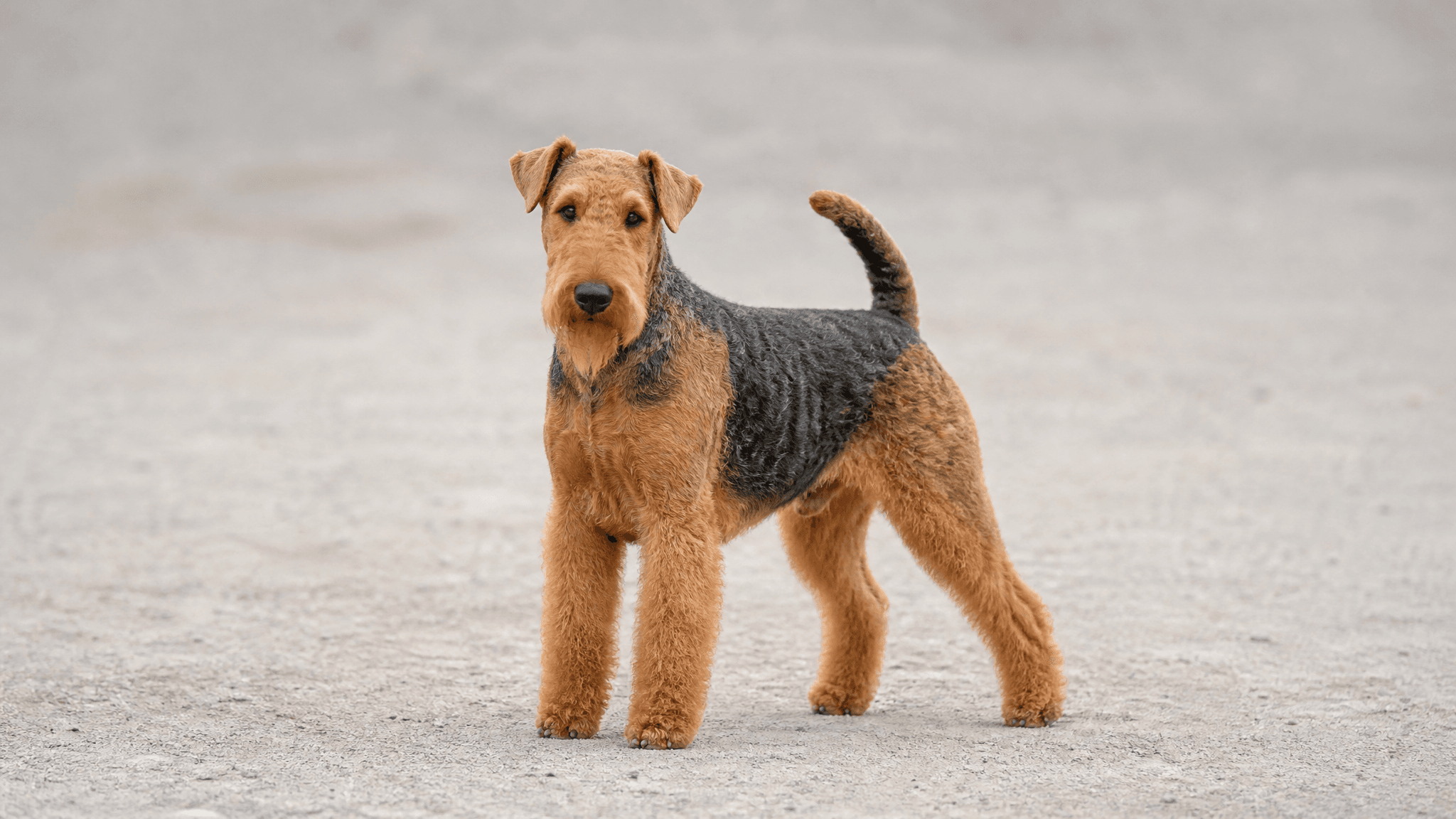
The Airedale Terrier is, literally, the "King of Terriers" — the largest of all members of the group. Developed in the Aire river valley, in Yorkshire, during the 19th century, from crosses between Otterhounds and local terriers, the Airedale was used to hunt otter and other medium-sized game. Its versatility led it to serve as a police dog, war dog (it was extensively used in World War I) and, today, as an excellent family companion.
Physical Characteristics
- Size
- Large
- Height (male)
- 58–61 cm
- Height (female)
- 56–58 cm
- Weight (male)
- 19–25 kg
- Weight (female)
- 18–20 kg
- Life Expectancy
- 11–14 years
- Coat
- double; hard, rough, and wavy outer coat; soft and dense undercoat
- Common Colors
- black or greyish saddle with tan markings on the head, ears, neck, limbs, and chest
Temperament & Personality
The Airedale is described by the FCI standard as "alert and energetic, not aggressive but fearless." It is a dog of strong character, intelligent and with enormous versatility — it learns quickly and likes having a function or task. Very loyal to its family, it tends to be reserved with strangers. It has an undeniable sense of humor and can be quite stubborn, requiring consistent and positive training from an early age.
Activity & Exercise
- Energy Level
- High
- Recommended Daily Exercise
- 60–90 minutes
- Suitable for Apartment
- Not recommended
Grooming & Care
- Grooming Needs
- High
- Shedding
- Minimal
Health
- Common Health Issues
- Dermatitis
- Gastric dilatation-volvulus (GDV — less frequent than in larger breeds)
- Hip dysplasia
- Hypothyroidism
- Lymphoma
- Recommended Health Tests
- Eye examination
- Hip radiography
- Thyroid tests
Compatibility
- With Children
- Good
- With Other Dogs
- Moderate
- With Cats
- Can be difficult
- For First-Time Owners
- Not recommended
Is an Airedale Terrier right for you?
An Airedale Terrier may suit you if:
- You are eager to provide at least 60 to 90 minutes of vigorous exercise and engaging mental challenges daily.
- You enjoy an active lifestyle, perhaps with outdoor adventures or training for dog sports.
- You appreciate a dog with a strong, intelligent character and a playful, sometimes stubborn, sense of humor.
- You are prepared for consistent, positive training to channel their intelligence and strong will effectively.
- You are committed to regular grooming to maintain their distinctive hard, rough coat and minimize shedding.
- You are ready to manage a dog with a natural prey drive and an alert, watchful nature.
Think twice if:
- You expect instant obedience from a dog, as their independent terrier spirit can be quite stubborn.
- You often leave your dog alone for long periods, as Airedales thrive on companionship and activity.
- You have cats or other small pets that are not accustomed to a dog with a strong prey drive.
- You are unwilling to commit to daily vigorous exercise and consistent, thorough grooming sessions.
- You live in an apartment or do not have a securely fenced yard for them to explore safely.
- You are a first-time dog owner looking for an easily managed, highly biddable breed.
Living with an Airedale Terrier is a rich, rewarding experience for the right family. They offer immense loyalty and joy, but their intelligence and strong will demand consistent engagement and a dedicated owner. This 'King of Terriers' truly thrives when their vibrant spirit is understood and nurtured.
Training an Airedale Terrier
Airedale Terriers are bright, versatile learners who thrive on having a purpose. Their keen intelligence means they pick up new commands quickly, especially when training is kept engaging and positive. Short, fun sessions with plenty of praise and high-value rewards will keep their strong character focused. However, their independent spirit and a touch of stubbornness mean inconsistency or harsh methods will quickly lead to disengagement, making training a frustrating battle rather than a rewarding partnership. Keep it upbeat and clear, and your Airedale will flourish.
Begin with:
- Attention and response to name around distractions
- Recall on a long line
- Loose-leash walking
- Leave it and drop it
- Calm greetings without jumping
- Settling on a mat or bed
- Cooperative handling for grooming, ears, feet and teeth
- Waiting at doors and gates
Prey Drive and Recall
Airedales were originally bred to hunt otter and other medium-sized game, giving them a strong prey drive that can make recall a significant challenge outdoors. When your Airedale spots something interesting, their instincts can override everything else. To counter this, make yourself the most exciting thing in their world! Practice recall in a secure, distraction-free area first, gradually introducing more tempting environments.
Always use a long line in open spaces until their recall is rock-solid, ensuring their safety and your peace of mind. Reward generously with high-value treats and enthusiastic praise every single time they come back, even if it takes a moment. Consistency and patience are key to building a reliable recall, and you can find more tips in our guide on teaching recall.
Strong Leash Pulling
Given their large size, strength (males can weigh up to 25 kg), and high energy, Airedales can be powerful pullers on the leash. This isn't just uncomfortable for you; it can be detrimental to their physical development and your enjoyment of walks. Start loose-leash training early, ideally from puppyhood, using positive reinforcement methods.
Focus on rewarding moments of slack in the leash and changing direction whenever they pull. Using a front-clip harness can also help redirect their momentum without causing discomfort. Remember, consistent daily practice is essential. For more detailed strategies, check out our guide on stopping leash pulling.
Boredom Behavior
Airedale Terriers have a high energy level and an intelligent mind, meaning they need more than just physical exercise; they need mental stimulation too. If under-exercised or left alone for too long without engagement, they can quickly become bored and resort to destructive behaviors like chewing furniture, excessive barking, or digging. They require 60-90 minutes of daily exercise, which is crucial for their well-being.
Ensure your Airedale gets plenty of vigorous activity, like long walks, runs, or active play sessions. Incorporate puzzle toys, training games, and chew toys to keep their minds busy when you can't actively engage with them. A tired Airedale is a well-behaved Airedale, so prioritize both physical and mental enrichment to prevent unwanted behaviors.
Airedale Terrier — Frequently Asked Questions
Is the Airedale Terrier a good family dog?
The Airedale Terrier can be a wonderful family dog in an active, confident household. They are loyal, playful, and deeply affectionate with their family. Known as the 'King of Terriers', they are the largest of all terrier breeds and carry that terrier independence with pride. They tend to be good with children who can match their energy, but their boisterous nature means they can accidentally knock over small toddlers. They are best suited to families who enjoy outdoor activities and don't mind a dog with strong opinions.
How much exercise does an Airedale Terrier need?
Airedale Terriers are high-energy dogs requiring at least 1–2 hours of vigorous exercise daily. They were bred as working terriers capable of hunting otter and badger, and they retain that drive and stamina. Running, hiking, swimming (they love water), fetch, agility, and off-leash play in a secure area are all excellent. Mental stimulation through training and problem-solving is equally important — a bored Airedale will find its own entertainment, which rarely suits its owner. They are not suited to a sedentary lifestyle.
Are Airedale Terriers easy to train?
Airedale Terriers are highly intelligent but notoriously independent. They understand commands quickly but often decide whether following them is worthwhile — a classic terrier trait. They respond best to confident, positive, varied training that keeps them mentally engaged. Repetitive drills bore them quickly. Early puppy training and consistent boundary-setting from day one are essential. They are sensitive to tone of voice and respond poorly to harsh methods. An Airedale trained well from puppyhood can achieve impressive results — they have excelled as police and military dogs historically.
What are the health concerns for Airedale Terriers?
Airedale Terriers are generally robust, but have some documented breed concerns. Hip dysplasia occurs in the breed — OFA screening is recommended. Hypothyroidism is documented and can affect coat quality and energy levels. Skin conditions, including allergies and dermatitis, affect some individuals. Gastric dilatation-volvulus (GDV/bloat) is a risk given their deep chest — feed smaller meals and avoid vigorous exercise around mealtimes. Von Willebrand's Disease (a blood clotting disorder) has been documented in some lines. Regular vet check-ups help catch issues early.
Do Airedale Terriers have a strong prey drive?
Yes — Airedale Terriers have a strong prey drive. They were bred to hunt vermin, otter, and badger independently, and this instinct remains active. Small fast-moving animals — cats they haven't been raised with, rabbits, squirrels — can trigger a strong chase response. Many Airedales can learn to live peacefully with cats they've been raised with from puppyhood, but introductions must be carefully managed. Off-leash recall is achievable with dedicated training, but it requires real consistency and high-value rewards to override hunting instincts reliably.
How long do Airedale Terriers live?
Airedale Terriers have an average lifespan of 11–14 years. Their robust constitution supports good longevity when their exercise needs are met. Key factors include regular vigorous exercise, maintaining a healthy weight, annual vet check-ups, dental care, ear care (their folded ears can trap moisture), and skin monitoring (given their known predisposition to allergies). Dogs from health-tested breeding lines tend to live toward the upper end of the range. Active, well-exercised Airedales typically remain lively and healthy well into their senior years.
Do Airedale Terriers get along with other dogs?
Airedale Terriers can be good with other dogs when well-socialised from puppyhood, but they have a terrier tendency to be dominant and can be quarrelsome, particularly with dogs of the same sex. They are not naturally submissive and may assert themselves forcefully in interactions with unfamiliar dogs. Multi-dog households with a well-socialised Airedale raised alongside other dogs generally work well. Introductions to new dogs should always be done on neutral ground, and same-sex pairings require careful management. Their size and strength means conflicts can escalate quickly.
What does an Airedale Terrier look like?
The Airedale Terrier is a large, athletic, well-built terrier with a distinctive hard, dense, wiry outer coat over a shorter, softer undercoat. Their characteristic tan and black (or grizzle) saddle markings are iconic. They have a long, flat head, small V-shaped ears that fold forward, and a straight back. They stand 56–61 cm at the shoulder and weigh 20–29 kg. Their wiry coat requires hand-stripping (for show dogs) or clipping (for pets) every few months to maintain its texture and appearance, along with regular brushing to prevent matting.
Community
Talk to real Airedale Terrier owners
This guide covers the breed on paper. In the app, the Airedale Terrier community covers it in real life: photos from other owners, questions answered by people who live with the breed, and a directory of dogs you can browse.
- Photos & pollsSee what Airedale Terrier owners are sharing today.
- Questions & answersAsk anything and hear from people who own one.
- Dog directoryBrowse Airedale Terriers from around the world.
You join automatically when you add a Airedale Terrier to your profile.