Bedlington Terrier
Summary
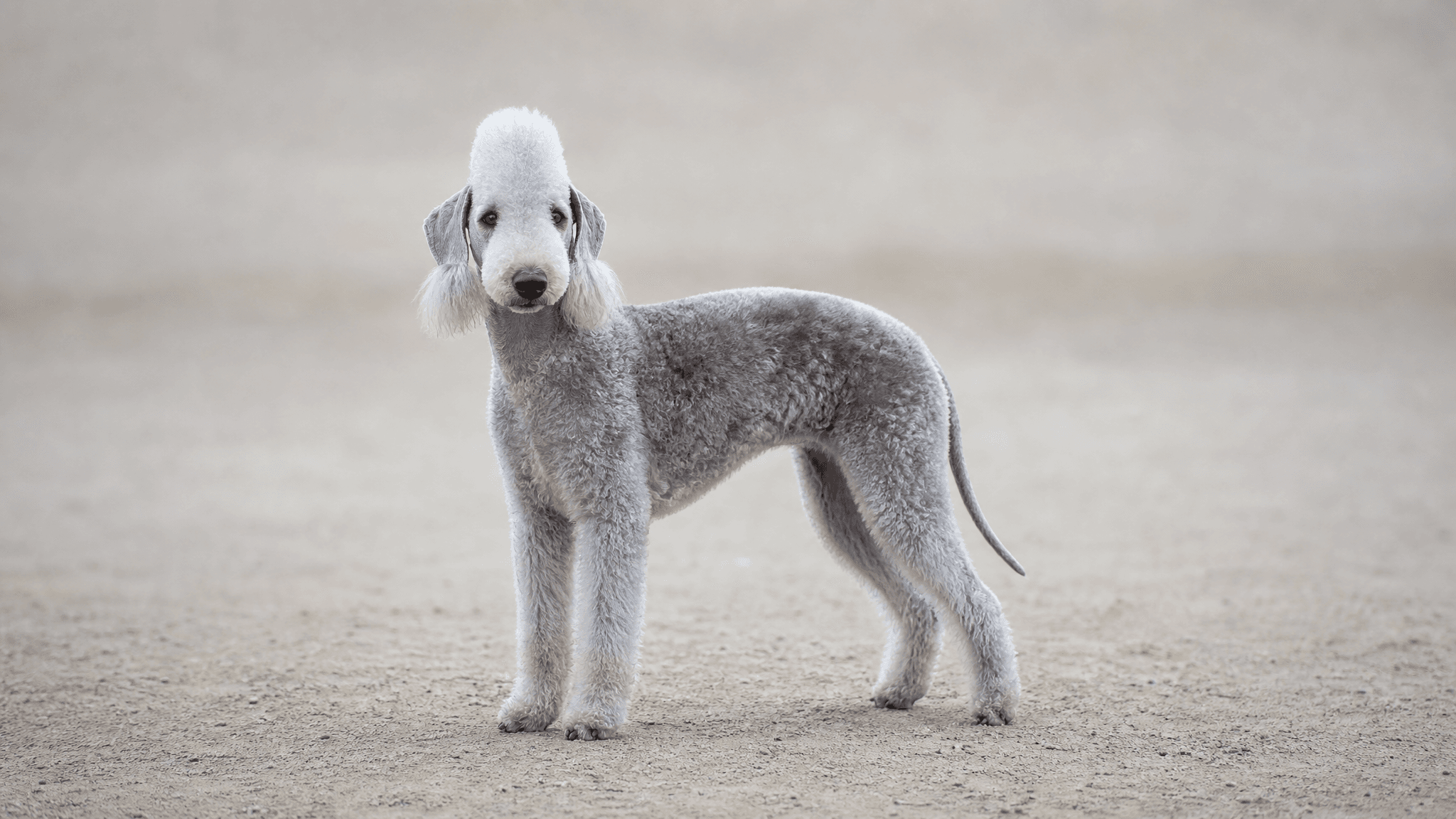
The Bedlington Terrier is probably the terrier with the most surprising appearance: at first glance it looks like a lamb, with its curly coat and characteristic topknot. However, beneath that delicate appearance hides a courageous and tenacious hunting dog, developed in Northumberland, in northern England, by the miners of Bedlington in the 18th century. It was used to catch rodents in the mines and to hunt fox and otter.
Physical Characteristics
- Size
- Medium
- Height (male)
- 41 cm
- Height (female)
- 38 cm
- Weight (male)
- 8–10 kg
- Weight (female)
- 7–9 kg
- Life Expectancy
- 11–16 years
- Coat
- abundant, curly; mixture of hard and soft hair; with topknot on the head
- Common Colors
- blue, sandy, liver; or blue-and-tan, sandy-and-tan, liver-and-tan
Temperament & Personality
Despite its stuffed-toy appearance, the Bedlington is a dog of strong character. It is very affectionate and loyal to the family, good with children, and less aggressive toward other dogs than most terriers. However, if provoked, it reveals the typical terrier courage. Intelligent, it enjoys mental and physical activities; it tends to be calmer at home than other terriers, adapting better to family environments.
Activity & Exercise
- Energy Level
- Moderate to high
- Recommended Daily Exercise
- 45–60 minutes
- Suitable for Apartment
- Yes with exercise
Grooming & Care
- Grooming Needs
- High
- Shedding
- Minimal
- Bathing Frequency
- Every 4–6 weeks
Health
- Common Health Issues
- Copper toxicosis (severe hereditary liver disease)
- Eye problems
- Mitral valve disease (MVD — main cardiac cause in senior Whippets)
- Patellar luxation
- Skin allergies
- Recommended Health Tests
- Copper toxicosis genetic test (mandatory)
- Eye examination
- Joint X-ray
Compatibility
- With Children
- Good
- With Other Dogs
- Good
- With Cats
- Moderate
- For First-Time Owners
- Acceptable
Is a Bedlington Terrier right for you?
A Bedlington Terrier may suit you if:
- You can provide 45 to 60 minutes of daily exercise and engaging mental challenges for an intelligent companion.
- You enjoy an active lifestyle that includes varied outdoor adventures or engaging in dog sports.
- You appreciate a loyal, affectionate companion who is calmer at home than many terriers but still possesses a spirited courage.
- You are prepared to engage in consistent, positive training to channel their intelligence and strong character effectively.
- You are willing to commit to their high grooming needs, including bathing every 4 to 6 weeks and maintaining their unique curly coat.
- You understand and are ready to manage their natural terrier instincts, like a keen prey drive, with patience and appropriate outlets.
Think twice if:
- You expect instant, unwavering obedience from a breed known for its independent terrier spirit.
- You have a routine that leaves dogs alone for long stretches, as they thrive on family companionship.
- You are unwilling to carefully introduce them to small, non-canine pets due to their strong prey drive.
- You are not prepared for their high grooming requirements or their daily need for active exercise.
- You are unable to provide a securely fenced yard or are lax about leash walking, given their hunting instincts.
- You are unprepared for managing a spirited adolescent terrier who will test boundaries with their intelligence and courage.
The Bedlington Terrier is a truly unique breed, combining the gentle appearance of a lamb with the heart of a tenacious hunter. Living with one means embracing this delightful paradox: you'll have an affectionate, loyal family member who is calm indoors, yet ready for adventure and mental challenges outdoors. They require dedication to grooming and consistent training, but in return, they offer an intelligent, spirited, and loving companionship that is incredibly rewarding.
Training a Bedlington Terrier
Bedlington Terriers, with their intelligent and affectionate nature, thrive on positive reinforcement and engaging training. They learn best through short, fun sessions that keep their keen minds stimulated. Consistency is key; these dogs of strong character respond wonderfully to clear guidance but can become stubborn or develop undesirable habits if training is inconsistent or if they lack sufficient mental and physical activity. Remember, while they are often calmer at home than other terriers, they still enjoy a good challenge and need their minds and bodies engaged to be their best selves.
Begin with:
- Attention and response to name around distractions
- Recall on a long line
- Loose-leash walking
- Leave it and drop it
- Calm greetings without jumping
- Settling on a mat or bed
- Cooperative handling for grooming, ears, feet and teeth
- Waiting at doors and gates
Prey drive and recall
Bedlington Terriers were originally bred as tenacious hunting dogs, used to catch rodents, fox, and otter. This means they possess a strong prey drive, which can make recall training a significant challenge, especially in stimulating environments. When your Bedlington spots something interesting, their instinct to chase can override everything else.
To manage this, start recall training in a low-distraction environment, gradually increasing distractions as your dog improves. Always use high-value treats and make coming back to you incredibly rewarding – more exciting than any squirrel! A long line is an essential safety tool, particularly during their recommended 45-60 minutes of daily exercise, until their recall is absolutely reliable. You can find more helpful advice in our guide on teaching recall.
Leash manners
Despite their medium size (males typically 8-10 kg), Bedlington Terriers have moderate to high energy levels and can be surprisingly strong pullers when excited or curious. This can make walks less enjoyable for both of you, especially if they are constantly straining against the leash.
Begin loose-leash training early and be consistent. Use positive reinforcement to reward walking calmly by your side, and avoid letting them practice pulling, as this only reinforces the behavior. A front-clip harness can offer better control without causing discomfort. For a detailed, force-free plan, check out our article on stopping leash pulling.
Boredom behaviors
Bedlington Terriers are intelligent and enjoy mental and physical activities. While they can be calmer at home than some other terriers, if they don't receive their daily 45-60 minutes of exercise and sufficient mental stimulation, they can quickly become bored or restless. This might manifest as excessive barking, digging, or destructive chewing around the house.
Ensure your Bedlington receives adequate daily exercise, combining walks with playtime or engaging training sessions. Puzzle toys, scent work, and learning new tricks are excellent ways to engage their keen minds and prevent boredom. A well-exercised and mentally stimulated Bedlington is a happy, calmer companion at home. If you notice signs of stress when left alone, this guide can help you understand and address it.
Bedlington Terrier — Frequently Asked Questions
What makes the Bedlington Terrier unique?
The Bedlington Terrier is one of the most visually distinctive breeds in the world — often described as looking like a lamb, with a distinctive arched back, pear-shaped head, tufted topknot, and a soft, linty, curly coat in blue, sandy, or liver (sometimes with tan points). Despite their gentle appearance, they are true terriers underneath — fast, courageous, and originally bred to hunt rats, rabbits, foxes, and even badgers in the coal mining towns of Bedlington, Northumberland. They combine an elegant, unusual appearance with a feisty, athletic terrier spirit.
Are Bedlington Terriers good family pets?
Bedlington Terriers can be wonderful family companions. They are affectionate and gentle with their family, playful with children who treat them respectfully, and generally more adaptable than many terrier breeds. They are known for a somewhat calmer indoor manner than some terriers, while still retaining their lively, curious spirit outdoors. They form deep bonds with their family and tend to be sociable. Their moderate exercise needs and manageable grooming (regular grooming appointments are needed but they are low-shedding) make them practical as well as charming companions for the right family.
What are the health concerns for Bedlington Terriers?
The most significant hereditary condition in Bedlington Terriers is Copper Toxicosis (CT) — a DNA-testable liver condition where the body accumulates excessive copper, causing progressive liver disease. Responsible breeders DNA test all breeding animals. Dogs from clear-tested parents carry no risk. Other concerns include patellar luxation, distichiasis (extra eyelashes causing eye irritation), retinal dysplasia, and kidney disease. Always ask for copper toxicosis DNA test certificates when purchasing a Bedlington Terrier. Annual liver enzyme testing is recommended for affected or carrier dogs.
How much grooming does a Bedlington Terrier need?
The Bedlington Terrier's distinctive coat requires professional grooming every 6–8 weeks to maintain its characteristic lamb-like shape and texture. The coat is a unique blend of hard and soft fibres that forms into distinctive curls — it requires trimming and scissoring to maintain the breed's characteristic silhouette. It is low-shedding, which is a genuine advantage for households sensitive to dog hair. Between professional sessions, the coat needs regular brushing to prevent matting. Finding an experienced groomer who knows the Bedlington trim is important.
How much exercise does a Bedlington Terrier need?
Bedlington Terriers need around 60 minutes of daily exercise. They are more energetic than their gentle appearance suggests — in their history they were fast enough to match a Whippet in a sprint. They enjoy brisk walks, running, agility, fetch, and off-leash play in a secure area. They should always be exercised on a leash or within secure fencing — their prey drive means they will chase small animals without hesitation. Despite their energy, they can also settle comfortably at home and adapt reasonably well to apartment living when their daily exercise needs are met.
Are Bedlington Terriers easy to train?
Bedlington Terriers are intelligent and generally willing to please, which makes them more trainable than many terrier breeds. They respond well to calm, positive, reward-based training and can learn to a high level of obedience. They are sensitive dogs — harsh corrections cause them to shut down or become evasive. They retain terrier stubbornness and can be selective about recall when something interesting is nearby. Early socialisation and puppy training are recommended. They enjoy having a 'job' to do — agility, obedience, and nose work are all excellent outlets for their intelligence and energy.
How long do Bedlington Terriers live?
Bedlington Terriers have an average lifespan of 13–16 years. Their generally robust constitution and smaller size support good longevity. Key factors include obtaining a puppy from copper toxicosis DNA-clear parents (eliminating the breed's most serious hereditary risk), regular liver monitoring if the dog is a carrier, dental care (important for terrier breeds), maintaining a healthy weight, daily exercise, and annual vet check-ups. Dogs free of copper toxicosis from health-tested lines commonly reach their mid-teens in good health.
Do Bedlington Terriers shed?
No — Bedlington Terriers are considered low-shedding. Their distinctive coat is a mix of soft and harsh fibres that tends to form curls and does not fall out in the way that most double-coated breeds shed. This makes them a more practical choice for households sensitive to dog hair. However, low-shedding does not mean low-maintenance — their coat still requires regular brushing (at least twice a week) to prevent tangles, and professional grooming every 6–8 weeks to maintain the breed's characteristic shape. Their coat grows continuously rather than cycling through seasonal sheds.
Community
Talk to real Bedlington Terrier owners
This guide covers the breed on paper. In the app, the Bedlington Terrier community covers it in real life: photos from other owners, questions answered by people who live with the breed, and a directory of dogs you can browse.
- Photos & pollsSee what Bedlington Terrier owners are sharing today.
- Questions & answersAsk anything and hear from people who own one.
- Dog directoryBrowse Bedlington Terriers from around the world.
You join automatically when you add a Bedlington Terrier to your profile.