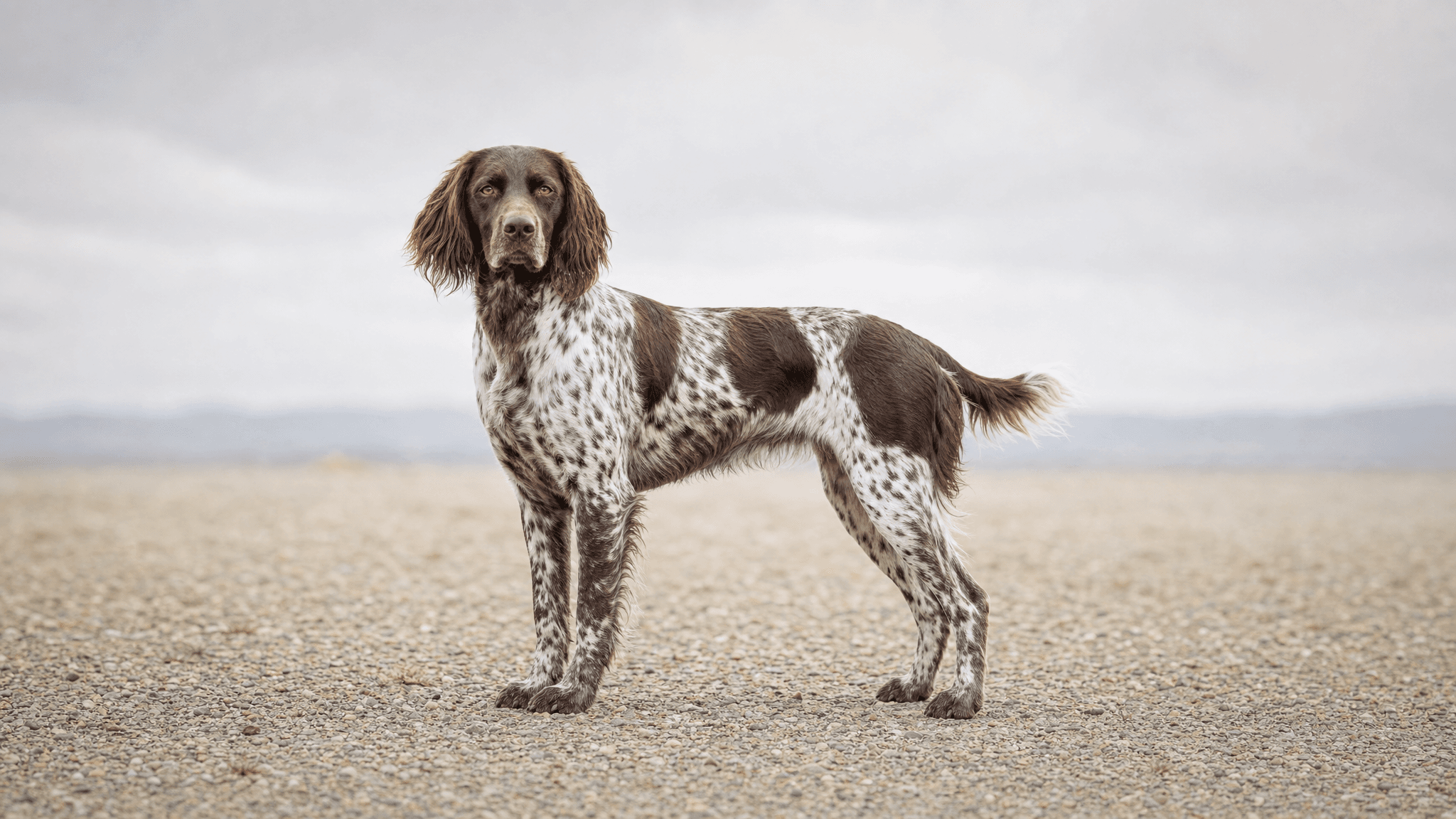
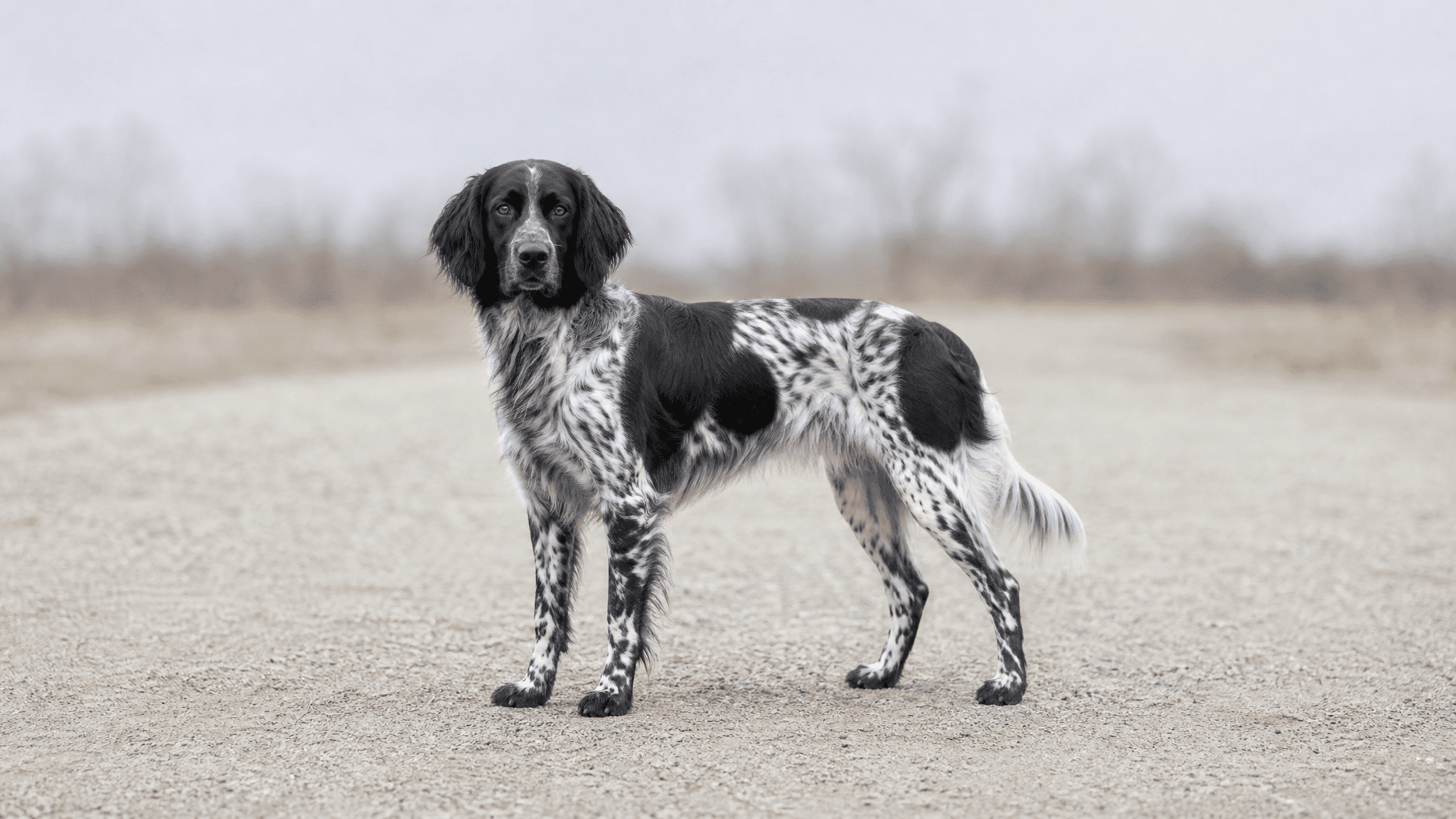
German Wire- Haired Pointing Dog
Summary
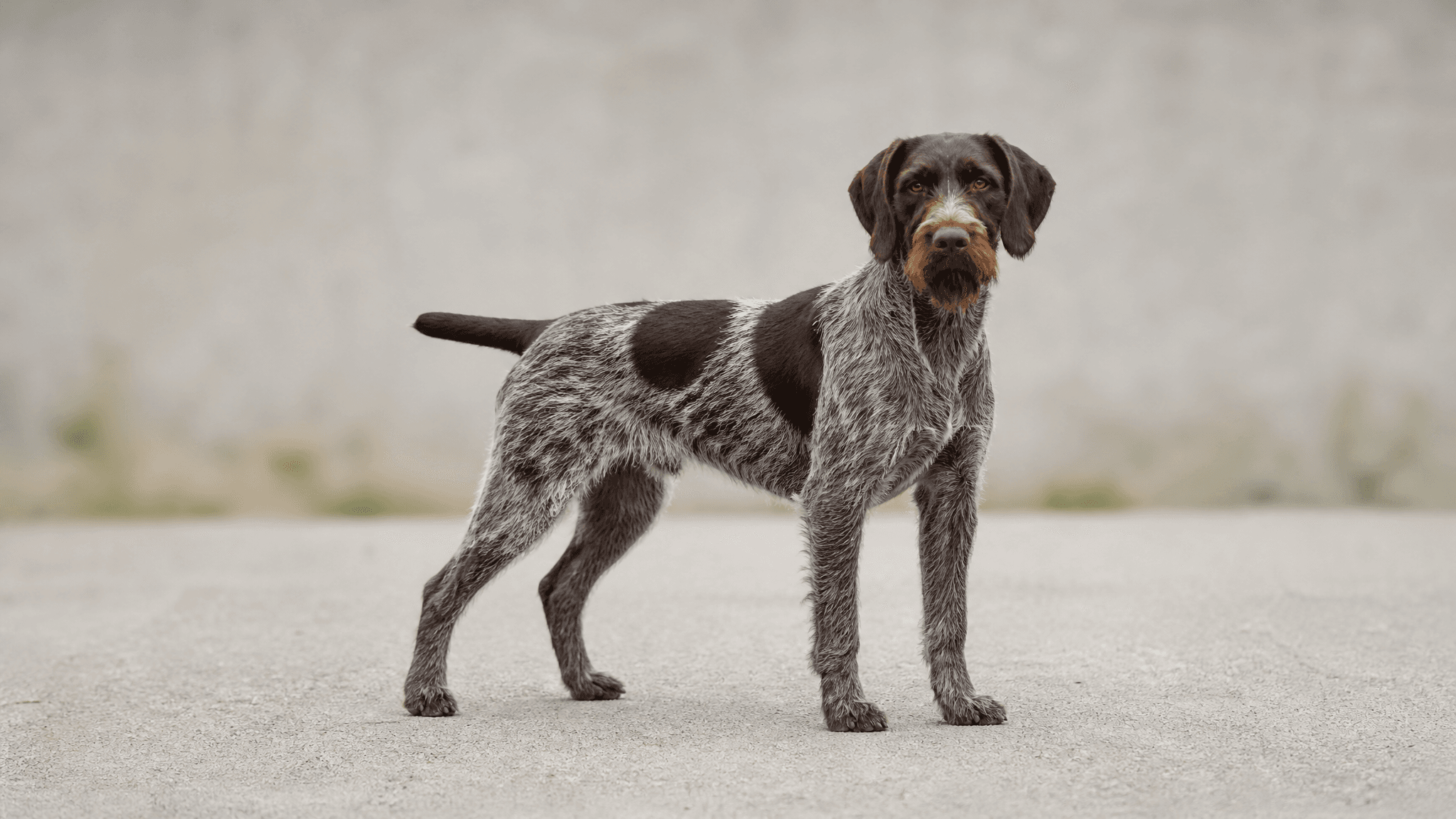
The German Wire-Haired Pointer, known internationally as Deutsch Drahthaar, is a versatile hunting dog developed in Germany in the late 19th century to work in all types of terrain and climate. Its hard, water-resistant coat, accompanied by characteristic eyebrows, mustache, and beard, gives it an unmistakable appearance and natural protection in the field. It is considered one of the most complete hunting dogs in the world, equally capable in land and water work.
Physical Characteristics
- Size
- Large
- Height (male)
- 61–68 cm
- Height (female)
- 57–64 cm
- Weight (male)
- 25–34 kg
- Weight (female)
- 20.5–29 kg
- Life Expectancy
- 12–14 years
- Coat
- Double — hard, rough, and water-resistant outer layer; dense and insulating undercoat; prominent eyebrows, mustache, and beard
- Common Colors
- Solid liver, liver and white (flecked, patched, or roan); occasionally black and white
Temperament & Personality
The Deutsch Drahthaar is an extremely active, loyal, and well-balanced dog. It is affectionate with the family, good with children when raised with them, but tends to be reserved and distrustful with strangers, making it an excellent guard dog. It has a strong hunting instinct and determination at work, requiring an experienced owner capable of providing firm and consistent leadership. It may try to dominate other animals, so early socialization is essential.
Activity & Exercise
- Energy Level
- Very high
- Recommended Daily Exercise
- 120 minutes
- Suitable for Apartment
- No
Grooming & Care
- Grooming Needs
- Moderate
- Shedding
- Moderate
Health
- Common Health Issues
- Elbow dysplasia
- Entropion
- Gastric dilatation and torsion (bloat/GDV)
- Hip dysplasia
- Hypothyroidism
- Progressive retinal atrophy (PRA)
- Subaortic stenosis (heart condition)
- Recommended Health Tests
- Cardiac screening
- Eye examination
- Orthopedic evaluation
- Thyroid function test
Compatibility
- With Children
- Good
- With Other Dogs
- Moderate
- With Cats
- Low to moderate
- For First-Time Owners
- Not recommended
Is a German Wire- Haired Pointing Dog right for you?
A German Wire- Haired Pointing Dog may suit you if:
- You can provide at least two hours of vigorous exercise daily, including mentally stimulating activities.
- You enjoy an active, outdoor lifestyle, including hiking, hunting, or water sports.
- You appreciate a loyal, affectionate family companion who is also a vigilant guardian.
- You are prepared for consistent, firm training and early socialization to channel their strong drive.
- You are willing to commit to moderate grooming for their distinctive wire coat, beard, and eyebrows.
- You understand and are prepared to manage a strong prey drive and natural pointing instincts.
Think twice if:
- You expect a dog that is always immediately biddable, as their independent hunting drive is strong.
- You have a schedule that leaves a dog alone for long periods, as they thrive on companionship and activity.
- You have small, non-canine pets that might trigger their strong prey drive.
- You are unwilling to dedicate significant time daily to their rigorous exercise and mental stimulation needs.
- You live in an apartment or do not have a securely fenced outdoor space for a large, active dog.
- You are not prepared for the consistent, firm guidance and boundaries a large, energetic adolescent needs.
Bringing a German Wire-Haired Pointing Dog into your life is a commitment to an active, engaged partnership. While their boundless energy and keen intelligence require consistent training and ample outdoor activity, they reward their dedicated families with unwavering loyalty and affectionate companionship. They are truly versatile, but their strong will and protective nature demand an owner who appreciates their unique blend of independence and devotion.
Training a German Wire- Haired Pointing Dog
Training a German Wire-Haired Pointer is a rewarding journey, but it requires an experienced hand due to their very high energy and strong hunting instinct. These intelligent dogs thrive on engaging, consistent training that taps into their natural drives. Keep sessions short, fun, and varied to maintain their focus and enthusiasm. They are highly motivated by tasks that challenge their minds and bodies, especially those involving scent and retrieval. Inconsistent commands or a lack of firm, patient leadership can quickly lead to frustration for both dog and owner, as their innate determination may then lead them to make their own decisions.
Begin with:
- Attention and name response
- Recall on a long line
- Loose-leash walking
- Leave it and drop it
- Calm greetings
- Settling on a mat
- Cooperative handling
- Waiting at doors
Prey drive and recall
The German Wire-Haired Pointer's strong hunting instinct is a defining trait, making them incredibly driven in the field but also a challenge in everyday life. Their prey drive can easily override even the best-learned commands, especially recall, when a squirrel or bird catches their eye. It's crucial to establish an absolutely bomb-proof recall from a young age, practicing consistently in increasingly distracting environments. Always make returning to you the most rewarding option available, using high-value treats and enthusiastic praise.
Start recall training on a long line in a secure area, gradually introducing distractions. Never rely on an untrained recall in an unsecured environment. For more detailed guidance, check out our guide on teaching a reliable recall.
Managing leash strength
As a large and powerful breed, a German Wire-Haired Pointer can easily pull an unprepared owner off their feet. Establishing polite loose-leash walking from puppyhood is non-negotiable. Begin training in a quiet, low-distraction environment, rewarding every step taken with a slack leash. Consistency is paramount; never allow them to pull you to their desired destination, as this reinforces the behavior.
Consider using a front-clip harness or head collar if pulling becomes an issue, as these can provide better control without causing discomfort. Remember, patience and consistency are your best tools. For more help, explore our tips on how to stop a puppy pulling on the leash.
Addressing boredom
With their very high energy level and intelligence, German Wire-Haired Pointers require significant daily exercise and mental stimulation – at least 120 minutes a day. If under-exercised or left alone for extended periods without engagement, they can quickly become bored and destructive. This might manifest as excessive chewing, digging, barking, or even trying to 'redecorate' your home.
To prevent these undesirable behaviors, ensure their physical needs are met with vigorous walks, runs, or off-leash play in secure areas. Supplement this with mental challenges like puzzle toys, scent games, and regular training sessions to keep their sharp minds occupied. Our training feature can help you build a consistent routine to keep your GWP happy and engaged.
German Wire- Haired Pointing Dog — Frequently Asked Questions
Is the German Wirehaired Pointer a good family dog?
The German Wirehaired Pointer can be a wonderful family dog in the right household. They are loyal, affectionate, and form deep bonds with their family. They tend to be good with children, especially when raised with them from puppyhood. However, they are a high-energy working dog — without adequate daily exercise and mental stimulation, they become bored and can develop destructive habits. Active families who love the outdoors are an ideal match.
How much exercise does a German Wirehaired Pointer need?
German Wirehaired Pointers need a minimum of 2 hours of vigorous exercise daily. They are versatile hunting dogs with extraordinary stamina, built to work all day in the field. Running, swimming, hiking, fetch, tracking, and field sports are all ideal outlets. Mental stimulation through scent work, obedience, and training is equally vital. A GWP that doesn't receive sufficient exercise will become frustrated, destructive, and excessively vocal. They are a serious commitment for anyone without an active lifestyle.
Are German Wirehaired Pointers easy to train?
German Wirehaired Pointers are highly intelligent and trainable, but they have an independent, sometimes stubborn streak that comes from their heritage as a dog bred to make decisions in the field without handler input. They respond best to confident, positive training using high-value rewards. Consistency and patience are key. They excel at advanced obedience, tracking, agility, and field work. Early puppy classes and ongoing training throughout life are strongly recommended.
Do German Wirehaired Pointers have a strong prey drive?
Yes — German Wirehaired Pointers have a very strong prey drive. They were bred to locate, flush, and retrieve game across all terrains and conditions. Any small, fast-moving animal — birds, rabbits, squirrels — can trigger a full hunting response. Off-leash recall in unsecured areas can be unreliable, especially when a scent trail activates their hunting instincts. Early recall training and a secure area for off-leash exercise are essential. Small pets like cats and rabbits should be carefully managed.
What are the main health concerns for German Wirehaired Pointers?
German Wirehaired Pointers are generally robust but have some documented breed predispositions. Hip dysplasia can occur — OFA screening of parents is important. Von Willebrand's Disease (a blood clotting disorder) has been documented in the breed. Heart conditions, including subaortic stenosis, occur in some lines. Hypothyroidism and entropion (eyelid rolling inward) are noted. As with all sporting breeds, ear infections are common given their floppy ears and active water lifestyle. Regular vet checks are important.
Are German Wirehaired Pointers good with other dogs?
German Wirehaired Pointers are generally good with other dogs — they were bred to work in groups in the field and are typically social with their own kind. Same-sex aggression can occasionally occur, particularly in unneutered males. Their strong prey drive means smaller dogs that move erratically may accidentally trigger a chase response. Proper socialisation from puppyhood, as with all breeds, produces the most reliably social adults. They often enjoy the company of another similarly-sized active dog.
How long do German Wirehaired Pointers live?
German Wirehaired Pointers have an average lifespan of 12–14 years. Their active, working constitution supports longevity when their exercise needs are consistently met. Key factors for a long healthy life include regular vigorous exercise, maintaining a healthy weight, annual vet check-ups, ear care (preventing chronic infections), and screening parents for hip and heart conditions. Dogs from health-tested breeding lines with responsible breeders tend to live full, healthy lives within this range.
What makes the German Wirehaired Pointer unique compared to other pointing breeds?
The German Wirehaired Pointer stands out as one of the most versatile all-round hunting dogs in the world. Unlike many pointing breeds specialised for one terrain or quarry, the GWP was developed to point, track wounded game, retrieve from water, and work on both furred and feathered game across all conditions. Their dense, wiry, weather-resistant coat — which also protects against thorns and cold water — is a defining feature. They are equally capable in upland fields, dense undergrowth, swamps, and mountains.
Community
Talk to real German Wire- Haired Pointing Dog owners
This guide covers the breed on paper. In the app, the German Wire- Haired Pointing Dog community covers it in real life: photos from other owners, questions answered by people who live with the breed, and a directory of dogs you can browse.
- Photos & pollsSee what German Wire- Haired Pointing Dog owners are sharing today.
- Questions & answersAsk anything and hear from people who own one.
- Dog directoryBrowse German Wire- Haired Pointing Dogs from around the world.
You join automatically when you add a German Wire- Haired Pointing Dog to your profile.