French Water Dog
Summary
The Barbet is one of the oldest water dog breeds in Europe, with records dating back to the 16th century in France. Its name derives from the French word "barbe" (beard), referring to its characteristic prominent beard. It is considered one of the ancestors of several modern breeds, including the Poodle (Caniche), the Portuguese Water Dog, the Briard, and possibly the American Water Spaniel. Nearly extinct after World War II, it was recovered by passionate French breeders and is today a rare but internationally recognized breed.
Physical Characteristics
- Size
- Medium
- Height (male)
- 58–65 cm
- Height (female)
- 53–61 cm
- Weight (male)
- 17–28 kg
- Weight (female)
- 13–23 kg
- Life Expectancy
- 13–15 years
- Coat
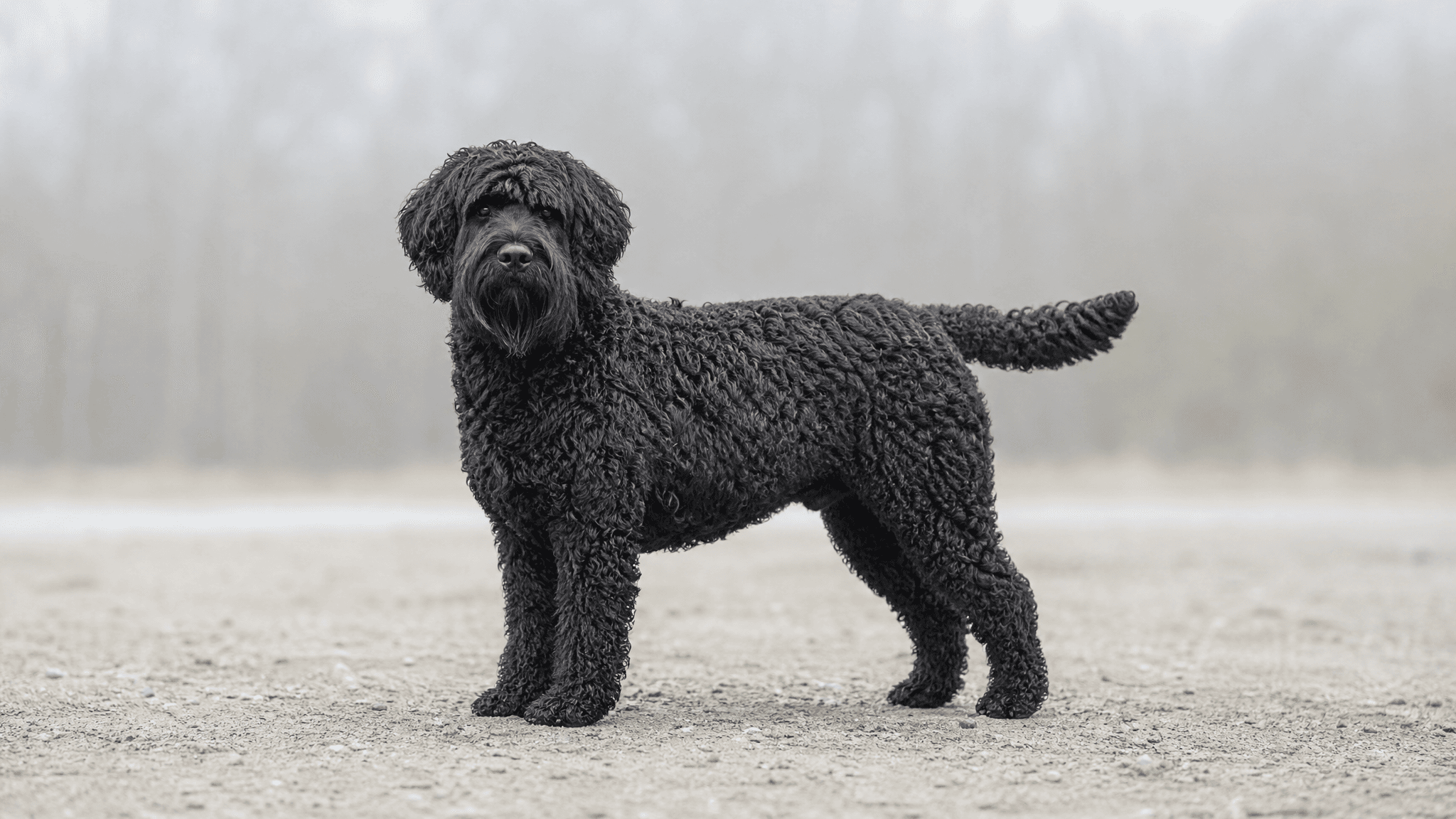
- Long, woolly, and curly all over the body; grows continuously and needs regular cuts; pronounced beard and mustache
- Common Colors
- Solid black, brown, fawn (beige/fawn), grey, pure white, or bicolor with white; the most common colors are black and brown, sometimes with white markings
Temperament & Personality
The Barbet is described as a sociable, cheerful, obedient, and intelligent dog. It loves water and has natural waterfowl retrieval instincts. It is very affectionate with the family and especially good with children and the elderly. It adapts well to different environments as long as it has sufficient exercise and company. Its "clownish" and jovial character makes it a very entertaining presence.
Activity & Exercise
- Energy Level
- Moderate to high
- Recommended Daily Exercise
- 45–60 minutes
- Suitable for Apartment
- Yes with exercise
Grooming & Care
- Grooming Needs
- Very high
- Shedding
- Minimal
- Bathing Frequency
- Every 4–6 weeks
Health
- Common Health Issues
- Epilepsy
- Hernias
- Hip dysplasia
- Low genetic diversity (high inbreeding coefficient) is an important concern in the breed
- Otitis
- Progressive retinal atrophy (PRA)
- Recommended Health Tests
- Eye examination
- Genetic test for PRA (_rod-cone dysplasia 1a_)
- Hip radiography
Compatibility
- With Children
- Excellent
- With Other Dogs
- Excellent
- With Cats
- Good
- For First-Time Owners
- Recommended
Is a French Water Dog right for you?
A French Water Dog may suit you if:
- You are ready to provide 45 to 60 minutes of daily exercise, including engaging water activities or retrieving games.
- You enjoy outdoor adventures, especially near water, where your dog can indulge its natural retrieving instincts.
- You appreciate a cheerful, intelligent, and affectionate companion with a wonderfully "clownish" and jovial personality.
- You are prepared for consistent, positive training to nurture an intelligent and eager-to-please companion.
- You are committed to very high grooming needs, including regular brushing and professional cuts for its long, woolly, curly coat.
- You are prepared for a dog that will enthusiastically embrace water, mud, and anything that might cling to its distinctive coat.
Think twice if:
- You expect a dog that is always perfectly serious and compliant, as their jovial nature can lead to playful independence.
- You have a demanding schedule that requires your dog to be left alone for long periods each day.
- You prefer a calm, quiet pet that will not engage in boisterous, playful interactions with children or other animals.
- You are unwilling to commit to daily vigorous exercise or the very high grooming demands of a continuously growing coat.
- You cannot provide a secure, stimulating environment where a medium-sized, active dog can truly thrive.
- You are not prepared to consistently manage the boisterous energy and playful antics of an active, medium-sized dog.
The French Water Dog offers immense joy and a deep bond to the right family, with their cheerful, affectionate nature and playful spirit. However, their distinctive coat and active minds demand consistent grooming and daily engagement. While adaptable, they truly thrive when their needs for exercise, mental stimulation, and companionship are fully met, rewarding dedicated owners with a truly special companion for 13 to 15 years.
Training a French Water Dog
Your French Water Dog, or Barbet, is a truly delightful and intelligent companion, eager to please and known for its jovial spirit. This breed thrives on positive reinforcement, responding beautifully to praise, treats, and play, especially anything involving water or retrieving! Keep training sessions short, fun, and consistent to hold their attention and harness their natural obedience. Because they are so affectionate and intelligent, inconsistent or harsh training methods can quickly lead to confusion or a loss of enthusiasm, making them less responsive. They truly want to work with you and enjoy the process.
Begin with:
- Attention and response to name
- Recall on a long line
- Loose-leash walking
- Leave it and drop it
- Calm greetings without jumping
- Settle on a mat or bed
- Cooperative handling for grooming
- Waiting at doors and gates
Recall and Water Drive
Your Barbet's strong natural waterfowl retrieval instincts mean they are incredibly drawn to water and anything that moves like prey. This can make recall challenging, especially near ponds, lakes, or even just a sprinkler! Start recall training in a quiet area and gradually introduce distractions, always using high-value rewards. Practice often, making coming back to you the most rewarding thing ever, even when there's a tempting splash or a bird in sight. For more tips, check out our guide on teaching a reliable recall.
Always be mindful of their environment. If you're near water, keep them on a long line until their recall is rock-solid. Channel their natural drives positively with games like 'fetch' near water, which can be a wonderful way to bond and reinforce good habits.
Grooming Cooperation
With their long, woolly, and continuously growing curly coat, Barbets have very high grooming needs. This means they need to be comfortable with regular brushing, bathing every 4-6 weeks, and professional cuts. Start cooperative grooming early in puppyhood, making it a positive and gentle experience. Introduce brushes, combs, and even the sound of clippers gradually, pairing them with high-value treats.
Regularly handle their paws, ears, and mouth so they are relaxed during nail trims, ear cleaning, and teeth brushing. This early positive exposure will make their lifelong grooming routine much smoother and more enjoyable for both of you.
Boredom Behaviors
Your Barbet is a sociable, cheerful dog with moderate to high energy, requiring 45-60 minutes of exercise daily. If they don't get enough physical activity or mental stimulation, their 'clownish' nature can manifest as unwanted behaviors like excessive barking, chewing, or digging. Ensure they have plenty of opportunities to run, play, and explore, ideally incorporating their love for water.
They also thrive on company and can become anxious or destructive if left alone for too long. Provide puzzle toys, engage in interactive play, and consider doggy daycare or a trusted sitter if you'll be away for extended periods. Understanding the signs of stress when you leave can help you address separation-related issues.
French Water Dog — Frequently Asked Questions
What is the Barbet?
The Barbet (also called the French Water Dog) is an ancient French water retriever with a history stretching back at least to the 16th century. It is considered one of the foundational breeds from which many modern water dogs and spaniels descend — including the Poodle, American Water Spaniel, Portuguese Water Dog, and possibly the Briard. They were used by French hunters to retrieve waterfowl from marshes and lakes. They are characterised by their thick, curly or wavy beard (barbe means beard in French) and woollen, water-resistant coat. They are medium-sized, sturdy, and athletic. In character they are joyful, affectionate, sociable, playful, eager to please, and intelligent — one of the most delightful water dog personalities.
Are Barbets good family dogs?
Barbets are exceptional family dogs and among the best-natured of all water dog breeds. They are genuinely joyful, affectionate, and playful — they love everyone in the family, including children, and rarely show aggression. They are naturally sociable, getting along well with other dogs, cats, and most animals. They are not particularly wary of strangers — they tend to greet new people with enthusiasm. Their soft, people-loving personality means they do not like being left alone for long periods. They need an active family who can provide daily exercise, but their temperament makes them manageable even for moderately active owners. Their hypoallergenic-like coat (low-shedding) is an added bonus for allergy-sensitive households.
How much exercise does a Barbet need?
Barbets need 60–90 minutes of daily exercise. They are athletic, energetic working water dogs with real stamina, but they are not extreme high-drive dogs. Daily walks, swimming (they love water and are exceptional swimmers), fetch, agility, and nose work all suit them well. Mental stimulation through training and interactive activities is as important as physical exercise for this intelligent breed. They enjoy dog sports including agility, rally obedience, dock diving, and tracking. Off-leash exercise should be in secure areas — though their prey drive is not particularly strong, their enthusiasm can carry them into trouble. They adapt reasonably well to suburban life if given sufficient daily exercise and mental engagement.
How do you groom a Barbet?
The Barbet's thick, woolly, curly coat requires consistent grooming attention. Regular brushing or combing 2–3 times per week is essential to prevent the coat from matting — their dense curls can form serious mats quickly if neglected. Professional grooming every 6–8 weeks, including trimming to a manageable length, makes ongoing maintenance significantly easier. Their beard area around the muzzle is particularly prone to collecting debris and moisture and needs daily attention. They are low-shedding, which makes them a good choice for allergy-sensitive households. After swimming or bathing, their coat must be thoroughly dried — leaving it damp can lead to mildew and skin problems. Ear cleaning is particularly important given their drop ears and love of water.
What health issues affect Barbets?
Barbets are generally a healthy breed with good genetic diversity from their broad historical origins. Key health concerns include hip dysplasia — OFA screening of parents is recommended. Elbow dysplasia has been documented. Eye conditions including progressive retinal atrophy and cataracts occur. Ear infections are common given their drop ears and love of water — regular ear cleaning and drying after swimming is essential. Epilepsy has been noted in some lines. Their dense coat can hide skin conditions that develop underneath if grooming is neglected. Annual vet check-ups, health-tested parents, and maintaining a lean, healthy weight are recommended for longevity.
How long do Barbets live?
Barbets have an average lifespan of 12–14 years. Key longevity factors include health-tested parents (particularly hip/elbow dysplasia and eye conditions), regular ear cleaning and drying after swimming (preventing chronic ear infections that can become painful and affect quality of life), consistent coat grooming (to prevent skin problems under their dense coat), annual vet check-ups, dental care, daily exercise (maintaining a lean, healthy physique), maintaining a healthy weight, and mental stimulation (engaged, happy dogs age better). Their generally robust constitution and working-dog heritage supports good longevity when well managed. Barbets from health-conscious breeders who receive consistent care commonly live well into their early-to-mid teens.
Are Barbets easy to train?
Barbets are one of the most trainable water dog breeds. They are intelligent, eager to please, food-motivated, and responsive — they make the connection between behaviour and reward quickly and enjoy the process of learning. They respond best to positive, reward-based training; they are sensitive dogs and harsh methods are unnecessary and counterproductive. They excel at obedience, agility, rally, dock diving, tracking, nose work, and therapy dog work. Their retrieving instinct from their hunting heritage makes fetch and retrieve tasks naturally appealing to them. Early socialisation and basic obedience from puppyhood establishes the foundation for a well-mannered adult. They are ideal for owners new to dog training who want a responsive, co-operative training partner.
What is the history and origin of the Barbet?
The Barbet has a remarkably long and influential history in France and beyond. References to a woolly, curly-coated water dog in France date back to the 16th century, with some historians tracing the type even earlier. They were beloved by French royalty and nobility — King Henry IV of France and his court were known to be fond of the breed. They were practical hunting companions, used to retrieve waterfowl from marshes, lakes, and rivers across France. Crucially, the Barbet is considered a foundational ancestor breed — genetic and historical evidence suggests it contributed to the development of the Standard Poodle, American Water Spaniel, Portuguese Water Dog, Irish Water Spaniel, and possibly the Briard. Despite their historical significance, the breed nearly went extinct after the two World Wars, with population numbers falling critically low. Dedicated French breeders worked from the 1970s onward to restore the breed, and it was officially recognised by the AKC only in 2020.
Community
Talk to real French Water Dog owners
This guide covers the breed on paper. In the app, the French Water Dog community covers it in real life: photos from other owners, questions answered by people who live with the breed, and a directory of dogs you can browse.
- Photos & pollsSee what French Water Dog owners are sharing today.
- Questions & answersAsk anything and hear from people who own one.
- Dog directoryBrowse French Water Dogs from around the world.
You join automatically when you add a French Water Dog to your profile.