Deutsch Stichelhaar
Summary
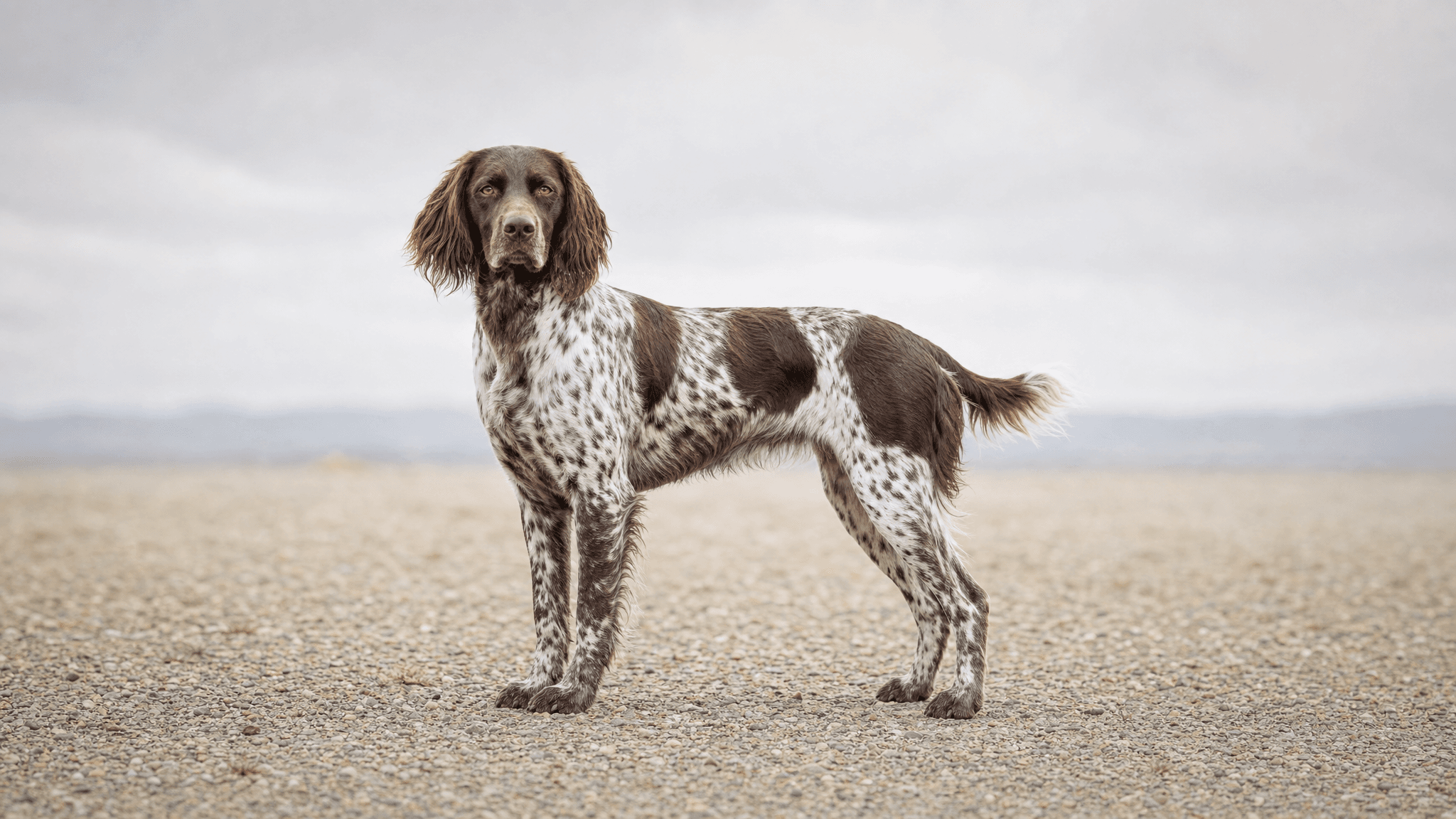
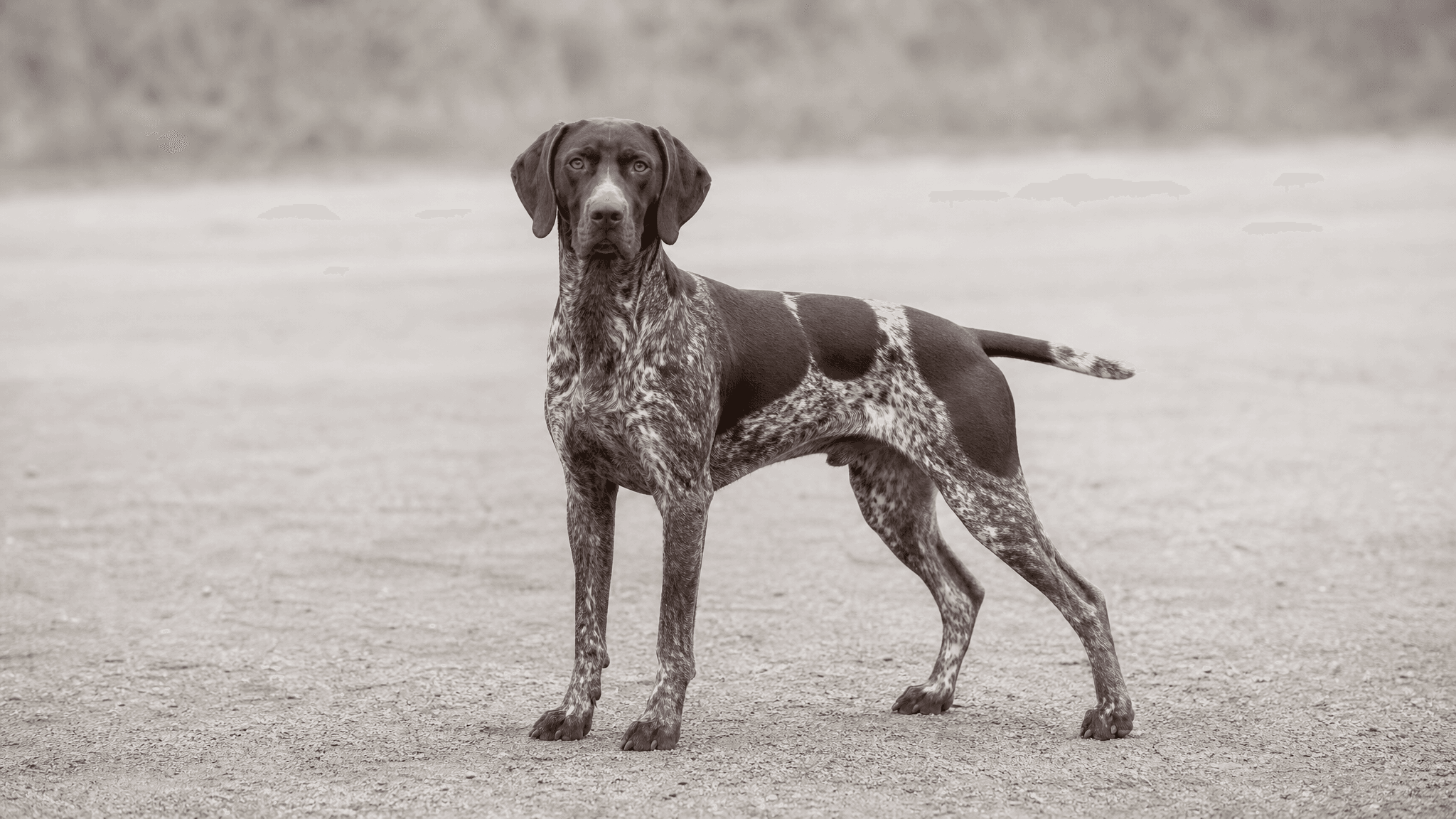
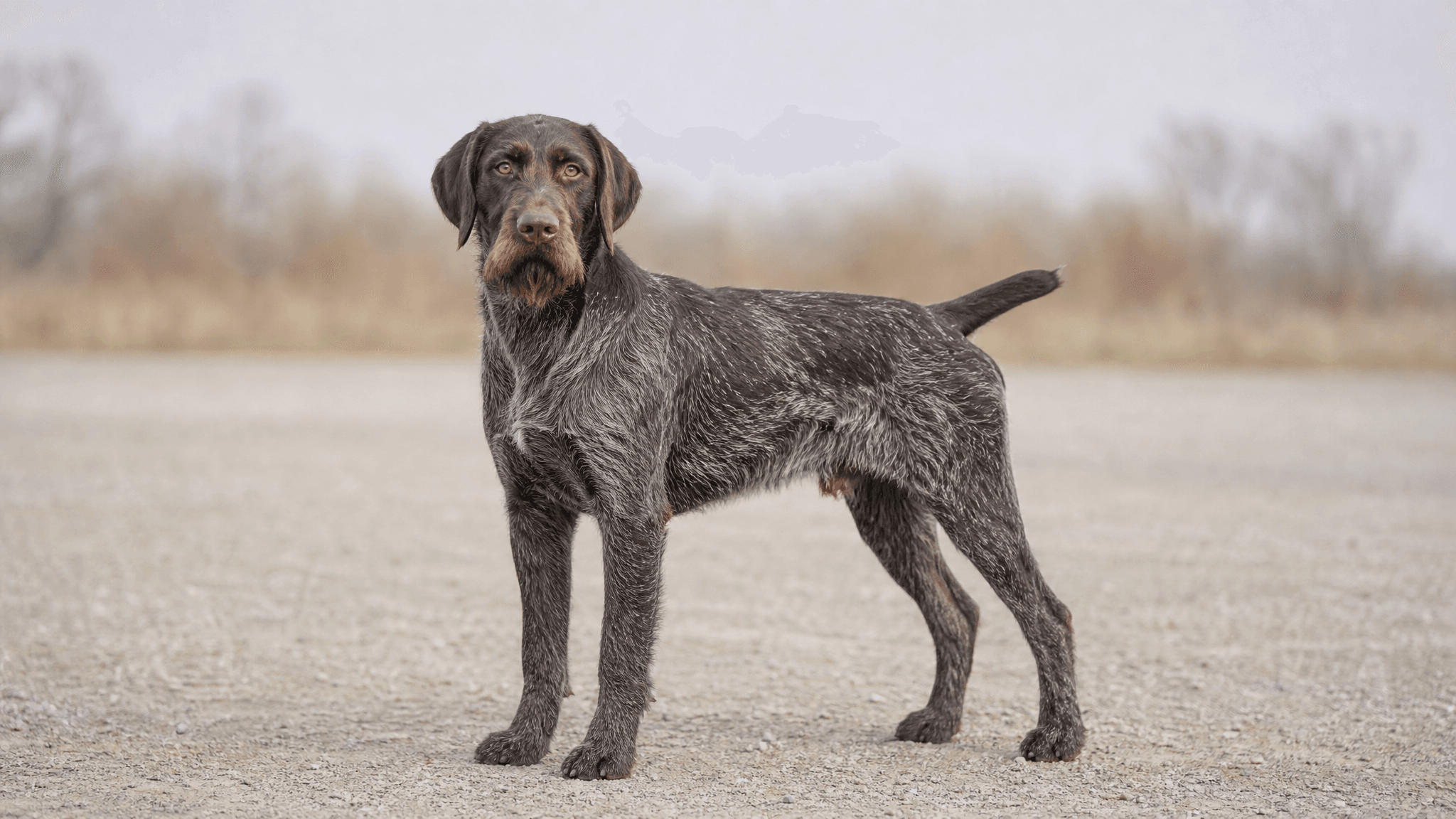
The Deutsch Stichelhaar — "German rough-haired" — is probably the rarest and least modernized of the German pointing dog breeds. Bred from crosses between Griffon, Pointer, Poodle, and Foxhound, it has a shorter coat than the Korthals Griffon and slightly rougher than the German Wire-Haired Pointer. It is considered by cynologists the quintessential "gamekeeper's dog" — balanced, courageous, and with a strong protective instinct, but surprisingly calm and "ruig" (rugged) in the best sense of the word.
Physical Characteristics
- Size
- Large
- Height (male)
- 60–70 cm
- Height (female)
- 58–68 cm
- Weight (male)
- 27–34 kg
- Weight (female)
- 25–32 kg
- Life Expectancy
- 10–12 years
- Coat
- Rough, hard, and flat (~4 cm on the body); sparse but present undercoat; pronounced eyebrows and moderate beard; soft feathering on the legs
- Common Colors
- Solid brown (with or without a white chest patch); brown roan (dark or light) with or without brown patches
Temperament & Personality
The Deutsch Stichelhaar is a balanced, calm, and courageous dog, characteristics frequently highlighted by the breed club secretary with the German word "Ruhe" (calm). It has a strong prey drive and is fearless when working in dense cover or hunting wild boar. At the same time, it has a "laid-back" personality at home and is described as relatively easy to train for an experienced handler. It can be a good guard dog.
Activity & Exercise
- Energy Level
- High
- Recommended Daily Exercise
- 90 minutes
- Suitable for Apartment
- Not recommended
Grooming & Care
- Grooming Needs
- Moderate
- Shedding
- Moderate
- Bathing Frequency
- Every 4–6 weeks
Health
- Common Health Issues
- Alopecia (non-seasonal hair loss)
- Dental problems (incomplete dentition in the hairless variety due to genetic linkage)
- Gun-shyness (in some lines)
- Hip dysplasia
- Recommended Health Tests
- Dermatological examination
- Mandatory orthopedic evaluation
- Temperament assessment
Compatibility
- With Children
- Good
- With Other Dogs
- Good
- With Cats
- Moderate
- For First-Time Owners
- Not recommended
Is a Deutsch Stichelhaar right for you?
A Deutsch Stichelhaar may suit you if:
- You are prepared to commit to at least 90 minutes of vigorous daily exercise and engaging mental challenges.
- You enjoy outdoor adventures like hiking, hunting, or field work where your dog can utilize its natural instincts.
- You appreciate a dog with a courageous, balanced temperament that is calm and relaxed in a home environment.
- You are an experienced handler prepared to provide consistent, firm, and fair training to a capable working dog.
- You are willing to perform moderate grooming, including regular brushing and occasional stripping to maintain their rugged coat.
- You understand and are ready to manage a dog with a strong prey drive and a natural protective instinct.
Think twice if:
- You expect immediate, effortless obedience from a dog, especially if you are a first-time owner.
- You have a routine that requires your dog to be left alone for long periods each day.
- You have small, free-roaming household pets, especially cats, that might trigger their moderate prey drive.
- You are unwilling to consistently provide 90 minutes of daily exercise or commit to their moderate grooming needs.
- You live in an apartment or do not have a securely fenced yard for a large, active dog.
- You are not prepared to handle a large, powerful dog with significant energy and a strong will during its adolescent phase.
The Deutsch Stichelhaar is a truly unique companion, embodying a rugged spirit and unwavering loyalty. While their "Ruhe" at home is a delight, remember this calm demeanor masks a powerful working drive that needs fulfilling. Living with a Stichelhaar means embracing their need for purpose and activity, balancing their courageous nature with consistent guidance for a deeply rewarding partnership that lasts 10-12 years.
Training a Deutsch Stichelhaar
The Deutsch Stichelhaar, known for its balanced and calm demeanor at home, is a highly intelligent and courageous learner. These dogs thrive on consistent, positive reinforcement and clear, engaging training sessions that tap into their natural desire to work alongside their handler. Keep sessions short, fun, and frequent to maintain their focus. As they are relatively easy to train for an experienced handler, a lack of clear leadership or inconsistent expectations can quickly lead to confusion and frustration for this sensitive breed, potentially manifesting as stubbornness or disengagement.
Begin with:
- Attention and response to name around distractions
- Recall on a long line
- Loose-leash walking
- Leave it and drop it
- Calm greetings without jumping
- Settling on a mat or bed
- Cooperative handling for grooming, ears, feet and teeth
- Waiting at doors and gates
Strong Prey Drive
Your Deutsch Stichelhaar possesses a powerful prey drive, a trait that makes them fearless in the field but can be a significant challenge during everyday walks. Their instinct to pursue small animals or even interesting scents can easily override their training, making a reliable recall paramount.
To manage this, start practicing recall in a quiet, fenced area with minimal distractions, using high-value treats and enthusiastic praise. Gradually introduce more stimulating environments, always keeping your dog on a long line until their reliable recall is solid. Focus on making yourself more exciting than the environment.
Pulling on Leash
With their large size and high energy levels, a Deutsch Stichelhaar can exert considerable force on the leash, making walks unpleasant if not properly trained. This breed needs consistent guidance to learn polite leash manners from a young age, especially given they require around 90 minutes of exercise daily.
Invest time in teaching loose-leash walking using positive reinforcement. Reward your dog frequently for walking beside you without tension on the leash. If pulling becomes a habit, consider a front-clip harness for better control and consult our guide on how to stop leash pulling. Consistency is key to ensuring enjoyable outings for both of you.
Managing High Energy
Despite their "laid-back" home personality, Deutsch Stichelhaars are high-energy working dogs that require significant physical and mental stimulation. If their need for roughly 90 minutes of daily exercise and engaging activities isn't met, they can quickly develop undesirable behaviors such as destructive chewing, excessive barking, or even anxiety.
Prevent these issues by providing a structured routine that includes vigorous exercise, such as long walks, runs, or scent work, alongside regular training sessions. Puzzle toys and interactive games can also help keep their intelligent minds busy. If you notice signs of stress or boredom, our Behaviour AI feature can help you understand and work on these behaviors.
Deutsch Stichelhaar — Frequently Asked Questions
What is the Deutsch Stichelhaar?
The Deutsch Stichelhaar, whose name translates to "German rough-haired," is a truly special and quite rare large pointing dog breed originating from Germany. It belongs to FCI Group 7 (Braque type) and is considered one of the least modernized of the German pointing breeds. Developed from crosses of Griffon, Pointer, Poodle, and Foxhound, they possess a distinctive rough coat that's shorter than a Korthals Griffon's but a bit rougher than a German Wire-Haired Pointer's. These dogs are known for their balanced temperament and rugged appearance, making them unique companions.
What was the Deutsch Stichelhaar originally bred for?
The Deutsch Stichelhaar was originally bred in Germany to be the quintessential "gamekeeper's dog," a true all-around hunting companion. Their purpose was to be versatile and fearless, capable of working effectively in challenging conditions. They possess a strong prey drive and are incredibly courageous, especially when facing dense cover or hunting wild boar. This breed was developed for its balanced temperament and strong protective instincts, making them superb partners for hunters who needed a reliable and rugged dog that could handle diverse tasks in the field.
How much exercise does a Deutsch Stichelhaar need?
Given their high energy level and large size, Deutsch Stichelhaars require a significant amount of daily exercise to stay happy and healthy. We recommend at least 90 minutes of vigorous activity each day. This isn't just a casual stroll; they thrive on activities like long runs, challenging hikes, or engaging in dog sports. Their background as working dogs means they love having a job to do, so incorporating mental stimulation alongside physical exertion is key. Ensuring they get enough exercise will help them be calm and well-behaved companions at home.
Is the Deutsch Stichelhaar a good family dog?
Yes, with proper socialization and training, the Deutsch Stichelhaar can be a wonderful family dog! They are known for their balanced, calm, and "laid-back" personality at home, often described with the German word "Ruhe," meaning calm. While they have a strong protective instinct, which makes them excellent guardians, they are generally good with children and other pets when raised together. Early introduction to various people and animals is crucial to foster their naturally good temperament. Their calm demeanor indoors, combined with their loyalty, makes them devoted family members.
Is the Deutsch Stichelhaar easy to train?
The Deutsch Stichelhaar is considered relatively easy to train, especially for an experienced handler, thanks to their intelligent and balanced temperament. They are calm and courageous, with a "laid-back" personality at home, which contributes to their trainability. While they have a strong prey drive, their willingness to please and focus makes them responsive to consistent, positive reinforcement training. Early socialization and firm, fair guidance are essential to harness their potential. With the right approach, you'll find them eager learners and dedicated partners, excelling in various activities.
What health issues are common in the Deutsch Stichelhaar?
Like all breeds, Deutsch Stichelhaars can be prone to certain health conditions, though they are generally robust dogs. Some documented concerns to be aware of include hip dysplasia, a common orthopedic issue in many large breeds. They can also experience alopecia, which is non-seasonal hair loss. Additionally, some lines may exhibit gun-shyness, which is important for hunting dogs. Interestingly, dental problems, specifically incomplete dentition, have been noted in the hairless variety due to a genetic linkage. Regular veterinary check-ups and responsible breeding practices help mitigate these risks.
What is the Deutsch Stichelhaar's coat like and how much grooming does it need?
The Deutsch Stichelhaar's coat is one of its defining features, living up to its "German rough-haired" name. It's a dense, wiry, and protective coat that's shorter than a Korthals Griffon's but slightly rougher than a German Wire-Haired Pointer's. This rugged coat helps protect them from harsh weather and dense underbrush in the field. While it's a working coat, it doesn't require excessive grooming. Regular brushing, perhaps once or twice a week, will help remove loose hair and keep it tidy. Occasional hand-stripping may be needed to maintain its texture and function.
What is the typical lifespan of a Deutsch Stichelhaar?
The Deutsch Stichelhaar is a robust and healthy breed, and with proper care, you can expect to enjoy many wonderful years with your companion. The typical lifespan for a Deutsch Stichelhaar is generally between 10 to 12 years. Providing them with a high-quality diet, consistent exercise, regular veterinary check-ups, and plenty of love and mental stimulation will contribute significantly to their longevity and overall well-being. They truly become cherished members of the family for a good long time.
Community
Talk to real Deutsch Stichelhaar owners
This guide covers the breed on paper. In the app, the Deutsch Stichelhaar community covers it in real life: photos from other owners, questions answered by people who live with the breed, and a directory of dogs you can browse.
- Photos & pollsSee what Deutsch Stichelhaar owners are sharing today.
- Questions & answersAsk anything and hear from people who own one.
- Dog directoryBrowse Deutsch Stichelhaars from around the world.
You join automatically when you add a Deutsch Stichelhaar to your profile.