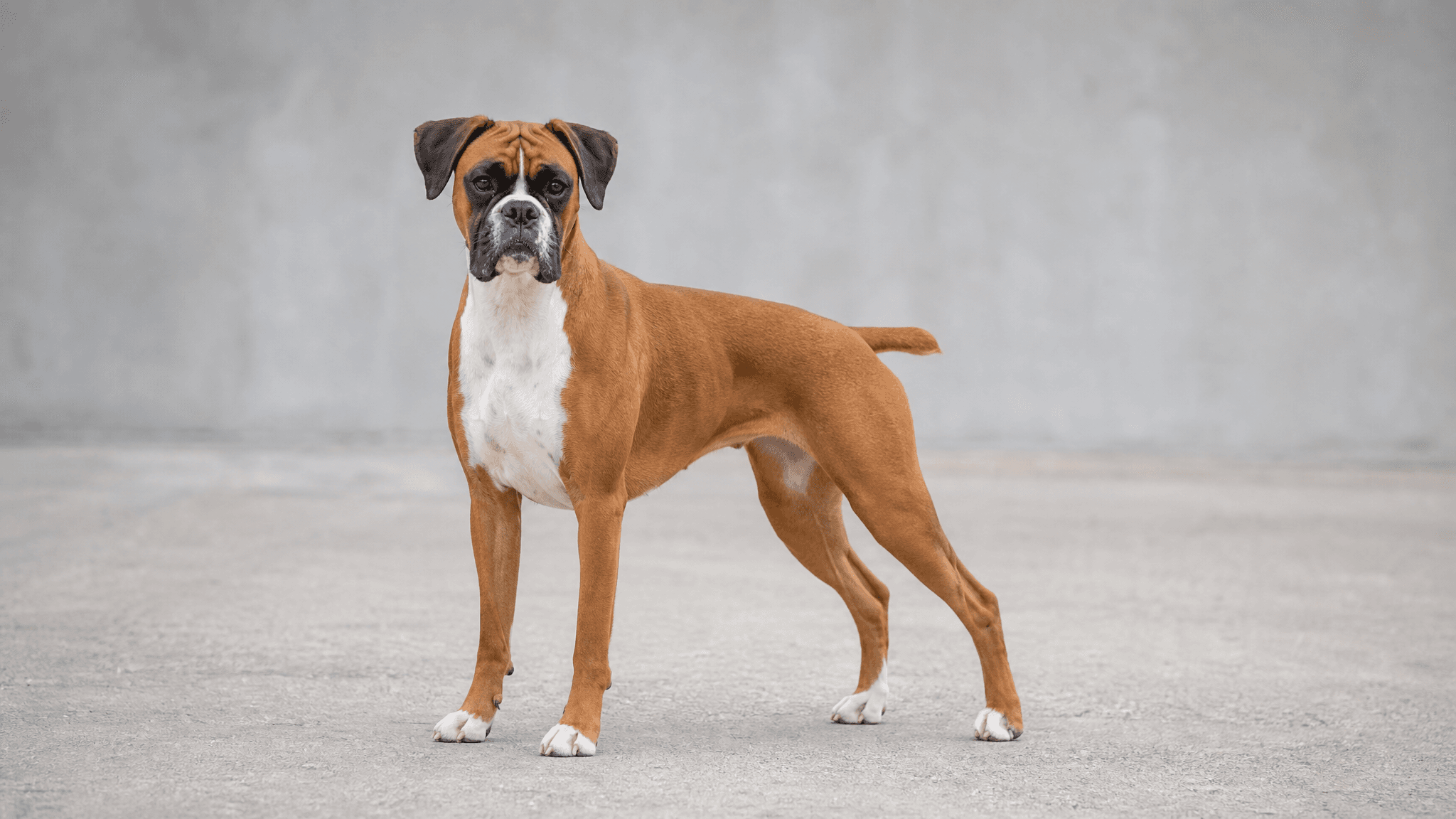
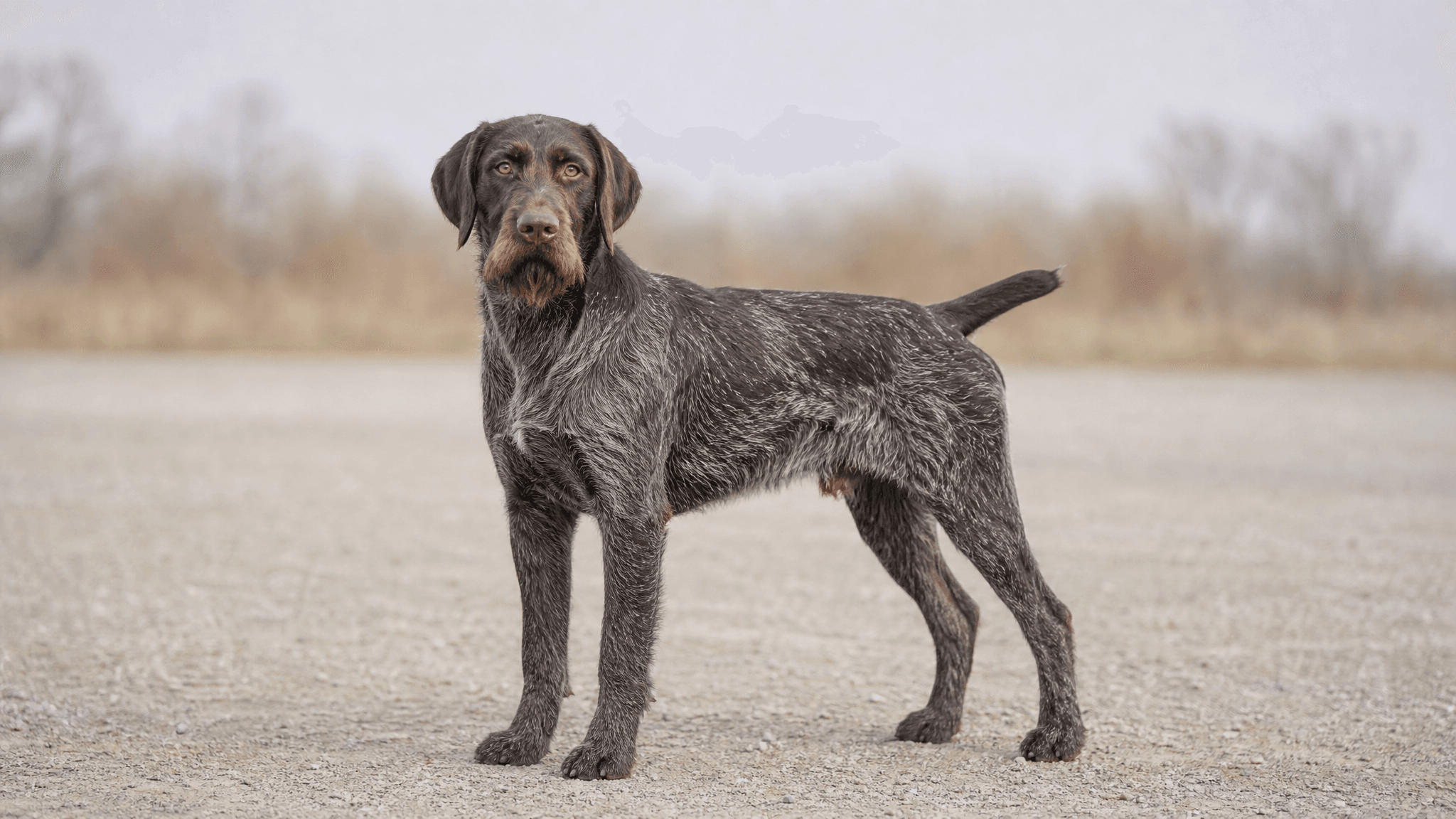
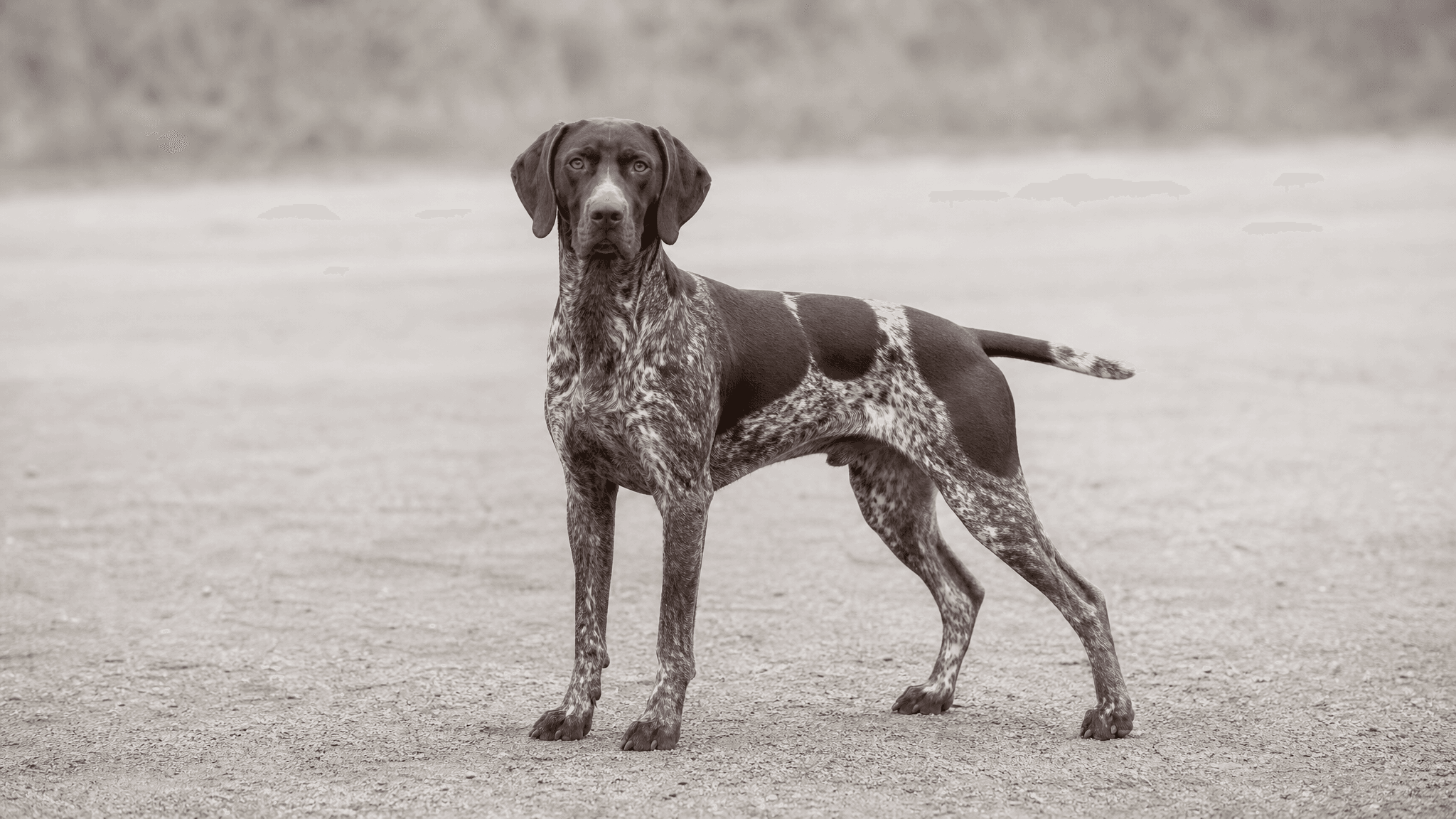
German Short- Haired Pointing Dog
Summary
The German Shorthaired Pointer is one of the most popular hunting dogs in the world, bred in Germany in the 19th century to be the "perfect hunting dog" — capable of pointing, flushing, retrieving on land and water, and tracking trails. Its development involved crosses between the old Spanish Pointer, German scent hounds, English Pointers, and other hunting dogs. It is currently one of the most versatile and intelligent breeds in the group, being equally appreciated as an active family dog.
Physical Characteristics
- Size
- Medium to large
- Height (male)
- 62–66 cm
- Height (female)
- 58–63 cm
- Weight (male)
- 25–32 kg
- Weight (female)
- 20–27 kg
- Life Expectancy
- 10–12 years
- Coat
- Short, dense, hard, and rough to the touch; provides good protection
- Common Colors
- Solid liver, liver with white ticked or roan, black with white ticked or roan
Temperament & Personality
The German Shorthaired Pointer is an active, loyal, intelligent, and action-oriented dog, frequently described as "noble" and "aristocratic." It is very devoted to the family and excellent with children when well socialized. Having been bred to work in close collaboration with the hunter, it tends to be very owner-oriented. Its high energy and intelligence require daily physical and mental stimulation; without it, it can become destructive.
Activity & Exercise
- Energy Level
- Very high
- Recommended Daily Exercise
- 90–120 minutes
- Suitable for Apartment
- Not recommended
Grooming & Care
- Grooming Needs
- Low
- Shedding
- Moderate
Health
- Common Health Issues
- Gastric dilatation-volvulus (GDV — less frequent than in larger breeds)
- Hip and elbow dysplasia
- Hypothyroidism
- Subaortic stenosis (heart condition)
- Von Willebrand disease
- Recommended Health Tests
- Cardiac examination
- OFA orthopedic evaluation
- Ophthalmologic evaluation
- Von Willebrand test
Compatibility
- With Children
- Excellent
- With Other Dogs
- Good
- With Cats
- Moderate
- For First-Time Owners
- Not recommended
Is a German Short- Haired Pointing Dog right for you?
A German Short- Haired Pointing Dog may suit you if:
- You can commit to providing 90 to 120 minutes of vigorous daily exercise and engaging mental challenges.
- You enjoy an active, outdoorsy lifestyle that includes long hikes, running, or dog sports.
- You appreciate a loyal, intelligent, and highly owner-oriented companion who thrives on close partnership.
- You are prepared to invest consistently in positive reinforcement training to channel their intelligence and energy.
- You don't mind moderate shedding and appreciate a low-maintenance, easy-care coat.
- You are willing to manage their natural instinct to point, track, and retrieve, perhaps even embracing these traits.
Think twice if:
- You expect a dog that is effortlessly biddable without significant training and consistent guidance.
- You have a busy schedule that would leave your dog alone for long stretches each day.
- You have small, vulnerable pets like cats or rabbits that might not thrive with a strong prey drive.
- You are unable to consistently provide at least 90 minutes of vigorous exercise every single day.
- You live in an apartment or do not have a securely fenced outdoor space for them to explore.
- You are unprepared for the energetic, sometimes boisterous nature of a medium-to-large breed during their adolescent phase.
Living with a German Shorthaired Pointer is a deeply rewarding experience for the right family. These intelligent, devoted dogs offer boundless energy and affection, thriving when their minds and bodies are consistently engaged. While their active nature demands a significant commitment to exercise and training, the bond you forge with this versatile, owner-oriented companion is truly special, making every effort worthwhile.
Training a German Short- Haired Pointing Dog
Your German Shorthaired Pointer is a remarkably intelligent and devoted companion, eager to work alongside you. They thrive on positive reinforcement, short, engaging training sessions that tap into their natural desire to collaborate. Because they were bred for close partnership, consistency and clear communication are key. If training becomes repetitive, harsh, or lacks sufficient mental and physical challenge, your GSP may become bored, frustrated, or develop unwanted behaviors, leading to a less harmonious relationship. Keep it fun, fair, and focused on building that special bond.
Begin with:
- Attention to name with distractions
- Reliable recall on a long line
- Loose-leash walking manners
- Leave it and drop it cues
- Calm greetings without jumping
- Settling on a mat or bed
- Cooperative handling for grooming
- Waiting patiently at doors and gates
Prey Drive and Recall
German Shorthaired Pointers were bred to be the "perfect hunting dog," with an incredibly strong prey drive for pointing, flushing, retrieving, and tracking. This instinct can make recall a significant challenge, especially in environments with tempting scents or moving creatures. It's crucial to establish a rock-solid recall from a young age, starting in low-distraction environments and gradually increasing the difficulty.
Practice recall frequently, making it the most rewarding thing your dog can do. Use high-value treats and enthusiastic praise every single time they come back to you. Always keep your GSP on a long line in unfenced areas until their recall is absolutely reliable, and consider a GPS tracker for extra peace of mind. For more in-depth guidance, check out our article on how to teach a dog to come when called.
Managing Leash Pulling
Given their medium to large size (males can weigh up to 32 kg) and very high energy level, a German Shorthaired Pointer can be a powerful puller on the leash. This isn't just uncomfortable for you; it can also be frustrating for your dog and make walks less enjoyable for both of you. Early and consistent training is essential to teach them polite leash manners.
Start teaching loose-leash walking in a quiet area with minimal distractions. Reward every step your GSP takes with a loose leash, using treats and verbal praise. If they pull, stop walking immediately until the leash slackens, then resume. Consistency is key! Investing in a front-clip harness can also help manage pulling while you're training. You can find more practical tips in our guide on how to stop a puppy pulling on the leash.
Energy Outlets
German Shorthaired Pointers have a very high energy level and require 90-120 minutes of exercise daily. When under-exercised or under-stimulated, they can become bored, anxious, and destructive. This breed is not recommended for apartment living precisely because they need ample space and activity to thrive. They need both physical exertion and mental engagement to be happy and well-behaved family members.
Ensure your GSP gets their recommended daily exercise, which can include vigorous walks, runs, swimming, or active games like fetch. Beyond physical activity, provide plenty of mental stimulation through puzzle toys, scent work, and consistent training sessions. Engaging their intelligent minds with new commands or tricks will help tire them out just as much as a good run. Our training feature can help you build a consistent routine to keep your GSP happy and engaged.
German Short- Haired Pointing Dog — Frequently Asked Questions
Are German Shorthaired Pointers good family dogs?
German Shorthaired Pointers (GSPs) are affectionate, loyal, and playful — genuinely wonderful with active families. They bond intensely with their people and thrive on being included in everything. They're generally gentle with children and sociable with other dogs. The critical factor is exercise: without 1.5–2+ hours of vigorous activity daily, they become unmanageable. For active families — runners, hikers, cyclists — a GSP is a superb, deeply bonded companion. For sedentary households, they're a poor match.
How much exercise does a German Shorthaired Pointer need?
GSPs are among the most high-energy breeds in existence — they need a minimum of 1.5–2 hours of vigorous exercise daily, and more is better. They excel at running, swimming, cycling, hunting, agility, and tracking. They were bred to work all day in the field and their stamina is phenomenal. Mental stimulation through nose work, training, and problem-solving is equally important alongside physical exercise. A GSP who gets enough activity is calm, sweet, and manageable at home; one who doesn't is genuinely challenging to live with.
Are German Shorthaired Pointers easy to train?
GSPs are highly intelligent and trainable — eager to please, responsive, and quick to learn. They shine in obedience, agility, tracking, and field sports. Positive reinforcement works excellently; they're sensitive dogs who don't respond well to harshness. Their intelligence means they can also be clever about getting what they want, so consistent rules are important. An under-exercised GSP is very difficult to train — expend physical energy first, then training sessions are far more productive.
What health problems do German Shorthaired Pointers have?
GSPs are generally healthy but have several notable concerns. Hip dysplasia is common — parents should be hip-scored. Bloat (GDV) is a significant risk due to their deep chest; prophylactic gastropexy is often recommended. Eye conditions including Entropion and Progressive Retinal Atrophy occur. Hereditary lymphedema (a lymphatic condition) is a breed-specific concern. Von Willebrand's disease (a clotting disorder) affects some lines. Skin conditions including cone biopsy (lupoid dermatosis) can occur. Cardiac issues have been documented. Regular health checks and choosing tested parents reduce risks substantially.
Do German Shorthaired Pointers shed?
GSPs shed moderately year-round. Their short, dense, water-repellent coat is relatively low-maintenance — a weekly brush with a rubber grooming mitt or bristle brush removes loose hair effectively. They don't have the dramatic seasonal coat blow of double-coated breeds, but short, stiff hairs do end up on furniture and dark clothing. Their minimal grooming needs are one of their practical advantages as a large, active breed — the time you save on coat care can go toward their exercise needs instead.
Are German Shorthaired Pointers good apartment dogs?
GSPs are genuinely not suited to apartment life. Their intense exercise needs, high energy, and strong instinct to run and explore make small spaces deeply inadequate. They can settle indoors after sufficient exercise, but meeting those needs from an apartment requires extraordinary commitment — multiple hours of vigorous outdoor activity daily, every single day regardless of weather. For most people, a house with garden access near open countryside or parks is the minimum environment for a GSP to thrive.
How long do German Shorthaired Pointers live?
German Shorthaired Pointers typically live 12–14 years. Their active working-dog nature means they tend to stay physically fit and mentally sharp for longer than many breeds. Key health management involves prophylactic gastropexy to prevent GDV, hip screening, maintaining healthy weight, regular exercise throughout life, and annual vet check-ups. GSPs who remain active in field work, hunting, or regular intensive exercise often age particularly well and remain vigorous well into their senior years.
Are German Shorthaired Pointers good with other pets?
GSPs have a strong prey drive — they were bred to hunt birds and other game, so small animals including cats, rabbits, and guinea pigs can be at genuine risk. Many GSPs who grow up with a cat from puppyhood learn to respect them, but this cannot be guaranteed and supervision is always needed. With other dogs they're generally sociable and friendly. Their instinct to hunt can also make off-leash reliability around wildlife challenging — recall training is especially important for this breed.
Community
Talk to real German Short- Haired Pointing Dog owners
This guide covers the breed on paper. In the app, the German Short- Haired Pointing Dog community covers it in real life: photos from other owners, questions answered by people who live with the breed, and a directory of dogs you can browse.
- Photos & pollsSee what German Short- Haired Pointing Dog owners are sharing today.
- Questions & answersAsk anything and hear from people who own one.
- Dog directoryBrowse German Short- Haired Pointing Dogs from around the world.
You join automatically when you add a German Short- Haired Pointing Dog to your profile.