Boxer
Summary
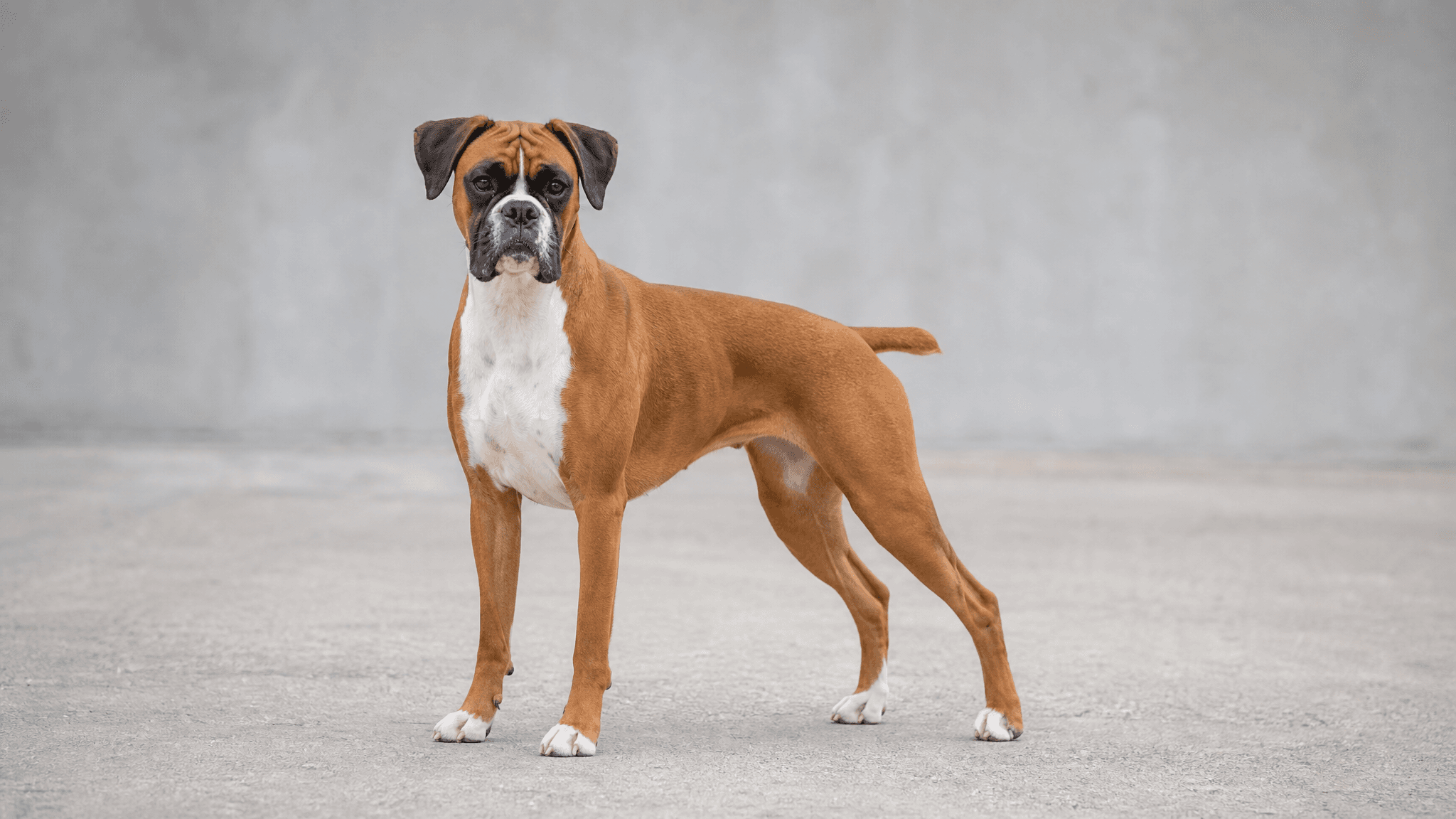
The Boxer was developed in Germany in the late 19th century from the Bullenbeisser (a now-extinct bull and bear hunting dog) and the English Bulldog. Its name may originate from the characteristic way it uses its front paws during play, like a boxer. It is a very popular breed worldwide, appreciated for its exuberant temperament, infectious energy, and absolute loyalty.
Physical Characteristics
- Size
- Medium to large
- Height (male)
- 57–63 cm
- Height (female)
- 53–59 cm
- Weight (male)
- 30–32 kg
- Weight (female)
- 25–27 kg
- Life Expectancy
- 10–12 years
- Coat
- Short, dense, glossy, and close-fitting
- Common Colors
- Fawn (from light yellow to dark red) and brindle, with or without white; white (not accepted by the FCI standard)
Temperament & Personality
The Boxer is famous for its exuberant and youthful personality — many owners describe it as a "dog that never grows up". It is extremely affectionate with its family, especially with children, and has almost limitless energy for play. With strangers, it can be reserved initially, but is rarely aggressive. It is courageous and protective, making it a natural guard without the need for special training.
Activity & Exercise
- Energy Level
- High
- Recommended Daily Exercise
- 90–120 minutes
- Suitable for Apartment
- Possible with intense exercise
Grooming & Care
- Grooming Needs
- Low
- Shedding
- Moderate
- Bathing Frequency
- Every 4–6 weeks
Health
- Common Health Issues
- Brachycephalic syndrome (severe respiratory problems)
- Cancer (mast cell tumors, hemangiosarcoma, lymphoma)
- Cardiomyopathy
- Hip dysplasia
- Subvalvular aortic stenosis
- Recommended Health Tests
- Cardiac examination
- Hip radiography
- Thyroid evaluation
Compatibility
- With Children
- Excellent
- With Other Dogs
- Good
- With Cats
- Moderate
- For First-Time Owners
- Recommended
Is a Boxer right for you?
A Boxer may suit you if:
- You are prepared to provide 90 to 120 minutes of vigorous daily exercise and engaging mental stimulation.
- You enjoy an active lifestyle filled with playful antics and a dog that loves to be the center of attention.
- You appreciate a dog with an endlessly youthful spirit and deep affection for its family, especially children.
- You are committed to consistent, positive training to channel their intelligence and boundless energy effectively.
- You appreciate a low-maintenance coat that needs minimal grooming beyond regular bathing and brushing.
- You are ready for a dog that 'boxes' with its front paws during play and naturally guards its loved ones.
Think twice if:
- You expect instant, unwavering obedience from a breed renowned for its playful, sometimes stubborn, nature.
- You frequently leave your dog alone for long periods, as Boxers thrive on constant companionship and interaction.
- You are unwilling to carefully introduce them to cats, as their prey drive can be a factor.
- You are unable to commit to at least 90 minutes of vigorous exercise daily to keep them happy and healthy.
- You live in a small apartment without easy access to safe, expansive outdoor areas for their intense play.
- You are unprepared for a strong, boisterous adolescent phase that can last longer than with many other breeds.
Boxers bring boundless joy and unwavering loyalty, but their 'dog that never grows up' spirit means a long commitment to active play and consistent guidance. They're not just pets; they're energetic, affectionate family members who thrive on your participation, making the effort truly rewarding for the right home.
Training a Boxer
Training a Boxer is a joyful experience, as these intelligent and affectionate dogs thrive on positive interaction and play. Their exuberant, youthful spirit means they learn best through short, fun, and frequent sessions that feel like a game rather than a chore. Keep things upbeat, use plenty of praise, and reward with their favorite treats or a quick play session. If training becomes repetitive, too long, or relies on harsh corrections, your Boxer's natural enthusiasm can quickly turn into boredom or resistance, leading to a boisterous, uncooperative companion rather than a focused learner. Consistency and patience are key to harnessing their boundless energy.
Begin with:
- Attention and response to name around distractions
- Recall on a long line
- Loose-leash walking
- Leave it and drop it
- Calm greetings without jumping
- Settling on a mat or bed
- Cooperative handling for grooming, ears, feet and teeth
- Waiting at doors and gates
Prey Drive and Focus
Boxers, with their history as hunting dogs and their boundless energy, can be easily distracted by movement or interesting scents. This strong prey drive, combined with their 'never grows up' exuberance, can make focusing on you a challenge, especially in busy environments. To counter this, start training in quiet areas and gradually introduce distractions, always rewarding heavily for attention on you. Use high-value treats and exciting toys to keep their focus.
Invest significant time in teaching a reliable recall, as this is crucial for their safety and your peace of mind. Practice with a long line in a secure area, making coming back to you the most rewarding thing ever. You can find more tips on how to teach a reliable recall in our blog.
Leash Pulling Power
A Boxer's medium to large size and high energy level mean they can exert considerable pulling power on the leash, especially when excited. This isn't just uncomfortable; it can be unsafe for both of you. Start loose-leash training from day one, making sure your Boxer learns that a slack leash means good things happen, like treats or moving forward.
Avoid letting them practice pulling, as this only reinforces the behavior. If they pull, stop walking until the leash loosens, then reward and continue. Consistent, positive reinforcement is key. Consider using a front-clip harness for better control while you're teaching. For more in-depth guidance, check out our article on how to stop a puppy pulling on the leash.
Boredom and Boisterousness
Boxers have a high energy level and require 90-120 minutes of exercise daily. Without sufficient physical activity and mental stimulation, their youthful exuberance can quickly turn into destructive behaviors, excessive barking, or general mischief around the home. Ensure they have plenty of opportunities to run, play, and engage their minds with puzzle toys or training games.
As highly affectionate dogs, Boxers thrive on family interaction and can struggle when left alone for long periods. Gradual desensitization to your absence, providing engaging activities, and ensuring they are well-exercised before you leave can help prevent separation-related stress. If you're concerned, learn about how to tell if your dog is stressed when you leave.
Boxer — Frequently Asked Questions
What is the Boxer?
The Boxer is a magnificent medium to large-sized dog breed, developed in Germany during the late 19th century. They originated from the Bullenbeisser, an extinct bull and bear hunting dog, and the English Bulldog. As a proud member of FCI Group 2 (Mastiff type), Boxers are renowned for their incredibly exuberant and youthful personality, often described as dogs that never truly grow up! Their name might even come from their playful habit of using their front paws, much like a human boxer. They are truly beloved worldwide for their infectious energy and absolute loyalty.
What was the Boxer originally bred for?
The Boxer's ancestors, particularly the Bullenbeisser, were originally bred in Germany for formidable tasks such as hunting bulls and bears. Over time, as their role evolved, Boxers became versatile working dogs. They were valued for their strength, agility, and courage, making them excellent companions for various duties. This rich history of working alongside humans has contributed to their courageous and protective nature, which is still very much a part of their charm today, without needing special training to be a natural guard.
How much exercise does a Boxer need?
Boxers are known for their high energy levels and absolutely thrive on activity! To keep your Boxer happy, healthy, and well-behaved, they need a good amount of exercise every single day. We recommend providing them with approximately 90 to 120 minutes of daily physical activity. This could include brisk walks, energetic play sessions in a secure yard, or even dog sports. Their boundless energy means they love to play, so incorporating fun and engaging activities will keep their minds and bodies stimulated.
Is the Boxer a good family dog?
Absolutely! The Boxer is famous for being an incredibly loving and devoted family dog. They are extremely affectionate with their human family members, and their patience and playful spirit make them especially wonderful with children. Many owners describe them as a "dog that never grows up," which perfectly suits a household with kids who love to play! While they can be reserved initially with strangers, they are rarely aggressive and possess a courageous and protective instinct, making them natural, gentle guardians for your home.
Is the Boxer easy to train?
Boxers are intelligent dogs with a strong desire to please, which generally makes them quite trainable. However, their exuberant and youthful personality, coupled with almost limitless energy, means that consistency and positive reinforcement are key. They respond wonderfully to fun, engaging training methods that tap into their playful nature. Their natural courage and protective instincts mean they can be excellent natural guards without needing specialized training, but early socialization and consistent obedience training will help channel their energy and intelligence into a well-mannered companion.
What health issues are common in the Boxer?
While Boxers are generally robust and healthy dogs, like all breeds, they can be predisposed to certain health conditions. It's always wise to choose a reputable breeder who screens their dogs for genetic conditions, and regular veterinary check-ups are crucial for maintaining your Boxer's well-being. Keeping up with preventative care, providing a balanced diet, and ensuring they get their recommended daily exercise will contribute significantly to their overall health and happiness, helping them live a full and vibrant life.
What is the Boxer's coat like and how much grooming does it need?
While our curated facts don't detail their coat, Boxers are widely known for their sleek, short, and shiny coats. This makes them wonderfully low-maintenance when it comes to grooming! A quick brush once or twice a week is usually all it takes to keep their coat looking its best and to minimize shedding. They truly are wash-and-wear companions, leaving more time for play and cuddles! Their minimal grooming needs are a definite plus for busy families who want a devoted companion without extensive coat care.
What is the typical lifespan of a Boxer?
The typical lifespan for a beloved Boxer is generally between 10 to 12 years. Providing them with excellent nutrition, plenty of exercise (those 90-120 minutes daily!), regular veterinary care, and a whole lot of love can help ensure your Boxer lives a long, happy, and healthy life by your side. They truly become cherished family members, and with proper care, you can enjoy many wonderful years with your playful and loyal companion.
Community
Talk to real Boxer owners
This guide covers the breed on paper. In the app, the Boxer community covers it in real life: photos from other owners, questions answered by people who live with the breed, and a directory of dogs you can browse.
- Photos & pollsSee what Boxer owners are sharing today.
- Questions & answersAsk anything and hear from people who own one.
- Dog directoryBrowse Boxers from around the world.
You join automatically when you add a Boxer to your profile.