Chesapeake Bay Retriever
Summary
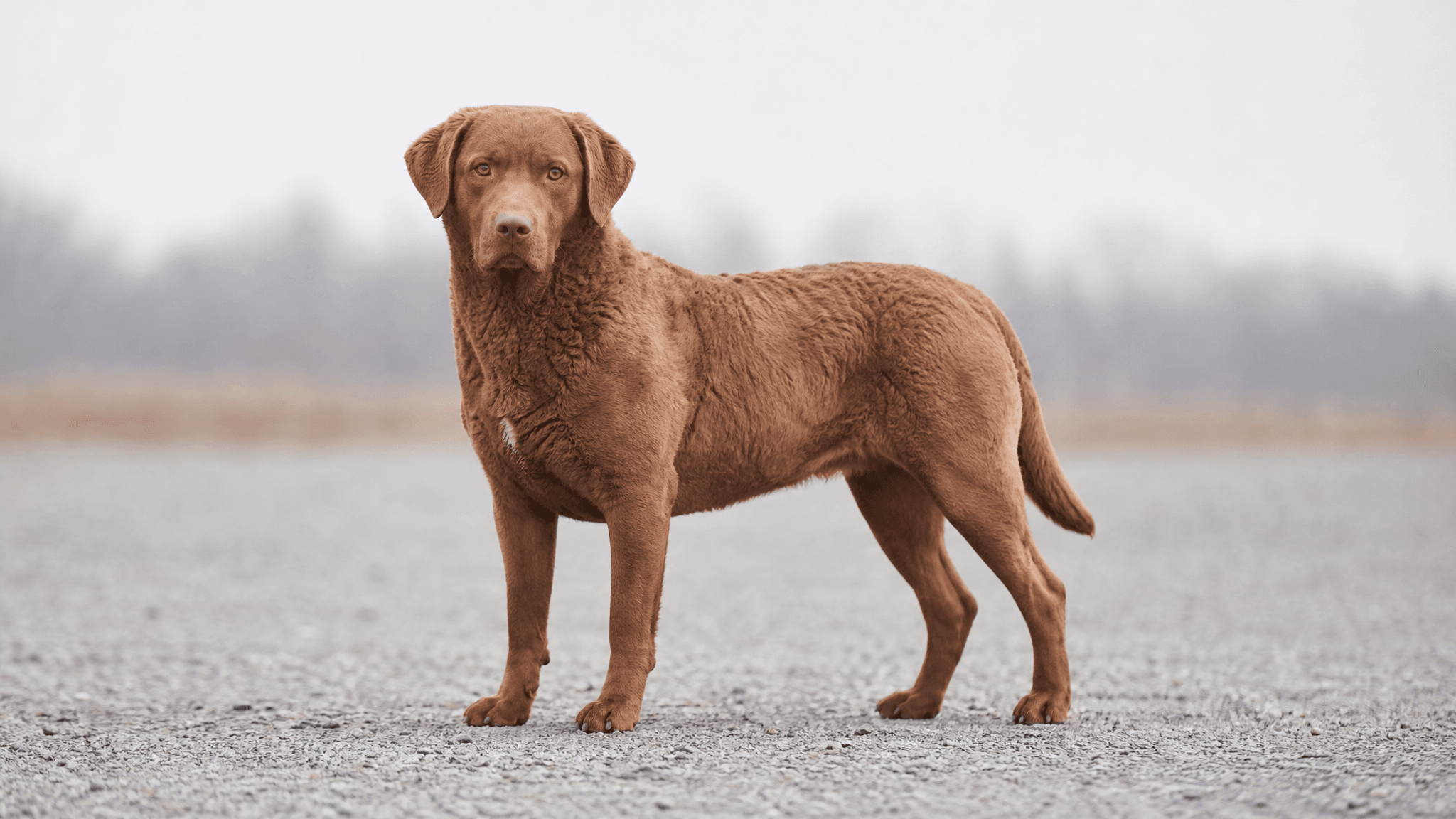
The Chesapeake Bay Retriever, often called "Chessie," is the only retriever breed originating from the USA and the only one that has the distinction of having been developed specifically to work in the freezing waters of Chesapeake Bay, in Maryland, to retrieve waterfowl in extreme cold conditions. It is an extraordinarily robust, determined, and resilient working dog, with a more independent nature than other retrievers.
Physical Characteristics
- Size
- Medium to large
- Height (male)
- 58–66 cm
- Height (female)
- 53–61 cm
- Weight (male)
- 29–36 kg
- Weight (female)
- 25–32 kg
- Life Expectancy
- 10–13 years
- Coat
- Short, dense, slightly wavy, and oily to the touch; woolly undercoat; extremely waterproof
- Common Colors
- All shades of brown (from chocolate to sedge/dry straw), possibly with small white marks
Temperament & Personality
The Chessie is a courageous, loyal, and highly determined dog, but clearly more independent and less easy-going than other retrievers. It is affectionate with its family but reserved and sometimes suspicious with strangers. It is a natural working dog with a strong protective instinct that can be dominant toward other dogs. It requires an experienced, firm, and consistent owner.
Activity & Exercise
- Energy Level
- High
- Recommended Daily Exercise
- 60–90 minutes
- Suitable for Apartment
- Not recommended
Grooming & Care
- Grooming Needs
- Low to moderate
- Shedding
- Moderate
- Bathing Frequency
- Every 6–8 weeks
Health
- Common Health Issues
- Cataracts
- Hip dysplasia
- Progressive retinal atrophy (PRA)
- Regional alopecia
- Von Willebrand disease type 3 (bleeding disorder)
- Recommended Health Tests
- Eye examination
- Genetic test for von Willebrand and PRA
- Hip radiography
Compatibility
- With Children
- Good
- With Other Dogs
- Moderate
- With Cats
- Moderate
- For First-Time Owners
- Not recommended
Is a Chesapeake Bay Retriever right for you?
A Chesapeake Bay Retriever may suit you if:
- You can commit to providing 60 to 90 minutes of vigorous daily exercise and engaging mental challenges.
- You enjoy outdoor adventures, especially those involving water or challenging terrains, and appreciate a robust companion.
- You admire a courageous, loyal, and determined companion who is affectionate with their family and possesses a protective nature.
- You are prepared to invest in consistent, firm, and experienced training to guide an intelligent, independent spirit.
- You are willing to provide low to moderate grooming for their waterproof coat, which sheds moderately and needs bathing every 6-8 weeks.
- You are ready to manage a dog with a natural protective instinct and a reserved demeanor towards new people and situations.
Think twice if:
- You expect an easily biddable dog that will always follow commands without question, as Chessies have an independent streak.
- You have a routine that leaves a dog alone for long periods, as this high-energy breed thrives on companionship and activity.
- You are unprepared to carefully manage introductions and interactions with other dogs or cats, due to their potential for dominance.
- You are unable to consistently provide 60 to 90 minutes of strenuous daily activity or manage moderate shedding.
- You live in an apartment or lack a securely fenced outdoor space for a medium to large, active dog.
- You are a first-time dog owner or uncomfortable with the firm, consistent handling needed for a strong-willed adolescent.
Living with a Chesapeake Bay Retriever means embracing a truly unique and robust companion for 10 to 13 years. While fiercely loyal and affectionate with their family, their independent spirit and protective nature demand an experienced, consistent owner. They aren't for everyone, but for the right person, a Chessie offers an unparalleled bond and an extraordinary partner in life's adventures.
Training a Chesapeake Bay Retriever
Chesapeake Bay Retrievers are incredibly intelligent and determined dogs, motivated by their strong working drive and a desire to please their experienced owner. They learn best through short, engaging, and consistent training sessions that incorporate positive reinforcement, especially with high-value treats or a favorite retrieving toy. Given their independent and sometimes dominant nature, a handler who is inconsistent, lacks firmness, or uses harsh methods will quickly find their Chessie making its own rules. Success comes from clear, fair, and fun training that harnesses their loyalty and sharp mind.
Begin with:
- Attention and response to name around distractions
- Recall on a long line
- Loose-leash walking
- Leave it and drop it
- Calm greetings without jumping
- Settle on a mat or bed
- Cooperative handling for grooming
- Waiting at doors and gates
Recall and prey drive
Chesapeake Bay Retrievers were specifically bred to retrieve waterfowl in challenging conditions, imbuing them with an exceptionally strong prey drive and unwavering determination. This instinct can make off-leash recall particularly challenging, as a fleeting bird or scent might prove an irresistible distraction. Begin recall training in a quiet, controlled environment and gradually introduce more distractions as your Chessie masters the command.
Always use a long line in unfenced areas until your Chessie's recall is absolutely reliable, as their independent streak means they might prioritize an interesting pursuit over your call. Make coming back to you the most rewarding experience possible, using high-value treats, enthusiastic praise, or a quick game with a favorite toy. For more detailed guidance, check out our guide on teaching recall.
Leash pulling and independence
With their medium to large size, males weighing up to 36 kg, and robust, determined temperament, a Chesapeake Bay Retriever can be a powerful puller on the leash. Their independent nature means they won't instinctively defer to your lead, especially if they are highly engaged with their surroundings. Consistent and early training for loose-leash walking is paramount to prevent struggles.
Use positive reinforcement to reward walking calmly by your side. If your Chessie pulls, stop immediately and only resume walking when the leash is slack. A front-clip harness can offer better control during the training phase. Remember, this breed thrives on consistency and clear guidance from an experienced owner. These tips for stopping leash pulling can be very helpful.
Boredom and destructive habits
Chessies possess a high energy level and are natural working dogs, requiring a minimum of 60-90 minutes of vigorous exercise daily. If their physical and mental needs are not adequately met, or if they are left alone for extended periods, their intelligence and determination can manifest as destructive behaviors, excessive barking, or even attempts to escape. This is why they are not recommended for apartment living.
Ensure your Chessie receives consistent daily exercise, engaging training sessions, and plenty of interactive puzzle toys to keep their sharp minds occupied. Provide a variety of appropriate chew toys to redirect any chewing instincts. A tired and stimulated Chessie is a happy and well-behaved companion, preventing them from inventing their own, often undesirable, forms of entertainment.
Chesapeake Bay Retriever — Frequently Asked Questions
What makes the Chesapeake Bay Retriever different from other retrievers?
The Chesapeake Bay Retriever (Chessie) is the most rugged and tenacious of all retriever breeds. Unlike the Golden or Labrador, the Chessie was developed specifically to retrieve waterfowl in the icy, rough waters of Chesapeake Bay — sometimes hundreds of birds in a single day. Their thick, oily, wavy double coat is uniquely water-resistant, their muscular build is heavier than other retrievers, and their temperament is considerably more independent and assertive. They are working dogs first, companions second.
Is the Chesapeake Bay Retriever a good family dog?
Chesapeake Bay Retrievers can be loyal, affectionate family dogs, but they are more selective about who they bond with than Goldens or Labradors. They tend to be devoted to their own family while being reserved or aloof with strangers. They are generally good with children in the family but may not tolerate rough handling from unfamiliar children. Their independent, assertive nature means they need an experienced owner who can provide firm, consistent guidance. They are not the right choice for those wanting a universally friendly retriever.
How much exercise does a Chesapeake Bay Retriever need?
Chesapeake Bay Retrievers need 1.5–2 hours of vigorous exercise daily. They are working dogs with exceptional stamina — leisurely walks will not fulfil them. Swimming (their greatest joy), retrieving, running, hiking, and fieldwork are all excellent outlets. Mental stimulation through training, scent work, and problem-solving is equally important. A Chessie that receives sufficient exercise is calm and manageable at home; one that doesn't will be restless, vocal, and potentially destructive. They are one of the most athletic of all sporting breeds.
Are Chesapeake Bay Retrievers easy to train?
Chesapeake Bay Retrievers are highly intelligent but notably independent and strong-willed. They are considerably more challenging to train than Golden Retrievers or Labradors. They understand what you want but may decide whether to comply based on their own assessment of the situation. They respect strong, calm leadership and consistent boundaries. Positive reinforcement works best; harsh corrections create resistance. Early puppy training, ongoing consistency, and experienced handling make a huge difference in outcomes.
What health issues affect Chesapeake Bay Retrievers?
Chesapeake Bay Retrievers have some important breed health concerns. Hip dysplasia is well-documented — OFA certification of parents is strongly recommended. Progressive Retinal Atrophy (PRA) can cause vision loss — DNA testing is available. Exercise-Induced Collapse (EIC) — a condition causing weakness after intense exercise — is seen in the breed. Degenerative Myelopathy (a progressive neurological condition) occurs. Hypothyroidism and von Willebrand's Disease are also noted. Health-tested breeders are essential.
Do Chesapeake Bay Retrievers love water?
Chesapeake Bay Retrievers have an extraordinary affinity for water — it is one of their most defining characteristics. Their unique wavy, oily double coat repels water far more effectively than any other retriever's coat. Their webbed feet make them powerful swimmers. Most Chessies will enthusiastically enter any body of water, even in cold temperatures. Swimming is the ideal primary exercise for this breed. If you have access to a lake, river, or beach, your Chessie will consider it paradise and develop a deep daily attachment to their swimming spot.
How long do Chesapeake Bay Retrievers live?
Chesapeake Bay Retrievers have an average lifespan of 10–12 years. Their robust constitution contributes to their longevity. Key factors for a long healthy life include regular vigorous exercise (they must stay active to stay healthy), maintaining a lean body weight, annual vet check-ups including hip and eye assessments, DNA testing for PRA and EIC in breeding lines, and dental care. Dogs from health-tested breeding lines tend to live healthy lives toward the upper end of the range.
Are Chesapeake Bay Retrievers good with other dogs?
Chesapeake Bay Retrievers can be dominant and selective with other dogs. They can be dog-aggressive, particularly same-sex, and do not naturally defer to other dogs the way Labs or Goldens might. Well-socialised Chessies raised with other dogs from puppyhood usually coexist peacefully. Introductions to unfamiliar dogs should always be carefully managed in a neutral space. They often prefer to be the only dog in the household. Their strong personality means they can clash with other assertive or dominant breeds.
Community
Talk to real Chesapeake Bay Retriever owners
This guide covers the breed on paper. In the app, the Chesapeake Bay Retriever community covers it in real life: photos from other owners, questions answered by people who live with the breed, and a directory of dogs you can browse.
- Photos & pollsSee what Chesapeake Bay Retriever owners are sharing today.
- Questions & answersAsk anything and hear from people who own one.
- Dog directoryBrowse Chesapeake Bay Retrievers from around the world.
You join automatically when you add a Chesapeake Bay Retriever to your profile.