American Staffordshire Terrier
Summary
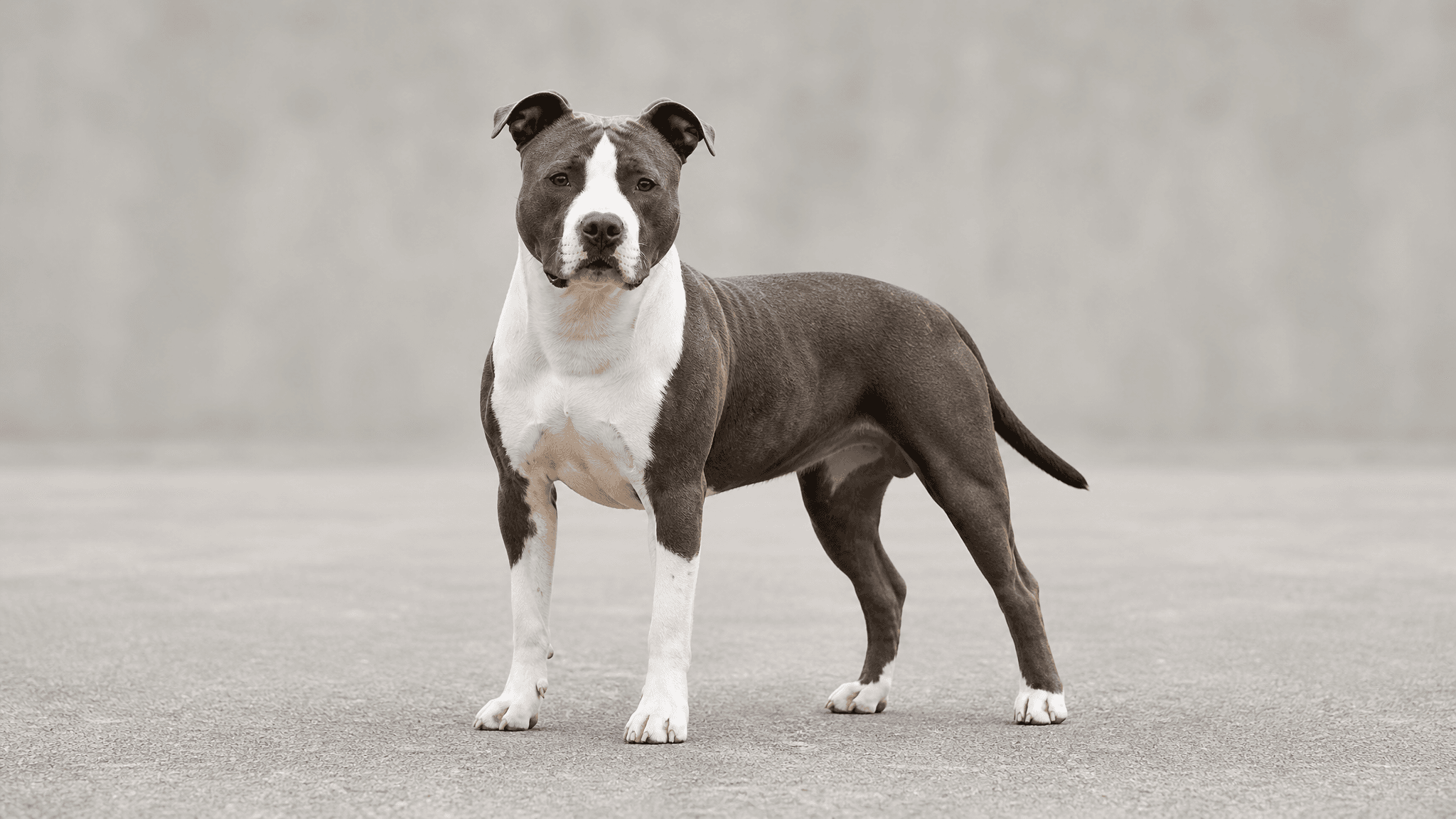
The American Staffordshire Terrier, popularly known as AmStaff, originated from the same ancestors as the English Staffordshire Bull Terrier but developed independently in the United States after the mid-19th century. Selected to be larger, more muscular, and more imposing than the British Staffie, it is today recognized by the FCI as a separate breed. Despite the media controversy that sometimes surrounds "bull type" breeds, the well-bred and socialized AmStaff is a docile, confident dog that is very attached to the family.
Physical Characteristics
- Size
- Medium to large
- Height (male)
- 46–48 cm
- Height (female)
- 43–46 cm
- Weight (male)
- 25–35 kg
- Weight (female)
- 20–30 kg
- Life Expectancy
- 12–16 years
- Coat
- short, dense, hard to the touch, and lying very close
- Common Colors
- all colors accepted; solid, particolor, or brindle; more than 80% white, black-and-tan, and liver not preferred
Temperament & Personality
The AmStaff is described by the AKC as "intelligent, confident, and a good companion." It is very loyal, courageous, and affectionate with the family. Sociable with people it knows, it can be reserved or dominant with same-sex dogs. Its character requires early, firm, and consistent training, and extensive socialization. It is an excellent companion dog for experienced owners with an active lifestyle.
Activity & Exercise
- Energy Level
- High
- Recommended Daily Exercise
- 60–90 minutes
- Suitable for Apartment
- Not recommended
Grooming & Care
- Grooming Needs
- Low
- Shedding
- Moderate
- Bathing Frequency
- Every 4–6 weeks
Health
- Common Health Issues
- Cerebellar ataxia
- Elbow dysplasia
- Hip dysplasia
- Hypothyroidism
- Progressive retinal atrophy (PRA)
- Skin and food allergies
- Recommended Health Tests
- Ataxia genetic test
- Eye examination
- Hip and elbow X-ray (OFA)
- Thyroid test
Compatibility
- With Children
- Good
- With Other Dogs
- Can be difficult
- With Cats
- Can be difficult
- For First-Time Owners
- Not recommended
Is an American Staffordshire Terrier right for you?
An American Staffordshire Terrier may suit you if:
- You are prepared to provide 60 to 90 minutes of vigorous daily exercise and engaging mental challenges.
- You enjoy an active lifestyle and want a courageous, loyal companion for your adventures.
- You appreciate an intelligent, confident, and affectionate dog that thrives on being part of the family.
- You are committed to providing early, firm, and consistent training along with extensive socialization.
- You are comfortable with a low-maintenance grooming routine, including bathing every 4 to 6 weeks.
- You are prepared to manage a dog that can be reserved or dominant with other same-sex dogs.
Think twice if:
- You expect a dog that is always biddable and easily trained without significant effort and experience.
- You have a quiet household routine or expect your dog to be left alone for long periods daily.
- You already have other dogs or cats and are unwilling to manage potential difficulties in multi-pet households.
- You are unable to commit to 60 to 90 minutes of daily vigorous exercise for a high-energy dog.
- You live in an apartment and cannot provide ample outdoor space or daily structured activities.
- You are not prepared for the physical and mental demands of consistently guiding a strong, confident, medium-to-large breed.
Bringing an AmStaff into your life is a deeply rewarding commitment, offering unparalleled loyalty and affection. While their confident spirit and high energy require dedicated training and an active lifestyle, the bond you forge with this intelligent companion is truly special. They thrive with experienced owners who understand their unique needs, blossoming into a loving, devoted family member.
Training an American Staffordshire Terrier
Your American Staffordshire Terrier is a truly intelligent and confident companion, eager to please their family. They thrive on positive reinforcement, praise, and engaging play, making training a rewarding experience for both of you. Keep training sessions short, fun, and consistent to match their high energy and maintain their focus. Inconsistent or unclear guidance, however, can lead to confusion and potentially dominant behaviors, especially with other dogs, so a firm yet gentle approach from day one is essential for shaping a well-mannered and sociable AmStaff.
Begin with:
- Attention and name response
- Recall on a long line
- Loose-leash walking
- Leave it and drop it
- Calm greetings without jumping
- Settling on a mat
- Cooperative handling
- Waiting at doors and gates
Prey Drive and Focus
American Staffordshire Terriers, with their terrier heritage, can possess a strong prey drive, making squirrels, cats, or even fast-moving objects incredibly tempting distractions. This can easily derail your carefully planned training, especially recall, if not addressed early and consistently. Your goal is to make yourself more interesting and rewarding than any potential distraction.
Start by building a rock-solid 'look at me' command in low-distraction environments, gradually increasing the challenge. Use high-value treats and enthusiastic praise when your AmStaff chooses to focus on you. For recall, practice on a long line in secure areas, rewarding heavily for returning. Remember, consistency is key to managing this instinct, and early, extensive socialization helps them learn appropriate responses to different stimuli.
Managing Leash Strength
Given their medium-to-large size and considerable strength (males 25-35 kg, females 20-30 kg), an AmStaff who pulls on the leash can quickly make walks unpleasant or even dangerous. Their high energy means they'll want to explore, and without proper training, that exploration often translates into dragging you along. Early intervention is crucial to establish good leash manners.
Start teaching loose-leash walking from puppyhood, making sure your AmStaff understands that a slack leash means progress. Use positive reinforcement to reward walking calmly by your side. Consider a front-clip harness for better control, as it redirects their pulling power. Consistency across all family members is vital; everyone should use the same commands and expectations for walking. For more tips, check out our guide on how to stop a puppy pulling on the leash.
Unmet Energy Needs
American Staffordshire Terriers have a high energy level and require a significant amount of exercise, typically 60-90 minutes per day. When their physical and mental needs aren't met, an intelligent and confident AmStaff can quickly become bored, leading to undesirable behaviors like excessive barking, chewing furniture, or digging. They're not being 'naughty,' just finding their own ways to release pent-up energy.
Ensure your AmStaff gets their recommended daily exercise through varied activities like brisk walks, runs, or play sessions. Incorporate mental stimulation with puzzle toys, scent work, and regular training sessions to keep their minds engaged. Our training feature can help you build a consistent routine. A tired AmStaff is a happy and well-behaved AmStaff, making for a harmonious home.
American Staffordshire Terrier — Frequently Asked Questions
Is the American Staffordshire Terrier a dangerous dog?
The American Staffordshire Terrier is not inherently dangerous. Like any breed, temperament is the result of genetics, breeding, socialisation, training, and management. Well-bred, properly socialised AmStaffs are known to be loving, loyal, and gentle with their family. The breed has historically excelled as a family companion. However, their muscular build and strength mean responsible ownership — including proper containment, leash manners, and socialisation — is especially important. Breed-specific legislation (BSL) affects AmStaffs in some regions, so it's important to check local regulations before getting one.
Are American Staffordshire Terriers good family dogs?
American Staffordshire Terriers can be wonderful family dogs. They are affectionate, playful, and deeply devoted to their family — historically nicknamed the 'nanny dog' for their gentle tolerance of children. They tend to be goofy and fun-loving at home and form very strong bonds with their people. Their high energy and strength means interactions with very young children should always be supervised. They require an experienced owner who can provide consistent guidance, proper socialisation, and adequate exercise. In the right household, the AmStaff is one of the most loyal and loving companions available.
How much exercise does an American Staffordshire Terrier need?
American Staffordshire Terriers are high-energy dogs that need at least 60–90 minutes of vigorous exercise daily. They are athletic, powerful dogs that thrive on running, playing fetch, agility, weight pulling, and tug games. Mental stimulation through training is equally important — an AmStaff that is both physically and mentally challenged is a calm, manageable companion at home. Without sufficient exercise, they can become frustrated and destructive. They make excellent jogging or cycling companions. A securely fenced yard is ideal for safe off-leash activity given their strength and prey drive.
Are American Staffordshire Terriers good with other dogs?
American Staffordshire Terriers can be dog-selective or dog-aggressive, particularly with same-sex dogs. Their terrier heritage and historical fighting background means not all AmStaffs will comfortably share their home or space with other dogs. Well-socialised AmStaffs raised alongside other dogs from puppyhood often coexist well. Introductions should always be done carefully and on neutral ground. Their strength means that if a fight does occur, it can be serious — proactive management and a solid recall or interruption training are important safety measures for AmStaff owners.
Are American Staffordshire Terriers easy to train?
American Staffordshire Terriers are highly intelligent and very responsive to training when properly motivated. They are food- and praise-motivated, quick to learn, and genuinely enjoy structured training sessions. They respond best to positive reinforcement and consistent, fair leadership. Their strength and confidence mean loose boundaries will be tested. Early puppy training and ongoing obedience are strongly recommended. They excel at obedience, agility, weight pulling, nose work, and trickwork. Many AmStaffs thrive in structured dog sports, which provides both mental stimulation and a healthy outlet for their energy.
What health issues affect American Staffordshire Terriers?
American Staffordshire Terriers are generally a robust, healthy breed but have some documented concerns. Hip dysplasia occurs — OFA screening of parents is recommended. Skin allergies and skin conditions (including demodectic mange in some lines) are relatively common. Hypothyroidism affects some individuals. Heart conditions, including congenital heart disease, have been documented. Cerebellar ataxia, a neurological condition affecting movement, has been found in the breed via DNA testing. Knee issues (luxating patella) can occur. Regular vet monitoring and reputable breeders reduce risks significantly.
How long do American Staffordshire Terriers live?
American Staffordshire Terriers have an average lifespan of 12–16 years, which is excellent for a medium-large breed. Their robust, athletic constitution contributes to their longevity. Key factors include regular vigorous exercise, maintaining a healthy lean weight, skin and allergy management, dental care (keeping teeth clean), annual vet check-ups including cardiac and orthopaedic monitoring, and sourcing from responsible, health-tested breeding lines. Spaying and neutering at appropriate ages also contributes to long-term health outcomes.
What is the difference between an American Staffordshire Terrier and a Pit Bull?
This is one of the most common questions about the breed. The American Staffordshire Terrier (AmStaff) is a formally recognised pedigree breed with a documented breed standard, registered with kennel clubs (AKC, FCI). The term 'Pit Bull' is informal and often used loosely to describe a range of muscular, broad-headed dogs, including AmStaffs, American Pit Bull Terriers, and various mixes. The American Pit Bull Terrier (APBT) is a separate breed registered with the United Kennel Club (UKC). AmStaffs tend to be slightly heavier and stockier. The two breeds share common ancestry but have developed on slightly different lines over the decades.
Community
Talk to real American Staffordshire Terrier owners
This guide covers the breed on paper. In the app, the American Staffordshire Terrier community covers it in real life: photos from other owners, questions answered by people who live with the breed, and a directory of dogs you can browse.
- Photos & pollsSee what American Staffordshire Terrier owners are sharing today.
- Questions & answersAsk anything and hear from people who own one.
- Dog directoryBrowse American Staffordshire Terriers from around the world.
You join automatically when you add a American Staffordshire Terrier to your profile.