Bloodhound
Summary
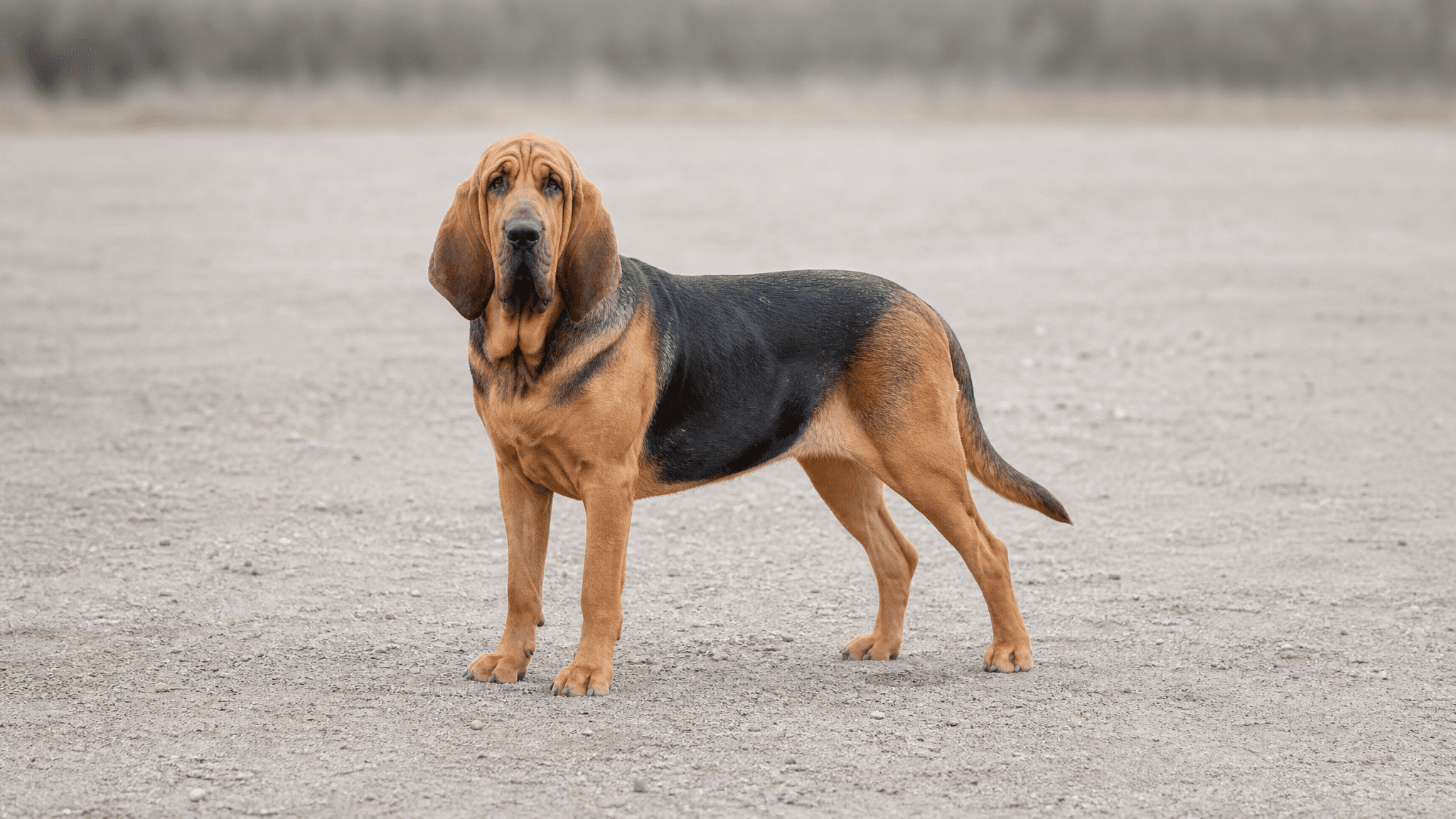
The Bloodhound, also known as the St. Hubert Hound, is considered the best scent tracker in the canine world. With origins in Belgian monasteries of the 7th century, where the monks of Saint-Hubert carefully selected these dogs to present to kings and nobles, the Bloodhound has a nose so precise that its trails are accepted as evidence in American courts. It is an imposing dog, with abundant skin, long ears, and an unmistakable melancholic gaze.
Physical Characteristics
- Size
- Large
- Height (male)
- 64–72 cm
- Height (female)
- 58–66 cm
- Weight (male)
- 46–54 kg
- Weight (female)
- 40–48 kg
- Life Expectancy
- 10–12 years
- Coat
- Short, dense, and weather-resistant
- Common Colors
- Black and tan, liver and tan, red (without white markings)
Temperament & Personality
The Bloodhound is a gentle, affectionate, and extremely patient dog — especially tolerant with children. Despite its intimidating appearance, it is a docile and friendly dog that rarely shows aggression. However, when on a trail, it becomes completely unstoppable, ignoring any command from its owner. Its deep and cavernous voice is one of the most impressive in the canine world.
Activity & Exercise
- Energy Level
- Moderate to high
- Recommended Daily Exercise
- 60–90 minutes
- Suitable for Apartment
- Not recommended
Grooming & Care
- Grooming Needs
- Moderate
- Shedding
- Moderate
- Bathing Frequency
- Every 4 weeks
Health
- Common Health Issues
- Chronic otitis
- Ectropion (eyelid)
- Gastric torsion
- Hip and elbow dysplasia
- Skin problems in folds
- Recommended Health Tests
- Eye examination
- Hip and elbow dysplasia evaluation
Compatibility
- With Children
- Excellent
- With Other Dogs
- Excellent
- With Cats
- Moderate
- For First-Time Owners
- Not recommended
Is a Bloodhound right for you?
A Bloodhound may suit you if:
- You are prepared to provide daily exercise for 60 to 90 minutes and engage their powerful nose.
- You enjoy dedicating time to scent work or tracking activities that fulfill their natural instincts.
- You appreciate a gentle, affectionate, and extremely patient companion, especially tolerant with children.
- You are committed to consistent, patient training, understanding their independent, scent-driven nature.
- You are prepared for moderate grooming needs, including regular bathing every four weeks.
- You are willing to manage their strong scent drive and impressive, deep, cavernous vocalizations.
Think twice if:
- You expect unwavering obedience, especially when they are focused on an irresistible scent trail.
- You frequently leave your dog alone for long periods, as these affectionate dogs thrive on companionship.
- You are unwilling to carefully introduce and supervise them around cats, despite their generally friendly nature.
- You are unable to commit to their daily exercise requirements or their moderate grooming schedule.
- You live in an apartment or cannot provide a securely fenced outdoor space for a large, energetic dog.
- You are a first-time dog owner seeking a breed known for being easy to train and biddable.
Living with a Bloodhound is a unique journey that balances their gentle, loving nature with their profound instinct to follow a scent. While they offer unparalleled companionship and patience, especially with families, their independent spirit and powerful nose demand consistent management and a dedicated owner. Embracing their true essence means celebrating their quirks and providing the environment where their incredible abilities can truly shine.
Training a Bloodhound
Training a Bloodhound is a rewarding journey that requires patience, consistency, and a deep understanding of their unique motivations. These gentle giants learn best through positive reinforcement, especially when treats and praise are paired with their ultimate reward: following a captivating scent. Keep training sessions short, fun, and engaging, ideally lasting 5-10 minutes to maintain their focus. If a handler becomes frustrated or uses harsh methods, a Bloodhound may become stubborn, shut down, or simply follow their incredible nose elsewhere, making progress much harder. Remember, their primary drive is scent, so harness it wisely!
Begin with:
- Attention and response to name around distractions
- Recall on a long line
- Loose-leash walking
- Leave it and drop it
- Calm greetings without jumping
- Settling on a mat or bed
- Cooperative handling for grooming, ears, feet and teeth
- Waiting at doors and gates
Scent drive and recall
Your Bloodhound's nose is legendary, and when they're on a trail, they can become completely deaf to your commands. This powerful instinct, while amazing, means recall is a critical skill to master. Start recall training in a quiet, enclosed area, making yourself the most exciting thing around. Use high-value treats and enthusiastic praise when they return, gradually introducing mild distractions. As they progress, practice on a long line in varied environments, always ensuring their safety. Remember, consistency is key to building a reliable recall, even against the allure of a captivating scent. For more detailed steps, check out this guide on teaching a reliable recall.
Never punish your Bloodhound for coming to you, even if it took them a while. Always make their return a positive experience to reinforce the behaviour. Management is also crucial; until their recall is rock-solid, always keep them on a leash or a long line in unfenced areas to prevent them from following a captivating scent into danger.
Leash manners
Given their large size and weight (males 46-54 kg, females 40-48 kg), a Bloodhound pulling on the leash can be a real challenge for even the strongest owner. Early and consistent loose-leash training is vital to ensure enjoyable walks for both of you. Use a comfortable, well-fitting harness that discourages pulling, and reward your Bloodhound for walking calmly by your side. Avoid letting them practice pulling, as this only reinforces the behaviour. If your Bloodhound starts to pull, stop walking until the leash slackens, then continue. This teaches them that pulling gets them nowhere. For a comprehensive approach, explore this force-free plan to stop leash pulling.
Incorporating scent games into your walks can also help. Allowing your Bloodhound short bursts of sniffing time can satisfy their natural instincts, making them more amenable to walking politely the rest of the time. Consistency and patience are your best friends here. You can also find more guidance in our top dog walking tips.
Boredom and barking
Bloodhounds have a moderate to high energy level and require 60-90 minutes of exercise daily, along with plenty of mental stimulation. If under-exercised, under-stimulated, or left alone for extended periods, they can become bored and express their frustration through their impressive, deep, and cavernous voice. This breed is not recommended for apartment living, as they need space and activity.
Ensure your Bloodhound gets their daily walks and engage them with scent work games, puzzle toys, and interactive play. A tired Bloodhound is a happy, quiet Bloodhound. Providing them with appropriate outlets for their intelligence and energy will help prevent unwanted barking and destructive behaviours. Consider rotating toys to keep things fresh and engaging for their keen minds.
Bloodhound — Frequently Asked Questions
What is the Bloodhound?
The Bloodhound — known in French as the Chien de Saint Hubert — is one of the oldest and most historically significant scent hound breeds in the world. It has been refined for over a thousand years, originally bred by monks at the Monastery of Saint Hubert in the Ardennes, Belgium, to produce the finest possible trailing hound. It holds the remarkable distinction of being the only animal whose evidence of tracking has been admitted in a court of law in the United States. No other dog in history has matched its nose — with 300 million scent receptors (compared to a human's 5 million), it can follow a trail that is several days old and over 200 kilometres long.
What is the Bloodhound's temperament like?
The Bloodhound has one of the gentlest, most affectionate temperaments of any large breed. Despite its imposing size and formidable reputation as a tracker, it is sensitive, patient, and people-loving. It is never aggressive and is famously tolerant — particularly with children. At home it is calm and affectionate, forming deep bonds with its family. However, once it is on a scent trail, its entire personality focuses on the track — it becomes oblivious to everything else, including commands and its owner. This combination of extreme gentleness at home and extreme single-mindedness on a trail is one of the Bloodhound's most distinctive characteristics.
Is the Bloodhound a good family dog?
The Bloodhound is a wonderful family dog in the right environment — gentle, affectionate, and famously patient with children. Its sheer size (males can reach 50–55 kg) means young toddlers need supervision — not because of aggression but because it can knock them over accidentally. It gets along very well with other dogs due to its pack-working heritage. Cats and small animals need careful introduction due to its hunting instinct. Its needs — large space, high daily exercise, significant drool management (it drools a lot), and regular ear care — mean it is best suited to active, patient families in rural or suburban settings with plenty of outdoor space.
How much exercise does a Bloodhound need?
The Bloodhound needs substantial daily exercise — at least 1.5–2 hours of vigorous activity per day. Despite its relaxed demeanour at home, it was bred for endurance tracking over long distances and has real stamina. Long walks, hikes, and safe off-lead running in large, securely fenced areas are ideal. It should never be off-lead in unenclosed areas — once it picks up an interesting scent, it will follow it single-mindedly and can travel very long distances before it realises it has lost its way. Scent tracking games, trailing exercises, and nose work are excellent mental outlets that satisfy its most fundamental instinct.
What are the grooming needs of a Bloodhound?
The Bloodhound has a short, dense coat that requires minimal brushing — once or twice a week with a rubber grooming mitt or bristle brush keeps it in good condition. However, the Bloodhound has some unique grooming requirements beyond coat care. Its long, pendulous ears fold over the ear canal and create a warm, moist environment ideal for infections — weekly cleaning is absolutely essential. Its deep facial wrinkles and skin folds (particularly around the neck and face) must be cleaned and dried regularly to prevent skin fold dermatitis. It also drools significantly — having dry cloths available is a practical necessity for Bloodhound owners. Nail trimming and dental care complete the routine.
What health issues are common in the Bloodhound?
The Bloodhound is prone to several significant health issues. Bloat (gastric dilatation-volvulus) is the most serious risk — as a large, deep-chested breed, it is particularly susceptible. Feeding two smaller meals, using a slow-feeder bowl, and restricting vigorous exercise for an hour after eating are essential preventive measures. Ear infections are very common due to the design of the ears. Hip and elbow dysplasia occur at moderate rates. Skin fold dermatitis requires regular cleaning of facial wrinkles. Eye conditions including ectropion and entropion are common. Cancer rates are higher than average in the breed. Despite these challenges, good veterinary care and proactive management significantly extend a Bloodhound's healthy years.
What is the typical lifespan of a Bloodhound?
The Bloodhound typically lives between 10 and 12 years — shorter than smaller breeds but reasonable for a very large dog breed. Their significant health risks (particularly bloat and cancer) are the primary factors that limit their lifespan. The best approaches to maximising longevity are: feeding practices that reduce bloat risk (two meals, slow feeder, no exercise directly after eating), maintaining a lean body weight, keeping ears clean and wrinkles dry, regular cancer screening from middle age, proactive orthopaedic monitoring, and scheduled veterinary check-ups. Despite having a shorter life than smaller breeds, Bloodhounds pack enormous warmth, intelligence, and personality into every year of their lives.
Is the Bloodhound easy to train?
The Bloodhound is intelligent but presents a particular training challenge: once it locks onto a scent, nothing else exists. Commands, rewards, and even the owner cease to register. This extreme single-mindedness on a trail makes recall the most difficult and most important skill to build — a Bloodhound should never be off-lead in an unfenced area. That said, at home and away from active scents, it is amenable, gentle, and responds well to positive reinforcement. Its sensitivity means harsh corrections are counterproductive. It can learn basic obedience and manners with patient, reward-based training. Nose work, tracking trials, and trailing exercises give it a productive, joyful outlet for its most powerful instinct and are highly recommended for all Bloodhound owners.
Community
Talk to real Bloodhound owners
This guide covers the breed on paper. In the app, the Bloodhound community covers it in real life: photos from other owners, questions answered by people who live with the breed, and a directory of dogs you can browse.
- Photos & pollsSee what Bloodhound owners are sharing today.
- Questions & answersAsk anything and hear from people who own one.
- Dog directoryBrowse Bloodhounds from around the world.
You join automatically when you add a Bloodhound to your profile.