Bouvier Des Flandres
Summary
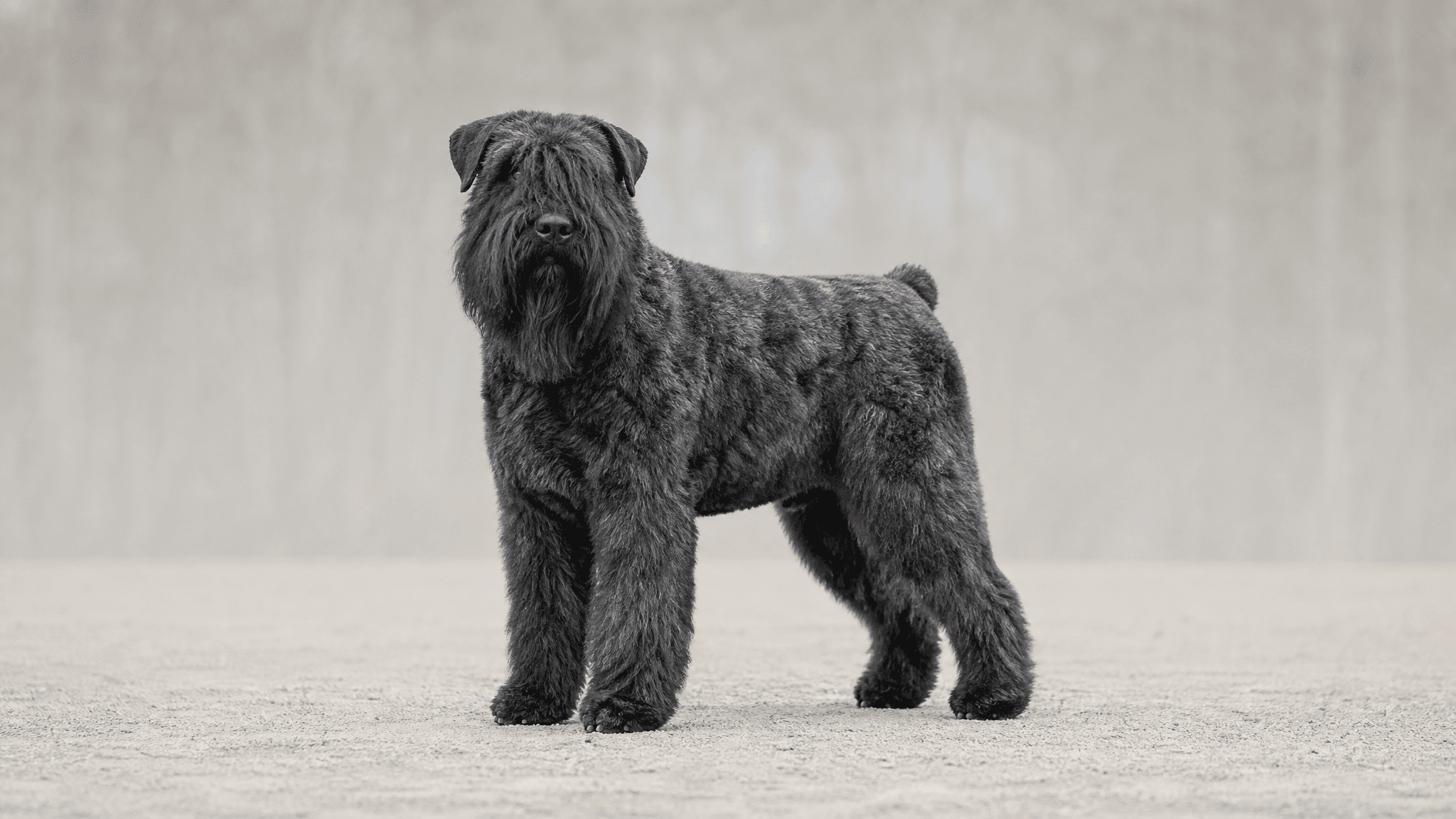
The Bouvier des Flandres is the most famous and imposing of the Belgian cattledogs, originating from the fertile plains of Flanders in northern Belgium and northern France. It worked as an all-around farm dog on Flemish farms — driving cattle, pulling milk carts, performing guarding and assistance duties. Today it is widely used as a police, military, search and rescue dog, and excellent family dog. It earned military honors in both World Wars.
Physical Characteristics
- Size
- Large
- Height (male)
- 62–70 cm
- Height (female)
- 59–65 cm
- Weight (male)
- 35–54 kg
- Weight (female)
- 27–38 kg
- Life Expectancy
- 10–12 years
- Coat
- Rough, harsh, dense, medium length; with very well-developed beard and mustache; soft, dense undercoat
- Common Colors
- Fawn to black, through brindle; grey salt and pepper; grey brindle
Temperament & Personality
The Bouvier des Flandres is a dog of balanced and noble temperament — courageous, determined and extremely intelligent. It is a born worker that equally excels as a family dog, with deep devotion to its group. It can be dominant and needs an owner who clearly establishes leadership. With family children it is protective and affectionate; with strangers it maintains the necessary distance.
Activity & Exercise
- Energy Level
- High
- Suitable for Apartment
- Not recommended
Grooming & Care
- Grooming Needs
- High
- Shedding
- Moderate
- Bathing Frequency
- Every 4–6 weeks
Health
- Common Health Issues
- Cataracts
- Degenerative myopathy (breed-specific)
- Exercise-induced collapse
- Gastric torsion
- Glaucoma
- Hip and elbow dysplasia
- Laryngeal paralysis
- Subaortic stenosis (heart condition)
- Recommended Health Tests
- Cardiac and ophthalmological examination
- Genetic test for myopathy
- PennHIP evaluation
Compatibility
- With Children
- Good
- With Other Dogs
- Moderate
- With Cats
- Moderate
- For First-Time Owners
- Not recommended
Is a Bouvier des Flandres right for you?
A Bouvier des Flandres may suit you if:
- You are prepared to provide daily vigorous exercise and engaging mental challenges for a highly intelligent working dog.
- You enjoy an active lifestyle that includes training, outdoor adventures, or even dog sports where your companion can excel.
- You appreciate a courageous, determined, and deeply devoted companion who is protective of their family.
- You are committed to consistent, firm, and positive training to establish clear leadership for your intelligent Bouvier.
- You are willing to dedicate significant time to regular grooming, including brushing their dense coat and maintaining their distinctive beard and mustache.
- You can confidently manage a large, powerful dog with natural guarding instincts and a tendency towards dominance.
Think twice if:
- You expect a dog that is always eager to please and instantly obedient, as Bouviers can be independent and dominant.
- You have a household where your dog will frequently be left alone for long periods, as this breed thrives on companionship.
- You are unwilling to manage interactions carefully if you have other dogs or cats, due to their moderate compatibility.
- You are not prepared for daily vigorous exercise and a high grooming commitment, including regular brushing and bathing every 4-6 weeks.
- You live in an apartment or do not have a securely fenced outdoor space suitable for a large, active dog.
- You are not confident in handling a strong, large-sized dog through its adolescent phase, which requires consistent guidance.
Bringing a Bouvier des Flandres into your life is a significant commitment, offering immense rewards for those prepared to meet their needs. They are magnificent, intelligent companions who will devote themselves deeply to their family. While their protective nature and working drive require consistent guidance and ample activity, the bond you forge with this courageous and noble dog will be truly exceptional.
Training a Bouvier des Flandres
Training a Bouvier des Flandres is a rewarding journey with a highly intelligent and determined partner. These noble working dogs thrive on purpose and clear, consistent guidance from a confident leader. They are deeply devoted to their family, making positive reinforcement with praise, play, and tasty rewards incredibly effective. Keep training sessions short, fun, and engaging to match their sharp minds, avoiding repetitive drills that can lead to boredom. Inconsistent expectations or a lack of clear direction will quickly lead to a dominant Bouvier making their own rules, so establish leadership kindly but firmly from day one.
Begin with:
- Attention and response to name around distractions
- Recall on a long line
- Loose-leash walking
- Leave it and drop it
- Calm greetings without jumping
- Settling on a mat or bed
- Cooperative handling for grooming, ears, feet and teeth
- Waiting at doors and gates
Channeling Working Drive
Your Bouvier des Flandres is a born worker with high energy and a deep-seated drive to have a job. Without appropriate outlets, this powerful instinct can manifest as unwanted herding of children or other pets, or even excessive guarding behaviors. To prevent this, channel their intelligence and determination into structured activities.
Engage them in dog sports like agility, obedience, or tracking, which utilize their natural talents and physical prowess. Regular, vigorous exercise is crucial, but mental stimulation is equally important. Puzzle toys, scent work, and advanced obedience training will keep their minds engaged and prevent boredom-related issues.
Managing Their Strength
A Bouvier des Flandres is a large and powerful dog, with males weighing up to 54 kg. Their sheer strength can make walks a challenge if they haven't learned proper leash manners from a young age. Allowing them to pull can quickly become a safety issue for both of you, especially given their high energy.
Start loose-leash training early and be absolutely consistent. Use a front-clip harness or a head halter for better control, and practice in low-distraction environments before gradually increasing complexity. Remember, consistency and clear communication are key to teaching your strong Bouvier to walk politely by your side. You can find more tips on stopping leash pulling here.
Preventing Problem Behaviors
Bouviers are high-energy dogs that require significant physical and mental exercise daily. If under-exercised, under-stimulated, or left alone for extended periods, they can become bored and destructive. This might manifest as excessive barking, chewing furniture, or digging, which are all signs of an unfulfilled dog.
Ensure your Bouvier receives at least two vigorous walks or play sessions daily, totaling ample exercise. Incorporate training sessions, puzzle toys, and interactive games to keep their intelligent minds active. For insights into canine stress when left alone, you might want to read this article. Providing a consistent routine and plenty of engagement will help prevent these undesirable behaviors and foster a happy, well-adjusted companion.
Bouvier Des Flandres — Frequently Asked Questions
What is the Bouvier des Flandres?
The Bouvier des Flandres (literally 'Cow herder of Flanders') is a large, powerful, and versatile working dog from Belgium, originally used as a general farm dog — cattle droving, cart pulling, and farm guarding. During World War I they served as messenger dogs and ambulance dogs; in the modern era they are used by police, military, and search and rescue units worldwide. They are a robust, thick-coated, compact breed with a distinctive bearded face. In character they are bold, loyal, highly intelligent, and intensely devoted to their family, combining working dog capability with deep family attachment.
Is the Bouvier des Flandres a good family dog?
In the right hands, the Bouvier des Flandres is a superb family dog. They are deeply loyal, protective, and affectionate with their family — known for forming particularly strong bonds with children they are raised with. However, they are not for everyone: they are a large, high-drive working breed that needs experienced, confident owners who will provide consistent training, significant daily exercise, and mental stimulation. An under-exercised, under-trained Bouvier becomes restless and potentially difficult to manage. For active, experienced owners who commit to the breed's needs, they are among the most rewarding canine companions available.
How much exercise does a Bouvier des Flandres need?
Bouvier des Flandres need 2+ hours of vigorous daily exercise. They are a powerful, athletic working breed built for endurance — originally working cattle over long distances all day. Without sufficient exercise and mental stimulation they become bored, restless, and can develop destructive or reactive behaviours. They thrive with running, hiking, cycling, agility, protection sports (Schutzhund/IPO), herding, tracking, and structured play. A large, securely fenced garden is a strong advantage. They are emphatically not suitable for apartment living or owners who cannot provide significant daily physical and mental engagement.
Are Bouvier des Flandres easy to train?
Bouvier des Flandres are highly intelligent and very trainable in the right hands. They are used in some of the world's most demanding working dog roles — police K9 units, military, personal protection — and they excel at complex, challenging training tasks. They respond to confident, clear, positive training from a handler who earns their respect. They do not respond to harsh or forceful methods. Their independence and working dog confidence means passive or inconsistent owners will struggle. Early and ongoing socialisation is critical — a well-socialised Bouvier is a trustworthy, impressive working companion and family guardian.
What health issues affect the Bouvier des Flandres?
The Bouvier des Flandres has several documented health concerns. Hip and elbow dysplasia are significant given their size and working build — OFA/BVA screening of parents is strongly recommended. Bloat (Gastric Dilatation-Volvulus) is a serious risk in this deep-chested breed — feed smaller meals and restrict vigorous exercise around mealtimes. Subaortic stenosis (SAS), a heart defect, has been found in the breed — cardiac screening is advisable. Progressive Retinal Atrophy (PRA) and hypothyroidism have been documented. Elbow dysplasia warrants particular attention. Regular vet check-ups and health-tested breeding lines are important.
How long do Bouvier des Flandres live?
Bouvier des Flandres have an average lifespan of 10–12 years — typical for a large, heavy working breed. Key longevity factors include daily vigorous exercise (maintaining lean muscle and healthy weight), managing GDV risk through careful feeding practices (no intense exercise around meals, raised bowl debate ongoing), annual vet check-ups including cardiac and orthopaedic screening, sourcing from health-screened parents, regular grooming (their thick coat requires maintenance to prevent skin problems beneath), and early socialisation (a calm, well-managed Bouvier has fewer stress-related health impacts). Regular ear checks beneath their heavy, bearded head are also important.
How much grooming does a Bouvier des Flandres need?
The Bouvier des Flandres has a thick, rough double coat that requires significant grooming. Their dense undercoat and harsh outer coat need brushing at least 2–3 times per week to prevent matting — particularly in the beard, eyebrows, and leg furnishings where debris and moisture collect. Professional grooming or hand-stripping every 8–12 weeks is recommended to keep the coat in good condition. Their beard requires daily cleaning as it traps food and moisture. Despite their dense coat, Bouviers are considered moderate shedders — less than many double-coated breeds of comparable size.
Is the Bouvier des Flandres suitable for first-time owners?
No — the Bouvier des Flandres is not recommended for first-time owners. Their size, strength, intelligence, and protective instincts require experienced, confident handling. An inexperienced owner who does not establish clear boundaries from puppyhood, provide adequate exercise and training, and properly socialise a Bouvier will find themselves with a very large, strong, potentially dominant dog that is difficult to manage. Those committed to getting a Bouvier should work with an experienced working dog trainer from the start, attend obedience classes, and thoroughly research the time and energy commitment required before bringing one home.
Community
Talk to real Bouvier Des Flandres owners
This guide covers the breed on paper. In the app, the Bouvier Des Flandres community covers it in real life: photos from other owners, questions answered by people who live with the breed, and a directory of dogs you can browse.
- Photos & pollsSee what Bouvier Des Flandres owners are sharing today.
- Questions & answersAsk anything and hear from people who own one.
- Dog directoryBrowse Bouvier Des Flandress from around the world.
You join automatically when you add a Bouvier Des Flandres to your profile.