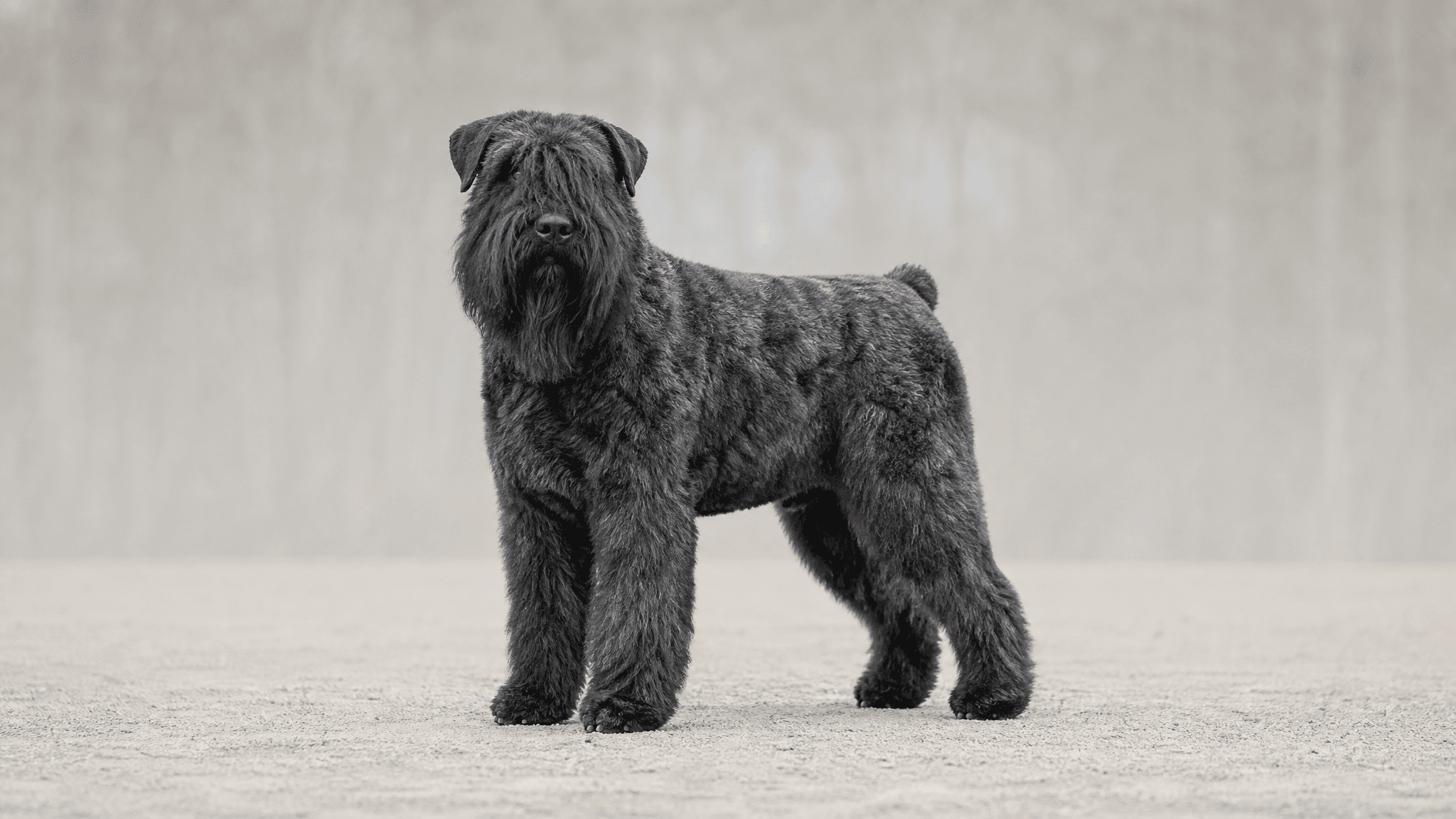
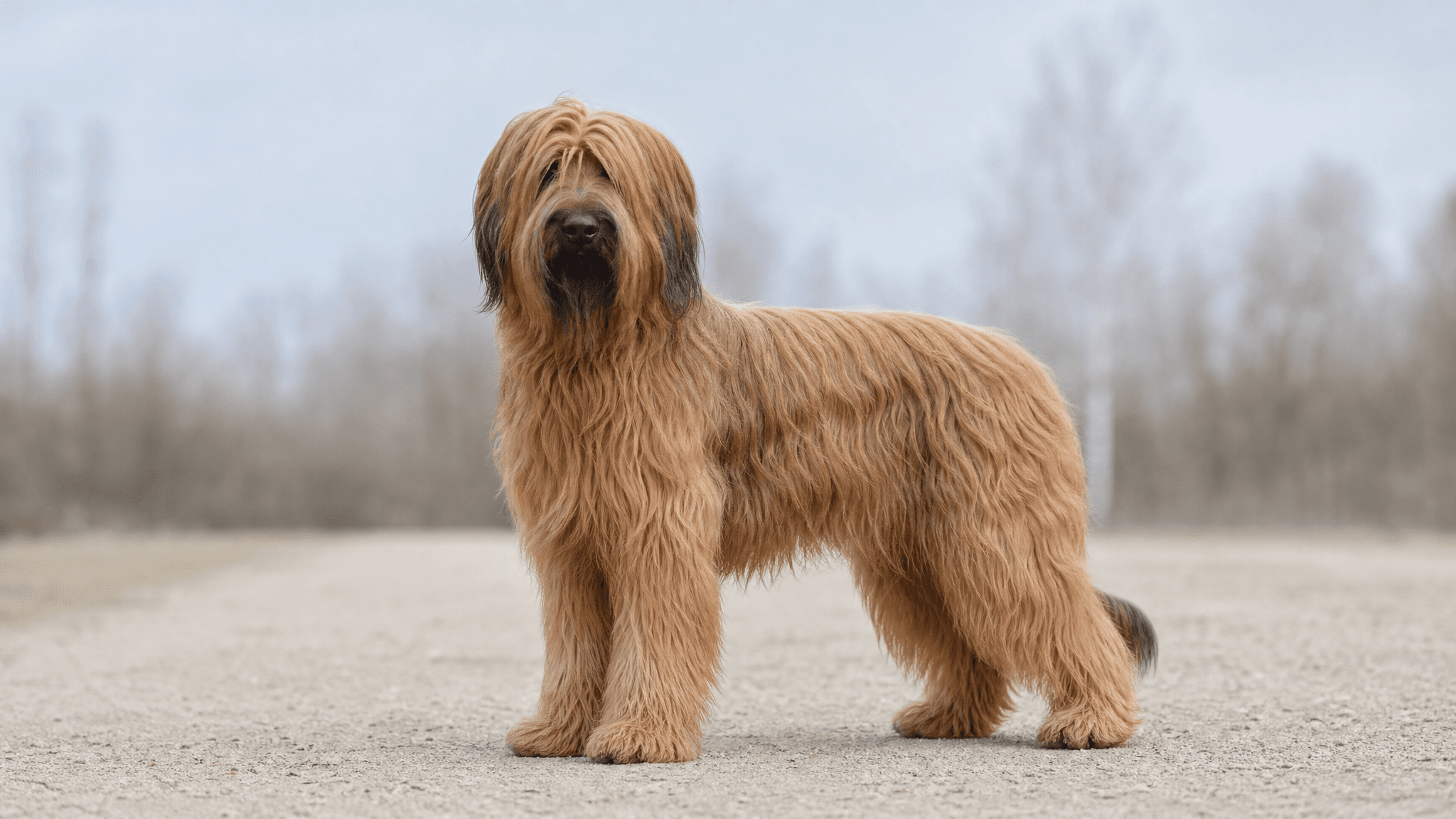
Beauce Sheepdog
Summary
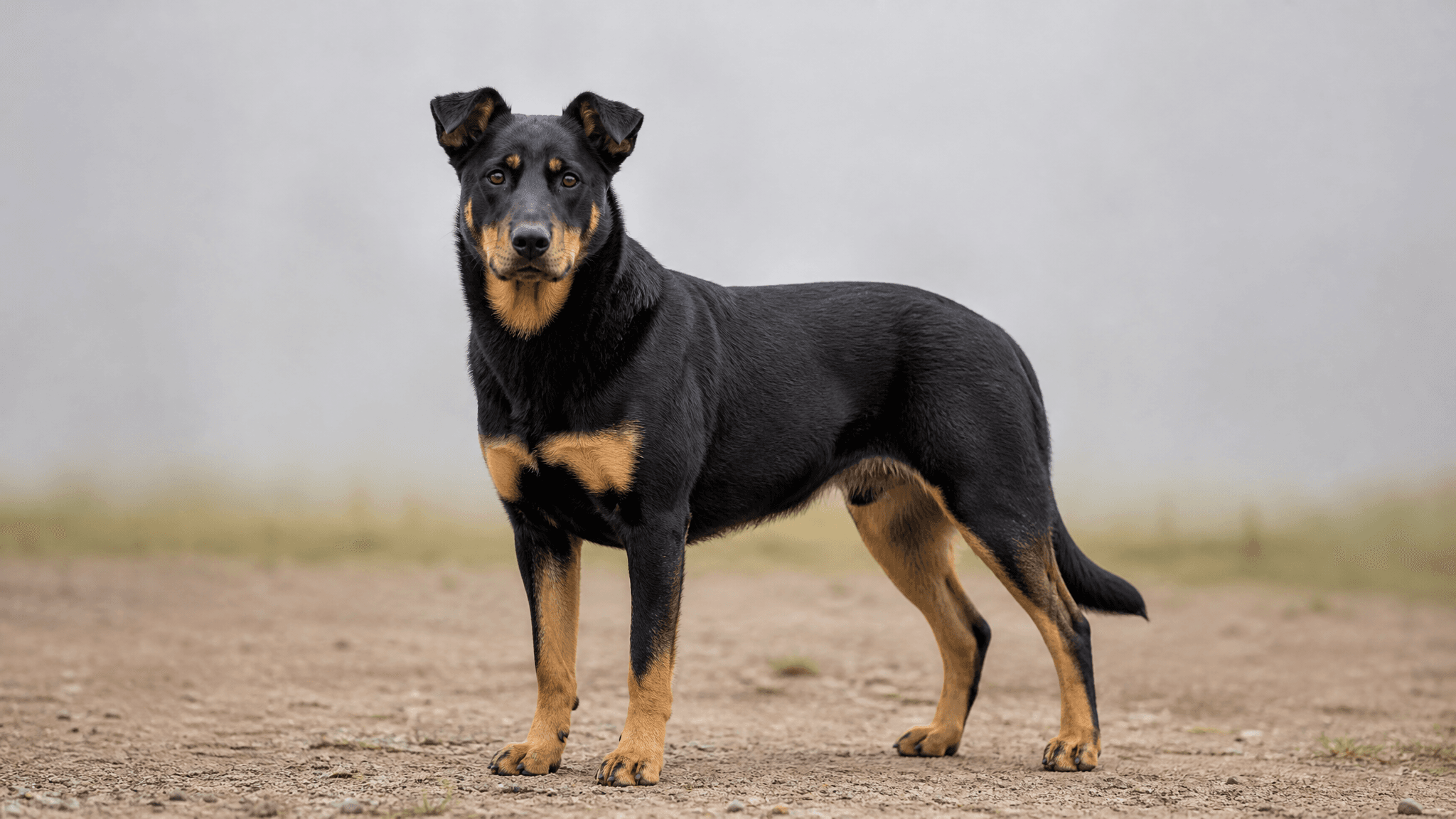
The Beauceron is one of the largest sheepdogs in France, an imposing and powerful breed that combines intelligence with courage and remarkable loyalty. Originating from the Beauce region, south of Paris, it was bred to herd large flocks of sheep and is easily recognizable by its black and tan coat with double dewclaws on the hind legs — a characteristic unique to the breed. It is also called "Bas Rouge" (red legs) for the coloring of its leg extremities.
Physical Characteristics
- Size
- Large
- Height (male)
- 65–70 cm
- Height (female)
- 61–68 cm
- Weight (male)
- 32–50 kg
- Weight (female)
- 26–38 kg
- Life Expectancy
- 10–12 years
- Coat
- Short, dense, rough to the touch, with dense undercoat
- Common Colors
- Black and tan; harlequin (black, grey and tan)
Temperament & Personality
The Beauceron is a dog of strong character: confident, courageous and extremely loyal to its owner, but reserved with strangers. It possesses remarkable intelligence and an extraordinary learning capacity, but it is also a breed that demands clear and consistent leadership — a Beauceron with a weak or inexperienced owner can become dominant and difficult to manage. With the family, it is affectionate and protective.
Activity & Exercise
- Energy Level
- High
- Recommended Daily Exercise
- 120 minutes
- Suitable for Apartment
- Not recommended
Grooming & Care
- Grooming Needs
- Low
- Shedding
- Moderate
- Bathing Frequency
- Every 6–8 weeks
Health
- Common Health Issues
- Copper-associated hepatitis (rare)
- Dilated cardiomyopathy (DCM)
- Gastric dilation (torsion)
- Hip dysplasia
- Recommended Health Tests
- Cardiac examination
- Liver analysis
- PennHIP evaluation
Compatibility
- With Children
- Good
- With Other Dogs
- Moderate
- With Cats
- Moderate
- For First-Time Owners
- Not recommended
Is a Beauce Sheepdog right for you?
A Beauce Sheepdog may suit you if:
- You are prepared to commit at least 120 minutes daily to vigorous physical activity and engaging mental challenges.
- You enjoy an active, outdoorsy lifestyle and are looking for a courageous, loyal companion for adventures.
- You appreciate a confident, intelligent dog with a strong character that forms deep, loyal bonds with its family.
- You are prepared to provide consistent, firm, and positive training from a young age to guide a smart learner.
- You don't mind moderate shedding and appreciate a dog with low grooming needs, requiring baths every 6-8 weeks.
- You understand and are willing to manage strong herding instincts and appreciate unique breed traits like double dewclaws.
Think twice if:
- You expect an inherently biddable dog that will always defer to you without consistent, experienced leadership.
- You often leave your dog alone for long periods or have a sedentary lifestyle that limits daily engagement.
- You are unwilling to carefully introduce and supervise interactions with other pets, especially cats or small animals.
- You are unwilling to provide the required 120 minutes of daily vigorous exercise for this high-energy breed.
- You live in an apartment or lack a securely fenced yard suitable for a large, active dog.
- You are not prepared for the physical strength and strong will of a large, confident working dog, especially during adolescence.
Bringing a Beauce Sheepdog into your life is a profound commitment to a loyal, intelligent partner. While their devotion is unmatched, their strong will and high energy demand an owner who is equally committed to consistent training and an active lifestyle. With the right leadership and environment, they blossom into magnificent companions, but without it, their powerful nature can become challenging.
Training a Beauce Sheepdog
Your Beauce Sheepdog is a truly intelligent and capable learner, eager to please its beloved owner. This breed thrives on clear, consistent guidance and positive reinforcement, responding best to short, engaging training sessions that feel like a partnership. They possess an extraordinary learning capacity, but this comes with a need for strong, confident leadership. If training lacks consistency or the handler is hesitant, a Beauceron can quickly become dominant and difficult to manage, making early foundations crucial for a harmonious life together. Remember, they are loyal and want to work with you.
Begin with:
- Attention and response to name around distractions
- Recall on a long line
- Loose-leash walking
- Leave it and drop it
- Calm greetings without jumping
- Settling on a mat or bed
- Cooperative handling for grooming, ears, feet and teeth
- Waiting at doors and gates
Herding Instinct and Focus
Your Beauceron's heritage as a sheepdog means they possess a strong herding instinct. This can manifest as nipping at heels, circling family members or other pets, or intense focus on moving objects like bikes or joggers. It's crucial to channel this drive positively. Engage them in activities like herding games (if available), agility, or advanced obedience that require focus and direction.
Early and consistent training is key to teaching them appropriate outlets for their energy and focus. Use long lines in secure areas to practice recall and redirect their attention from potential "flocks." Mental stimulation, such as puzzle toys or scent work, can also help satisfy their need to work and think.
Managing Strength on Leash
Given their large size and impressive strength (males up to 50 kg, females up to 38 kg), a Beauceron that pulls on the leash can be a significant challenge, even dangerous. It's vital to start loose-leash training early and be absolutely consistent. Use a front-clip harness or head halter for better control, but always combine equipment with positive reinforcement training.
Teach them that a loose leash means rewards and that pulling gets them nowhere. Practice in quiet environments first, gradually introducing distractions. Remember, a Beauceron needs its full 120 minutes of daily exercise, but this should be enjoyable for both of you. For more tips, check out our guide on stopping leash pulling.
Boredom and Destructive Behavior
A Beauceron's high energy and intelligence mean they require substantial physical and mental stimulation. If their recommended 120 minutes of daily exercise isn't met, or if they are left alone and under-stimulated, they can become bored and develop undesirable behaviors. This might include excessive barking, destructive chewing, or digging, especially since they are not recommended for apartment living.
Provide plenty of structured exercise, engaging training sessions, and interactive toys. Rotate toys to keep things fresh, and consider activities like dog sports or advanced obedience to keep their minds active. A well-exercised and mentally stimulated Beauceron is a happy and well-behaved companion. Consistency in training, as supported by our training feature, is vital to prevent these issues.
Beauce Sheepdog — Frequently Asked Questions
What is the Beauceron?
The Beauceron (Berger de Beauce) is a large, powerful French herding and working dog from the Beauce region south of Paris. It is one of the oldest and most important French dog breeds, developed over centuries as both a sheep herder and a farm guardian. It is distinguished by its striking black and tan coat, its powerful, muscular build, and uniquely, by the double dewclaws on its rear feet — a breed hallmark required by the standard. It is also known as the Bas Rouge ('red stockings') due to its tan markings. It was used in both World Wars as a messenger dog, for mine detection, and as a police dog. It is recognised by the FCI and AKC and is highly regarded as a working and sport dog worldwide.
Is the Beauceron a good family dog?
The Beauceron can be a magnificent family dog for the right family — loyal, protective, devoted, and deeply bonded with its people. However, it is not a breed for inexperienced dog owners. It is large (males 65–70 cm, 30–50 kg), powerful, and has strong protective and herding instincts. It may attempt to herd children and can be dominant with other dogs. It is typically reserved with strangers and has strong protective instincts. Early socialisation from puppyhood is critical. It needs an experienced, confident handler who provides consistent training and clear boundaries. For active families who enjoy training and sport — particularly those involved in schutzhund, ring sport, agility, or tracking — the Beauceron is an extraordinarily capable, devoted partner.
How much exercise does a Beauceron need?
The Beauceron is a high-energy, high-drive working breed that needs substantial daily exercise — a minimum of 1.5–2 hours of vigorous activity per day, plus significant mental stimulation. It was developed for demanding all-day herding and guarding work, and this work ethic is deeply ingrained. Long runs, hiking, cycling alongside, and working dog sports such as agility, tracking, obedience, and ring sport are ideal activities. Mental engagement is equally critical — without a job or structured challenge, Beaucerons can become frustrated, anxious, and destructive. They are excellent working and sport dogs and thrive when given a clear purpose. They are not suitable for sedentary lifestyles or apartment living.
Is the Beauceron easy to train?
The Beauceron is highly intelligent and exceptionally trainable when in the right hands — it is considered one of the most capable working dog breeds in the world. It excels in advanced obedience, protection sports, ring sport, tracking, herding, and search and rescue. However, it is a powerful, dominant, and sometimes challenging breed that requires an experienced, confident handler. It learns rapidly but will test authority if inconsistency is detected. Positive reinforcement works best; it is sensitive to its handler's emotional state and responds to clear, fair, consistent leadership. It requires early socialisation to manage its protective instincts appropriately. An experienced trainer will find it one of the most rewarding and capable dogs to work with.
What is the Beauceron's coat like?
The Beauceron has a short, dense, harsh-textured outer coat with a short, dense, woolly undercoat. The standard colouring is black and tan — a deep black body with rich tan (red) markings on the cheeks, above the eyes, on the throat, chest, legs, and under the tail. Harlequin (merle) colouring — grey with patches of black and tan markings — is also accepted in the breed standard. The coat is designed for outdoor work in all weather and sheds moderately year-round, more heavily during seasonal coat changes. Grooming is easy: weekly brushing with a bristle brush or grooming mitt manages shedding and keeps the coat clean. Bathing every 4–6 weeks is sufficient. The breed's double dewclaws on the rear feet are a breed hallmark that requires regular attention and trimming.
Does the Beauceron bark a lot?
The Beauceron is an alert, vocal breed that will bark to communicate and to alert its family to unusual activity — it was bred to guard as well as herd. It is not an excessive or neurotic barker, but it will bark purposefully when it perceives a threat or stranger approaching. Its size and bark are imposing and effective as a deterrent. With training and adequate daily exercise and mental stimulation, problematic barking can be managed. Boredom, under-stimulation, or anxiety can trigger excessive barking in this intelligent breed. Early training to establish a reliable 'quiet' command, combined with ensuring the dog's exercise and mental needs are fully met, keeps barking well within manageable levels for most households.
What health issues are common in the Beauceron?
The Beauceron is generally a healthy breed. Hip and elbow dysplasia are the most significant concerns — given its size, responsible breeders screen breeding dogs thoroughly. Bloat (gastric dilatation-volvulus) is a serious risk for this large, deep-chested breed — feeding two smaller meals, using a slow-feeder, and restricting vigorous exercise for an hour after eating are essential precautions. Dilated cardiomyopathy (heart enlargement) can occur in large breeds and should be monitored as the dog ages. Progressive retinal atrophy has been observed in some lines. Regular veterinary check-ups including cardiac and orthopaedic screening, appropriate diet, and maintaining a lean body weight support the best possible longevity for this magnificent breed.
What is the typical lifespan of a Beauceron?
The Beauceron typically lives between 10 and 12 years — reasonable for a large working breed. Its robust working constitution generally contributes to resilience, but its size brings associated health risks. The most important longevity factors are maintaining a lean body weight, providing vigorous daily exercise and mental stimulation, implementing bloat-prevention feeding practices, scheduling regular cardiac and orthopaedic check-ups from middle age, and maintaining consistent routine veterinary care throughout its life. Beaucerons that are kept active, mentally challenged, and properly maintained health-wise tend to age well and maintain their characteristic alertness, loyalty, and working capability well into their senior years.
Community
Talk to real Beauce Sheepdog owners
This guide covers the breed on paper. In the app, the Beauce Sheepdog community covers it in real life: photos from other owners, questions answered by people who live with the breed, and a directory of dogs you can browse.
- Photos & pollsSee what Beauce Sheepdog owners are sharing today.
- Questions & answersAsk anything and hear from people who own one.
- Dog directoryBrowse Beauce Sheepdogs from around the world.
You join automatically when you add a Beauce Sheepdog to your profile.