Billy
Summary
The Billy is a large scent hound originating from west-central France, bred in the 19th century by Gaston Hublot de Rivault, who named it after his Château de Billy in Poitou. It was developed from three now-extinct Poitevin lines — Montemboeuf, Ceris, and Larrye — and nearly disappeared during World War II, being saved by only two specimens. Today it is rare but active as a big game hunting dog.
Physical Characteristics
- Size
- Large
- Height (male)
- 60–70 cm
- Height (female)
- 58–62 cm
- Weight (male)
- 25–33 kg
- Weight (female)
- 23–30 kg
- Life Expectancy
- 12–13 years
- Coat
- Short and slightly rough to the touch
- Common Colors
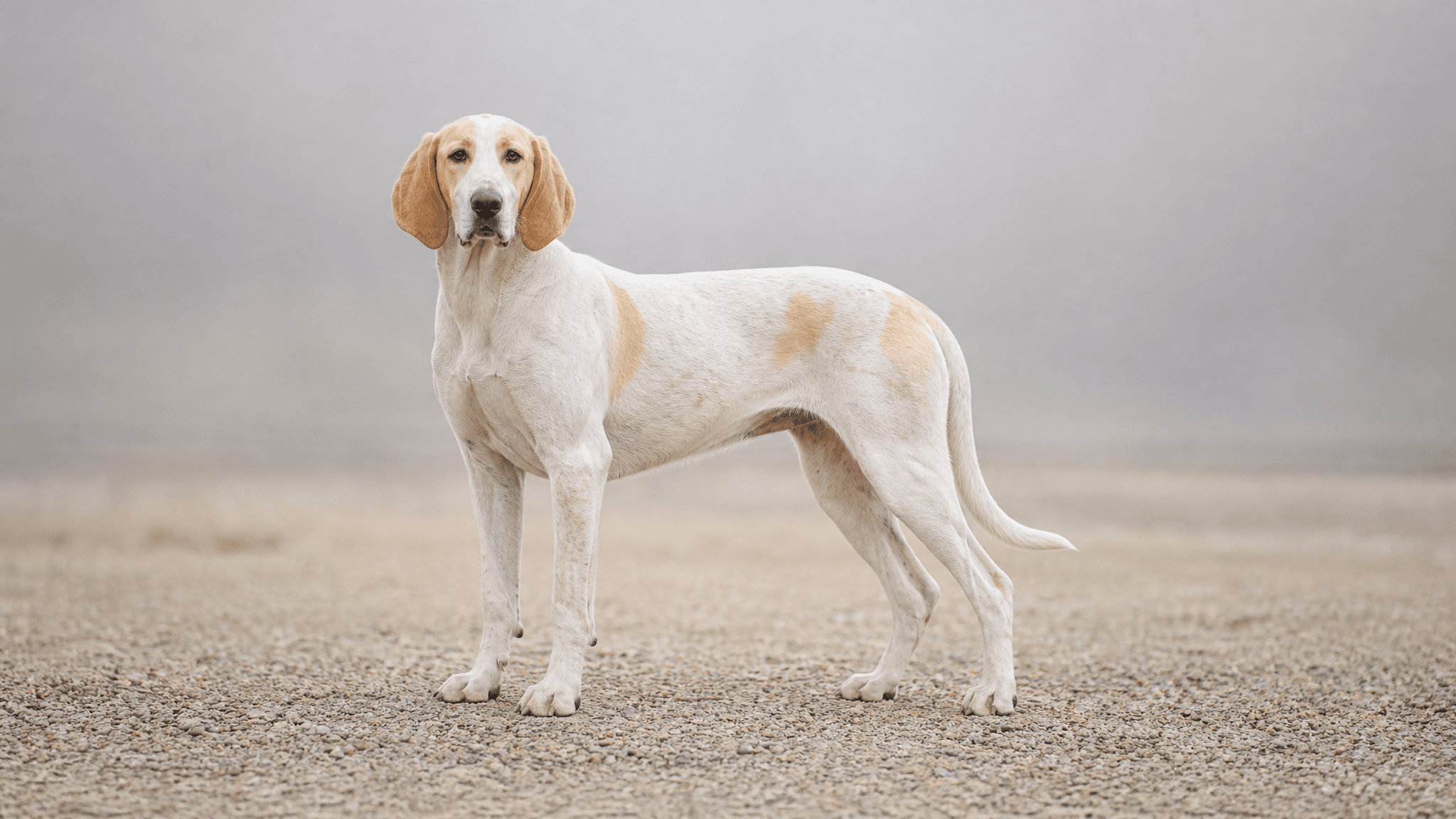
- Pure white or off-white, with or without orange or lemon patches; black is not permitted
Temperament & Personality
The Billy is an intelligent, courageous, and extremely fast dog. It is loyal to its owner and gentle with children, but its independence and speed make it difficult to control outside of a fenced area. It can be aggressive with other dogs if not properly socialized. As a pack dog, it changes the volume of its bark depending on the prey found.
Activity & Exercise
- Energy Level
- Very high
- Recommended Daily Exercise
- 120 minutes
- Suitable for Apartment
- Not recommended
Grooming & Care
- Grooming Needs
- Low
- Shedding
- Moderate
Health
- Common Health Issues
- Gastric torsion
- Hip dysplasia
- Otitis
- Recommended Health Tests
- Orthopedic evaluation
Compatibility
- With Children
- Good
- With Other Dogs
- Moderate
- With Cats
- Can be difficult
- For First-Time Owners
- Not recommended
Is a Billy right for you?
A Billy may suit you if:
- You are prepared to dedicate at least two hours daily to vigorous exercise and stimulating mental challenges.
- You enjoy an active, outdoor lifestyle, perhaps involving hiking, running, or scent work.
- You appreciate an intelligent, courageous companion who is fiercely loyal to their family.
- You are committed to consistent, firm, and positive training to manage a strong-willed scent hound.
- You don't mind moderate shedding and prefer a low-maintenance coat that needs minimal grooming.
- You are willing to manage a strong prey drive and a vocal nature typical of a large scent hound.
Think twice if:
- You expect instant, perfect obedience from a dog who follows its nose above all else.
- You have a busy schedule that would leave a highly energetic dog alone for long periods.
- You have cats or small pocket pets that a large, high-prey-drive scent hound might view as game.
- You are unable or unwilling to provide at least two hours of rigorous daily exercise for a large, energetic breed.
- You live in an apartment or lack a securely fenced large outdoor space for safe exercise.
- You are not prepared for the strength and independent will of a large dog during its boisterous adolescent phase.
Living with a Billy is a unique adventure, blending deep loyalty and gentle companionship with an independent spirit and boundless energy. While their low-maintenance coat is a plus, their need for extensive exercise and mental engagement is non-negotiable. They thrive with active families who understand their scent hound nature and are prepared to channel their incredible drive, ensuring a harmonious life for this courageous and intelligent breed.
Training a Billy
Training a Billy is a rewarding journey, especially with their keen intelligence and loyalty. These courageous scent hounds thrive on positive reinforcement, responding wonderfully to praise, engaging play, and especially scent-based rewards. Keep training sessions short, fun, and consistent to hold their attention. As very high-energy dogs, they need mental and physical engagement to prevent boredom. If training is inconsistent or relies on harsh methods, their independent nature can lead to a less cooperative companion, making their impressive speed and strength even more challenging to manage.
Begin with:
- attention and response to name around distractions
- recall on a long line
- loose-leash walking
- leave it and drop it
- calm greetings without jumping
- settling on a mat or bed
- cooperative handling for grooming, ears, feet and teeth
- waiting at doors and gates
Scent Drive and Recall
The Billy's heritage as a scent hound means their nose is incredibly powerful, and their prey drive is exceptionally strong. Once they catch a scent, their independence and impressive speed make them incredibly difficult to recall, especially outside a securely fenced area. Start recall training in a quiet, enclosed space with high-value treats and praise, gradually introducing distractions. Always use a long line in unfenced areas until their recall is rock-solid. You can find more tips in our guide on teaching a dog to come when called.
Keep walks engaging by varying routes and playing scent games, but understand that their instinct to follow a trail is profound. Never underestimate their ability to disappear over the horizon in pursuit of an interesting smell, so safety and secure environments are paramount.
Leash Manners and Strength
Given their large size and substantial strength, a Billy who pulls on the leash can be a real challenge, even for experienced owners. It's crucial to establish loose-leash walking from the very beginning. Use a front-clip harness or a head halter if needed, as these can provide better control without causing discomfort. Consistency is key; every walk is a training opportunity.
Practice walking in quiet areas, rewarding your Billy for keeping a slack leash. If they pull, stop immediately until the leash loosens, then resume. This teaches them that pulling gets them nowhere. For more detailed strategies, check out our plan to stop leash pulling.
Boredom and Destructive Habits
A Billy's very high energy level and intelligence mean they require at least 120 minutes of vigorous exercise daily. Without adequate physical and mental stimulation, these dogs can quickly become bored, leading to destructive behaviors like excessive barking, chewing, or digging. They are not recommended for apartment living precisely because they need space and activity.
Ensure they have plenty of opportunities to run and explore in a secure area. Incorporate puzzle toys, scent work, and consistent training sessions to keep their minds engaged. As pack dogs, they thrive on companionship, so prolonged periods of being left alone can also contribute to anxiety and unwanted behaviors. Our Behaviour AI feature can help you understand and work on specific behaviors.
Billy — Frequently Asked Questions
What is the Billy?
The Billy is a magnificent, large scent hound hailing from the picturesque west-central region of France. This noble breed belongs to FCI Group 6, which encompasses large-sized hounds, reflecting its impressive stature and hunting prowess. Developed in the 19th century by Gaston Hublot de Rivault, who named it after his Château de Billy, this breed was meticulously created from three now-extinct Poitevin lines: Montemboeuf, Ceris, and Larrye. Known for its intelligence, courage, and incredible speed, the Billy is a truly distinctive and historically rich canine companion.
What was the Billy originally bred for?
The Billy was originally bred as a dedicated big game hunting dog, a role it still excels at today! Its powerful build, incredible speed, and keen scenting abilities made it an invaluable asset for tracking and pursuing large prey. This breed faced near extinction during World War II, a truly heartbreaking time, with only two specimens managing to survive. Thanks to dedicated efforts, the Billy was saved and, though still rare, continues to be an active and respected hunting dog, carrying on its proud heritage with every chase.
How much exercise does a Billy need?
The Billy is a dog with a very high energy level, so they definitely need a good amount of exercise to stay happy and healthy! We recommend at least 120 minutes of vigorous activity every single day. Due to their incredible speed and independent nature, it's crucial to ensure they get this exercise in a secure, fenced area. Their strong hunting instincts mean they can be difficult to control if they catch a scent outside, so off-leash adventures should always be in a safe, enclosed space where they can truly stretch their legs.
Is the Billy a good family dog?
Yes, the Billy can indeed be a wonderful addition to the right family! They are known to be loyal to their owners and surprisingly gentle with children, making them lovely companions for supervised play. However, it's important to remember their pack dog nature and strong hunting instincts. While they can coexist with other pets, proper socialization from a young age is absolutely essential to prevent potential aggression towards other dogs. With consistent guidance and plenty of positive interactions, a Billy can thrive in a loving family environment.
Is the Billy easy to train?
Training a Billy can be a rewarding experience, but it definitely requires patience and consistency! They are intelligent and courageous dogs, which are fantastic traits, but their independence and incredible speed mean they can be a bit of a challenge, especially outside a fenced area. Their strong prey drive also means they'll change the volume of their bark depending on what they've found, which is fascinating but can be a lot to manage. Early and consistent training, focusing on positive reinforcement and clear boundaries, is key to harnessing their potential and building a strong bond.
What health issues are common in the Billy?
Like all breeds, the Billy can be prone to certain health conditions, and being aware of them helps you provide the best care. Some of the documented health concerns for this wonderful breed include gastric torsion, which is a serious stomach condition, hip dysplasia, a common orthopedic issue, and otitis, which refers to ear infections. Regular veterinary check-ups are essential for early detection and management of any potential issues, ensuring your Billy lives a long, happy, and healthy life by your side!
What is the Billy's coat like and how much grooming does it need?
The Billy typically sports a short, dense, and smooth coat, which is wonderfully low-maintenance! This type of coat is characteristic of many scent hounds, designed for protection during their active outdoor pursuits without becoming cumbersome. Generally, a weekly brush with a rubber curry comb or a bristle brush is usually sufficient to remove loose hairs and keep their coat looking shiny and healthy. Occasional baths are also great to keep them smelling fresh, especially after their adventurous outings. It's a truly easy-care coat, perfect for active families!
What is the typical lifespan of a Billy?
It's wonderful to know that the magnificent Billy typically enjoys a good, long life! These robust and active dogs generally live for about 12 to 13 years. Providing them with excellent nutrition, plenty of exercise, regular veterinary care, and a loving home environment are all key factors in helping your Billy reach the upper end of this lifespan and beyond. Cherish every moment with your courageous and loyal companion!
Community
Talk to real Billy owners
This guide covers the breed on paper. In the app, the Billy community covers it in real life: photos from other owners, questions answered by people who live with the breed, and a directory of dogs you can browse.
- Photos & pollsSee what Billy owners are sharing today.
- Questions & answersAsk anything and hear from people who own one.
- Dog directoryBrowse Billys from around the world.
You join automatically when you add a Billy to your profile.