Bergamasco Shepherd Dog
Summary
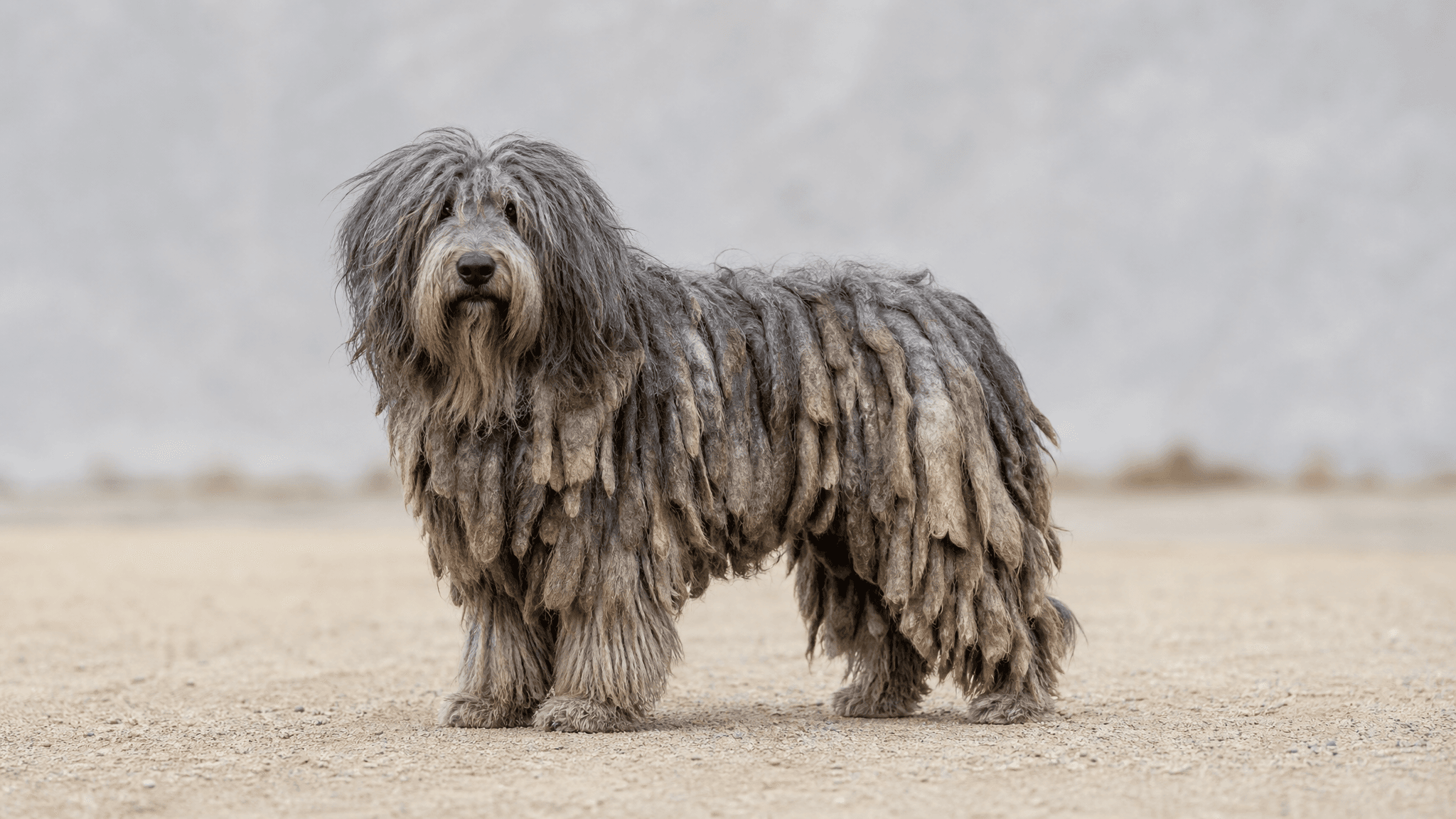
The Bergamasco Shepherd Dog is an ancestral Italian breed, originating from the Bergamasque Alps near Bergamo, that worked for centuries as a flock guardian and driver at high altitudes. It is immediately recognizable by its coat, unique in the canine world, formed by three types of hair that naturally interweave into flat tufts or mats (different from the cords of the Puli or Komondor). This extraordinary coat functioned as insulation and protection in extreme alpine conditions.
Physical Characteristics
- Size
- Medium to large
- Height (male)
- 58–62 cm
- Height (female)
- 54–58 cm
- Weight (male)
- 32–38 kg
- Weight (female)
- 26–32 kg
- Life Expectancy
- 13–15 years
- Coat
- Unique — formed by three types of hair (woolly undercoat, intermediate hair and harsh outer hair) that interweave into flat tufts/mats
- Common Colors
- Grey (in all shades), black, fawn with or without black or grey patches; merle
Temperament & Personality
The Bergamasco is a balanced, patient and independent dog, with intelligence developed over centuries of autonomous work. It is extremely loyal and affectionate with the family, but reserved with strangers. It possesses a natural protective instinct but is rarely aggressive without reason. Its patience makes it especially good with children, and its intelligence allows it to assess complex situations with great ease.
Activity & Exercise
- Energy Level
- Moderate
- Recommended Daily Exercise
- 60–90 minutes
- Suitable for Apartment
- Not recommended
Grooming & Care
- Grooming Needs
- High
- Shedding
- Minimal
- Bathing Frequency
- Every 12 weeks
Health
- Common Health Issues
- Cataracts
- Gastric torsion
- Hip dysplasia
- Progressive retinal atrophy (PRA)
- Recommended Health Tests
- Eye examination
- Orthopedic evaluation
Compatibility
- With Children
- Excellent
- With Other Dogs
- Excellent
- With Cats
- Good
- For First-Time Owners
- Acceptable
Is a Bergamasco Shepherd Dog right for you?
A Bergamasco Shepherd Dog may suit you if:
- You can provide 60 to 90 minutes of daily exercise and engaging mental challenges for an intelligent companion.
- You enjoy outdoor adventures or activities where your independent and intelligent dog can work alongside you.
- You appreciate a loyal, patient, and affectionate family member who is naturally protective and good with children.
- You are prepared to engage in consistent, positive training that respects an intelligent and independent mind.
- You are prepared for the unique, high-grooming needs of a coat that naturally forms protective tufts or mats.
- You are willing to manage a dog with a natural protective instinct and a history of independent herding work.
Think twice if:
- You expect immediate, unquestioning obedience from a dog known for its independent and intelligent decision-making.
- You have a routine that requires your dog to be left alone for long periods without sufficient engagement.
- You are not prepared to guide a naturally protective dog in new social situations with unfamiliar people or animals.
- You are unwilling to commit to 60-90 minutes of daily exercise or the significant, specialized grooming their coat requires.
- You live in an apartment or do not have a securely fenced outdoor space for a medium-to-large breed.
- You are not prepared for the consistent guidance and firm, yet gentle, handling an independent adolescent Bergamasco needs.
Bringing a Bergamasco Shepherd into your life is a commitment to a truly unique and ancient companion. Their striking, protective coat and independent, intelligent spirit require dedicated grooming, consistent guidance, and an understanding heart. While fiercely loyal and patient with their family, they thrive when their owner appreciates their reserved nature and provides the space and engagement this special breed deserves.
Training a Bergamasco Shepherd Dog
Bergamascos are intelligent and independent dogs, learning best through positive reinforcement and short, engaging sessions. Their centuries of autonomous work mean they thrive when they understand the 'why' behind a command, rather than rote repetition. Harsh or overly long training will quickly lead to disengagement or withdrawal from this sensitive breed. When a handler fails to make training rewarding and clear, a Bergamasco may use its natural independence to make its own decisions, which can be frustrating but is rooted in its historical role as a self-reliant flock guardian.
Begin with:
- Attention and response to name around distractions
- Recall on a long line
- Loose-leash walking
- Leave it and drop it
- Calm greetings without jumping
- Settling on a mat or bed
- Cooperative handling for grooming, ears, feet and teeth
- Waiting at doors and gates
Independent Decision-Making
The Bergamasco's heritage as an autonomous flock guardian means they are accustomed to making their own decisions. This strong independent streak, combined with their natural protective instinct, can sometimes make them appear stubborn or unwilling to follow commands if they don't perceive a clear reason or if they feel a situation requires their own assessment.
To work with this, focus on building a strong, trusting relationship where your Bergamasco sees you as a reliable leader. Use positive reinforcement to make training fun and rewarding, showing them that cooperating with you leads to good outcomes. Practice impulse control games and consistent guidance to channel their protective nature constructively, encouraging them to look to you for direction in new or challenging situations.
Managing Leash Strength
With males weighing up to 38 kg and females up to 32 kg, a Bergamasco is a medium to large dog with considerable strength. While they have a moderate energy level, their independent nature means they might decide to pull on the leash if something catches their interest or if they feel they need to investigate. This can make walks challenging if not addressed early.
Start loose-leash training as soon as possible, using a comfortable, well-fitting harness that discourages pulling. Reward your Bergamasco frequently for walking politely by your side, reinforcing the desired behavior. If you're struggling with a strong puller, our guide on stopping leash pulling offers force-free methods to help you and your dog enjoy walks together.
Preventing Boredom
Bergamascos are intelligent dogs that require mental stimulation in addition to their recommended 60-90 minutes of daily physical exercise. If under-exercised, under-stimulated, or left alone for extended periods without engagement, their intelligence and independence can lead to boredom-driven behaviors like excessive chewing, barking, or digging. They are not recommended for apartment living due to their need for space and activity.
Ensure your Bergamasco receives consistent daily exercise and mental enrichment. Incorporate puzzle toys, scent work, and regular training sessions into their routine. When you must leave them alone, provide engaging toys and ensure they've had sufficient physical and mental exercise beforehand. This proactive approach will keep their intelligent minds busy and prevent unwanted behaviors.
Bergamasco Shepherd Dog — Frequently Asked Questions
What is the Bergamasco Shepherd Dog?
The Bergamasco Shepherd Dog is an ancient Italian herding breed from the Alps near Bergamo. Its most striking feature is its extraordinary coat, which naturally forms long, flat mats called 'flocks' or 'flakes' that cover the body and protect the dog from harsh mountain weather and wolf attacks. Beneath that unusual exterior is a calm, highly intelligent, and deeply devoted working dog that forms exceptionally strong bonds with its family.
How do you care for the Bergamasco's unique coat?
The Bergamasco coat actually requires less maintenance than it looks. Once the mats (flocks) have fully formed — usually between one and five years of age — you should never brush them; pulling them apart destroys the structure. Instead, check the mats a couple of times a year to separate any that are merging at the skin. The coat does not need washing more than 2–3 times per year, and it must be dried very thoroughly (which takes hours) to prevent mildew. It does not shed in any meaningful way once matted.
When do the Bergamasco's characteristic mats (flocks) form?
Bergamasco puppies are born with a soft, fluffy single coat that begins to change around one year of age. Between ages 1 and 5, the three different types of hair in the coat — soft undercoat, 'goat hair,' and oily 'woolly' hair — begin to tangle together naturally into the characteristic flat mats. Owners need to actively separate these during formation so they don't merge into one large mat that covers the whole body. By age 5–6 the coat is usually fully formed and requires only light annual maintenance checks.
Are Bergamasco Shepherd Dogs good family dogs?
Yes, but they are not a breed for everyone. They are deeply affectionate and loyal with their immediate family — especially children they have grown up with — but tend to be reserved and watchful with strangers. Their herding and guarding instincts mean they naturally keep an eye on the household. They need an owner who appreciates their independence and intelligence, and who can provide consistent leadership without harshness. Given the right home, they are extraordinarily devoted and gentle companions.
How much exercise does a Bergamasco Shepherd Dog need?
Bergamascos were bred for long days in the mountains and have the stamina to match. They need at least 1–1.5 hours of exercise per day, and they particularly enjoy hiking and activities where they can use their problem-solving intelligence. Mental stimulation is just as important as physical exercise for this breed — herding tasks, nosework, or advanced obedience training fulfil their working drive. A bored Bergamasco can become destructive or vocal, so regular, varied activity is key.
Are Bergamasco Shepherd Dogs easy to train?
Bergamascos are highly intelligent and can learn quickly, but they think independently and don't blindly follow commands. They respect their owner and respond best when they understand the reason for a request rather than just being drilled. Positive, reward-based training with variety and problem-solving challenges works far better than repetition. They have a long memory — both for good experiences and bad ones — so calm, patient, consistent handling from puppyhood is critical to building a trustworthy working partnership.
Do Bergamasco Shepherd Dogs shed?
Puppies do shed their puppy coat as it transitions into the adult coat. However, once the adult mats have fully formed, the dead hair becomes part of the mat structure rather than falling out onto furniture and clothing. This makes the fully-matted adult Bergamasco surprisingly low-shedding compared to most double-coated breeds. People with mild dog allergies sometimes tolerate them better than other breeds, though they are not truly hypoallergenic.
What health issues are common in Bergamasco Shepherd Dogs?
The Bergamasco is generally a robust and healthy breed with few serious hereditary conditions, which reflects its history as a working mountain dog selected for fitness and endurance. Hip dysplasia can occur, though at lower rates than in many large breeds. Eye conditions are occasionally seen. The main health watch points are skin health under the mats (check that mats are dry and air can circulate) and maintaining a lean body weight to protect the joints. With proper care, they are one of the healthier large herding breeds.
Community
Talk to real Bergamasco Shepherd Dog owners
This guide covers the breed on paper. In the app, the Bergamasco Shepherd Dog community covers it in real life: photos from other owners, questions answered by people who live with the breed, and a directory of dogs you can browse.
- Photos & pollsSee what Bergamasco Shepherd Dog owners are sharing today.
- Questions & answersAsk anything and hear from people who own one.
- Dog directoryBrowse Bergamasco Shepherd Dogs from around the world.
You join automatically when you add a Bergamasco Shepherd Dog to your profile.