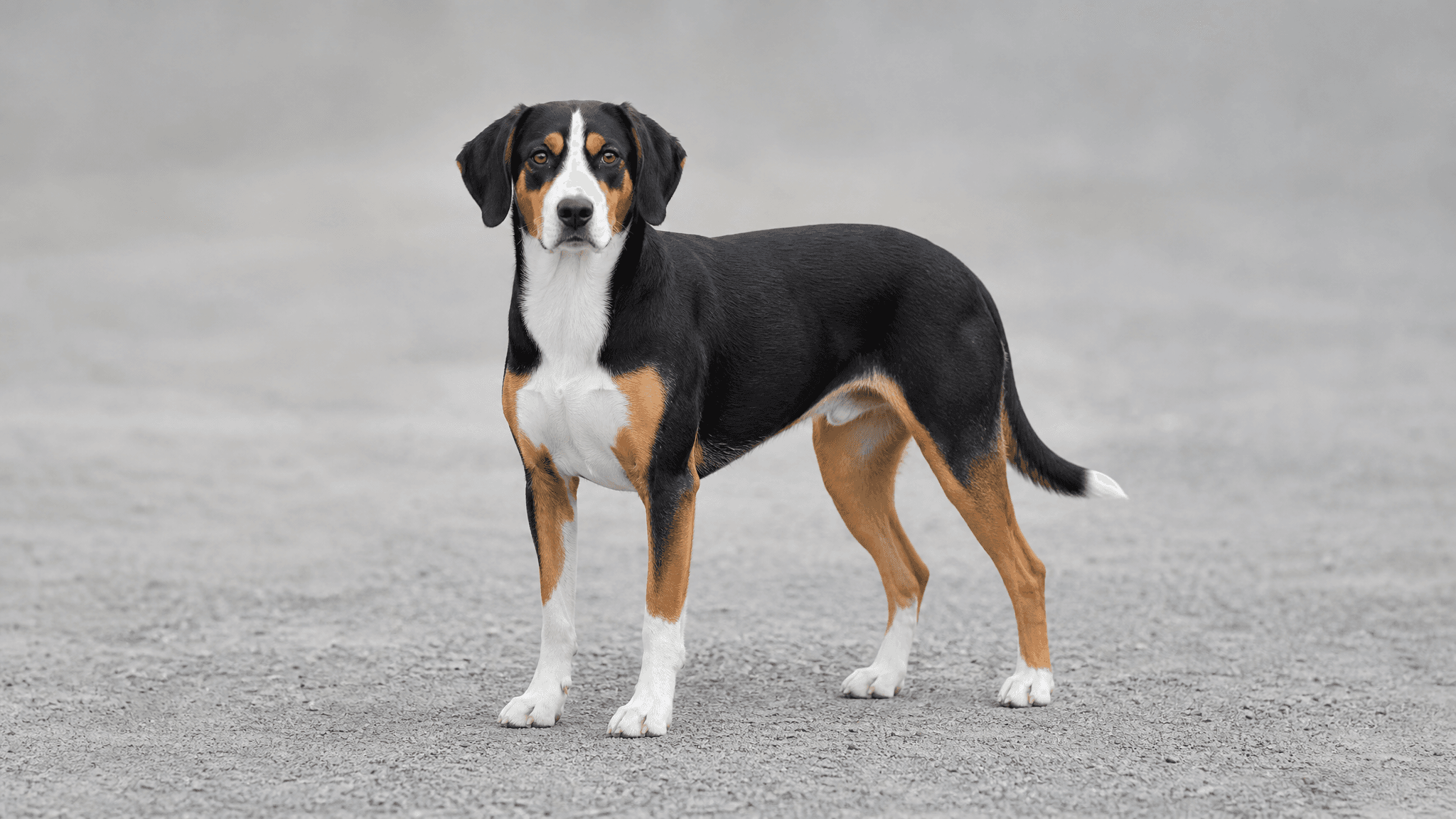
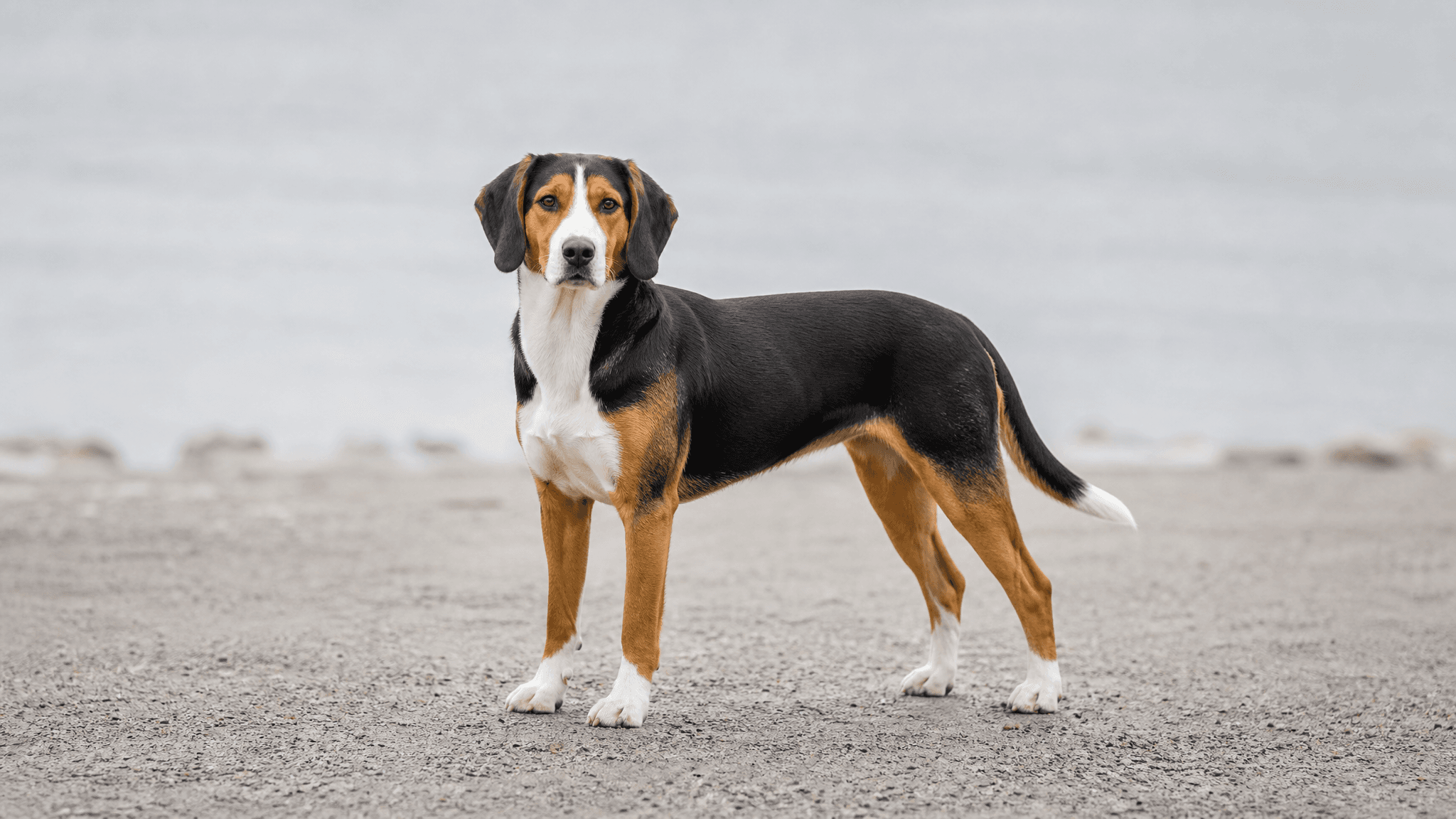
Bavarian Mountain Scent Hound
Summary
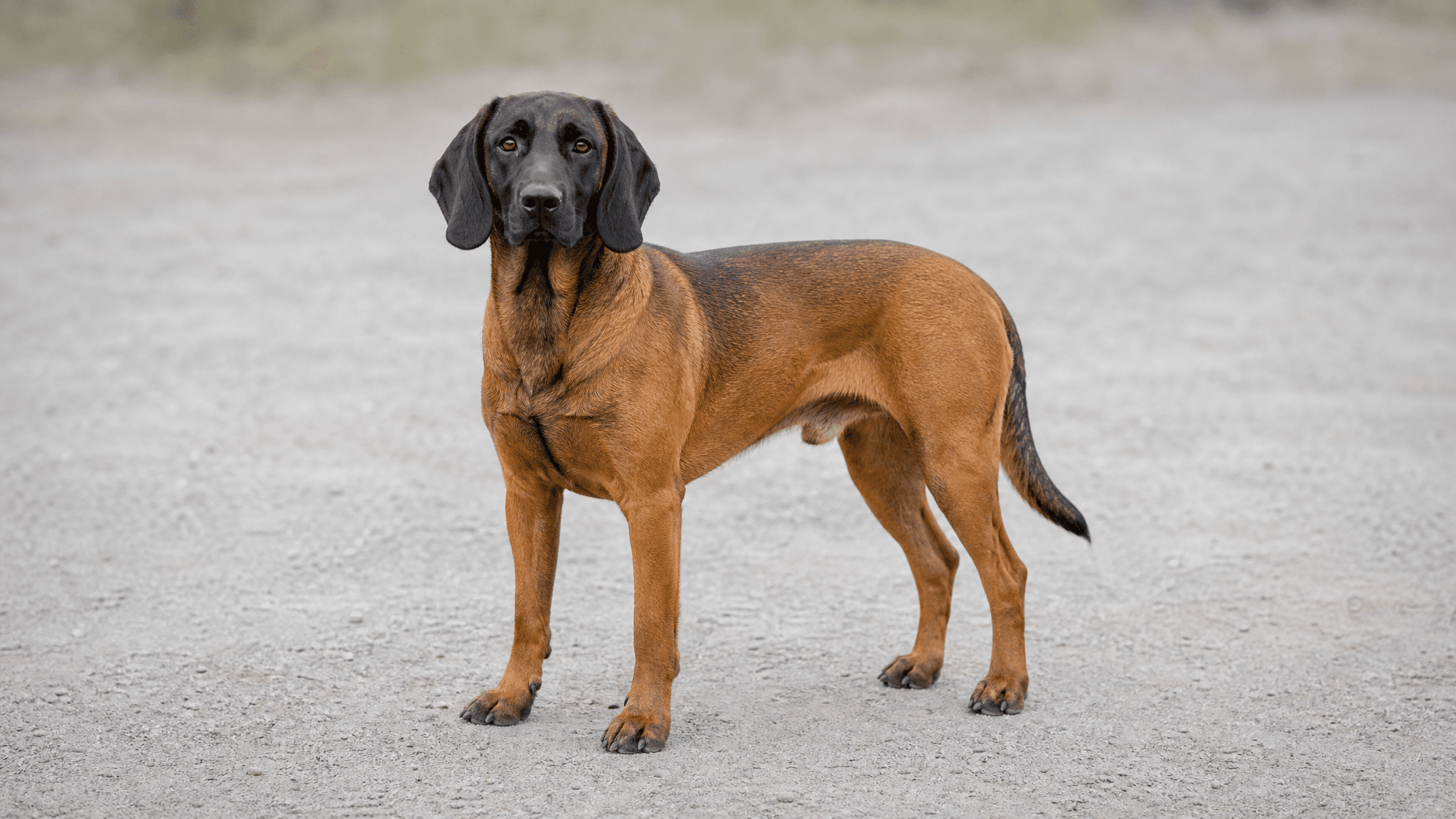
The Bavarian Mountain Scent Hound (Bayerischer Gebirgsschweisshund) was developed in the late 19th century by Baron Karg-Bebenburg, crossing the Hanoverian Scent Hound with the shorter-legged Tyrolean Hound. The result was a more agile and compact dog than the Hanoverian, better adapted to mountainous alpine terrain. It is equally used for tracking wounded animals in the Bavarian mountains and the Alps.
Physical Characteristics
- Size
- Medium
- Height (male)
- 44–52 cm
- Height (female)
- 40–48 cm
- Weight (male)
- 25–35 kg
- Weight (female)
- 22–30 kg
- Life Expectancy
- 12–15 years
- Coat
- Short to medium, dense and close-fitting; slightly longer on neck and back
- Common Colors
- Reddish fawn, brownish, dark red, brindle; frequently with dark mask
Temperament & Personality
The Bavarian Mountain Scent Hound is a balanced, calm dog highly dedicated to tracking. It is extremely loyal to its owner and works in perfect partnership. Unlike pack scent hounds, it does not do well in large groups — it prefers the close relationship with a single owner. It can be affectionate and calm at home.
Activity & Exercise
- Energy Level
- High
- Recommended Daily Exercise
- 60–90 minutes
- Suitable for Apartment
- Not recommended
Grooming & Care
- Grooming Needs
- Low
- Shedding
- Moderate
- Bathing Frequency
- Every 4 weeks
Health
- Common Health Issues
- Generally a healthy breed
- Hip dysplasia
- Otitis
- Recommended Health Tests
- Orthopedic evaluation
Compatibility
- With Children
- Good
- With Other Dogs
- Moderate
- With Cats
- Moderate
- For First-Time Owners
- Not recommended
Is a Bavarian Mountain Scent Hound right for you?
A Bavarian Mountain Scent Hound may suit you if:
- You are prepared to provide 60 to 90 minutes of vigorous exercise daily, including mentally stimulating scent work.
- You enjoy outdoor adventures like hiking or tracking, where your dog can use its natural talents.
- You appreciate a loyal, calm, and affectionate companion who forms a deep bond with one person.
- You are committed to consistent, positive training that harnesses their natural tracking instincts and builds a strong partnership.
- You are comfortable with moderate shedding and a low-maintenance grooming routine, including bathing every four weeks.
- You are willing to manage a strong scent drive, understanding their desire to follow interesting smells.
Think twice if:
- You expect immediate and unwavering obedience, as their strong scent drive can make them independent thinkers.
- You frequently leave your dog alone for long periods, as they thrive on close companionship and can become anxious.
- You are not prepared to manage careful introductions and ongoing supervision with other household pets.
- You are unable to commit to daily vigorous exercise and mental stimulation that satisfies their high energy level.
- You live in an apartment and cannot provide ample secure outdoor space for them to explore and exercise.
- You are not prepared for the commitment required to guide a strong-willed, intelligent hound through its adolescent phases.
The Bavarian Mountain Scent Hound offers a rewarding partnership for the right owner. They are incredibly loyal and calm at home, but their high energy and deep tracking instincts mean they thrive with a purpose and consistent engagement. If you're ready for a dedicated companion for 12 to 15 years who loves adventure as much as you do, this intelligent hound could be your perfect match.
Training a Bavarian Mountain Scent Hound
Your Bavarian Mountain Scent Hound is a wonderfully loyal and focused learner, especially when their incredible nose is engaged! These intelligent dogs thrive on working in partnership with their owner, making positive reinforcement and consistent, short training sessions key. They are motivated by praise, treats, and especially by scent-based activities that tap into their natural tracking drive. If training lacks engagement or consistency, or if you don't understand their deep dedication to scent, they can become easily distracted or choose to follow their nose over your commands, making early foundation work crucial for a harmonious relationship.
Begin with:
- Attention and response to name around distractions
- Recall on a long line
- Loose-leash walking
- Leave it and drop it
- Calm greetings without jumping
- Settling on a mat or bed
- Cooperative handling for grooming, ears, feet and teeth
- Waiting at doors and gates
The Call of Scent
The Bavarian Mountain Scent Hound's entire purpose is tracking, meaning their nose is incredibly powerful and their drive to follow a scent is immense. This can make recall particularly challenging, as a captivating scent trail will often override any command. It's not defiance, but instinct, so understanding this is the first step.
To manage this, start recall training in low-distraction environments and gradually introduce more complex settings, always using a long line for safety. Make yourself the most exciting thing around, with high-value treats and enthusiastic praise. Practice regularly and consistently, so that coming back to you becomes a deeply ingrained habit, even when that tempting scent calls. You can find more tips in our guide to teaching recall.
Strong Leash Pullers
Given their medium size, high energy, and weight (up to 35kg for males), Bavarian Mountain Scent Hounds can be powerful pullers on the leash, especially when they catch a scent. This isn't just uncomfortable; it can be dangerous for both you and your dog, potentially leading to injuries or escapes.
Start loose-leash training from day one, using positive reinforcement to reward walking calmly by your side. Avoid pulling back or yanking, as this can make them pull harder. Instead, stop walking when they pull, and only resume when the leash is slack. Invest in a comfortable, well-fitting harness that discourages pulling. For a comprehensive approach, check out our force-free plan to stop leash pulling.
Unspent Energy
Bavarian Mountain Scent Hounds have a high energy level and require a good 60-90 minutes of daily exercise, often more if it involves mental stimulation like tracking. They are not recommended for apartment living, and if their energy and keen intelligence aren't channeled appropriately, they can develop undesirable behaviors such as destructive chewing, excessive barking, or general restlessness.
Ensure their daily exercise includes varied activities beyond just a walk. Scent games, puzzle toys, and exploring new environments are fantastic ways to engage their minds. Consider formal tracking or nose work classes to give them a 'job' that satisfies their natural instincts. Our GPS Walks feature can help you track their activity and explore new routes, ensuring they get the stimulation they need to be a calm and happy companion at home.
Bavarian Mountain Scent Hound — Frequently Asked Questions
What is the Bavarian Mountain Scent Hound?
The Bavarian Mountain Scent Hound (Bayerischer Gebirgsschweisshund) is a specialised German tracking hound developed in Bavaria in the 19th century specifically for the demanding task of trailing wounded game — particularly deer and chamois — on cold, often days-old blood trails through the steep, rocky terrain of the Alps. It was created by crossing the Hannoverscher Schweisshund (Hanoverian Scent Hound) with lighter, more agile Bavarian mountain hounds. It is recognised by the FCI and is primarily a working breed used by professional hunters and game managers. It is a medium-sized, athletic, close-coupled hound with a dense, harsh coat and exceptional cold-nose tracking ability that is considered among the finest in the world.
Is the Bavarian Mountain Scent Hound a good companion dog?
The Bavarian Mountain Scent Hound is primarily a specialised working breed rather than a family companion, but it is affectionate, loyal, and devoted in the home. It bonds closely with its handler and family and can be a warm and pleasant house dog in the right environment. It is typically reserved with strangers — characteristic of its single-handler working tradition. It tends to do better with older children than with very young ones. It gets along with other dogs reasonably well. Its considerable exercise needs, strong tracking drive, and the requirement for meaningful purposeful work mean it is best suited to active, experienced owners in rural settings — ideally those who hunt or engage in tracking activities.
How much exercise does a Bavarian Mountain Scent Hound need?
The Bavarian Mountain Scent Hound has considerable exercise requirements — at least 1.5–2 hours of vigorous activity per day. It was bred for endurance work in demanding mountain terrain and has real physical stamina. Long hikes — particularly in hilly or mountainous terrain — are ideal, as they mirror its working environment. Off-lead exercise must be in securely fenced areas given its intense tracking drive. Nose work, tracking trials, and scent games provide excellent mental stimulation alongside physical exercise. Without sufficient daily exercise and purposeful activity, it becomes restless and unhappy. It is not a breed suited to apartment or sedentary urban living. A rural home with access to varied outdoor terrain is ideal.
Is the Bavarian Mountain Scent Hound easy to train?
The Bavarian Mountain Scent Hound is highly intelligent and, in its traditional working role, is considered highly trainable for tracking tasks. However, it is a single-handler breed — it bonds intensely with one person and works best for that handler. In obedience and domestic training, its independent tracking nature means it requires patience, consistency, and positive reinforcement. It can be stubborn when its tracking drive is engaged. Recall training in open areas is particularly challenging. Early socialisation and reward-based training from puppyhood establish the best foundations. It is not recommended for first-time dog owners. A confident, experienced handler who hunts or works the dog in tracking activities will find it exceptionally talented and cooperative.
What health issues are common in the Bavarian Mountain Scent Hound?
The Bavarian Mountain Scent Hound is a robust working breed with generally good health. Hip dysplasia is possible in medium to large working breeds and should be screened in breeding dogs. Ear infections are a recurring concern given its pendant ears — weekly inspection and cleaning after outdoor work are essential preventive steps. Bloat (gastric dilatation-volvulus) is a moderate risk for deep-chested breeds. As a relatively uncommon breed, maintaining genetic diversity is important. Eye examinations and routine dental care complete the preventive health picture. Overall, it is considered a healthy, hardy breed — decades of selection for working ability in demanding conditions have maintained robust physical constitution. Regular veterinary check-ups support early detection of any developing conditions.
What is the Bavarian Mountain Scent Hound's coat like?
The Bavarian Mountain Scent Hound has a short, dense, harsh, and close-fitting double coat designed to protect it during work in rugged mountain terrain — providing both warmth and physical protection from brush, thorns, and rough ground. The coat comes in a range of shades from deep reddish-brown (the classic 'Schweisshund' red) through tan, fawn, and brindle, often with a darker muzzle and saddle. Grooming is straightforward: weekly brushing with a rubber grooming mitt or firm bristle brush keeps the coat in good condition. The breed sheds moderately year-round. Bathing every 6–8 weeks or after particularly dirty working sessions is sufficient. Regular ear inspection and cleaning, nail trimming, and dental care are important ongoing maintenance tasks.
Is the Bavarian Mountain Scent Hound good with children and other pets?
The Bavarian Mountain Scent Hound is generally calm and gentle in the home and can be good with children — it is not an aggressive breed. However, it bonds most deeply with its primary handler and can be reserved or cool with other household members or strangers. Children should be taught to respect the dog's boundaries, and interactions with very young children should always be supervised. It typically gets along reasonably well with other dogs, especially working hounds. Its prey drive may extend to cats and small animals, particularly when its hunting instinct is aroused outdoors. Early socialisation significantly improves its domestic adaptability. For experienced, active homes with appropriate boundaries and outlets, it can be a calm and reliable household companion.
What is the typical lifespan of a Bavarian Mountain Scent Hound?
The Bavarian Mountain Scent Hound typically lives between 12 and 14 years — solid longevity for a medium-sized working breed. Its heritage of selection for physical toughness and working endurance in demanding alpine conditions contributes to a generally robust constitution. The main longevity factors are maintaining a healthy body weight, providing adequate daily exercise, proactive ear care to prevent chronic infections, appropriate feeding to reduce bloat risk, and routine veterinary check-ups. Working dogs that receive regular purposeful physical activity typically age very well. Keeping the dog mentally engaged with tracking exercises and nose work throughout its life also contributes to its overall wellbeing and quality of life as it enters its senior years.
Community
Talk to real Bavarian Mountain Scent Hound owners
This guide covers the breed on paper. In the app, the Bavarian Mountain Scent Hound community covers it in real life: photos from other owners, questions answered by people who live with the breed, and a directory of dogs you can browse.
- Photos & pollsSee what Bavarian Mountain Scent Hound owners are sharing today.
- Questions & answersAsk anything and hear from people who own one.
- Dog directoryBrowse Bavarian Mountain Scent Hounds from around the world.
You join automatically when you add a Bavarian Mountain Scent Hound to your profile.