Basset Hound
Summary
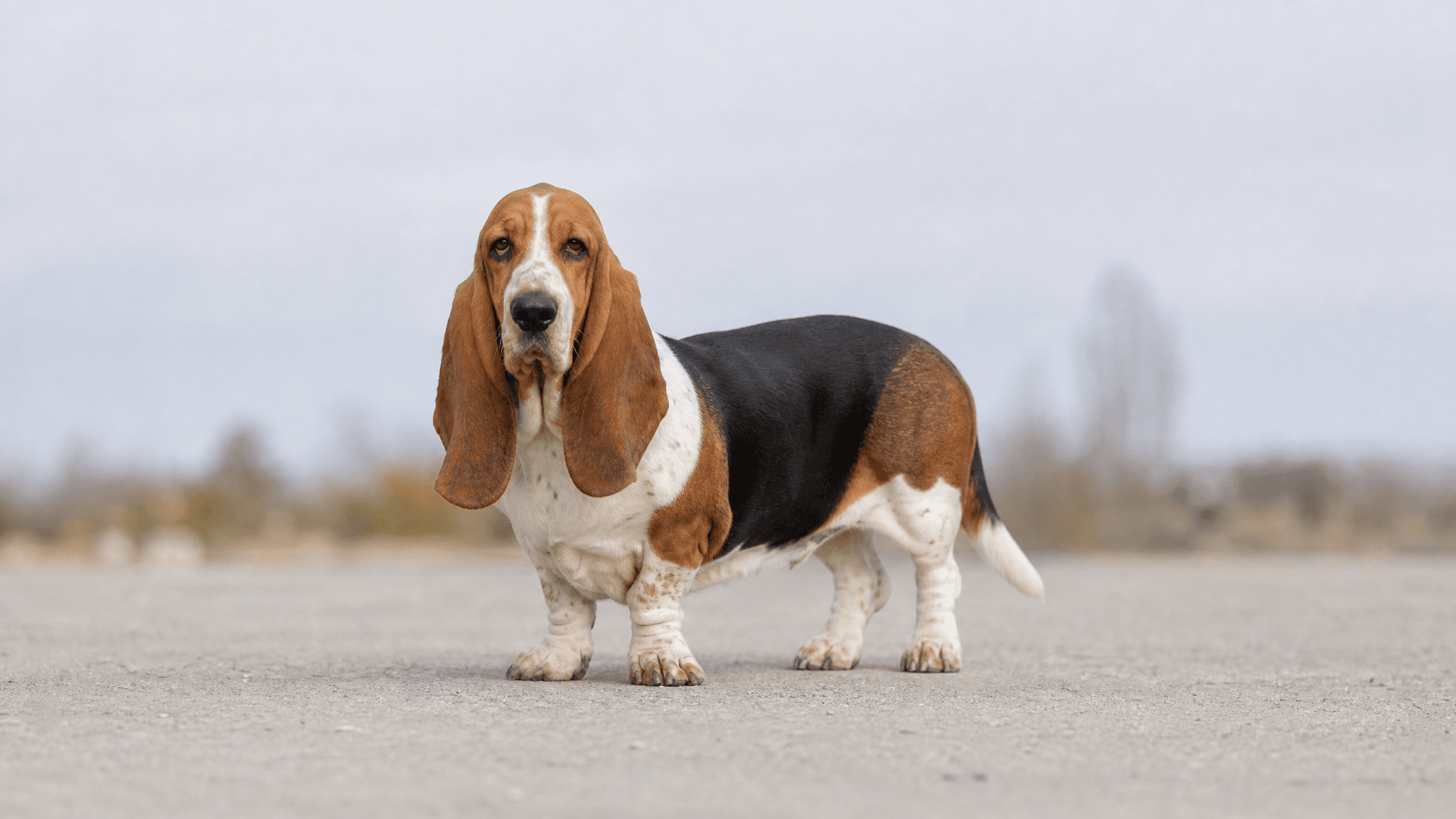
The Basset Hound is one of the most recognizable dogs in the world, famous for its short legs, long ears, and unmistakable melancholic expression. Although it has origins in France — descending from the Basset Artésien Normand — it was in Great Britain that the breed was developed in its modern form in the 19th century, through crosses with the Bloodhound. It is a scent hound of exceptional nose, second only to the Bloodhound in olfactory ability, and very popular as a companion dog worldwide.
Physical Characteristics
- Size
- Medium
- Height (male)
- 30–38 cm
- Height (female)
- 28–36 cm
- Weight (male)
- 23–29 kg
- Weight (female)
- 20–27 kg
- Life Expectancy
- 10–12 years
- Coat
- Short, dense, and smooth
- Common Colors
- Classic tricolor (black, white, and tan); bicolor lemon and white, red and white, etc.
Temperament & Personality
The Basset Hound is a sweet, patient, and extraordinarily gentle dog. It is very affectionate with the whole family, excellent with children, and very tolerant. It has a notable appetite and a slight stubbornness — when it catches an interesting scent, it can completely ignore commands. Its deep voice and melancholic howl are trademarks of the breed.
Activity & Exercise
- Energy Level
- Moderate
- Recommended Daily Exercise
- 45–60 minutes
- Suitable for Apartment
- Yes with exercise
Grooming & Care
- Grooming Needs
- Low to moderate
- Shedding
- Moderate to heavy
- Bathing Frequency
- Every 4 weeks
Health
- Common Health Issues
- Chronic otitis
- Ectropion (eyelid)
- Gastric torsion
- Hip and elbow dysplasia
- Obesity (pronounced tendency)
- Spinal problems
- Thrombocytopenia (hereditary platelet disorder)
- Recommended Health Tests
- Coagulation test
- Eye examination
- Hearing examination
- Orthopedic evaluation
Compatibility
- With Children
- Excellent
- With Other Dogs
- Excellent
- With Cats
- Good
- For First-Time Owners
- Acceptable
Is a Basset Hound right for you?
A Basset Hound may suit you if:
- You enjoy engaging a dog's powerful sense of smell with daily sniff-fests and moderate walks for 45 to 60 minutes.
- You appreciate a calm, affectionate companion who thrives on being a cherished part of your family's daily life.
- You are drawn to a sweet, patient, and gentle companion who offers unwavering affection and tolerance to everyone.
- You are prepared to patiently guide a dog with a mind of its own, especially when an intriguing scent captures their attention.
- You are willing to regularly brush and bathe your Basset every four weeks to manage their moderate to heavy shedding.
- You understand and can manage a dog whose powerful nose will lead them on captivating scent adventures.
- You appreciate the distinctive deep voice and melancholic howl that are charming trademarks of the breed.
Think twice if:
- You expect immediate and consistent obedience from a dog, as their scent-driven nature can make them delightfully independent.
- You often leave your dog alone for long periods, as Bassets thrive on companionship and can become lonely.
- You expect a dog to instantly integrate with very skittish or territorial small household pets without careful, patient introductions.
- You are unwilling to provide 45-60 minutes of daily exercise or manage their moderate to heavy shedding with regular grooming.
- You cannot provide a securely fenced yard or contained outdoor space where their powerful nose won't lead them astray.
- You are unable to physically manage a strong, medium-sized dog, up to 29 kg, who may pull intently on leash.
The Basset Hound is a truly unique companion, offering boundless affection and a gentle spirit that enriches any home. However, their endearing stubbornness and powerful scent drive mean they require patient guidance and a secure environment. Embrace their independent nature and distinctive vocalizations, and you'll discover a loyal, loving friend whose charm is as deep as their howl.
Training a Basset Hound
Training a Basset Hound is a delightful journey, as these sweet and gentle souls are eager to please their families. They respond best to positive reinforcement, especially when tasty treats are involved, thanks to their notable appetite! Keep training sessions short, fun, and consistent to hold their attention. Bassets learn through repetition and positive association, so patience is a virtue. If sessions become too long or frustrating, their inherent stubbornness might emerge, or they might simply 'tune out' if a captivating scent takes precedence. Understanding their scent hound nature is key to a successful and happy training experience.
Begin with:
- Responding to name with distractions
- Recall on a long line
- Loose-leash walking
- Leave it and drop it
- Calm greetings without jumping
- Settling on a mat or bed
- Cooperative handling for grooming
- Waiting at doors and gates
Scent-driven recall
Basset Hounds are scent hounds through and through, with an incredible nose that can easily lead them astray. When they pick up an interesting scent, their world narrows to that trail, and they can become notoriously 'deaf' to your calls. This isn't stubbornness in a malicious sense, but rather their powerful instinct taking over. To overcome this, always start recall training in a secure, low-distraction area, gradually introducing more challenging environments. Use a long line for safety during outdoor practice, and carry high-value, irresistible treats to make coming back to you the most rewarding option. Consistency and patience are vital here; celebrate every successful recall like it's the best thing ever!
Understanding their powerful drive is key. Never let your Basset off-leash in an unfenced area unless their recall is absolutely bulletproof, which can take a lot of dedicated practice. Consider scent work games at home to satisfy their natural instincts in a controlled way, which can also strengthen your bond. For more detailed steps, check out this guide on recall training.
Leash pulling
Despite their short stature, Basset Hounds are surprisingly strong and can be formidable pullers on the leash, especially when their powerful nose latches onto an exciting scent. Their low center of gravity gives them leverage, making it challenging to maintain control if they decide to follow a trail. Begin loose-leash training early and consistently, using a comfortable, well-fitting harness rather than just a collar to prevent strain on their neck.
Practice the 'stop-and-go' method: if they pull, stop walking immediately. Only resume when the leash slackens. Change directions frequently to keep them focused on you rather than the environment. Make walks an enriching experience where you guide the adventure, perhaps incorporating short bursts of sniffing time as a reward for good leash manners. For more tips, check out our guide on stopping leash pulling.
Loneliness and boredom
Basset Hounds are affectionate dogs that thrive on companionship and can become unhappy if left alone for long periods or if they don't receive their recommended 45-60 minutes of daily exercise and mental stimulation. An under-stimulated or lonely Basset might express their displeasure through their characteristic melancholic howl, or by engaging in destructive chewing. They are not 'backyard dogs' but truly family members who need to be involved in household life.
To prevent boredom and loneliness, ensure they get their daily walks and playtime. Provide a variety of puzzle toys to keep their minds engaged when you can't actively play. Consider scent games indoors, which tap into their natural abilities and provide great mental enrichment. If you must leave them, ensure they have a safe, comfortable space, and consider a dog walker or pet sitter for longer absences. Our Behaviour AI feature can help you understand and work on any emerging behaviours.
Basset Hound — Frequently Asked Questions
Why are Basset Hounds so slow and laid-back?
Basset Hounds were bred for slow, methodical scent tracking through dense undergrowth — their short legs and heavy build keep them close to the ground where scent concentrations are strongest. That same pace and temperament carries into daily life: they're naturally unhurried, calm, and deeply content doing very little. This makes them wonderful low-key companions, but it also means motivating them to exercise takes more creativity than most breeds.
Do Basset Hounds howl a lot?
Basset Hounds are vocal dogs with a distinctive, deep, resonant howl bred to carry across open countryside. They howl when lonely, bored, excited, or when they catch an interesting scent. This is something to consider seriously if you live in an apartment or close to neighbours. Early training to settle and redirect boredom, combined with sufficient daily exercise, helps manage their vocal tendencies — though some Basset vocalisation is simply the breed expressing itself.
Are Basset Hounds good family dogs?
Basset Hounds are superb family dogs — they're patient, gentle, and tolerant with children, and their laid-back nature means they rarely overreact to the chaos of family life. They tend to be sociable with other dogs and generally get along with cats when introduced properly. Their gentle temperament and low aggression make them one of the safest breeds around young children, though they need to be taught not to knock toddlers over with their enthusiasm.
What health problems are Basset Hounds prone to?
Basset Hounds' long backs put them at risk of intervertebral disc disease (IVDD), similar to Dachshunds — avoid stairs, jumping, and rough play that twists the spine. Their long, heavy ears trap moisture and need regular cleaning to prevent ear infections. Obesity is a significant risk given their appetite and reluctance to exercise, and extra weight dramatically worsens their back and joint health. Bloat (GDV) is also a risk due to their deep chest, and eye conditions like entropion and glaucoma are seen in the breed.
Are Basset Hounds easy to train?
Basset Hounds are intelligent but notoriously stubborn — they're scent hounds bred to work independently, which translates to a dog that will follow its nose rather than your commands when something interesting is nearby. Patience, consistency, and high-value food rewards (they're very food-motivated) work far better than repetition or frustration. Keep sessions very short (5 minutes), make them fun, and accept that a reliable recall off-leash is difficult with this breed.
How much exercise does a Basset Hound need?
Basset Hounds need moderate exercise — around 30–45 minutes of walking per day spread across two outings. Despite their lazy reputation, regular walks are essential to prevent the obesity that leads to serious back and joint problems. They're not built for jogging or strenuous activity, and in warm weather should only exercise in cool parts of the day. Sniff walks — letting them follow their nose freely — are mentally enriching and count as real exercise for this scent-driven breed.
How long do Basset Hounds typically live?
Basset Hounds typically live 10–12 years. Their longevity is most influenced by weight management — an overweight Basset puts enormous strain on an already vulnerable back and joints, leading to chronic pain and a much shorter life. Regular ear cleaning, eye monitoring, and annual vet check-ups round out the care routine. Bassets from health-tested lines who maintain a healthy weight can live comfortably into their early teens.
Can Basset Hounds live in an apartment?
Basset Hounds can adapt to apartment living — their low energy indoors and calm temperament make them reasonably suited to smaller spaces. The main challenge is their howling, which can be problematic for neighbours if they're left alone or bored. A ground-floor apartment is preferable since stairs put stress on their backs. Ensuring they get regular daily walks and aren't left alone for excessive periods makes apartment life workable for a Basset Hound.
Community
Talk to real Basset Hound owners
This guide covers the breed on paper. In the app, the Basset Hound community covers it in real life: photos from other owners, questions answered by people who live with the breed, and a directory of dogs you can browse.
- Photos & pollsSee what Basset Hound owners are sharing today.
- Questions & answersAsk anything and hear from people who own one.
- Dog directoryBrowse Basset Hounds from around the world.
You join automatically when you add a Basset Hound to your profile.